On Rue Mouffetard, one of Paris's oldest market streets, Kokodak occupies a stretch of the 5th arrondissement where neighbourhood character and dining ambition have long overlapped.
Pearl is the En Primeur Club membership app — saves, bookings, and concierge access live there. Same editors, same standards.
- Address
- 36 Rue Mouffetard, 75005 Paris, France
- Phone
- +33143705624
- Website
- restaurants-kokodak.com
- Directions
- Get directions
 Saves & bookings on Pearl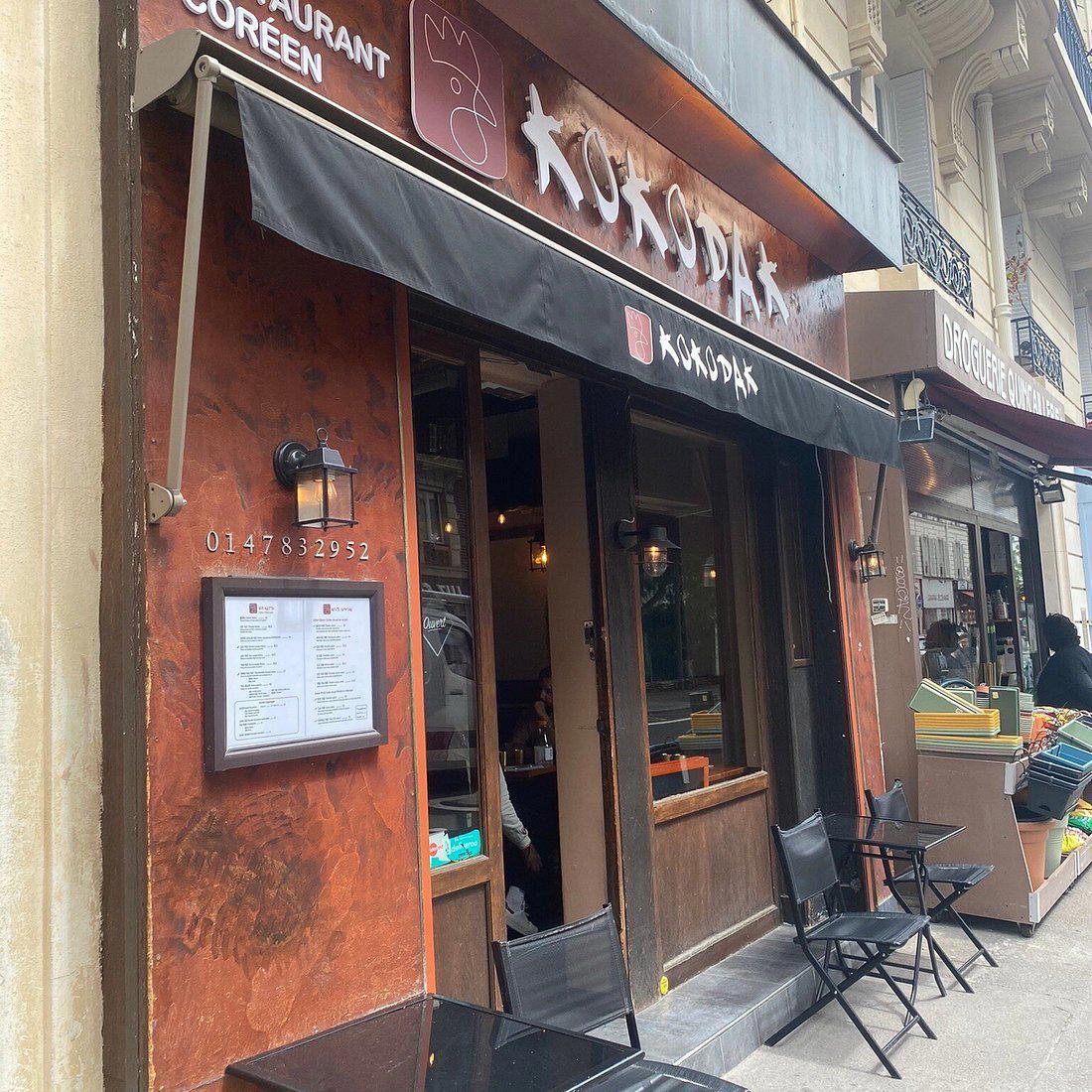
Rue Mouffetard and the Question of What a Paris Neighbourhood Restaurant Can Become
Rue Mouffetard has been a food street since the Roman road that preceded it. The cobblestones, the morning market vendors, the cave-like ground floors with their low ceilings and stone walls, these are not design choices. They are geological fact, the accumulated sediment of a street that has provisioned the Left Bank for centuries. Restaurants that open here inherit that context whether they want to or not. The neighbourhood does not defer to newcomers; it absorbs them, and the ones that last are the ones that find a way to work with the grain of the place rather than against it.
Kokodak, at 36 Rue Mouffetard, is a Korean-Italian Fusion restaurant in Paris's 5th arrondissement, with a casual dress code, reservations recommended, and a price point of about $28 per person. The 5th arrondissement has never been Paris's flashiest dining district. That distinction belongs to the 8th, where Alléno Paris au Pavillon Ledoyen operates inside the grand formal register of Champs-Élysées gastronomy, and where Le Cinq at the Four Seasons George V packages luxury dining inside one of the city's most recognisable hotel addresses. The Left Bank runs on different logic: it has historically rewarded substance over spectacle, and diners who know the neighbourhood tend to arrive with that expectation already formed.
A Venue in Formation: Reading the Early Signals
What makes Kokodak genuinely interesting to track right now is precisely its early-stage opacity. little is confirmed in the public record: no verified awards, no published price tier, no documented chef biography, no confirmed cuisine category. In a Paris dining scene that moves quickly to assign credentials, Michelin inspectors walk these streets, food journalists file from these arrondissements, and word travels fast through the city's tightly networked restaurant community, a venue without a public data trail is either new, deliberately low-profile, or operating at a neighbourhood scale that hasn't yet attracted wider editorial attention.
All three explanations are plausible for a Mouffetard address. The street has a long history of small operators who build loyal local audiences without ever pursuing the kind of visibility that generates Michelin consideration or national press coverage. It has also, in recent years, attracted more ambitious openings from chefs who want the neighbourhood's character without its traditional informality ceiling. The evolution of what a Rue Mouffetard restaurant can be, and what it can charge, is still being written.
The French restaurant scene provides instructive reference points for understanding how that evolution typically unfolds. Venues like Arpège, now a three-Michelin-star address, began as a neighbourhood proposition before successive reinventions pushed it into a different tier entirely. Kei, which introduced a Japanese-French synthesis into the 1st arrondissement, built its reputation incrementally before formal recognition arrived. The pattern across French fine dining, from Bras in Laguiole to Mirazur in Menton, is that regional and neighbourhood credibility often precede, and sometimes outlast, institutional recognition.
The 5th Arrondissement as a Dining Context
Understanding where Kokodak sits requires understanding the 5th's competitive dynamics. This is a district with a large student population, a serious tourist footfall along the Panthéon axis, and a clutch of genuinely committed local diners who shop the Mouffetard market and expect the restaurants nearby to take produce seriously. The price pressure runs in both directions: visitors want value relative to the 8th, and locals are experienced enough to know when they're not getting it.
That tension, between neighbourhood accessibility and culinary ambition, defines the evolution of dining on and around Mouffetard. The venues that have navigated it most successfully tend to be the ones that resolve it through specificity rather than compromise: a tightly focused menu, a defined point of view on sourcing or technique, a format disciplined enough to be repeatable at scale without losing what makes it worth returning for. Across France, the clearest examples of this kind of resolution come from outside Paris: Auberge de l'Ill in Illhaeusern, Flocons de Sel in Megève, and Auberge du Vieux Puits in Fontjoncouse each built their identities around a specific relationship with place that made reinvention feel organic rather than reactive.
In Paris itself, the comparable ambition has often landed in more central postcodes. L'Ambroisie on the Place des Vosges is the model of a restaurant whose setting and cooking have become inseparable over decades. The question for any Mouffetard opening is whether the street's character, its age, its daily rhythm, its social mix, can serve the same function as a grand address.
What Comes Next
For venues at this stage, present on the map, absent from the documented record, particularly useful editorial stance is honest about what isn't yet known while placing the address in the context that does exist. Rue Mouffetard has produced serious restaurants before. The French dining tradition it participates in, from the market-driven cooking that connects Paul Bocuse's Auberge du Pont de Collonges to AM par Alexandre Mazzia in Marseille, is among the more documented and debated in the world. International comparisons, Le Bernardin in New York, Atomix, Au Crocodile in Strasbourg, Assiette Champenoise in Reims, Troisgros in Ouches, underscore how a strong sense of place, when it connects with cooking that can carry it, produces restaurants that endure well past their opening press.
Kokodak is at the beginning of that process, on a street that provides one of Paris's more demanding starting conditions. That is worth watching.
Know Before You Go
- Address: 36 Rue Mouffetard, 75005 Paris, France
- Nearest Metro: Place Monge (Line 7) or Censier-Daubenton (Line 7)
- Price range: About $28 per person
- Booking: Reservations recommended
- Hours: Mon: 12-2:30 PM, 7-10:30 PM; Tue: 12-2:30 PM, 7-10:30 PM; Wed: 12-2:30 PM, 7-10:30 PM; Thu: 12-10:30 PM; Fri: 12-10:30 PM; Sat: 12-10:30 PM; Sun: 12-10:30 PM
- Awards: None
- Ideal time to visit Mouffetard: Saturday and Sunday mornings, when the street market is at full capacity and the neighbourhood is at its most characteristic
A Pricing-First Comparison
Comparable venues nearby, for context on price, style, and recognition.
| Venue | Cuisine | Price | Notes |
|---|---|---|---|
| KokodakThis venue — the venue you are viewing | Montparnasse, Korean-Italian Fusion | $$ | Not listed |
| JJIN | Montparnasse, Korean Barbecue | $$ | Not listed |
| OPPA CANTINE | Not listed | $$ | 15th arrondissement (Dupleix), Authentic Korean Canteen |
| Bibimbap | Not listed | $$ | 5th Arr. - Panthéon, Korean Bibimbap |
| Go Oun | Not listed | $$ | Louvre / Palais-Royal, Korean Fusion |
| Mogo | Not listed | $ | 9th Arrondissement (Opéra), Korean Home-Style Canteen |
Continue exploring
More in Paris
Restaurants in Paris
Browse all →
Bars in Paris
Browse all →
Hotels in Paris
Browse all →
Wineries in Paris
Browse all →
At a Glance
- Modern
- Cozy
- Group Dining
- Casual Hangout
- Open Kitchen
Current opening hours
- Monday
- 12–2:30 PM, 7–10:30 PM
- Tuesday
- 12–2:30 PM, 7–10:30 PM
- Wednesday
- 12–2:30 PM, 7–10:30 PM
- Thursday
- 12–10:30 PM
- Friday
- 12–10:30 PM
- Saturday
- 12–10:30 PM
- Sunday
- 12–10:30 PM
Hours can change for holidays and private events. Last verified .
Chaleureuse et moderne with tamisée lighting and pleasant wooden decor creating a convivial atmosphere.