
Kohaku brings Japanese contemporary cooking to Rome's Via Veneto district at a mid-range price point that belies the seriousness of its kitchen. A Michelin Plate recognition in 2025 confirms the quality of a menu that spans fish, dumplings, ramen, and yakimono-grilled dishes. The eight-course kaiseki tasting menu, available evenings, offers one coherent expression of what the kitchen is doing.
Pearl is the En Primeur Club membership app — saves, bookings, and concierge access live there. Same editors, same standards.
- Address
- Via Marche, 66, 00187 Roma RM, Italy
- Phone
- +39 06 4566 5202
- Website
- kohakurome.com
- Directions
- Get directions
 Saves & bookings on Pearl
A Japanese Counter in the Shadow of the Eternal City
Rome's dining culture is among the more conservative in Europe. The city's relationship with foreign cuisines has historically been one of polite tolerance rather than deep engagement, which makes the small cluster of serious Japanese kitchens operating here something worth paying attention to. These are not izakaya-inflected noodle bars or fusion hedges, they are restaurants that have accepted the challenge of presenting Japanese cooking on its own terms to an audience whose palate is calibrated around carbonara and cacio e pepe. Kohaku, on Via Marche in the Salario district just north of Via Veneto, sits inside that smaller, more demanding tier.
The address places Kohaku in a neighbourhood that tends to produce a clientele that repeats rather than one that passes through once. That matters in the context of a kitchen that earns, a score that, at that volume, is harder to maintain than to achieve initially, and signals consistent execution rather than a single memorable visit.
What the Michelin Plate Actually Means Here
Michelin awarded Kohaku a Plate recognition in 2025. In the Guide's current framework, the Plate sits below the Bib Gourmand and Star categories but above a simple listing, it identifies a restaurant with good cooking. For a Japanese contemporary kitchen operating in Rome rather than Milan or Tokyo, that recognition carries a specific kind of weight. The Italian Michelin Guide does not have a large pool of Japanese restaurants to assess against a domestic comparable set, which means the Plate is awarded against the Guide's general quality threshold, not a cuisine-specific curve. Passing that threshold in a city where the culinary default is Italian is a more pointed statement than the Plate designation might suggest.
For comparison, Rome's starred Italian houses, La Pergola at three stars, Enoteca La Torre and Il Pagliaccio at two, operate at the €€€€ price tier. Kohaku sits at €€€, which positions it in a different competitive register entirely, closer to serious neighbourhood dining than to destination-restaurant territory. That gap matters when setting expectations: the kitchen is not competing for space in the same conversation as Rome's creative fine-dining circuit, but it is doing something more disciplined than the city's casual Japanese options.
The Menu's Structure and the Yakimono Question
Japanese contemporary menus in European cities tend to resolve in one of two directions: they either compress the format into a tasting sequence to manage unfamiliarity, or they present a broad à la carte that allows entry at multiple price and confidence levels. Kohaku takes the second route for its daytime and casual evening service, covering fish preparations, dumplings, ramen, and dishes from the yakimono grill. The yakimono element is worth singling out. Yakimono, grilled items, typically proteins and vegetables prepared over charcoal or open flame, sits at the centre of the meal in traditional Japanese meal sequencing. A kitchen that includes a functional yakimono grill and uses it as a genuine course anchor, rather than a decorative feature, is making a structural choice about how the meal flows. That choice tends to produce more coherent mid-meal pacing than menus that treat grilled items as an afterthought.
For the evening, Kohaku offers an eight-course kohaku kaiseki tasting menu. Kaiseki, in its formal iteration, is Japan's most structured meal format: courses follow a prescribed order built around seasonal ingredients, with each dish calibrated to texture, temperature, and the progression of the whole. Whether Kohaku's kaiseki observes that full formal architecture or adapts it to a more accessible European format is not something to assert without being in the room. What the menu format signals, however, is a kitchen that has chosen to organise its strongest offering around sequence and coherence rather than individual showpiece dishes. That is a meaningful orientation for a restaurant at this price point.
Sake, Shochu, and the Pairing Case
The editorial logic of pairing beverages with kaiseki is more rigid than it might appear from outside Japanese dining culture. Japanese spirits and wines are not interchangeable background elements; they are course-specific instruments. Sake in particular carries enough range, from dry junmai to rich junmai daiginjo, that the choice of what arrives with, say, a grilled protein versus a delicate raw fish preparation materially changes the experience of both the drink and the dish. European restaurants running kaiseki formats face a standing dilemma: whether to build a sake programme that can support course-by-course pairings, to pivot toward European wine pairings that their front-of-house team can navigate with more confidence, or to offer both and let the guest decide.
Kohaku's specific beverage programme is not documented in the available record, so no specific claims about its sake selection can be made. What is observable is that the kaiseki format, if taken seriously, creates an implicit demand for pairing options that can track the meal's progression. Restaurants in this format that offer sake by the glass alongside the eight-course menu are making a more coherent proposal than those that default entirely to Italian wine lists, regardless of how well-assembled those lists might be. The parallel question arises for shochu, which pairs differently from sake and often more effectively with grilled and fried preparations.
For those interested in how Japanese contemporary cooking is handled across different European contexts, The Japanese Restaurant in Andermatt and Eika in Taipei offer useful reference points for what the format looks like at different price and ambition levels. Within Italy's broader fine-dining picture, the discipline visible at Kohaku's level sits in a different register from the creative Italian houses covered in Acquolina or at a national level through kitchens like Osteria Francescana in Modena, Le Calandre in Rubano, Enrico Bartolini in Milan, Dal Pescatore in Runate, Enoteca Pinchiorri in Florence, and Atelier Moessmer Norbert Niederkofler in Brunico.
Rome's Japanese dining scene is narrow enough that the serious options remain easy to track. Sushisen represents the sushi-counter tradition within that small field. Kohaku occupies a different position, broader in format, more structured in its evening ambition, and priced to be a repeatable choice rather than an occasion restaurant.
Planning a Visit
Kohaku is at Via Marche, 66 in the 00187 postcode, placing it within walking distance of the Via Veneto corridor and the Barberini metro station. The €€ pricing makes it accessible for a weekday dinner without the reservation pressure that attaches to Rome's starred houses, though the kaiseki menu is an evening-only format and would benefit from advance booking given the fixed-course structure.
For broader planning across the city, see our full Rome restaurants guide, our full Rome hotels guide, our full Rome bars guide, our full Rome wineries guide, and our full Rome experiences guide.
What Regulars Order at Kohaku
The menu's breadth means regulars tend to anchor around the yakimono grill and the fish preparations for casual visits, using the wide à la carte to build meals that read more like grazing through a range of techniques than following a single through-line. The eight-course kaiseki menu is the structure that demonstrates the kitchen's full range. For a first visit where the goal is understanding what Kohaku can actually do, the kaiseki is the more reliable read; the à la carte better suits a return visit when the format is already familiar.
Recognition, Side-by-Side
Comparable venues nearby, for context on price, style, and recognition.
| Venue | Cuisine | Price | Awards | Notes |
|---|---|---|---|---|
| KohakuThis venue — the venue you are viewing | Authentic Japanese Kaiseki & Omakase | $$$ | Michelin Plate | Not listed |
| Sushisen | Modern Japanese Sushi and Omakase | $$$ | Michelin Plate | Ostiense |
| 180 Grammi Pizzeria Romana | Modern Roman Pizza | $$$ | Not listed | Prenestino-Labicano |
| Acciuga | Modern Italian Seafood | $$$ | Michelin Plate | Monte Mario |
| Livello 1 | Modern Seafood | $$$ | Michelin Plate | Ardiatino |
| Il Marchese - Osteria Mercato Liquori | Modern Roman Osteria | $$ | Michelin Plate | Campo Marzio |
Recognition history
Dated appearances from independent guides and award organizations, with the underlying list record or original source where available.
Michelin Plate
Michelin
Michelin Plate
Michelin

At a Glance
- Elegant
- Minimalist
- Intimate
- Sophisticated
- Quiet
- Date Night
- Special Occasion
- Celebration
- Open Kitchen
- Chefs Counter
- Sake Program
Current opening hours
- Monday
- 12:30–2:30 PM, 7:30–10:30 PM
- Tuesday
- 12:30–2:30 PM, 7:30–10:30 PM
- Wednesday
- 12:30–2:30 PM, 7:30–10:30 PM
- Thursday
- 12:30–2:30 PM, 7:30–10:30 PM
- Friday
- 12:30–2:30 PM, 7:30–10:30 PM
- Saturday
- 12:30–2:30 PM, 7:30–10:30 PM
- Sunday
- Closed
Hours can change for holidays and private events. Last verified .
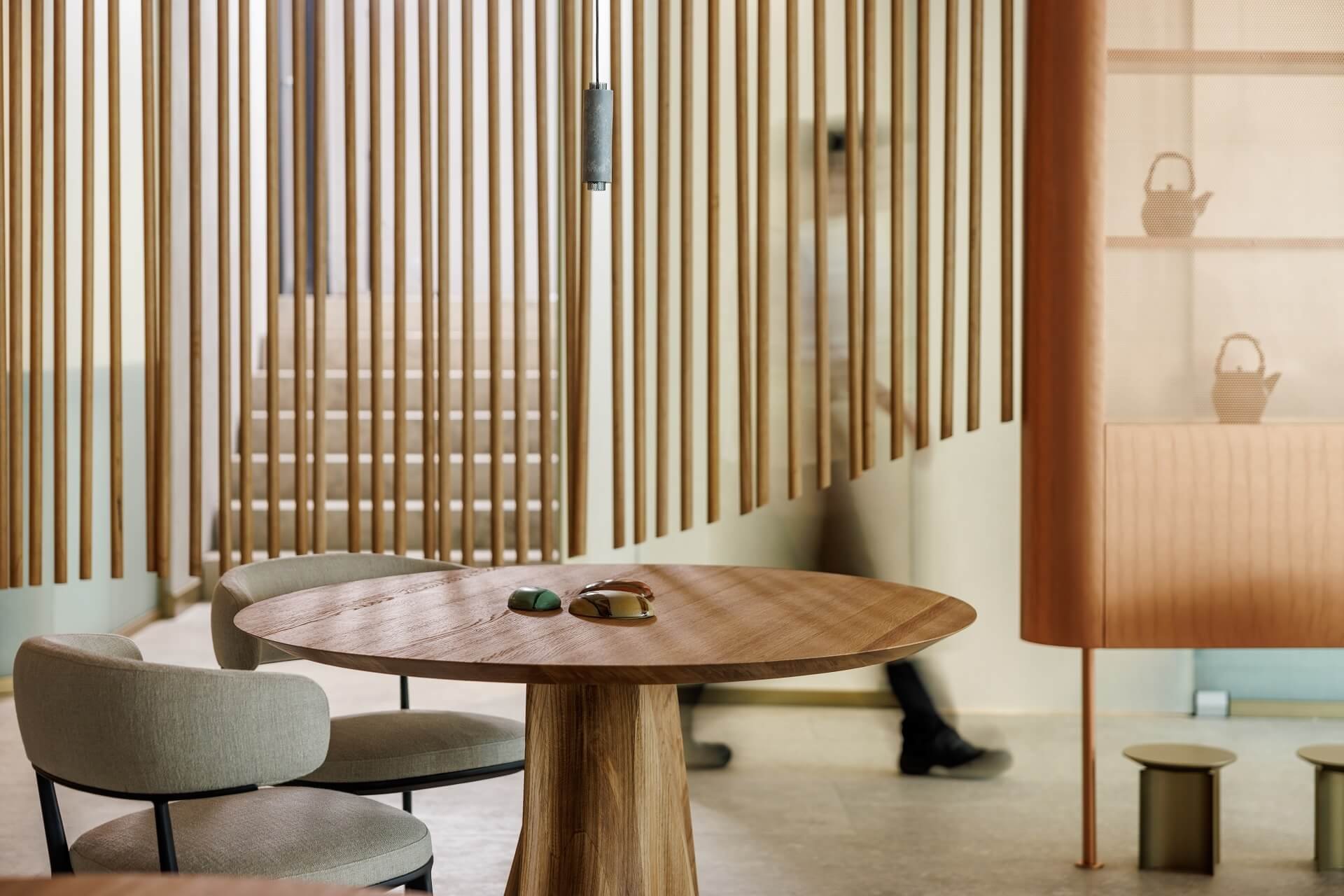
Refined and elegant minimalist environment with Japanese aesthetics reminiscent of Kyoto's Gion district; serene, intimate lighting with attention to detail throughout.