

Michelin Plate · We're Smart World 3 Radishes
Our verdict
Koh Thai Kitchen sits on a hilltop within the Four Seasons Ko Samui, earning consecutive Michelin Plates in 2024 and 2025 for a menu of southern and central Thai dishes built around local seafood, Australian lamb, and Wagyu beef. The alfresco setting delivers unobstructed views across jungle canopy and open sea. Price range sits at ฿฿฿, placing it at the premium tier of the island's Thai dining options.

Pearl is the En Primeur Club membership app, where members save venues, book tables and use the concierge.
The menu
What to order
- Larb Tuna
- Gaeng Massaman Nua
- Plaa Pla
- Pad Thai Goong Mae Nam
Hilltop Thai, Open Sky
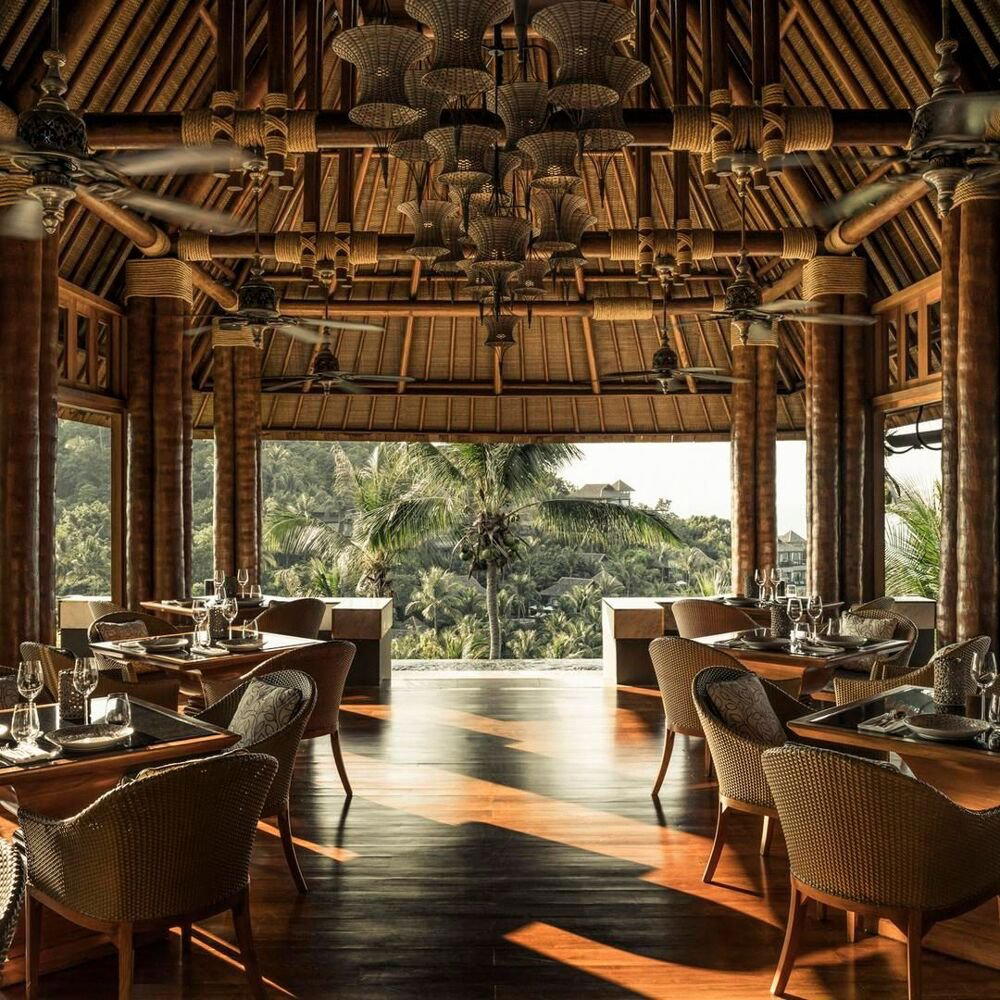
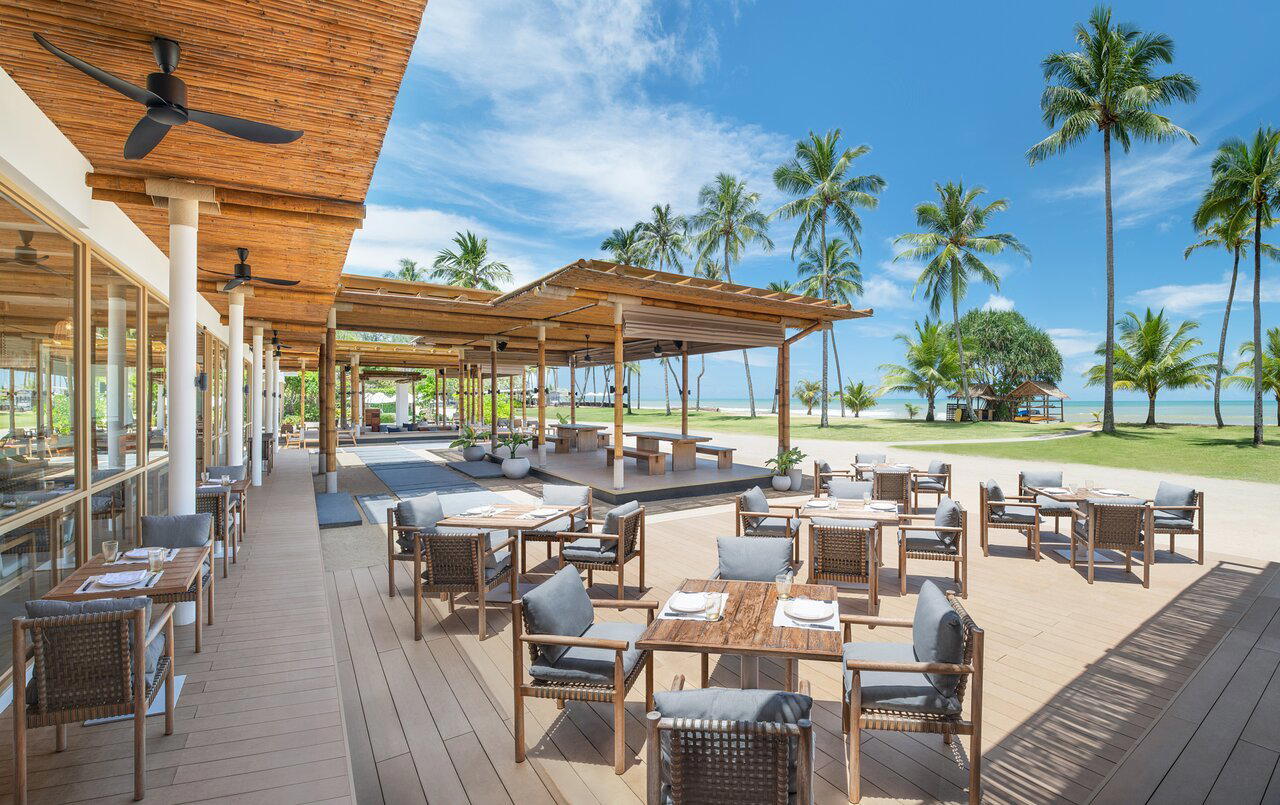
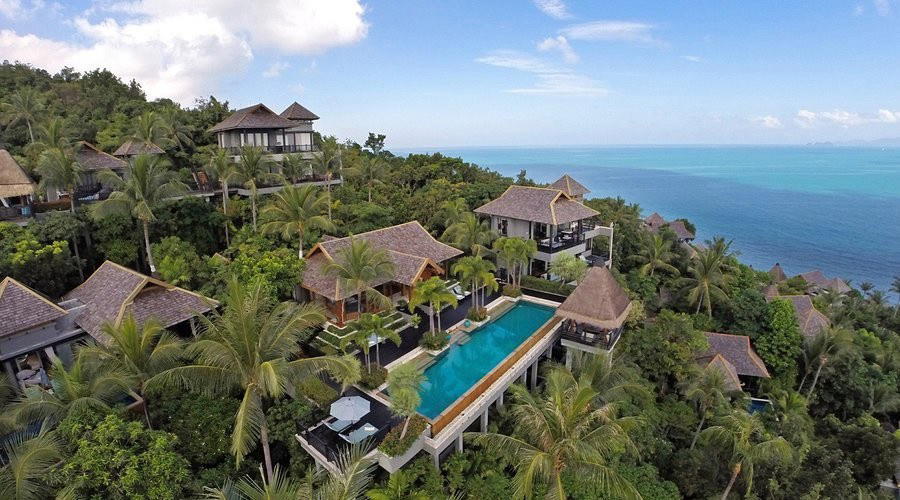
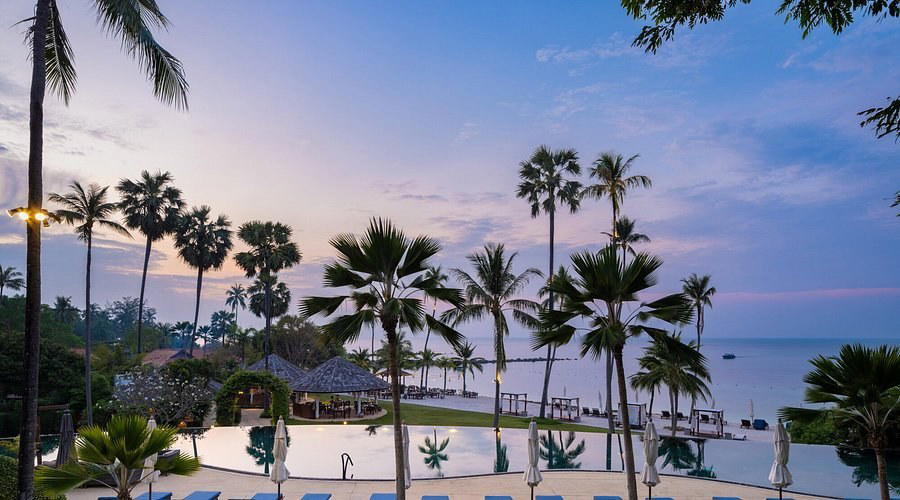
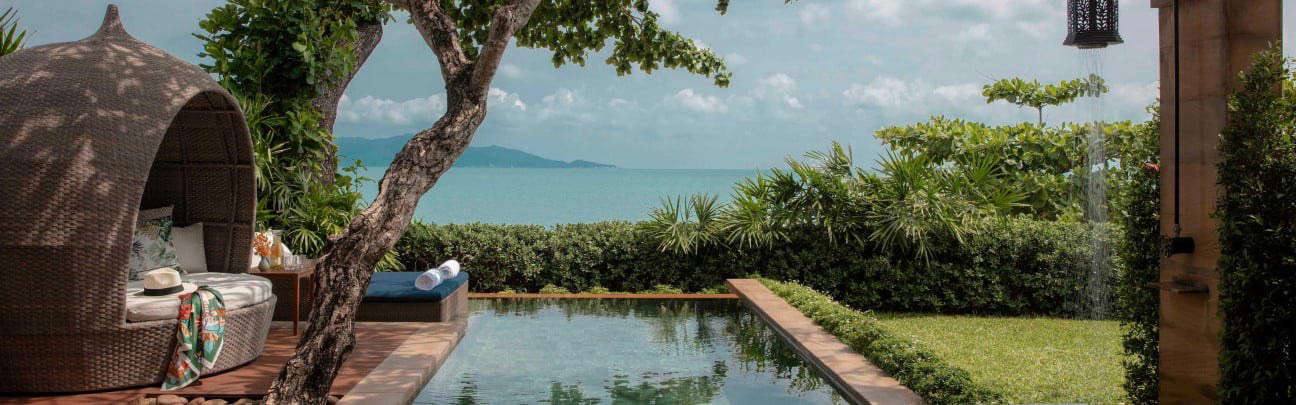
There is a particular kind of dining that Ko Samui does better than almost anywhere in the Gulf of Thailand: open-air tables positioned high enough above sea level that the treeline drops away and the water fills the peripheral vision. Koh Thai Kitchen, positioned on the ridge that runs through the Four Seasons property on the island's north-east coast, operates squarely inside that tradition. The approach is alfresco throughout, with a rustic architectural style that resists the over-polished resort aesthetic common at this price tier. The jungle extends below, the sea stretches toward the outer islands of the Ang Thong Marine National Park, and the late-afternoon light produces the kind of sunset that photographers position themselves for an hour early. The setting is not decorative. It is the frame through which the food is understood.
Southern and Central Thai on the Same Menu
Ko Samui sits at the geographic boundary between two of Thailand's most distinctive regional cooking traditions. Southern Thai food is built on turmeric, dried shrimp, and coconut milk fermented to a sharper, more funky register than the central style. Central Thai cooking, anchored in Bangkok's professional kitchen culture, runs toward balance: the interplay of sweet, sour, salty, and heat in proportions designed to coexist rather than compete. Koh Thai Kitchen draws from both, and the menu's span across more than twenty vegetable preparations signals a kitchen operating with more range than the average resort restaurant. The protein sourcing reaches beyond local waters: Australian lamb and Wagyu beef appear alongside the island's own seafood, a combination that places this kitchen in the same premium-ingredient tier as hotels in Phuket and Bangkok where imported proteins are used to anchor the menu's upper register.
The High-Heat Tradition and What It Requires
Pad thai and pad see ew occupy different positions in Thailand's culinary hierarchy, but both depend on the same technical demand: a wok hot enough to produce wok hei, the breath-of-the-wok smokiness that separates restaurant stir-fry from anything achievable on a domestic burner. Pad thai, built around thin rice noodles, tamarind, fish sauce, dried shrimp, and palm sugar, has been codified into a near-national dish since the mid-twentieth century, when it was promoted as part of a government campaign around rice conservation. Pad see ew, wider flat noodles charred against the wok surface in sweet soy with egg and Chinese broccoli, operates in a less politicised tradition but demands equivalent heat precision. Both dishes serve as a diagnostic for any Thai kitchen: get the temperature wrong and the dish is technically correct but flat. The stir-fry station at a hotel restaurant of this calibre works with imported high-BTU equipment that most street-side operations cannot match, which creates its own dynamic. The mise en place is more controlled, the sourcing more consistent, the execution less dependent on the particular energy of a night market. What it trades in spontaneity it compensates with reliability. For a guest who may eat at Koh Thai Kitchen once during a week-long stay, that reliability matters.
For comparison on the island, Phensiri and Baan Suan Lung Khai (Seafood) represent the ฿฿ tier, where the cooking can be equally serious but the setting and ingredient sourcing operate at different parameters. FishHouse shares the ฿฿฿ tier but pivots toward European technique with local seafood. Saffron represents a further point of comparison for anyone building a broader picture of the island's upper-end dining options.
Michelin Recognition in Context
Koh Thai Kitchen received a Michelin Plate in both 2024 and 2025. The Plate designation sits below the star system but is awarded to restaurants the Michelin inspectors consider worth visiting, with cooking of good quality. Consecutive recognition across two guide cycles, as opposed to a single-year inclusion, indicates a kitchen maintaining consistent standards rather than a one-time performance. On Ko Samui, where the dining scene skews toward international resort menus and beach-casual Thai, a Michelin-recognised Thai kitchen at this altitude of setting and price is a specific proposition. For broader context on how Thai fine dining is benchmarked nationally, Sorn in Bangkok and Nahm in Bangkok represent the starred tier of southern and central Thai cooking respectively, while Samrub Samrub Thai in Bangkok occupies a research-led position in the same conversation. PRU in Phuket and AKKEE in Pak Kret indicate the spread of Michelin-recognised cooking beyond Bangkok across the southern and central regions. Aeeen in Chiang Mai rounds out the northern end of that national picture.
The French-Thai Register
The kitchen occasionally incorporates French technique into a Thai framework, a register that has precedent across Thailand's hotel dining sector and one that tends to work leading when the French element functions as a structural tool rather than a flavour overlay. A sauce built on reduction and butter does not belong in a bowl of tom kha. A precisely controlled protein temperature or a clean emulsion used to carry southern spice does, and the kitchen appears to operate with that distinction in mind. The record notes the French-Thai fusion arrives with the right Thai accents, which suggests the integration is calibrated rather than decorative. Given the ingredient sourcing and the Michelin Plate recognition, the kitchen's positioning aligns with properties that treat technique as a means rather than a statement.
Planning a Visit
Koh Thai Kitchen sits at ฿฿฿, placing it in the same price bracket as the island's other premium hotel restaurants. The property is within the Four Seasons Ko Samui at 219 Moo 5 Surat Thani, Angthong, 84140. Given the alfresco format and the sunset positioning, timing an evening reservation for the hour before dark will make the most of the view. The Four Seasons reservation infrastructure handles bookings; guests staying off-property should contact the hotel directly to arrange a table. The setting and price tier make this a reasonable option for older children who can sit through a longer meal, though the premium ingredient pricing and the restaurant's character align more naturally with adult dining. For a broader picture of where Koh Thai Kitchen sits within the island's hospitality options, see our full Ko Samui restaurants guide, our full Ko Samui hotels guide, our full Ko Samui bars guide, our full Ko Samui experiences guide, and our full Ko Samui wineries guide. For seafood-focused alternatives at a lower price point, Bang Por Seafood Takho represents the island's more casual end of the same local-catch tradition. The Spa in Lamai Beach and Agave in Ubon Ratchathani offer further reference points for travellers moving beyond Ko Samui.
Frequently asked questions
Is Koh Thai Kitchen suitable for children?
At ฿฿฿ and set within a Four Seasons property, the pricing and atmosphere are calibrated toward adult diners. Older children comfortable with a formal open-air setting and a menu built around local seafood, Australian lamb, and Wagyu beef will find more to engage with than younger ones.
What's the vibe at Koh Thai Kitchen?
The restaurant occupies an alfresco hilltop position within the Four Seasons Ko Samui, with a rustic structure that opens onto wide views of jungle, sea, and surrounding islands. Sunsets here are a specific draw, and the setting sits at ฿฿฿, putting it firmly in the island's premium hotel dining tier.
What distinctions does Koh Thai Kitchen have?
Koh Thai Kitchen has received recognition including: Koh Thai Kitchen is located on a hilltop within the Four Seasons Hotel. The restaurant's alfresco dining areas sport a rustic style. Diners can enjoy southern and central Thai dishes made with premium ingredients such as local seafood, Aust….
What do people recommend at Koh Thai Kitchen?
The kitchen's southern and central Thai menu draws consistent attention, particularly dishes built around local seafood and premium proteins including Wagyu beef and Australian lamb. The occasional French-Thai crossover preparations have also registered positively, and the restaurant holds a Michelin Plate for both 2024 and 2025.
What's the pricing like at Koh Thai Kitchen?
Pricing at Koh Thai Kitchen is listed as ฿฿฿.
Where is Koh Thai Kitchen located?
Koh Thai Kitchen is located at 219 Moo 5 Surat Thani Angthong, 84140, Thailand, Ko Samui.
Booking and Cost Snapshot
| Venue | Cuisine | Price | Awards |
|---|---|---|---|
| Koh Thai KitchenThis venue (the venue you are viewing) | Modern Southern Thai | $50–100 | Michelin Plate · We're Smart World 3 Radishes |
| Baan Suan Lung Khai | Southern Thai Seafood | $20–30 | Michelin Bib Gourmand |
| FishHouse | Modern Beachfront Seafood | $50–100 | Michelin Plate |
| Kapi Sator | Southern Thai | $20–30 | Michelin Plate |
| Phensiri | Southern Thai | $10–20 | Michelin Plate |
| The Ranch | Premium Steakhouse | $150–200 | Michelin Plate |
Recognition history
Dated appearances from independent guides and award organizations, with the underlying list record or original source where available.
Michelin Plate
Michelin
We're Smart World 3 Radishes
We're Smart World
Full recognition history (4 entries)
Michelin Plate
Michelin
Michelin Plate
Michelin
Continue exploring
More in Koh Samui
Restaurants in Koh Samui
All restaurants in Koh Samui →
Bars in Koh Samui
All bars in Koh Samui →
Details
- Scenic
- Rustic
- Romantic
- Elegant
- Date Night
- Special Occasion
- Terrace
- Panoramic View
- Open Kitchen
- Hotel Restaurant
- Craft Cocktails
- Local Sourcing
- Waterfront
- A La Carte
- Craft Cocktails
Current opening hours
- Monday
- 7–11 AM, 6–10 PM
- Tuesday
- 7–11 AM, 6–10 PM
- Wednesday
- 7–11 AM, 6–10 PM
- Thursday
- 7–11 AM, 6–10 PM
- Friday
- 7–11 AM, 6–10 PM
- Saturday
- 7–11 AM, 6–10 PM
- Sunday
- 7–11 AM, 6–10 PM
Hours can change for holidays and private events. Hours as of .
Rustic alfresco dining areas with fresh breezy air, dramatic vistas of blue sea and islands, well-suited for romantic dinners.