Koh Pee Pee
Our verdict
Koh Pee Pee occupies a streetside address on Rua Schiller in Porto Alegre's Rio Branco neighbourhood, where the city's appetite for Southeast Asian cooking has carved out a modest but growing niche. The name evokes Thailand's Ko Phi Phi archipelago, signalling a kitchen oriented around the flavours and techniques of the Gulf of Thailand and beyond. It sits within a dining quarter that rewards those willing to look past the city's dominant Italian-Brazilian canon.

Pearl is the En Primeur Club membership app, where members save venues, book tables and use the concierge.
The menu
What to order
- Chicken satay
- Tom yum soup
- Pad thai
- Khao pad
Southeast Asian Cooking in a Southern Brazilian City
Porto Alegre is not a city that immediately invites comparisons with Bangkok or Chiang Mai. Its culinary identity was shaped by nineteenth-century Italian and German immigration, and that lineage is visible everywhere, from the cantina tables at Cantina Pastasciutta Boulevard Laçador to the neighbourhood bistros that populate Rio Branco and Moinhos de Vento. Against that backdrop, a restaurant named after one of Thailand's most recognisable island chains is a deliberate declaration of difference. Koh Pee Pee, on Rua Schiller in Rio Branco, positions itself within a small but coherent current of Southeast Asian dining that has been developing quietly in Brazil's southern capital over the past decade.
That current matters for context. Brazilian cities have long absorbed Japanese, Chinese, and Korean cooking as part of a broader immigrant food culture, but Thai and wider Southeast Asian cuisines occupy a different register: they arrived later, they lack the same immigrant community anchoring, and they depend on a kitchen that can source or replicate ingredients, coconut milk and galangal and fish sauce and makrut lime, that do not grow in Rio Grande do Sul. Where those kitchens get it right, the result is a genuinely distinct register from anything else on the city's table.
Rio Branco as a Setting
The neighbourhood of Rio Branco sits close to the older residential fabric of Porto Alegre, between the more obviously commercial Cidade Baixa to the south and the polished affluence of Moinhos de Vento to the north. Rua Schiller, the street on which Koh Pee Pee operates, is the kind of address where a restaurant can establish a local following without competing directly for tourist traffic. The dining offer along this stretch is eclectic rather than themed: you are as likely to find a cocktail bar such as Capone Drinkeria as a French-inflected bistro like Le Bistrot Gourmet or the wine-anchored Le Bateau Ivre. That eclecticism is characteristic of Rio Branco's dining scene, which tends to attract residents rather than visitors, and which rewards the kind of repeat custom that sustains a specialist kitchen.
Walking Rua Schiller toward number 83, the scale of the building signals a mid-sized independent rather than a grand dining room. Southeast Asian restaurants in Brazilian cities rarely occupy large footprints; the economics of sourcing unusual ingredients and attracting a local audience for unfamiliar food tend to keep operations tight. That constraint is not necessarily a disadvantage: smaller rooms concentrate atmosphere and allow kitchens to maintain consistency across service.
The Cultural Weight of Thai Cooking Outside Its Home
Thai cuisine carries specific cultural freight when it travels. Unlike French or Italian cooking, which arrived in South America through direct migration and adapted over generations, Thai food in Brazil is largely reconstructed from imported ingredients, cookbooks, diaspora knowledge, and, increasingly, from Brazilian cooks who have spent time in Thailand or trained under Thai-lineage kitchens. The results vary considerably. At one end of the spectrum are kitchens that approximate the flavours with whatever is available locally; at the other are those that maintain the discipline to source correctly and to respect the balance of hot, sour, salty, and sweet that defines the cooking at its most coherent.
That balance is not a stylistic preference; it is structural. Thai cuisine, particularly the central and southern traditions associated with the coast and the Gulf, organises dishes around a specific interplay of those four registers, with aromatics, lemongrass, galangal, kaffir lime leaf, doing work that cannot be substituted without changing the nature of the dish. A restaurant that names itself after Ko Phi Phi, a coastal island in Krabi province associated with the southern Thai tradition of seafood and coconut-rich curries, is making an implicit claim about which register it is working in. Whether that claim is substantiated is what separates the interesting Southeast Asian kitchens in Brazilian cities from those that merely invoke the geography.
For comparison, the ambition visible in Brazil's broader fine dining conversation, at D.O.M. in São Paulo or Lasai in Rio de Janeiro, centres on native Brazilian ingredients as the organising principle. Southeast Asian kitchens operating in the same country are working against that current: they are not celebrating local produce but arguing for the primacy of a specific foreign flavour tradition. That argument requires technical commitment to succeed.
Where Koh Pee Pee Sits in Porto Alegre's Wider Dining Picture
Porto Alegre's restaurant scene has grown more confident and internationally aware over the past several years, with venues like Iaiá Bistrô demonstrating the appetite for thoughtfully framed food that does not default to the city's pasta-and-churrasco defaults. Koh Pee Pee operates in a different register from those bistro-format venues, one that is harder to execute because the reference cuisine is further from local culinary memory, but which, when done well, fills a gap that no other style of kitchen can.
Across Brazil's regional cities, the pattern of specialist Southeast Asian dining tends to follow a similar trajectory: a small room, a focused menu, a reliance on word-of-mouth within a neighbourhood, and a degree of pricing pressure that reflects the cost of imported or difficult-to-source ingredients. Bistro Fitz Carraldo in Manaus and Cantina Pozzobon in Santa Maria illustrate, from very different culinary angles, how regional Brazilian cities support independent restaurants that operate outside the mainstream. Koh Pee Pee belongs to that broader category of independents that sustain a city's culinary range without anchoring its identity.
For those assembling a broader picture of dining in Brazil's south and beyond, our full Porto Alegre restaurants guide maps the city's current offer across cuisines and price tiers. Further afield, Aero Burguer e Grill in Santa Cruz Do Sul, Casa da Dika Restô e Eventos in Bragança, Casa da Flor Restaurante in Dourados, Casa da Picanha Penedo in Itatiaia, Famosa Pizza in Ribeirão Preto, and Arte e Café Imperial in Angra dos Reis represent the range of independent dining that defines Brazil's non-metropolitan restaurant culture. Internationally, the precision-driven cooking at Le Bernardin in New York City and the Korean tasting-menu format at Atomix in New York City illustrate, from the opposite end of the formality spectrum, what specialist kitchens look like when they operate with deep sourcing and technical control.
Planning a Visit
Koh Pee Pee's address is R. Schiller, 83, in Rio Branco, Porto Alegre. The neighbourhood is accessible from the city centre by taxi or rideshare in under fifteen minutes and is walkable from several of Porto Alegre's mid-range hotel concentrations. Phone and online booking details are not currently listed in public directories, so the most reliable approach is to visit the address directly to confirm hours and reservation policy, or to ask at nearby businesses on Rua Schiller. As with most independent Southeast Asian kitchens in Brazilian regional cities, arriving early in a service is advisable: menus and kitchen capacity at this scale tend to reflect what has been sourced that day.
Frequently asked questions
Where is Koh Pee Pee in Porto Alegre?
Koh Pee Pee is located at R. Schiller, 83 - Rio Branco, Porto Alegre - RS, 90430-150, Brazil, Porto Alegre.
Is Koh Pee Pee one of the only Southeast Asian restaurants in Porto Alegre?
Southeast Asian restaurants are genuinely sparse in Porto Alegre, a city whose food culture was built largely by nineteenth-century Italian and German immigration. That makes Koh Pee Pee, at R. Schiller, 83 in Rio Branco, notable by category alone, most cities of Porto Alegre's size in southern Brazil offer very limited representation of Thai or broader Southeast Asian cooking. For visitors or locals seeking that specific cuisine, the options in the city are few.
What's the best thing to order at Koh Pee Pee?
What the address in Rio Branco does signal is a neighbourhood-scale operation rather than a large commercial venue, which typically means a focused menu where most items are worth ordering. Check directly with the restaurant on arrival for current offerings.
How hard is it to get a table at Koh Pee Pee?
Rio Branco is a residential district rather than a high-footfall dining strip, which generally means booking pressure is lighter than at venues on busier corridors like Cidade Baixa. That said, Southeast Asian cooking remains a rarity in Porto Alegre, and that scarcity can drive demand disproportionate to a restaurant's size. Calling ahead is prudent, particularly for weekend visits.
What is Koh Pee Pee known for?
Koh Pee Pee is associated with Southeast Asian cooking in a city whose dining identity is defined overwhelmingly by Italian and German immigrant traditions. Porto Alegre has very few restaurants working in this register, which positions Koh Pee Pee as one of the more distinct addresses in the city's current restaurant scene. Its location at R. Schiller, 83 in Rio Branco places it in a quieter residential pocket, adding to a sense of deliberate discovery.
Cost Snapshot
Comparable venues nearby, for context on price, style, and recognition.
| Venue | Cuisine | Price | Awards | Notes |
|---|---|---|---|---|
| Koh Pee PeeThis venue (the venue you are viewing) | Traditional Thai | $30–50 | Not listed | Not listed |
| Iaiá Bistrô | Regional Brazilian Bistro | $20–30 | Not listed | Vila Assunção, Regional Brazilian Bistro |
| Restaurante Vivenda Portuguesa | Authentic Portuguese Seafood | Not listed | Not listed | Floresta, Authentic Portuguese Seafood |
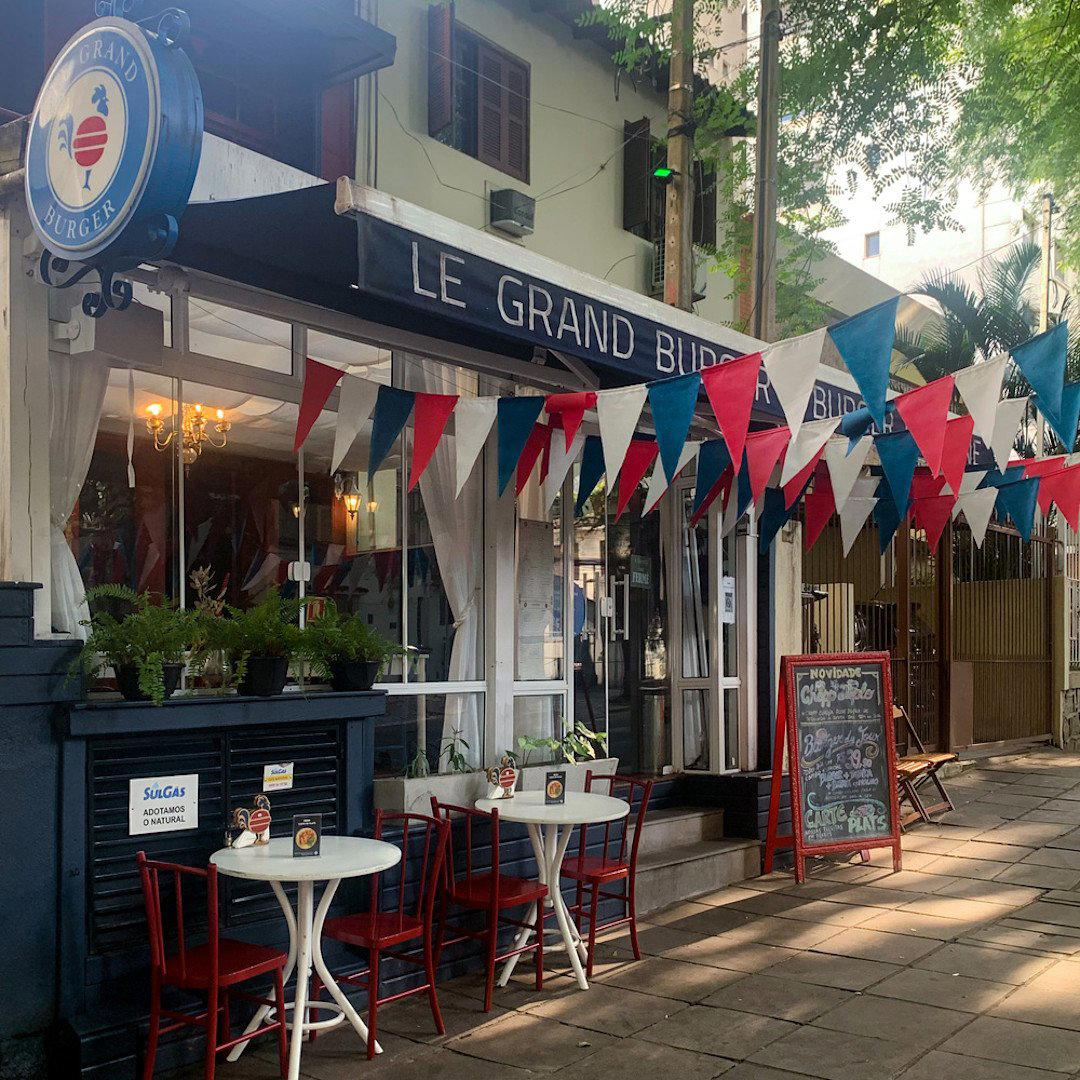
| Le Grand Burger | French-Inspired Gourmet Burgers | $10–20 | Not listed | Moinhos de Vento, French-Inspired Gourmet Burgers |
| CIAO | Traditional Neapolitan Pizzeria | $20–30 | 50 Top Pizza Latin America #47 | Not listed |
| Le Bistrot Gourmet | Contemporary International Bistro | Not listed | Not listed | Boa Vista, Contemporary International Bistro |
Continue exploring
More in Porto Alegre
Restaurants in Porto Alegre
All restaurants in Porto Alegre →
Bars in Porto Alegre
All bars in Porto Alegre →
Details
- Intimate
- Cozy
- Elegant
- Date Night
- Special Occasion
- Historic Building
- Craft Cocktails
- A La Carte
- Craft Cocktails
- Vegetarian Friendly
- Vegan Options
- Gluten Free Options
Current opening hours
- Monday
- 6:30–11 PM
- Tuesday
- 6:30–11 PM
- Wednesday
- 6:30–11 PM
- Thursday
- 6:30–11 PM
- Friday
- 6:30–11:30 PM
- Saturday
- 6:30–11:30 PM
- Sunday
- Closed
Hours can change for holidays and private events. Hours as of .
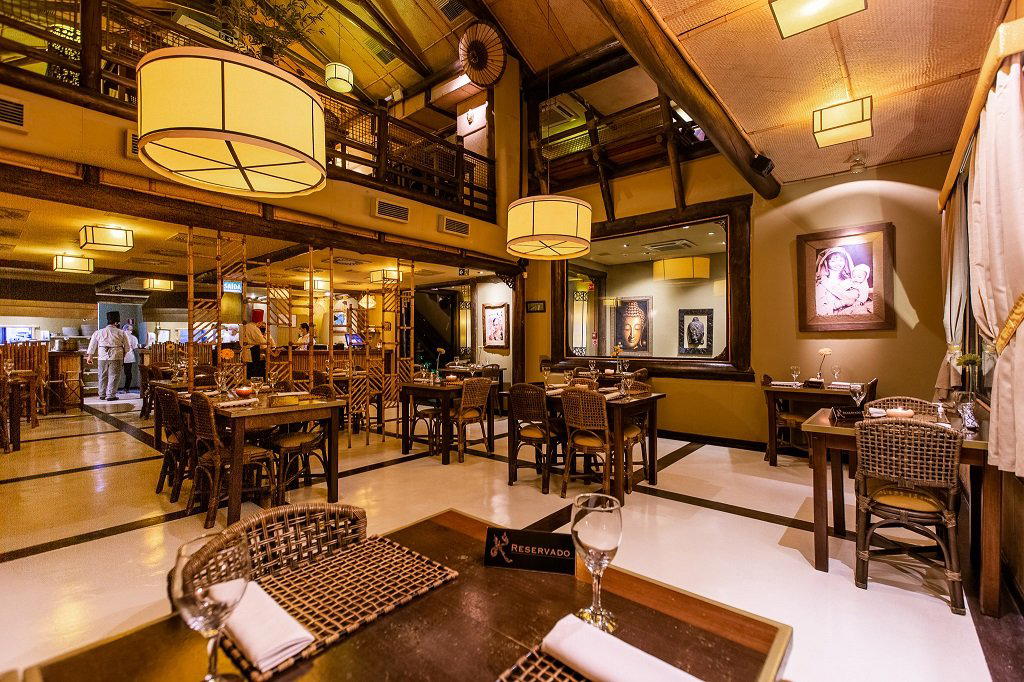
Low-lit dining room with soft lighting creating an intimate atmosphere, equipped with authentic Thai art, tableware, and cultural elements.