KoCh Baukasten sits in Mehrnbach, a small Upper Austrian town where the region's farm-to-table ethic plays out quietly, away from the Michelin circuit's urban concentration. The name itself signals a modular, building-block approach to cooking, placing ingredient provenance at the centre of the format. For travellers tracing Austria's serious rural dining scene, it belongs on the same map as the country's most considered regional tables.
Pearl is the En Primeur Club membership app — saves, bookings, and concierge access live there. Same editors, same standards.
- Address
- Mehrnbach 18, 4941 Mehrnbach, Austria
- Phone
- +4367764082240
- Website
- koch-baukasten.at
- Directions
- Get directions
 Saves & bookings on Pearl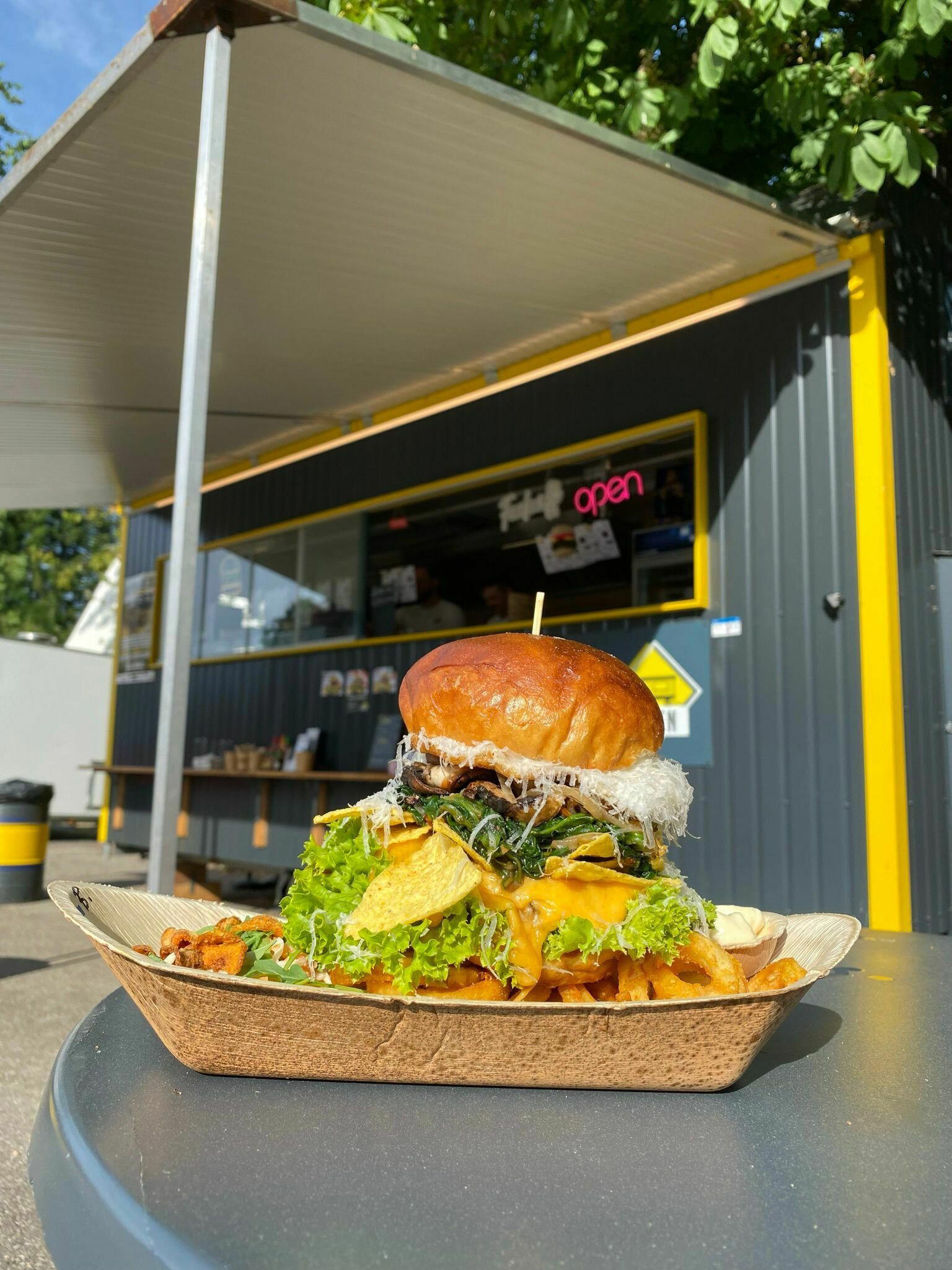
Upper Austria's Quiet Dining Radius
Austria's most decorated restaurants cluster around Vienna, the Salzburg approaches, and Alpine resort corridors. Steirereck im Stadtpark in Vienna and Ikarus in Salzburg operate at the top of that visibility pyramid, drawing international press and allocation-style reservations. But Austria's dining culture has always had a secondary register: smaller, regionally grounded tables in towns that rarely appear in travel features, where the sourcing relationships are tighter precisely because the market is smaller. Mehrnbach, a compact settlement in the Innviertel district of Upper Austria, sits in that secondary register. The Innviertel borders Bavaria and shares its agricultural character — grain fields, dairy farms, river valleys — which shapes what a kitchen here can credibly put on a plate.
KoCh Baukasten occupies an address on the village edge at Mehrnbach 18. The name translates roughly as "cooking building blocks" or "cooking kit," which signals an approach organised around component sourcing and assembly rather than technique-led transformation. In a region where farm proximity is a practical reality rather than a marketing angle, that framing carries weight.
The Ingredient Argument in Austria's Rural Kitchen
Across Austrian gastronomy's serious regional tier, ingredient sourcing has become the organising principle that separates the credible from the decorative. Döllerer in Golling an der Salzach built its reputation partly on Salzach Valley produce and foraged Alpine material. Obauer in Werfen has spent decades establishing direct relationships with regional suppliers. Kräuterreich by Vitus Winkler in Sankt Veit im Pongau centres its identity on herb cultivation and kitchen garden integration. The pattern across these houses is consistent: proximity to supply chains is translated into a menu logic that urban kitchens cannot replicate at the same cost or freshness margin.
The Innviertel's agricultural output supports that model well. The area is one of Upper Austria's more productive farming zones, with a mix of livestock, arable crops, and orchard fruit that gives a regional kitchen material to work with across all seasons. A kitchen operating under a "building blocks" concept in this geography would logically source from that immediate radius, letting the seasonal availability of local produce determine the menu's structure rather than imposing a fixed format onto variable supply.
This stands in contrast to the approach at venues built around a chef's signature register. Houses like Landhaus Bacher in Mautern an der Donau maintain a recognisable stylistic continuity across seasons; the sourcing serves the vision. The building-block model inverts that relationship: the sourcing is the vision, and the cooking follows what the region provides. Neither is superior as a philosophy, but the latter places more pressure on the quality of local supply networks and demands a different kind of guest patience with the menu.
Upper Austria's serious dining outside Linz remains underreported relative to Tyrol, Salzburg, and the Weinviertel. That gap has narrowed as venues like Ois in Neufelden drew attention to the region's capacity for considered cooking beyond metropolitan infrastructure. Mehrnbach's position near Ried im Innkreis, the Innviertel's market town, places it within a short drive of a population centre while retaining the character of a village operation.
The practical implication for visitors is that KoCh Baukasten functions on rural restaurant logic: arrival by car is the realistic option for most guests, and the experience sits outside the touring patterns that connect, say, Gourmetrestaurant Tannenhof in Sankt Anton am Arlberg or Griggeler Stuba in Lech to ski resort infrastructure. Those Alpine venues benefit from a captive high-spend audience concentrated in a small geography. A Mehrnbach table draws from a different visitor logic: guests who plan the meal as a destination in itself, or locals who have incorporated it into a regular rotation.
For context on how Austrian regional dining compares at the furthest end of the ambition scale, Taubenkobel in Schützen am Gebirge in Burgenland represents what a destination rural restaurant looks like when international recognition compounds over time. Atelier Fischer in Sankt Gilgen occupies a smaller, more intimate register near the Wolfgangsee. KoCh Baukasten's scale and village position suggest the latter reference point is the more relevant comparison for format expectations.
Reading the Name as a Menu Signal
The "Baukasten" concept, if applied consistently, produces a certain kind of dining experience: one built on clearly identifiable components rather than multi-step emulsions or elaborate architectural plating. Diners accustomed to the tasting-menu format at Schwarzer Adler in Hall in Tirol or the creative ambition on display at Artis in Graz will find a different register here, one closer to the logic of a well-sourced bistro than a progression-driven tasting menu. That is not a diminishment. Some of Austria's most satisfying regional tables operate exactly in this mode, where a single ingredient sourced correctly and cooked without interference communicates more than a composed dish requiring fifteen components.
The comparison with international reference points reinforces the distinction. Technique-forward counters like Le Bernardin in New York City or progression-driven formats like Atomix in New York City represent one end of the ambition scale. Austria's rural kitchen tradition represents another, and the Baukasten model fits within that tradition by design. For a broader map of where Mehrnbach sits among the country's regional options, see our full Mehrnbach restaurants guide.
Planning a Visit
Mehrnbach is accessible from Ried im Innkreis, roughly 5 kilometres to the southeast, which connects to the A8 motorway running between Salzburg and Passau. Guests travelling from Salzburg face approximately a 70-kilometre drive; from Linz, the route runs around 85 kilometres via the A8 and B141. Direct public transport to the village is limited, making car hire the practical approach for most visitors. Booking directly via the venue's address is the starting point; phone and website details were not available at the time of writing, so an in-person or email enquiry is the recommended first step. Given the village scale and the format implied by the name, advance confirmation of opening days is advisable before making the drive from further afield. Stüva in Ischgl and Restaurant 141 by Joachim Jaud in Mieming operate on seasonal calendars tied to resort rhythms; a Mehrnbach village table follows different patterns, likely more consistent across the year but with its own closure logic that rewards confirmation in advance.
How KoCh Baukasten Mehrnbach compares with similar nearby venues.
| Venue | Cuisine | Price |
|---|---|---|
| Kammer5 | Modern Cuisine | €€€ |
Continue exploring
More in Mehrnbach
Restaurants in Mehrnbach
Browse all →
Bars in Mehrnbach
Browse all →
At a Glance
- Lively
- Trendy
- Rustic
- Casual Hangout
- Local Sourcing
Current opening hours
- Monday
- Closed
- Tuesday
- 11 AM–2 PM, 5–8 PM
- Wednesday
- 11 AM–2 PM, 5–8 PM
- Thursday
- 11 AM–2 PM, 5–8 PM
- Friday
- 11 AM–8 PM
- Saturday
- Closed
- Sunday
- Closed
Hours can change for holidays and private events. Last verified .
Casual outdoor seating under a chestnut tree with a friendly, relaxed street food atmosphere.
Know Before You Go
- Getting there
- Mehrnbach 18, 4941 Mehrnbach, Austria