Kémia occupies a telling address in Paris's 9th arrondissement, where North African culinary traditions meet the precision of French technique. The name itself signals the kitchen's orientation: kémia refers to the small shared plates served before a meal across the Maghreb, a tradition the restaurant reframes through contemporary European methods. Rue Bergère places it at a crossroads between working Paris and the city's increasingly porous approach to Mediterranean influence.
Pearl is the En Primeur Club membership app — saves, bookings, and concierge access live there. Same editors, same standards.
- Address
- 1 Rue Bergère, 75009 Paris, France
- Phone
- +33986171763
- Website
- restaurant-kemia.com
- Directions
- Get directions
 Saves & bookings on Pearl
Where the Maghreb Meets the French Kitchen
Paris has long maintained an ambivalent relationship with its North African inheritance. The city's Algerian, Moroccan, and Tunisian communities have shaped its food culture for decades, yet that influence rarely crossed into the kind of formal, technically ambitious dining that attracts critical attention. That gap has been narrowing. A generation of cooks trained in classical French kitchens has begun applying the precision and sourcing discipline of haute cuisine to ingredients and flavour systems rooted in the Maghreb. Kémia, at 1 Rue Bergère in the 9th arrondissement, sits within that shift.
The venue's name is itself a positioning statement. Kémia denotes the array of small dishes placed before a meal across North Africa, a tradition closer in spirit to Spanish tapas or Italian antipasti than to the structured courses of classical French service. Reframing that tradition through the methods of a French kitchen, where technique is codified and sourcing is treated as an argument, produces something that belongs to a specific and still-forming category: Mediterranean bridge cooking, where the southern shore of the sea arrives on the plate with northern precision applied to it.
The 9th Arrondissement as Context
The address matters. The 9th arrondissement does not carry the gastronomic prestige of the 8th, where Alléno Paris au Pavillon Ledoyen and Le Cinq at the Four Seasons Hôtel George V anchor a concentration of formal haute cuisine. Nor does it belong to the 7th, where Arpège has spent decades refining its vegetable-forward argument. The 9th sits in a different register: historically a neighbourhood of theatres, covered passages, and immigrant-run businesses, it has developed a dining scene defined less by institutional prestige and more by independent operators working with specific culinary commitments. Rue Bergère in particular sits near the Grands Boulevards, an area that has absorbed successive waves of culinary influence without becoming a single coherent scene.
That plurality is an advantage for a restaurant working between two culinary traditions. There is no dominant local register to conform to or resist. The 9th allows a restaurant like Kémia to be legible without being categorised, which is exactly the condition that bridge-cuisine restaurants require to find their audience.
Local Ingredients, Imported Methods: The Central Argument
The most productive tension in this category of cooking is between the ingredient logic of North African cuisine and the technique logic of the French kitchen. North African cooking has always been ingredient-driven in a specific way: spice combinations, preserved elements (harissa, preserved lemon, ras el hanout), slow-cooked proteins, and grain-based dishes like couscous carry the weight of the meal. French haute cuisine reverses the emphasis, making technique the primary expression and sourcing the supporting argument. When these two systems meet in a serious kitchen, the result is rarely fusion in the pejorative sense. It is, more precisely, a conversation about what precision can do to an already complex flavour tradition.
Across France, the restaurants that have navigated this intersection most credibly treat North African ingredients as primary rather than decorative. AM par Alexandre Mazzia in Marseille offers a reference point: a three-Michelin-starred kitchen that draws on African and Mediterranean flavour systems and applies them through a technically demanding, highly personal format. The approach there is one model. A Paris restaurant working from similar ingredients but within a more accessible format and neighbourhood context represents a different point on the same arc.
The broader French dining scene provides useful comparison coordinates. Kei, which brought Japanese precision to French classical cuisine and earned three Michelin stars doing so, demonstrates how the Paris critical establishment responds when technique is unimpeachable and the cultural source material is treated with genuine depth. L'Ambroisie on the Place des Vosges represents the opposite pole: a house committed entirely to classical French continuity, where the peer comparison is internal to the tradition rather than across cultures. Kémia operates in neither of those modes but the two poles usefully frame the space it occupies.
France's Wider Template for Ingredient-Led Ambition
French dining at the highest level has repeatedly demonstrated that geographic specificity and technical ambition are not in conflict. Bras in Laguiole built a three-star reputation on the plants and landscapes of the Aubrac plateau. Flocons de Sel in Megève made Alpine ingredients the organising principle of a serious tasting format. Auberge de l'Ill in Illhaeusern has sustained Alsatian regional identity over generations without retreating into nostalgia. What those restaurants share is a willingness to treat their ingredient source as intellectually serious, not merely picturesque.
A restaurant working with Maghrebi ingredients in Paris is making a comparable claim: that the spice markets of Marrakech, the preserved citrus of Fès, and the lamb traditions of the Algerian high plains deserve the same careful attention as the truffles of Périgord or the butter of Normandy. It is a claim the Paris dining public is increasingly equipped to assess, as travel, immigration, and a generational shift in what counts as culinary literacy have expanded the reference frame for many diners in the city.
Internationally, the template has been proven. Mirazur in Menton, currently ranked among the world's leading restaurants, works at the French-Italian-Mediterranean intersection with a similar premise: that a broader cultural geography, applied with technical discipline, produces something more interesting than any single tradition could alone. Atomix in New York applies Korean culinary logic through a fine-dining format with equivalent seriousness. The category is proven; the question for any individual restaurant is whether execution matches intention.
Planning a Visit
Kémia is located at 1 Rue Bergère in the 9th arrondissement, within walking distance of the Grands Boulevards metro station. The 9th arrondissement's dining scene is dense enough that an evening in the neighbourhood can be planned around multiple stops, particularly given the area's concentration of wine bars and independent bistros within a few blocks of Rue Bergère. For a wider view of where Kémia sits within the city's broader dining picture, our full Paris restaurants guide provides context across price tiers and cuisine types.
How Kémia Paris compares with similar nearby venues.
| Venue | Cuisine | Price |
|---|---|---|
| Brigade du Tigre | Asian | €€ |
| Faubourg Daimant | Vegan | €€ |
| Richer | Modern Cuisine | €€ |
| Quelque Part | Creative | €€€ |
At a Glance
- Lively
- Cozy
- Trendy
- Group Dining
- Date Night
- Casual Hangout
- Open Kitchen
- Extensive Wine List
- Local Sourcing
Current opening hours
- Monday
- 12–2 PM, 7:30–10 PM
- Tuesday
- 12–2 PM, 7:30–10 PM
- Wednesday
- 12–2 PM, 7:30–10 PM
- Thursday
- 12–2 PM, 7:30–10 PM
- Friday
- 12–2 PM, 7:30–10 PM
- Saturday
- Closed
- Sunday
- Closed
Hours can change for holidays and private events. Last verified .
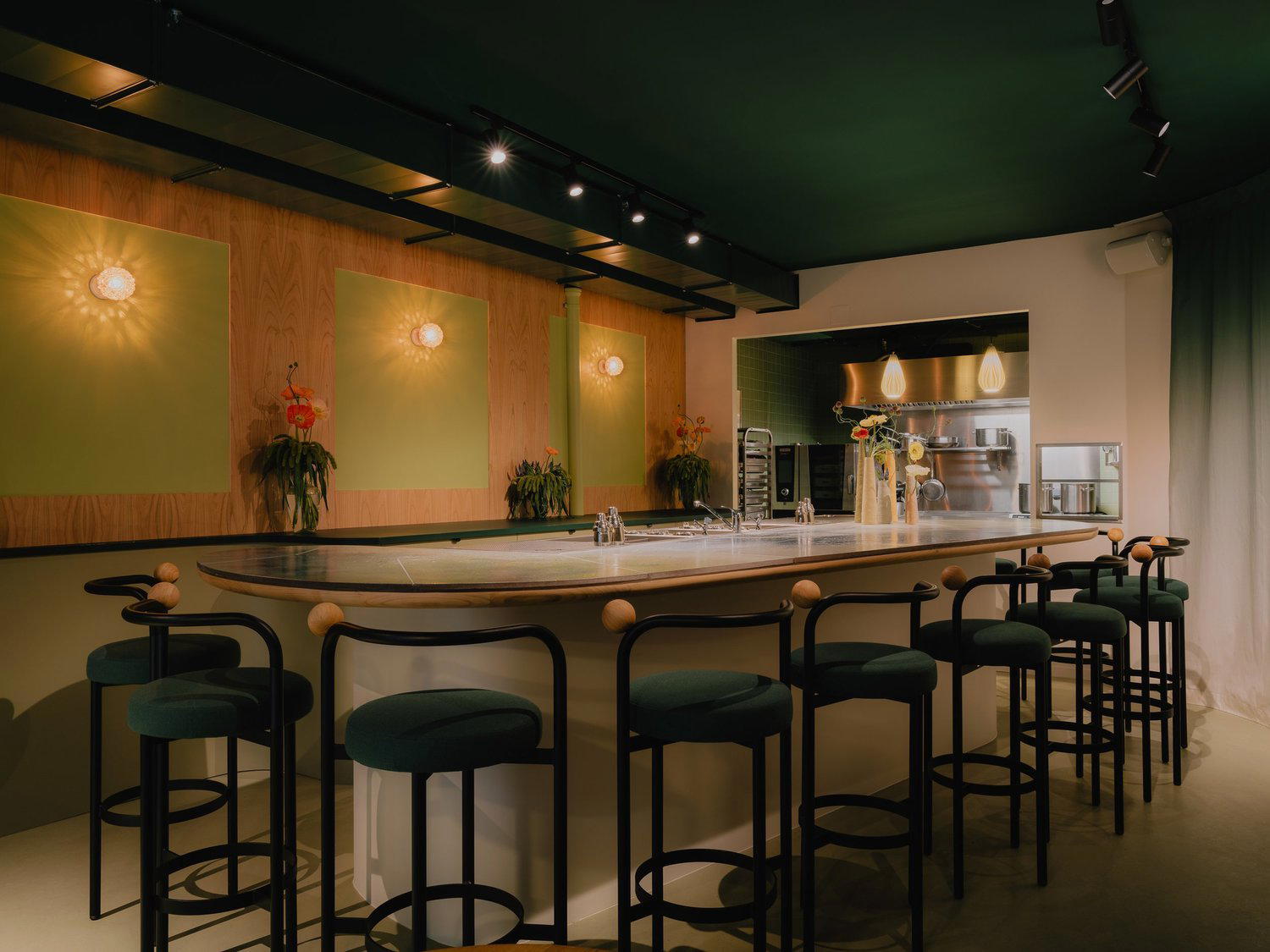
Multicolored tile open kitchen creating a warm, cheerful, and lively atmosphere.
Know Before You Go
- Getting there
- 1 Rue Bergère, 75009 Paris, France