
Tabelog 100 #42
Our verdict
Kirin belongs to Sapporo’s compact, counter-led dumpling culture rather than the city’s more formal reservation dining tier. Its Tabelog 100 Dumplings 2024 selection, small seating footprint, and low dinner spend place it in the useful category of serious casual restaurants where menu focus matters more than ceremony.

Pearl is the En Primeur Club membership app, where members save venues, book tables and use the concierge.
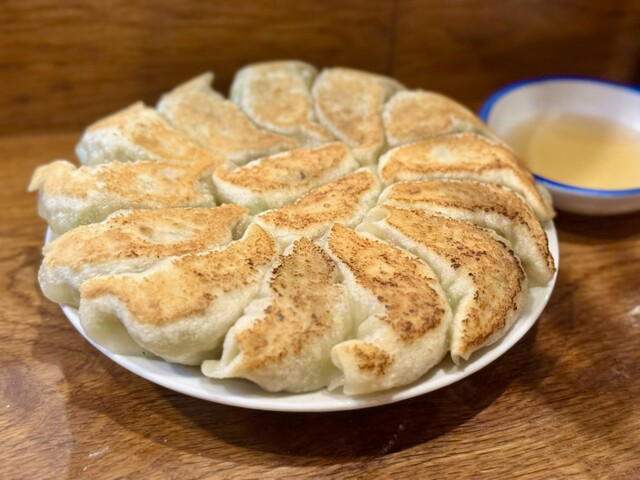
Sapporo has the feel of a city where compact meals can carry serious intent: quick decisions, focused appetites, and restaurants built for eating rather than lingering over design. In that setting, dumplings make sense. They are precise, social, inexpensive by the standards of destination dining, and unforgiving when handled carelessly. Kirin fits that grammar: a focused dumpling and dim sum address where the meal is shaped by repetition, heat, and a short-format appetite rather than a long tasting-menu arc.
Sapporo is often read from the outside through seafood, ramen, soup curry, and winter appetite. Dumplings occupy a less theatrical place in the city’s dining culture, but they are a useful test of a restaurant’s discipline. The category rewards narrow specialization: wrappers, filling, pan control, pacing, and the rhythm of small plates. A 2024 selection in Tabelog’s Dumplings 100 puts Kirin inside a national conversation about gyoza and related dim sum formats, not merely a local snack stop. That distinction matters because the dumpling field in Japan is crowded, price-sensitive, and heavily dependent on regulars.
Dumplings as a short-menu discipline, not a side order
The menu architecture here is the story. Dumpling houses at this level rarely need breadth to prove seriousness; the signal is how tightly the kitchen organizes a meal around a central form. Categories listed for Kirin are dumpling, dim sum, and yum cha, which places it in a narrower lane than Sapporo restaurants built around other specialist formats. The format suits diners who want a focused evening with clear priorities rather than a table covered by unrelated comfort dishes.
That concentration also separates this kind of restaurant from the city’s more ceremonial destinations. Menme and Sushi Natsume Honten answer different dining moods, with expectations shaped by their own categories and formats. Kirin belongs to another Sapporo tier: casual, category-specific, and more immediate. Compared with Chinese Momiji, the distinction is not only price but category identity. The useful question is not whether one is grander, but whether the evening calls for dumpling precision or a broader Chinese meal.
There is a wider Sapporo pattern here. The city supports focused specialists at many levels, from spice-driven counters to curry addresses and other narrow-format dining rooms. In that context, Kirin reads as part of a citywide habit: deep repetition inside a narrow category, with excellence expressed through consistency rather than scale.
The format favors direct ordering and quick judgement
The dining format sharpens the experience. Kirin is best read as a focused casual restaurant rather than a sprawling destination room, and that changes how to approach the meal. Compact specialist venues do not forgive vague menus or slow sequencing; they depend on kitchen rhythm, clear ordering, and diners who understand what the place is for. The format also suits the social range dumplings handle well: a single diner can eat with purpose, while a small group can build a meal by ordering across the category.
The restaurant’s recognition is especially useful because casual specialists survive on repeat demand rather than celebratory traffic alone. A Tabelog score of 3.66 in this category is another signal to read carefully. Dumpling shops do not carry the same prestige machinery as Michelin tasting rooms, so recognition tends to come from concentrated user attention and category lists rather than international awards circuits. Kirin’s 2024 Tabelog Dumplings 100 selection is therefore central to how the restaurant should be understood.
Practical friction should be checked before committing to the meal. For a compact, popular specialist, details such as booking expectations, payment methods, and daily operating conditions can shape the experience as much as the food.
Where it fits in a Sapporo eating plan
Kirin is strongest as a precise casual stop in a city itinerary that might otherwise lean too heavily on ramen, seafood, and soup curry. The restaurant’s role is not to replace those Sapporo signatures, but to add another register: dumplings as a craft category with national recognition and local utility. For travelers mapping several meals, it pairs well with a wider scan of Our full Sapporo restaurants guide, especially when balancing specialist counters with broader dining rooms.
The surrounding decision tree is direct without being simplistic. Future Curry Koris and Kiraito answer different cravings. Other Sapporo dining points toward different sides of the city’s food culture, where regional sourcing, specialist counters, and casual formats pull attention in separate directions. Kirin is the pick when the evening calls for a narrow, award-noted dumpling format, not a long dinner built around courses or ceremony.
For a fuller city plan, the meal can sit beside Sapporo’s broader hospitality map: Our full Sapporo hotels guide for where to stay, Our full Sapporo bars guide for late drinking, Our full Sapporo wineries guide for regional wine context, and Our full Sapporo experiences guide for non-restaurant planning. Readers comparing Japanese casual formats beyond Hokkaido can also look more broadly at how tightly defined dining ideas work in other cities. The useful lesson is the same: compact formats travel well when the proposition is clear, the category is narrow, and the execution is consistent.
Frequently asked questions
How much does it cost to eat at Kirin?
Pricing at Kirin is listed as JPY 2,000 - JPY 2,999 View spending breakdown.
Where exactly is Kirin?
Sapporo.
When is Kirin open?
Published hours are not provided in the available record. Check the venue's official channels for the latest details.
What's the signature at Kirin?
Kirin does not list a named signature dish in the public record. The clearest anchor is its Tabelog 100 Dumplings 2024 selection, which points to a dumpling-focused menu in Sapporo at JPY 2,000–JPY 2,999. Check the venue's official channels for the latest details.
How does Kirin handle allergies?
Those details are not published. Kirin can be reached at +81-11-261-8811, and it operates in Sapporo. Check the venue's official channels for the latest details.
Similar Picks
Comparable venues for orientation by cuisine and category.
| Venue | Cuisine | Price | Awards | Notes |
|---|---|---|---|---|
| KirinThis venue (the venue you are viewing) | Dumplings / Taiwanese-Chinese Izakaya | $20–30 | Tabelog 100 #42 | Not listed |
| Chinese Momiji | Casual Chinese Bistro in Tanukikoji Market | $30–50 | Tabelog 100 #42 | JPY 3,000 - JPY 3,999 |
| Menme | Hokkaido Robatayaki Izakaya | $50–100 | Tabelog 100 #43 | JPY 8,000 - JPY 9,999 View spending breakdown |
| Kiraito | Classic Sapporo ramen shop | $10–20 | Tabelog 100 #66 | JPY 999 - JPY 999 |
| Future Curry Koris | Indian-style curry house | $10–20 | Tabelog 100 #13 | JPY 1,000 - JPY 1,999 JPY 1,000 - JPY 1,999 View spending breakdown |
| Sushi Natsume Honten | Traditional Sushi Omakase | $100–150 | Tabelog 100 #14 | JPY 20,000 - JPY 29,999 |
Recognition history
Dated appearances from independent guides and award organizations, with the underlying list record or original source where available.
Tabelog 100 #42 · No. 42
Tabelog · Tabelog 100 - Dumplings - 2024
Continue exploring
More in Sapporo
Restaurants in Sapporo
All restaurants in Sapporo →
Bars in Sapporo
All bars in Sapporo →




Details
- Lively
- Classic
- Cozy
- Casual Hangout
- Late Night
- Solo
- Group Dining
- Standalone
- Street Scene
- A La Carte
Current opening hours
- Monday
- 5–11 PM
- Tuesday
- 5–11 PM
- Wednesday
- 5–11 PM
- Thursday
- 5–11 PM
- Friday
- 5–11 PM
- Saturday
- 5–11 PM
- Sunday
- Closed
Hours can change for holidays and private events. Hours as of .
Compact and casual with a bustling, standing-room-familiar market feel; reviews and the venue profile suggest a lively, smoky izakaya atmosphere.