
Tabelog 100 #13
Our verdict
Future Curry Koris places Sapporo’s curry culture inside a broader Asian and ethnic dining frame rather than the usual soup-curry shorthand. Recognition in Tabelog’s Asian cuisine and ethnic cuisine EAST 100 selection for 2024 gives it a clear reputation signal, while its scale and everyday format keep the experience closer to a neighbourhood curry room than a formal destination restaurant.

Pearl is the En Primeur Club membership app, where members save venues, book tables and use the concierge.
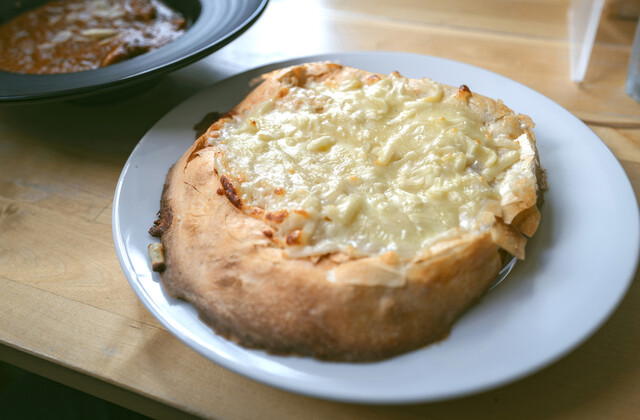
Approaching Sapporo through its everyday dining scene feels less like one dining district than overlapping habits: quick lunches, curry specialists, ramen counters, and late-evening rooms for regulars rather than ceremony. Future Curry Koris fits that practical urban rhythm. The point is not spectacle, but how a modest curry room can carry enough critical weight to sit inside a national recognition system often crowded by larger cities and louder formats.
Sapporo’s curry reputation is often reduced to simple shorthand, which can flatten the city’s range. Hokkaido’s capital has several curry languages at once: spice-forward Indian curry, Japanese curry-rice culture, and hybrid Asian plates moving between them. Future Curry Koris is better read as part of the Asian and ethnic curry conversation than as a simple local-curry stop. Its Tabelog Hyakumeiten recognition in 2024 places it in a wider Japan dining frame, not only a Sapporo one.
A small curry room in Sapporo's Asian-and-ethnic awards tier
Awards matter differently here than in white-tablecloth dining. A Michelin star signals one kind of ambition; a Tabelog Hyakumeiten selection signals something more democratic and demanding in Japan’s food culture: repeat appeal, category credibility, and consistency among thousands of everyday specialists. Future Curry Koris is listed with Tabelog Hyakumeiten recognition in 2024, with a Tabelog score of 3.62 and categories given as Asian, Ethnic, and Indian curry. That signal places it within a broader Asian-ethnic grouping rather than only a local curry conversation.
That distinction helps travellers read Sapporo beyond seafood and ramen. A meal here belongs to the city’s casual specialist culture, not its luxury tier. Alongside Sapporo dining such as Menme or Sushi Natsume Honten, the appeal is category precision rather than ceremony. Alongside other casual specialists including SOUL STORE, the interest is how curry carries serious reputation without becoming formal. Kirin and Chinese Momiji occupy different dining lanes, but define the same point: Sapporo’s strongest everyday restaurants often compete through focus, not scale.
For food-led itineraries, this is where Sapporo becomes more interesting: not a checklist of famous dishes, but a matrix of specialist rooms. Other Sapporo dining rooms show different versions of spice, noodle culture, and dedicated curry cooking. Additional unnamed local specialists add context for Indian-curry influence in the city, while broader Hokkaido dining reminds travellers that the region’s serious food culture extends beyond central counters and curry shops.
Why the reputation signal is useful for travellers
In Japan, casual dining can be hard for visitors to assess from outside. The room may be small, the format plain, and the cooking too familiar to photograph as luxury. Tabelog’s category lists help by placing everyday specialists into a comparative structure. Future Curry Koris’ 2024 Hyakumeiten recognition gives travellers a defensible reason to prioritize it, especially if the trip already includes seafood, ramen, and izakaya meals. It answers a different question: where does Sapporo’s spice cooking register beyond local habit?
The restaurant’s scale reinforces that reading. The format reads as a focused curry stop rather than a grand dining-room model. Expect neither a long tasting-menu evening nor a chef-biography performance, but a curry-focused meal recognized for category strength. The better comparison is not expensive sushi counters, but specialist rooms where a narrow format earns repeat attention. That is why the award signal has weight: it confirms the category itself is taken seriously.
There is a broader Sapporo point. The city’s dining identity is built on cold-weather appetite, agricultural proximity, and urban density, but its better casual rooms are rarely just comfort food. They refine a single proposition until locals understand it first and travellers later. That pattern appears across ramen, curry, yakiniku, and izakaya cooking. Future Curry Koris fits because it is specific enough to resist generic “Japanese curry” expectations and accessible enough for a day of eating around Sapporo.
For a broader map, Our full Sapporo restaurants guide is the right starting point, with adjacent planning in Our full Sapporo hotels guide, Our full Sapporo bars guide, Our full Sapporo wineries guide, and Our full Sapporo experiences guide. Travellers building a Japan-wide casual-dining list can compare how smaller specialist formats read in other cities, from unnamed specialist restaurants in Kamakura and Tokyo to casual rooms in Osaka, Kumamoto, Kawasaki, and Kyoto. For a trans-Pacific contrast in focused Japanese formats, unnamed Japanese-format venues overseas show how narrow concepts change outside their domestic dining context.
The editorial read: choose it for focus, not ceremony
The strongest reason to place Future Curry Koris on a Sapporo itinerary is not rarity for its own sake. It is the combination of category recognition, compact format, and a cuisine type that expands the city beyond familiar export images. The award signal gives the meal a reputation anchor; the setting keeps it grounded in the everyday. That tension is the appeal.
Travellers wanting polished service theatre, luxury wine pacing, or a long-form dining narrative should spend elsewhere. Those who read cities through specialist rooms will find the stronger signal here: Sapporo’s curry culture is not a side note to ramen and seafood. It has enough depth to produce nationally visible names in categories where local regulars, price discipline, and repeatable cooking matter. Future Curry Koris is valuable because it makes that argument quietly, without requiring the meal to behave like a destination restaurant.
Frequently asked questions
Where is Future Curry Koris in Sapporo?
Future Curry Koris is located in Sapporo.
How much does it cost to eat at Future Curry Koris?
Pricing at Future Curry Koris is listed as JPY 1,000 - JPY 1,999 JPY 1,000 - JPY 1,999 View spending breakdown.
What days is Future Curry Koris closed?
Specific closing-day details for Future Curry Koris are not provided in the available venue data. Check directly with the restaurant before visiting.
What is Future Curry Koris known for?
Future Curry Koris is known for its Tabelog Hyakumeiten recognition in 2024. In Sapporo, it is listed in the Asian, Ethnic, and Indian curry categories.
Is Future Curry Koris allergy-friendly?
The available venue details do not publish a formal allergy policy. For ingredient questions, call +81-11-252-3333 before booking and confirm specifics for the dish you plan to order.
A Pricing-First Comparison
Comparable venues in the metro at similar price points.
| Venue | Cuisine | Price | Awards | Notes |
|---|---|---|---|---|
| Future Curry KorisThis venue (the venue you are viewing) | Indian-style curry house | $10–20 | Tabelog 100 #13 | Not listed |
| Parfarteria miL | Nighttime Parfait Specialty | Not listed | Not listed | Tanukikoji, Nighttime Parfait Specialty |
| クネル | French Bistro with Hokkaido Ingredients | $50–100 | Not listed | Chūō, French Bistro with Hokkaido Ingredients |
| Clock | Japanese Curry | Not listed | Tabelog 100 #77 | Chūō, Japanese Curry |
| Indian Restaurant Ram | Indian & Nepalese Curry House | $10–20 | Tabelog 100 #5 | Kita, Indian & Nepalese Curry House |
| North Continent Machi No Naka | Hokkaido-sourced Hamburg Steak & Western Grill | $20–30 | Tabelog 100 #63 | Chūō, Hokkaido-sourced Hamburg Steak & Western Grill |
Recognition history
Dated appearances from independent guides and award organizations, with the underlying list record or original source where available.
Tabelog 100 #13 · No. 13
Tabelog · Tabelog 100 - Asian cuisine / Ethnic cuisine - EAST - 2024
Continue exploring
More in Sapporo
Restaurants in Sapporo
All restaurants in Sapporo →
Bars in Sapporo
All bars in Sapporo →



Details
- Cozy
- Casual Hangout
- Group Dining
- Solo
- After Work
- Standalone
- A La Carte
- Counter Dining
- Beer
- Wine
- Spirits
Current opening hours
- Monday
- 11:30 AM–2:45 PM, 5–9 PM
- Tuesday
- Closed
- Wednesday
- 11:30 AM–2:45 PM, 5–9 PM
- Thursday
- 11:30 AM–2:45 PM, 5–9 PM
- Friday
- 11:30 AM–2:45 PM, 5–9 PM
- Saturday
- 11:30 AM–2:45 PM, 5–9 PM
- Sunday
- 11:30 AM–2:45 PM, 5–9 PM
Hours can change for holidays and private events. Hours as of .
Casual and compact with around 25 seats including counter and small tables, creating a relaxed neighborhood curry house feel rather than a formal Indian restaurant.