
Tabelog 100 #42
Our verdict
Chinese Momiji gives Sapporo’s Chinese dining scene a compact, award-recognised counterpoint to the city’s better-known seafood and ramen circuits. Its Tabelog 100 Chinese EAST selections in 2023, 2024, and 2026 place it in a serious regional conversation, while the central Chuo Ward setting keeps it tied to the city’s after-dark eating culture rather than destination dining theatre.

Pearl is the En Primeur Club membership app, where members save venues, book tables and use the concierge.
The menu
What to order
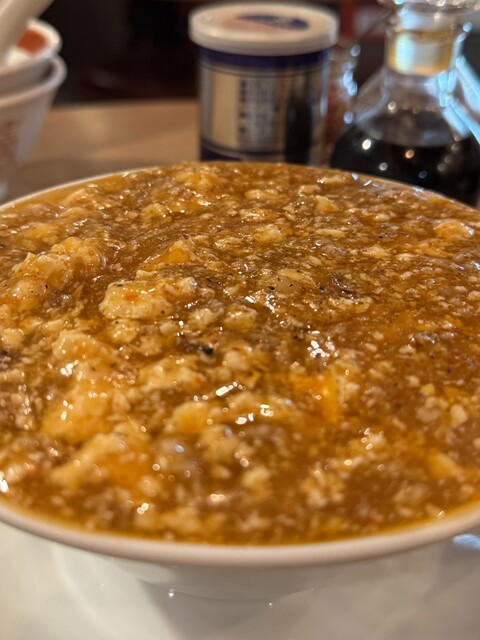
- Mapo tofu
- Boiled water gyoza with thick skin
Approaching the Tanukikoji side of central Sapporo at night, the city’s appetite feels less formal than its winter reputation suggests. Steam, grill smoke, small signs, and late foot traffic make this part of Chuo Ward feel built for short distances and decisive meals. Chinese Momiji fits that rhythm: a Chinese restaurant inside the city’s dense evening circuit, where the question is not spectacle but whether the kitchen gives structure and clarity to a cuisine often flattened abroad into takeout categories.
Sapporo is usually introduced through seafood, miso ramen, soup curry, and dairy-rich desserts, but its stronger dining map is wider. Chinese cooking in Hokkaido differs from its Tokyo counterpart. It often sits between neighbourhood utility and serious technique, using the island’s cold-climate produce, meat, and drinking culture as context rather than decoration. That is why an award-recognised Chinese address in Sapporo matters: it widens the city’s conversation beyond crab counters and ramen queues.
Hokkaido produce gives Chinese cooking a sharper local frame
The ingredient question is central because Sapporo sits inside one of Japan’s major food-producing regions. Hokkaido’s reputation rests on dairy, corn, potatoes, wheat, seafood, lamb, and cold-water fish, but for Chinese cooking the point is not a local-products checklist. It is how a regional larder changes expectations around heat, oil, texture, and portioning. Northern Japan’s winter climate favours cooking that carries warmth and depth without heaviness; disciplined Chinese technique suits that task.
Chinese Momiji’s recognition on Tabelog’s Chinese EAST 100 list in 2023, 2024, and 2026 gives the restaurant an external signal that matters in Japan’s user-review dining culture. Tabelog scores are not Michelin stars, but a Hyakumeiten selection carries weight because it separates category specialists from the broader mass of restaurants. A 3.65 Tabelog score places the restaurant in a range where local diners are paying attention, not merely rewarding novelty.
The stronger comparison is not with luxury Chinese dining in hotel towers, but with Sapporo’s small-format specialist restaurants. Menme sits in a higher dinner bracket, while Kirin and Future Curry Koris occupy lower or casual-price territory; Shinohei operates at a more expensive tier. In that spread, Chinese Momiji reads as an accessible serious table, not a ceremonial one. The value proposition is not cheap Chinese cuisine, but recognised cooking appearing in the same central after-work pattern as noodles, curry, and izakaya meals.
For travellers building a Sapporo dining itinerary, that distinction matters. A meal here makes more sense against the city’s broader specialist circuit: the spice-and-noodle pull of 175°DENO Tantanmen Sapporo kitaguchi ten, the curry focus at [Curry Senmon Ten] Maruyama Kyoju., or the Indian curry lineage of Ajanta Indo Curry Ten and Ajanta Sohonke. Chinese cooking becomes part of the same citywide argument: Sapporo is better treated as a specialist-food city, not a checklist of Hokkaido clichés.
Award recognition without the ceremony trap
Japan’s strongest mid-priced restaurants often resist the international luxury template. They may have limited English visibility, no grand room narrative, and little interest in translating themselves into a tourist-facing script. That can be a strength. Chinese Momiji’s public profile is built around category recognition rather than chef celebrity, keeping attention on the cooking tradition and local dining pattern around it.
In many cities, Chinese dining is pushed into banquet luxury or treated as casual background food. Sapporo’s better small restaurants complicate that split: serious without signalling expense through ceremony, and reliant on repeat local custom rather than constant reinvention. The Tabelog 100 marker is useful because it identifies a restaurant working inside a known category with enough consistency to be selected across multiple years.
Travellers with only one or two meals in Sapporo may choose seafood or ramen first, understandably. Anyone staying longer should add at least one Chinese table, because it shows how the city eats when it is not performing Hokkaido for outsiders. Chinese Momiji is compelling in that slot because its recognition is specific to Chinese cuisine rather than general popularity.
The surrounding itinerary can stay compact. Our full Sapporo restaurants guide maps the wider dining field, while Our full Sapporo hotels guide, Our full Sapporo bars guide, Our full Sapporo wineries guide, and Our full Sapporo experiences guide place dinner inside the city rather than treating it as an isolated booking. In Sapporo, stronger evenings usually come from stitching together neighbourhoods, transit, bars, and late food rather than chasing one grand reservation.
How to place it in a Japan dining itinerary
Chinese Momiji works better as a calibration point than as a trophy stop. It asks diners to notice category depth: a Chinese restaurant in Hokkaido recognised alongside eastern Japan peers, priced below several serious-dining brackets, and located inside a central night-eating district. That combination is more useful than another generic quality claim.
Across Japan, the same principle applies. Travellers moving between cities should compare specialisation rather than cuisine labels alone. The decision is beef in Kamakura at -Grilled beef Sukiyaki- KAMAKURA TANUKIAN 鎌倉 たぬき庵 in Kamakura, charcoal and tuna in Tokyo at. 鮪と炭火焼き うお炭 秋葉原店 in Tokyo, café culture in Osaka at.cafe in Osaka, a contemporary Kumamoto table at.know in Kumamoto, Vietnamese cooking in Kawasaki at (Shoku) Vietnam in Kawasaki, or a Kyoto meal at [ki:] in Kyoto. Outside Japan, the same curation logic can point toward Jōdo Saké Bar in Los Angeles or Onigiri Time in Pasadena, where format and context matter more than broad cuisine tags.
The case for Chinese Momiji is precise: Sapporo’s Chinese scene has enough depth to reward attention, and this address has the award trail to justify a place in a tightly edited itinerary. It is not the city’s default story, which is exactly why it gives a sharper reading of how Sapporo eats after dark.
For a different Hokkaido rhythm outside the city’s Chinese and curry circuits, Aigues Vives points toward the region’s bakery and coastal-drive culture, a reminder that Sapporo dining gains meaning as part of the larger Hokkaido table.
Frequently asked questions
How do I find Chinese Momiji?
Chinese Momiji is located in Sapporo.
Is Chinese Momiji more mid-range or high-end?
Pricing at Chinese Momiji is listed as JPY 3,000 - JPY 3,999.
What days is Chinese Momiji closed?
Hours at Chinese Momiji: Mon: 5–10:30 PM; Tue: 5–10:30 PM; Wed: 5–10:30 PM; Thu: 5–10:30 PM; Fri: 5–10:30 PM; Sat: 5–10:30 PM; Sun: 5–10:30 PM.
What makes Chinese Momiji worth seeking out?
Its Tabelog 100 selection for Chinese cuisine in the EAST list, plus a Sapporo address in Tanukikoji, gives it clear local weight. The JPY 3,000–3,999 price range keeps it in reach for a dinner stop, while the Monday-to-Saturday 5 PM to midnight service makes it useful for late meals.
Can Chinese Momiji adjust for dietary needs?
The practical way to handle dietary needs is to ask when making a reservation, since reservations are available and the listed phone number is 011-281-5335. Its operating details, including dinner service from 5 PM to midnight Monday through Saturday, make advance communication the sensible route.
Comparable Spots, Quickly
Nearby venues at a similar price tier for orientation.
| Venue | Cuisine | Price | Awards | Notes |
|---|---|---|---|---|
| Chinese MomijiThis venue (the venue you are viewing) | Casual Chinese Bistro in Tanukikoji Market | $30–50 | Tabelog 100 #42 | Not listed |
| Local Chinese Food Shifan | Spicy Chinese (Sapporo Susukino) | $30–50 | Tabelog 100 #98 | Chūō |
| Keyaki (けやき) | Sapporo miso ramen shop | $10–20 | Tabelog 100 #85 | Susukino |
| Yakiniku Horumon Fudo. | Yakiniku, horumon & jingisukan tavern | $30–50 | Tabelog 100 #41 | Chūō |
| Tenjiku Sapporo kiyota honten | South Indian Soup Curry | $10–20 | Tabelog 100 #62 | Kiyota |
| The Bar Nano Femto | Cocktail Bar | $20–30 | Tabelog 100 #26 | Chūō |
Recognition history
Dated appearances from independent guides and award organizations, with the underlying list record or original source where available.
Tabelog 100 #42 · No. 42
Tabelog · Tabelog 100 - Chinese cuisine - EAST - 2026
Continue exploring
More in Sapporo
Restaurants in Sapporo
All restaurants in Sapporo →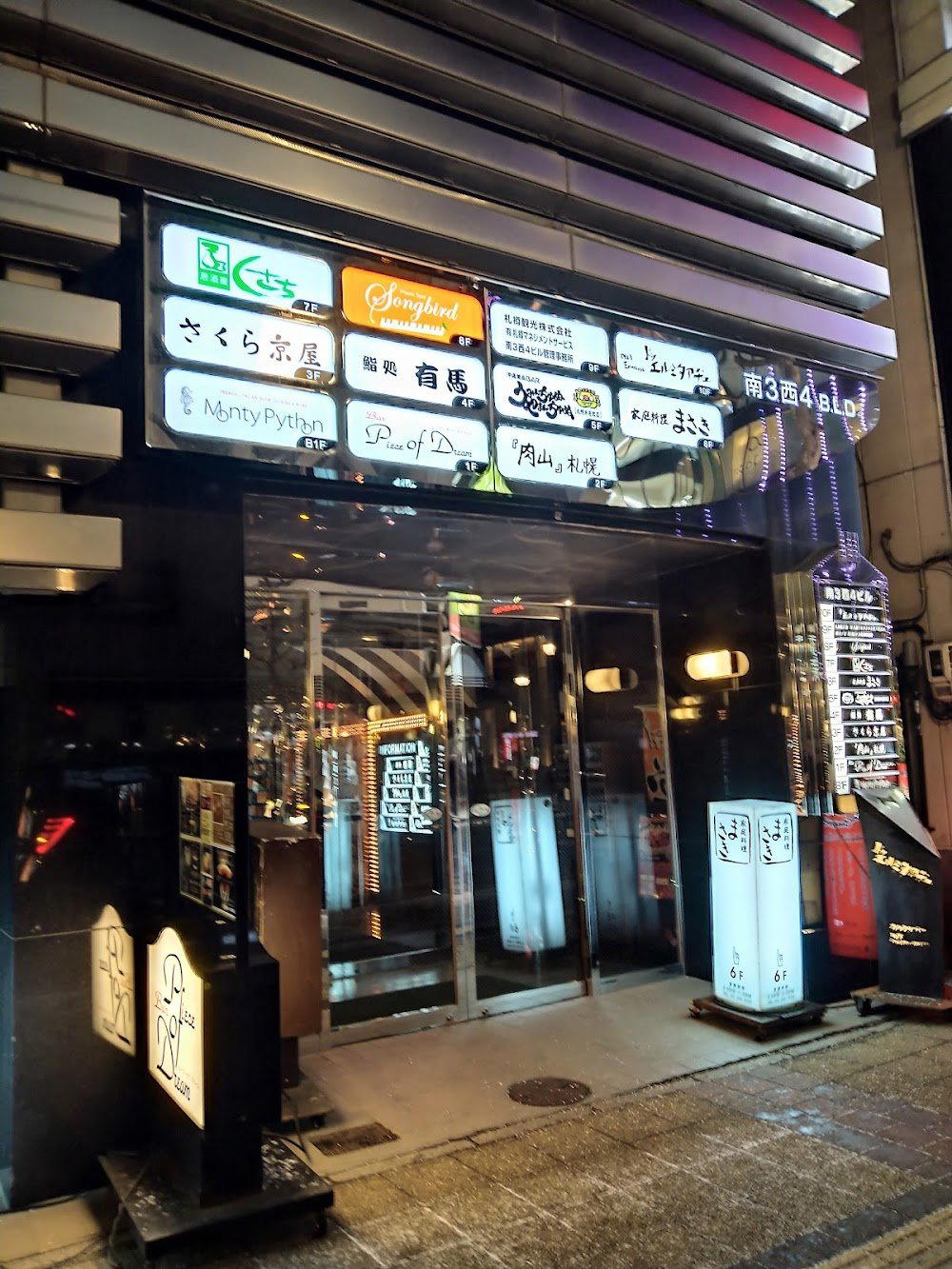
Bars in Sapporo
All bars in Sapporo →



Details
- Lively
- Intimate
- After Work
- Group Dining
- Casual Hangout
- Late Night
- Celebration
- Solo
- Standalone
- A La Carte
- Small Plates
Current opening hours
- Monday
- 5–10:30 PM
- Tuesday
- 5–10:30 PM
- Wednesday
- 5–10:30 PM
- Thursday
- 5–10:30 PM
- Friday
- 5–10:30 PM
- Saturday
- 5–10:30 PM
- Sunday
- 5–10:30 PM
Hours can change for holidays and private events. Hours as of .
A small, adults-oriented hidden Chinese restaurant in Tanukikoji Market with a lively yet intimate atmosphere; interior photos and reviews suggest a cozy, casual space suited to evening gatherings and birthday parties rather than family dining.