
Kinari Pizza gives Nara a compact, lunch-focused pizza ritual: short hours, no reservations, 30 seats, and dough-led scarcity that makes timing matter. Its 2025 selection for Tabelog 100 - Pizza places it among Japan’s noted pizza addresses, while the JPY 1,000–1,999 range keeps the meal closer to everyday Naramachi dining than destination tasting-menu formality.
Pearl is the En Primeur Club membership app — saves, bookings, and concierge access live there. Same editors, same standards.
- Address
- 5 Nishiterabayashicho, Nara, 630-8372, Japan
- Phone
- +81 90-9620-8059
- Website
- instagram.com
 Saves & bookings on Pearl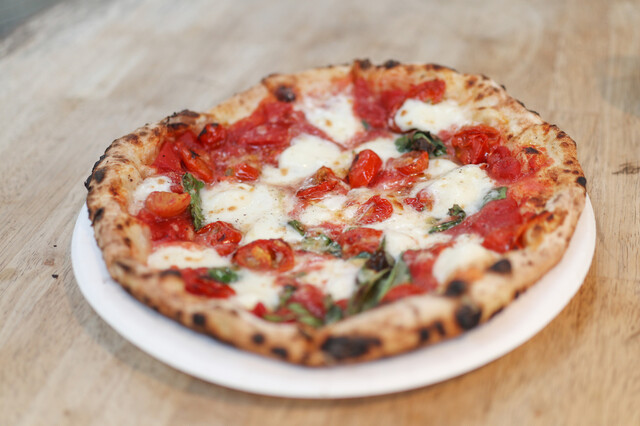
Approaching Nishiterabayashicho, the rhythm is Nara rather than Naples: temple-town lanes, modest shopfronts, and a lunch crowd that moves early because the city’s better casual counters often run on supply rather than ceremony. Pizza in Japan has split into two serious registers: metropolitan, reservation-driven pizzerias with long queues of obsessive regulars, and smaller regional rooms where the meal is treated as a tight midday ritual. Kinari Pizza belongs to the second camp, with the discipline signaled by short service, a 30-seat room, and a kitchen that closes when the dough is gone.
That detail matters. Pizza here is not an all-day convenience food but a timed act: arrive within the lunch window, order without expecting a long-format menu performance, and treat the crust as the main event rather than a carrier for excess. In Nara, where much of the visitor day is shaped around shrines, deer parks, tea, and slow walking through Naramachi, this kind of lunch has a practical intelligence. It fits between cultural stops without flattening into tourist fuel.
A lunch-only pizza ritual in temple-town Nara
Nara’s dining identity is usually discussed through kakinoha-zushi, wagashi, tea, and kappo-style Japanese cooking, but the city’s stronger casual addresses show another pattern: small formats, narrow hours, and a preference for doing one thing with concentration. The comparison is less with broad Italian restaurants than with ramen shops, sweet counters, and soba rooms where pacing is part of the product. Kinari Pizza’s selection for Tabelog 100 - Pizza in 2025 gives that format a national signal, placing a modestly priced Nara pizzeria inside a category often dominated by larger urban markets.
The price band also changes the expectation. At JPY 1,000–1,999, the meal sits near Yorozu Onkashi Atsurae Dokoro Kashiya’s accessible Nara sweet-shop bracket rather than the higher-spend register occupied by Okada or Chugokusai Naramachi Kuko. Poku Poku sits slightly above this range, while Menya K represents the city’s lower-cost noodle tier. That spread is useful for travelers: Nara rewards planning by meal type, not by chasing a single dining hierarchy. Pizza here functions as a precise lunch decision, especially for visitors who want a serious but brief stop before returning to the old city’s walking routes.
The ritual is simple and slightly unforgiving. Reservations are unavailable, Tuesdays and Wednesdays are closed, and sudden closures can occur. This is not a flaw in the experience; it is the operating grammar of a dough-limited shop. The meal asks for early movement and a tolerance for a short window. In return, the format avoids the drag that can accompany overextended menus and all-day tourist service.
What the award says about the room, not just the pizza
Tabelog’s Hyakumeiten lists are not decorative badges in Japan’s restaurant culture. They are shorthand for category credibility, especially in genres such as pizza, ramen, curry, and sweets, where specialist craft often lives outside luxury pricing. Kinari Pizza’s 2025 Tabelog 100 - Pizza selection is therefore less a claim of grandeur than a useful filter: it tells readers that this is a specialist address, not a generic Western-food fallback in a sightseeing district.
That distinction is important in Nara. The city’s premium restaurant conversation often leans toward Japanese and French-influenced rooms, including addresses such as 37+1 - Sanjuhachi, A VOTRE SANTE (French), Ajinokaze Nishimura (Japanese), Ajinotabibito Roman (Japanese), and akordu (Spanish, Innovative). Against that set, a pizza specialist plays a different role: shorter, more casual, easier to pair with daytime sightseeing, and less dependent on a formal evening reservation plan.
The dining etiquette follows from the format. Expect a compact meal rather than a lingering progression, and avoid treating the room like a café with an open-ended table. Credit cards are accepted, while electronic money and QR code payments are not; there is no service charge or additional fee listed. The room is non-smoking, private rooms are unavailable, and parking is unavailable, which makes it better suited to walkers already moving through central Nara than drivers trying to slot lunch into a broad regional itinerary.
How to place it within a Nara day
The smartest use of the restaurant is as a focused lunch in a Naramachi-leaning day, not as a substitute for Nara’s more formal dinner culture. Kintetsu Nara is the nearest station, and the address on Nishiterabayashicho puts it in the part of the city where independent food stops make sense between morning sightseeing and an afternoon built around old-town streets. Because the restaurant can close once dough runs out, late arrival turns a simple lunch into a gamble.
For broader planning, use our full Nara restaurants guide to balance specialist casual rooms with longer Japanese and European meals. Travelers building a complete stay can pair that with our full Nara hotels guide, our full Nara bars guide, our full Nara wineries guide, and our full Nara experiences guide. The point is not to turn every meal into a production; in Nara, the better itinerary often alternates quiet, precise lunches with more structured evening reservations.
Japan’s casual dining culture is rich in these narrow-specialist formats, from -Grilled beef Sukiyaki- KAMAKURA TANUKIAN 鎌倉 たぬき庵 in Kamakura to. 鮪と炭火焼き うお炭 秋葉原店 in Tokyo.cafe in Osaka.know in Kumamoto, (Shoku) Vietnam in Kawasaki, and [Curry Senmon Ten] Maruyama Kyoju. in Sapporo. Overseas Japanese-leaning rooms such as Jōdo Saké Bar in Los Angeles and Onigiri Time in Pasadena show how focused formats travel, but Nara’s version feels rooted in local pacing: brief, orderly, and better when treated on its own terms.
The editorial call is clear. The restaurant is for travelers who value a disciplined lunch as much as a formal dinner, and who understand that a short service window can be a sign of seriousness rather than inconvenience. Build the day around timing, keep the party small enough for a 30-seat room to make sense, and let the meal do one job well.
Cuisine and Awards Snapshot
Side-by-side context: comparable cuisine and price.
| Venue | Cuisine | Price | Notes |
|---|---|---|---|
| Kinari PizzaThis venue — the venue you are viewing | Neapolitan-style pizza truck with garden seating | $$ | Not listed |
| GATEAU DES BOIS LABORATOIRE Raboratowāru | French patisserie & café | $$ | Nara |
| Yorozu Onkashi Atsurae Dokoro Kashiya | Traditional Japanese Wagashi & Cafe | $$ | Nara |
| Naramachi Vegan Nabi ならまちヴィーガン菜美 | Vegan Japanese Omakase | $$ | Nara |
| Miyake Kyukounoiketei Omoteya | Japanese wagashi café | $$ | Nara |
| Patisserie Chocolaterie Emera | Classic French-style patisserie & chocolaterie | $$ | Nara |
Recognition history
Dated appearances from independent guides and award organizations, with the underlying list record or original source where available.
Tabelog 100 #59 · No. 59
Tabelog · Tabelog 100 - Pizza - 2025
Continue exploring
More in Nara




Bars in Nara
Browse all →


Hotels in Nara
Browse all →



Wineries in Nara
Browse all →
At a Glance
- Cozy
- Rustic
- Lively
- Casual Hangout
- Family
- Group Dining
- Solo
- Date Night
- Late Night
- Garden
- Standalone
- Design Destination
- Beer Program
- Garden
- Street Scene
Current opening hours
- Monday
- 11 AM–3 PM
- Tuesday
- Closed
- Wednesday
- Closed
- Thursday
- 11 AM–3 PM
- Friday
- 11 AM–3 PM
- Saturday
- 11 AM–3 PM
- Sunday
- 11 AM–3 PM
Hours can change for holidays and private events. Last verified .
Casual and down‑to‑earth, with a food‑truck setup and garden seating that feels like a relaxed backyard; wood‑fired oven aromas, simple tents or outdoor tables, and a cozy hidden‑gem atmosphere in historic Naramachi.