Kiki Restaurant
Kiki Restaurant on Kentish Town Road occupies a corner of north London where neighbourhood dining has quietly grown more serious. The address places it in a residential stretch that rewards those who look beyond the West End's more obvious circuits, in a city where interesting cooking often happens at a distance from the awards trail.
Pearl is the En Primeur Club membership app — saves, bookings, and concierge access live there. Same editors, same standards.
- Address
- 253 Kentish Town Rd, London NW5 2JT, United Kingdom
- Phone
- +442039524025
- Website
- kiki-restaurant-happy.com
- Directions
- Get directions
 Saves & bookings on Pearl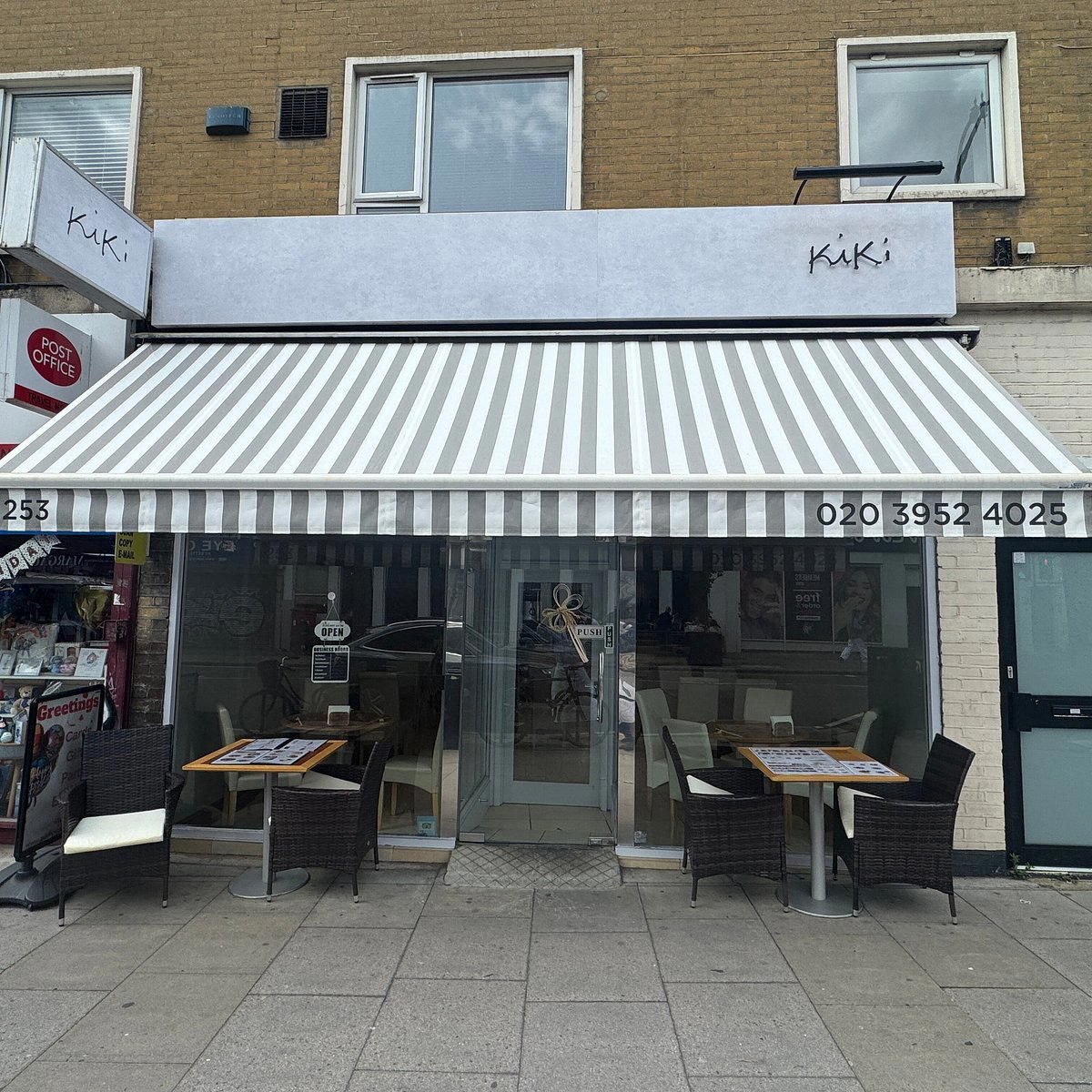
Kentish Town and the North London Dining Shift
London's restaurant conversation has long been anchored in Mayfair, Knightsbridge, and the City's expense-account corridors. The past decade, however, has seen a measurable drift northward, with Islington, Highbury, and the Camden basin producing a tier of neighbourhood restaurants that compete less on postcode prestige and more on cooking precision and local loyalty. Kentish Town Road sits at the centre of this shift: a working high street with enough residential density to support a consistent lunch trade, a dinner crowd that arrives on foot rather than by car service, and a tolerance for menus that change more often than the room does. Kiki Restaurant, at number 253, occupies exactly this position.
The street itself sets the register before you reach the door. Kentish Town Road runs between Camden's market energy to the south and Tufnell Park's quieter residential character to the north, and the block around NW5 2JT reflects that middle ground: independent businesses, a few cafés with actual regulars, and the kind of foot traffic that belongs to people who live nearby rather than people who drove in. For a restaurant trying to build something with staying power, this is a more honest proving ground than a Covent Garden side street where tourists provide a safety net for mediocre cooking.
Where Imported Technique Meets Local Sourcing
One significant development in London's neighbourhood restaurant tier over the past fifteen years has been the arrival of classical or international technique in rooms that previously offered little beyond competent brasserie cooking. This is the model that has produced some of the more interesting work happening outside the Michelin circuit: kitchens that apply the discipline of fine-dining training to ingredients sourced from British farms, coastal suppliers, and seasonal growers, then price the result at a level the neighbourhood can support. It is a format that demands more from the kitchen than from the budget.
This approach has precedents across the country. At L'Enclume in Cartmel, Simon Rogan built an entire agricultural supply chain to underpin a tasting menu that trades on hyper-local provenance. Moor Hall in Aughton applies comparable rigour in Lancashire. In London, CORE by Clare Smyth and The Ledbury have made British-sourced produce the backbone of cooking at the three-star level, demonstrating that the model scales from destination dining to destination-within-a-neighbourhood dining. What distinguishes the Kentish Town variant is that it does so without the formal room, the tasting-menu price point, or the awards apparatus that tends to follow those addresses.
For reference, the upper bracket of London dining, occupied by venues like Restaurant Gordon Ramsay, Sketch, The Lecture Room and Library, and Dinner by Heston Blumenthal, prices at ££££ and competes across a tourist and corporate dining circuit. Kiki sits well outside that competitive set, in a tier defined by repeat local custom rather than destination bookings. The comparison is not a downgrade; it is a different discipline entirely.
The Cooking Logic: Global Method, Neighbourhood Scale
The intersection of imported technique and domestic produce is not a new idea in British cooking. It runs from the 1980s Anglo-French kitchens through to the current generation of chefs who trained in Europe or Japan and returned to work with Lincolnshire vegetables and Scottish seafood. What matters is how faithfully the discipline transfers when the room holds fewer covers, the kitchen brigade is smaller, and the margin for error is narrower. Venues like hide and fox in Saltwood and Midsummer House in Cambridge have demonstrated that classical precision is not exclusive to big-city addresses. Internationally, places like Le Bernardin in New York City and Atomix in New York City have established that the crossover between technique and local terroir produces particularly coherent cooking in any city, regardless of format.
In the context of a Kentish Town address, the application of serious cooking logic to accessible pricing creates a particular kind of value: not cheapness, but accuracy. A kitchen that understands where the produce comes from, how it was raised, and what technique serves it leading will produce food that holds up against rooms charging significantly more, because the discipline is in the method rather than the margin.
North London in a Broader British Context
London's neighbourhood restaurant tier sits in a national conversation about where serious cooking actually happens. The country's most decorated rooms tend to be rural or semi-rural: Le Manoir aux Quat'Saisons in Oxford, Waterside Inn in Bray, Gidleigh Park in Chagford, Hand and Flowers in Marlow, and Restaurant Andrew Fairlie in Auchterarder all operate at a remove from urban density. The city equivalent, venues like Opheem in Birmingham, shows that urban neighbourhoods beyond the West End can sustain cooking at a high level when the local customer base is engaged enough to support it. Kentish Town belongs to this pattern, not as a lesser version of Chelsea or Mayfair dining, but as a distinct category with its own logic and its own rewards.
For readers building a London itinerary beyond the obvious circuits, the NW5 address is worth the extra tube stop.
Price and Recognition
Comparable venues nearby, for context on price, style, and recognition.
| Venue | Cuisine | Price | Notes |
|---|---|---|---|
| Kiki RestaurantThis venue — the venue you are viewing | Kentish Town, Authentic Japanese | $$ | Not listed |
| wagamama hammersmith | Brook Green, Japanese Noodle Bar | $$ | Not listed |
| Asakusa | Euston, Authentic Japanese Izakaya | $$ | Not listed |
| Konnichiwa Japanese Cuisine | Hornsey, Authentic Japanese Sushi | $$ | Not listed |
| wagamama victoria | Not listed | $$ | Victoria, Japanese-inspired Ramen and Noodles |
| Cafe Japan | Golders Green, Authentic Japanese Sushi | $$ | Not listed |
Continue exploring
More in London
Restaurants in London
Browse all →
Bars in London
Browse all →
Hotels in London
Browse all →

At a Glance
- Minimalist
- Cozy
- Intimate
- Casual Hangout
- Date Night
- Standalone
- Sake Program
Current opening hours
- Monday
- Closed
- Tuesday
- 12–3 PM, 6–10 PM
- Wednesday
- 12–3 PM, 6–10 PM
- Thursday
- 12–3 PM, 6–10 PM
- Friday
- 12–3 PM, 6–10:30 PM
- Saturday
- 12–3 PM, 5:30–10:30 PM
- Sunday
- 12–3 PM, 5:30–9:30 PM
Hours can change for holidays and private events. Last verified .
Serene and welcoming with minimalist décor reflecting understated elegance.