Our verdict
One of Mumbai's most enduring North Indian dining addresses, Khyber has occupied its Kala Ghoda corner on Mahatma Gandhi Road since the 1960s, anchoring the Fort district's case for serious frontier-style cooking. The kitchen leans into the rich, slow-cooked register of Mughal and Peshwari tradition — clay oven breads, whole-roasted meats, and long-braised gravies that reward unhurried eating. Reserve in advance, especially on weekends.

Pearl is the En Primeur Club membership app — saves, bookings, and concierge access live there. Same editors, same standards.
- Address
- 145, Mahatma Gandhi Road, Kala Ghoda, Fort, Mumbai, Maharashtra 400001, India
- Phone
- +91 22 4039 6666
- Hours
- Daily 12:30–4 PM, 7:30–11:30 PM
- Website
- khyberrestaurant.com
- Directions
- Get directions
The menu
What to order
- Reshmi Kebab Masala
- Tandoori Chicken Tikka
- Dal Makhni
Where Fort's Colonial Architecture Meets the Frontier Table
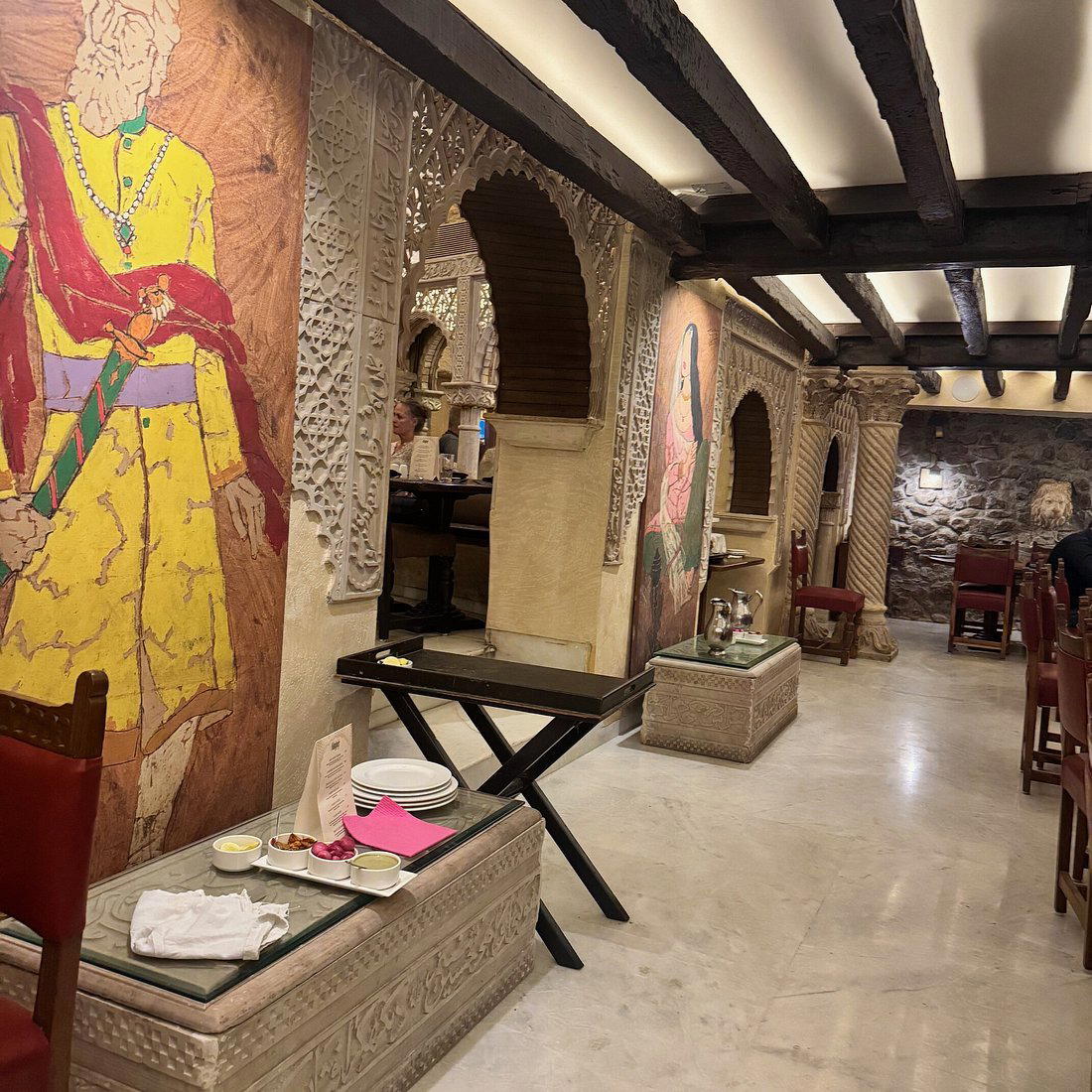
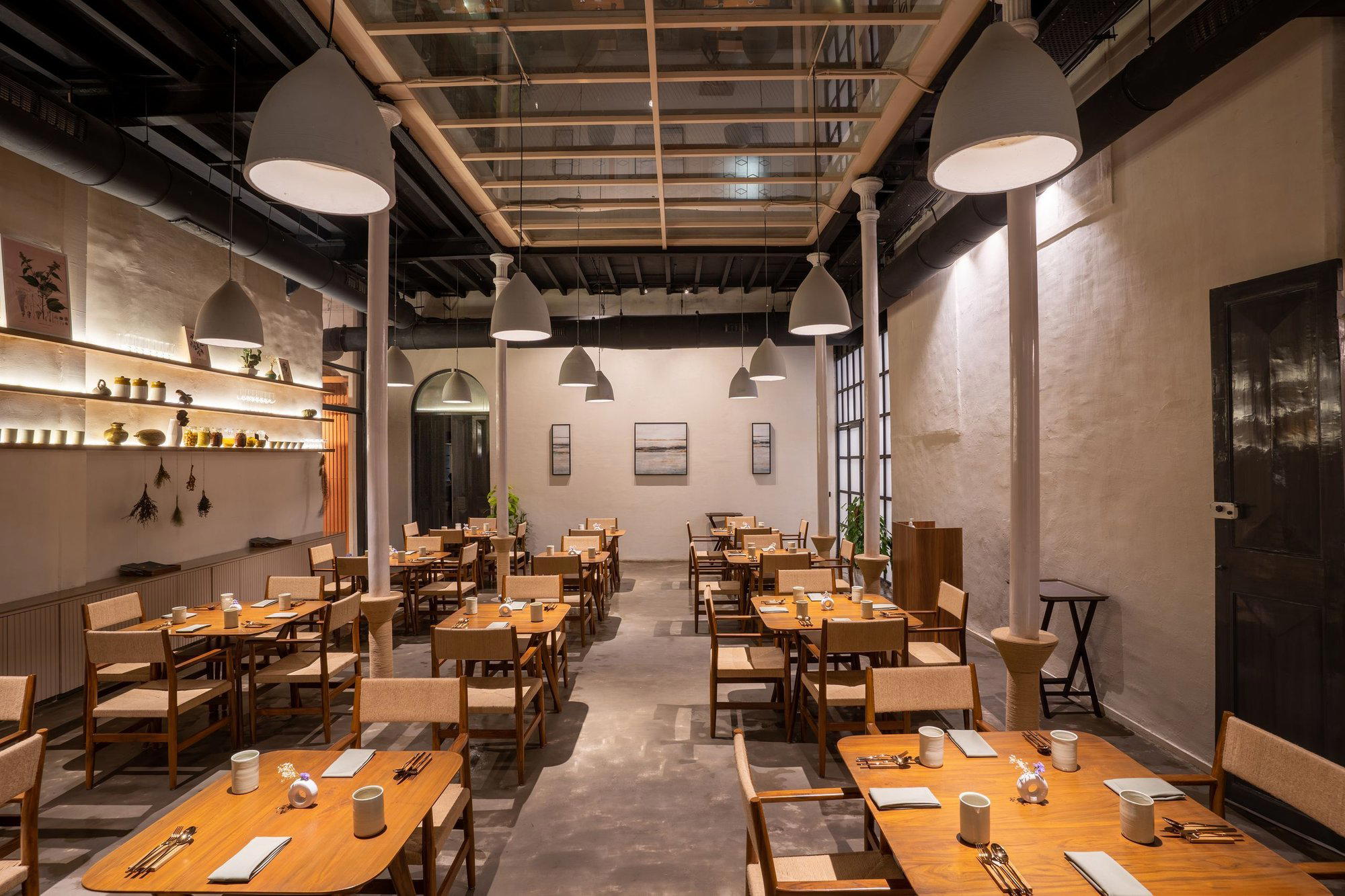
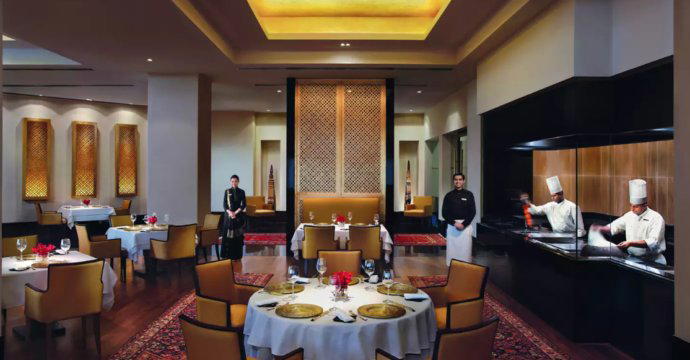
Kala Ghoda's heritage precinct carries a particular weight in Mumbai. The art galleries, the restored Victorian-era buildings, the slow pedestrian pace along Mahatma Gandhi Road — all of it sets a context that few restaurants in the city can match for sheer staying power. Khyber, at number 145, has been part of this backdrop long enough that its red-sandstone facade and arched interiors have become inseparable from the neighbourhood's visual identity. Walking in from the street, the transition is abrupt in the leading sense: the city noise drops, the terracotta murals register before the menu does, and the room asserts itself as the kind of dining space that was built to last rather than to trend.
That architectural seriousness is not merely decorative. North Indian frontier cooking — the Peshwari and Mughal register that Khyber has always occupied, has its own visual grammar. Heavy carved wood, warm amber light, and earthenware form the sensory backdrop against which tandoor smoke and slow-cooked meat make their case. The room earns that pairing honestly.
The Cooking Tradition Behind the Menu
India's premium restaurant tier has fractured in interesting ways over the past decade. Contemporary Indian tasting-menu formats, the kind that Masque represents, or that The Table approaches from a different angle, now occupy one end of the spectrum. Regional specialists like Dakshin, with its south Indian focus, occupy another. Khyber's competitive set is narrower and older: the handful of Mumbai addresses that treat North Indian frontier cooking as a serious, long-form discipline rather than a comfort-food category.
The cooking tradition at stake here draws from the northwest corridor of the subcontinent, the Khyber Pass region that gives the restaurant its name. This is a cuisine defined by restraint in spicing and intensity in technique: meats that spend hours in clay ovens at high heat, breads pulled directly from tandoor walls, gravies built on reduced cream and slow-cooked onion rather than on spice complexity alone. The effect is a register that reads as quieter than, say, Lucknowi or Chettinad cooking, but with a depth that only comes from time and temperature. Compared with Bukhara in New Delhi, which has made Peshwari cooking its entire identity for decades, Khyber represents Mumbai's most sustained parallel argument for the same tradition.
That alignment with a cooking tradition older than Mumbai's dining scene itself is part of what separates Khyber from the wave of contemporary Indian restaurants reframing regional ingredients. The Bombay Canteen and Americano work from a place of reinvention; Khyber works from a place of continuity. Neither approach is superior, but they are addressing different questions about what Indian restaurants are for.
The Team Dynamic: Kitchen, Floor, and the Weight of a Long Run
Restaurants that endure for decades in a city as commercially volatile as Mumbai do so through institutional coherence rather than individual genius. What keeps Khyber's standard consistent across decades is the kind of integrated service model where the kitchen's slow-cooking discipline is matched by a front-of-house that understands how to pace a table through it. Tandoor cooking does not hurry, and a dining room that tries to turn tables against the rhythm of a clay oven will always lose.
The team dynamic here has always leaned on this synchronisation. The meats, the raan, the seekh, the various preparations that come out of the tandoor, need to arrive at the right moment, at the right temperature, with the right breads. That coordination is the operational challenge of frontier cooking, and it is one that the Khyber floor team has had time to internalise. This is not the kind of service that introduces each dish with a philosophical explanation; it is attentive and efficient in the older-school sense, focused on the mechanics of a long, unhurried meal.
For comparison, the new generation of Indian restaurants across the country, Farmlore in Bangalore, Avartana in Chennai, or Adaa at Falaknuma Palace in Hyderabad, have introduced a narrated, tasting-menu service style where the sommelier or host mediates between the kitchen and the guest explicitly. Khyber's model predates that format and does not adopt it; the food is expected to speak without annotation, which places a heavier burden on the kitchen's consistency and the server's reading of the table.
Kala Ghoda, the Fort District, and Where Khyber Sits in Mumbai's Dining Map
The Fort district and Kala Ghoda are not Mumbai's most commercially active dining zones in the way that Bandra or Lower Parel are. The area draws on a mix of office professionals at lunch, cultural visitors in the afternoons, and a dinner crowd that tends toward occasion dining rather than casual frequency. This shapes what restaurants in the neighbourhood need to be. Khyber has always fit the occasion-dining mould: it is not cheap, not casual, and not a place one drops into without intent.
That positioning within Mumbai's broader geography puts Khyber in a different conversation from mid-market Indian restaurants competing on price. For those planning a full day around the Fort district, the museum circuit, the galleries, and the architecture, Khyber is the logical dinner anchor. For a broader picture of the city's eating and drinking options, our [full Mumbai restaurants guide]() maps the competitive terrain across neighbourhoods, price tiers, and cuisine categories. You can also consult our [full Mumbai hotels guide](), [full Mumbai bars guide](), full Mumbai experiences guide, and [full Mumbai wineries guide]() for broader planning context.
Beyond Mumbai, the frontier cooking tradition Khyber represents surfaces across India's dining tier in distinct forms. Naar in Kasauli works the Himalayan register of that same northwest tradition. And internationally, the debate about what constitutes serious Indian cooking, as opposed to adapted diaspora Indian, is one that restaurants like Le Bernardin in New York City and Atomix in New York City have shown can be won through technical rigour and historical honesty rather than novelty. Baan Thai in Kolkata offers a useful comparison point for how a single-region cuisine can anchor an entire restaurant's identity over decades.
Planning Your Visit
Khyber is located at 145 Mahatma Gandhi Road in the Kala Ghoda precinct of Fort, making it walkable from the Chhatrapati Shivaji Maharaj Vastu Sangrahalaya (the Prince of Wales Museum) and the Jehangir Art Gallery. The address is well-served by taxis and auto-rickshaws; the nearest Metro connection is within manageable distance. Dinner on weekends draws a full room, and advance booking is advisable, walk-ins are less reliable Friday through Sunday. Lunch on weekdays tends to be quieter and is a reasonable alternative for those who prefer a less pressured pace. This is a sit-down occasion restaurant rather than a quick-service stop; factor at least ninety minutes for a proper meal.
Frequently asked questions
What part of town is Khyber in?
Khyber is located at 145, Mahatma Gandhi Road, Kala Ghoda, Fort, Mumbai, Maharashtra 400001, India, Mumbai.
What if I have dietary restrictions or allergies at Khyber?
North-West Frontier cooking at this level typically involves marinades, ghee, cream-based gravies, and wheat-flour breads, so guests with dairy, gluten, or nut sensitivities should flag requirements clearly when booking. Contact the restaurant at the 145 Mahatma Gandhi Road address directly to discuss specific dietary needs before arrival, as menu accommodation varies by preparation.
What should I order at Khyber?
Khyber's kitchen is built around North-West Frontier cooking, so the strongest plates tend to come from the tandoor and the slow-cooked meat preparations that define that tradition. The Fort address and long operational history suggest a menu anchored in kebabs, robust gravies, and bread from the clay oven. Specific dish availability should be confirmed directly with the restaurant before your visit.
Should I book Khyber in advance?
Khyber is located at 145 Mahatma Gandhi Road in the Kala Ghoda precinct, one of Mumbai's more concentrated dining-and-culture zones, and the restaurant has operated long enough to hold a loyal regular crowd. Weekend evenings in particular fill early. Booking ahead by at least a few days is advisable, especially for larger groups.
What's Khyber best at?
The restaurant's identity is rooted in the cooking traditions of the North-West Frontier, a regional style that emphasises fire, spice-rubbed meat, and rich, slow-cooked preparations rather than the delicate or contemporary-tasting-menu formats that have spread across Mumbai's premium tier in recent years. Khyber holds its ground as an institution in that specific tradition, in a city where that kind of cooking is rarely given this level of dedicated focus.
What if I have allergies at Khyber?
Dietary accommodations can vary. Flag restrictions in advance via the venue's official channels.
Is eating at Khyber worth the cost?
Khyber sits in a category where you are paying for institutional depth — a long-running kitchen in a heritage Fort building serving a cooking style that requires genuine technique. Whether the bill makes sense depends on what you are comparing it against: it is not priced as a casual meal, but it is not competing with Mumbai's tasting-menu format restaurants either. Current pricing should be confirmed with the restaurant directly.
Cost and Credentials
Comparable venues nearby, for context on price, style, and recognition.
| Venue | Cuisine | Price | Notes |
|---|---|---|---|
| KhyberThis venue — the venue you are viewing | North-West Frontier/Mughlai | $20–30 | Not listed |
| Dakshin | South Indian Fine Dining | $30–50 | Parel, Premium South Indian Fine Dining |
| Trishna | Iconic Mumbai Seafood | $20–30 | Fort Mumbai, Well-known Mumbai Seafood |
| Mahesh Lunch Home | Authentic Mangalorean Seafood | $30–50 | Fort Mumbai, Authentic Mangalorean Seafood |
| O Pedro | Modern Goan-Portuguese | $30–50 | Kolekalyan, Modern Goan-Portuguese |
| Cin Cin | Italian Pizza and Pasta | Not listed | Kolekalyan, Italian Pizza and Pasta |
Details
- Cozy
- Elegant
- Classic
- Well Known
- Date Night
- Family
- Business Dinner
- Historic Building
- A La Carte
- Vegetarian Friendly
Current opening hours
- Monday
- 12:30–4 PM, 7:30–11:30 PM
- Tuesday
- 12:30–4 PM, 7:30–11:30 PM
- Wednesday
- 12:30–4 PM, 7:30–11:30 PM
- Thursday
- 12:30–4 PM, 7:30–11:30 PM
- Friday
- 12:30–4 PM, 7:30–11:30 PM
- Saturday
- 12:30–4 PM, 7:30–11:30 PM
- Sunday
- 12:30–4 PM, 7:30–11:30 PM
Hours can change for holidays and private events. Last verified .
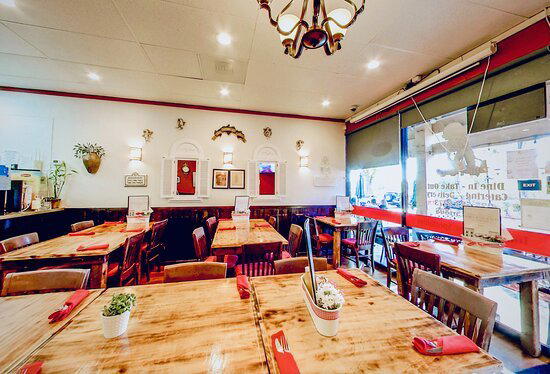
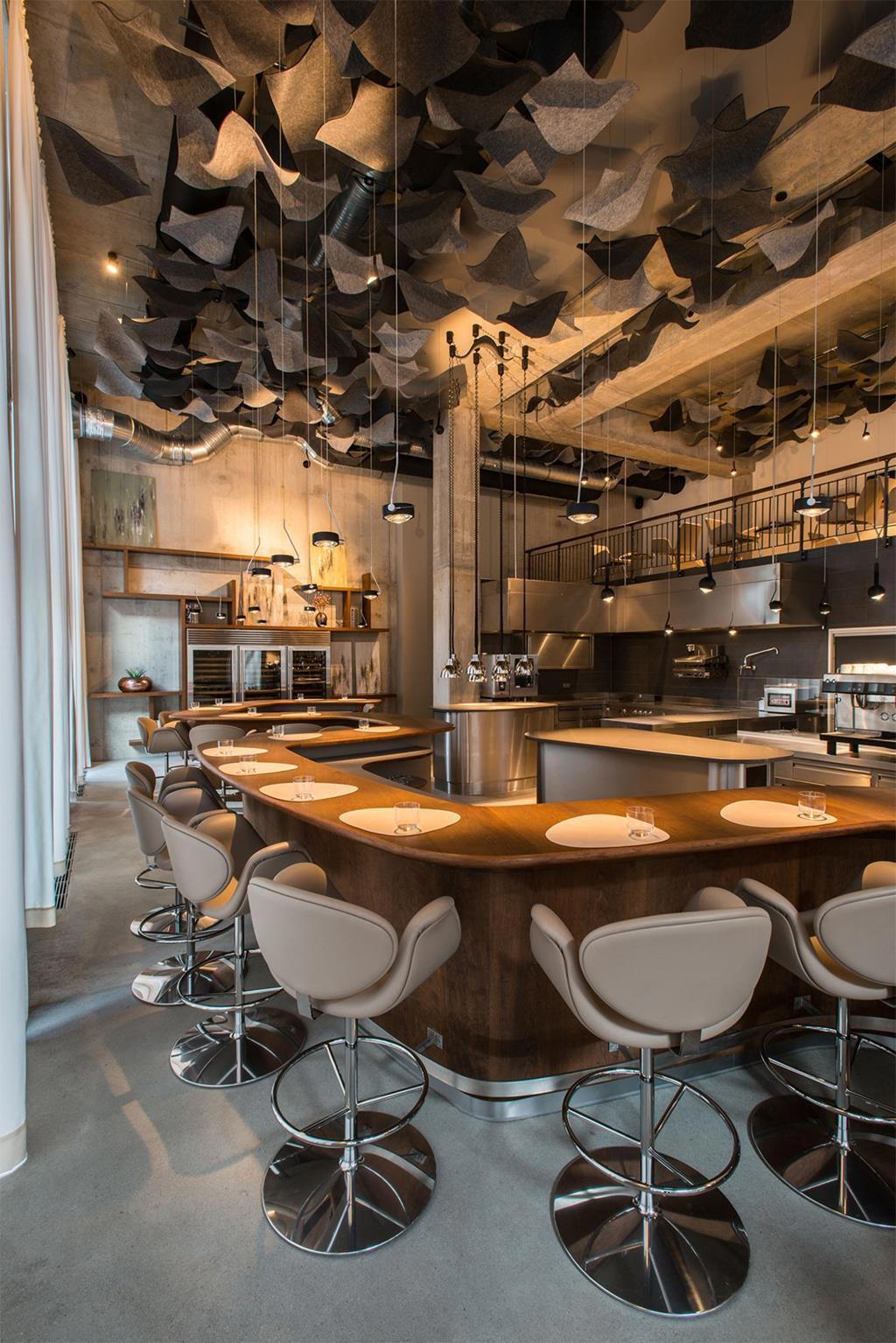
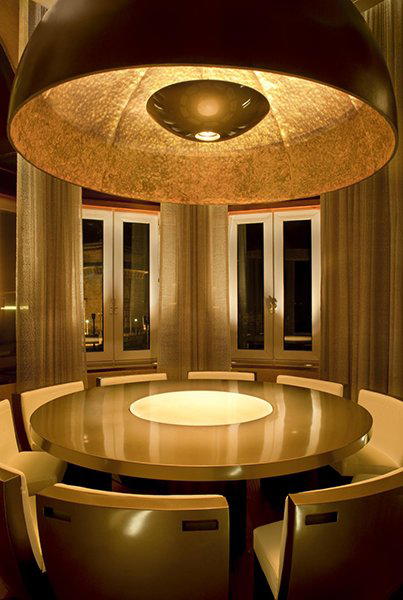
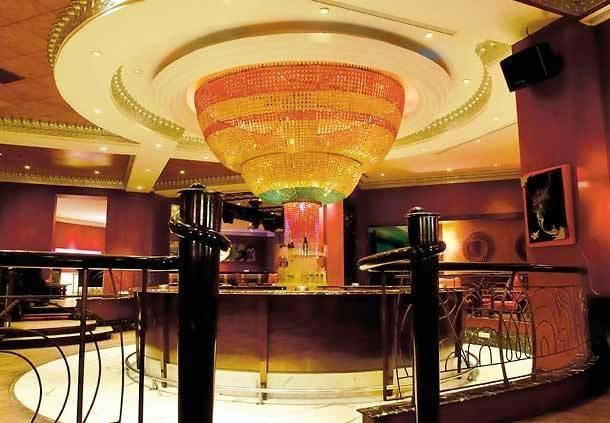
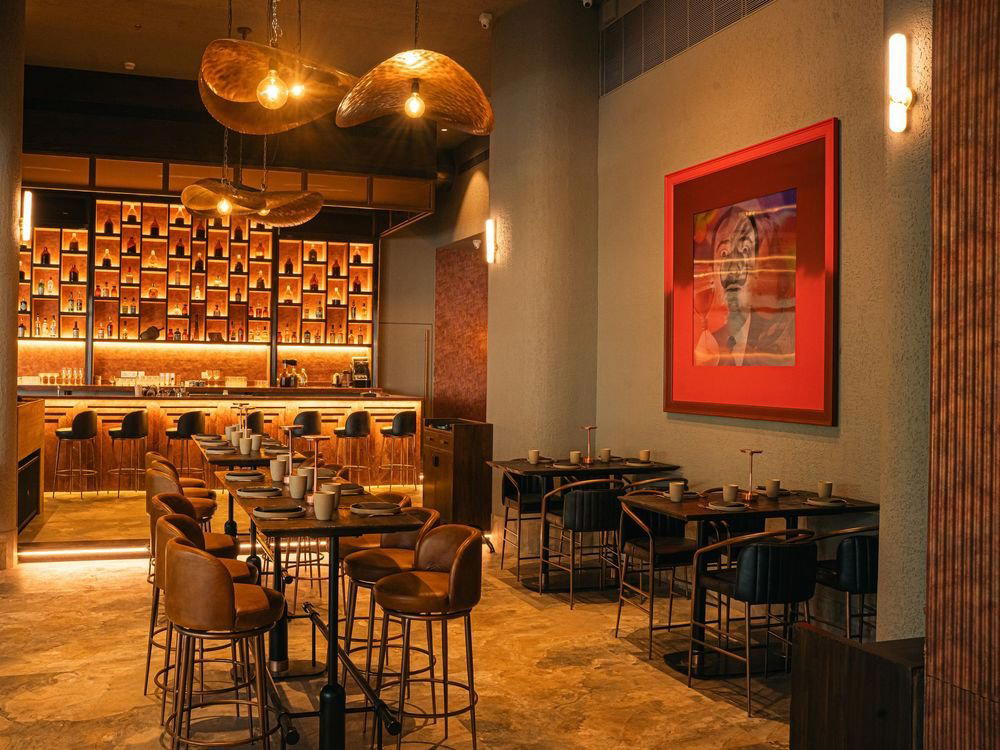
Cozy and elegant with beautiful interiors, modern Indian art, huge mirrors creating spacious illusion, and a classic atmosphere, though sometimes freezing cold from AC.