Indigo
On Hastings Street in Napier South, Indigo sits within one of New Zealand's most wine-saturated dining regions, where Hawke's Bay producers and the Art Deco city's food scene intersect. The address places it close to the action of central Napier, and the name signals a distinct mood rather than a genre. Visitors to the region will find it alongside a competitive local dining tier shaped by proximity to serious vineyard restaurants.
 Discover on Pearl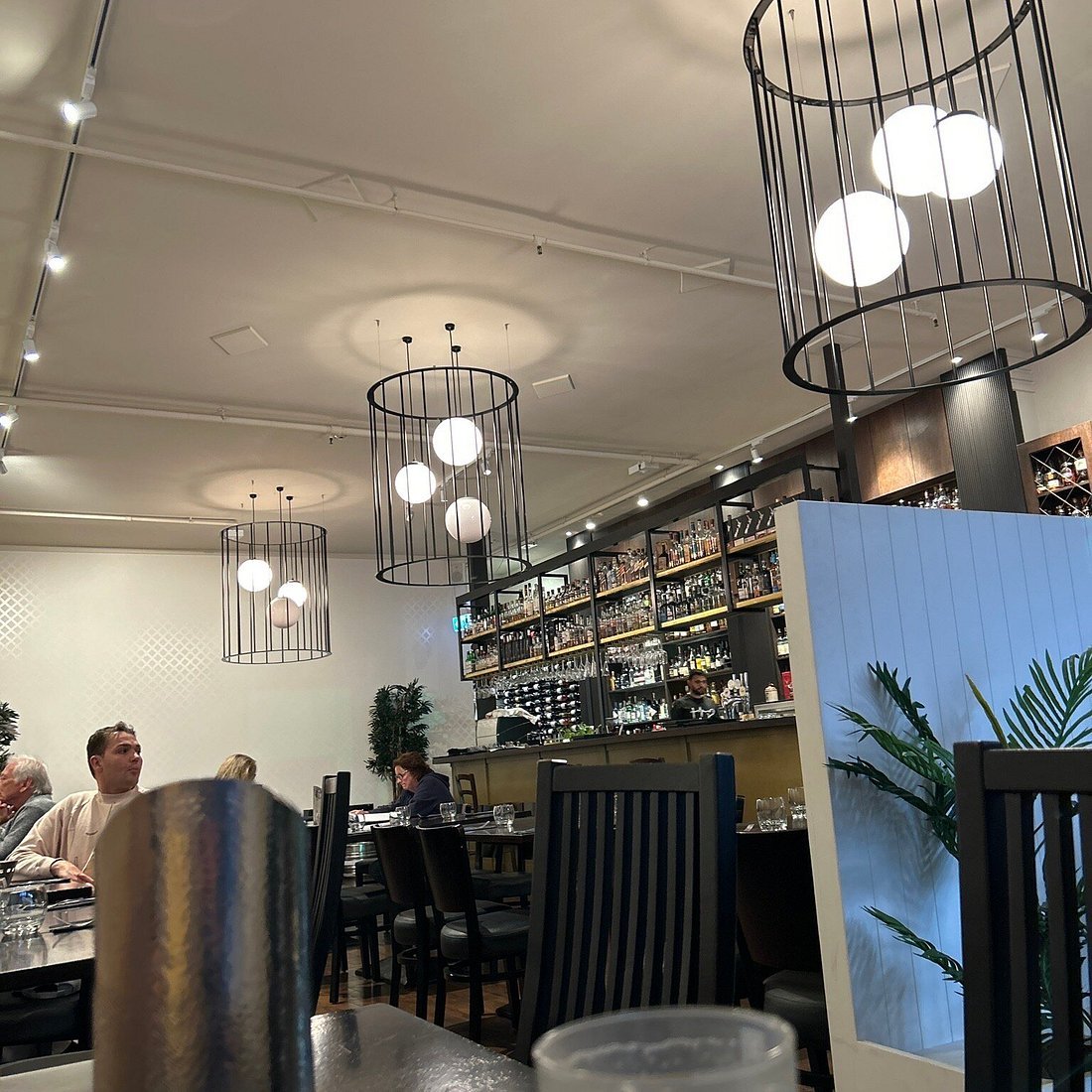
Hastings Street and the Dining Character of Napier South
Napier's dining identity is shaped by two forces that rarely converge this neatly: a compact Art Deco city grid that concentrates foot traffic along a few key streets, and one of New Zealand's most productive wine-growing regions directly at its doorstep. Hastings Street, where Indigo sits at number 24A, is the primary artery for this convergence. The street draws both locals and regional visitors who have spent the day among the Hawke's Bay vineyards and want a table that matches the ambition of what they have been drinking. That context sets the standard for any serious restaurant operating on this block.
Napier South, as a sub-precinct, carries a slightly more residential and considered atmosphere than the tourist-dense seafront strips further north. Restaurants here compete less on visibility and more on reputation, which means word-of-mouth and repeat custom do more work than passing trade. That structural reality tends to select for kitchens with a consistent identity rather than those chasing seasonal trends.
The shortlist, unlocked.
Hard-to-book tables, cellar releases, and concierge-planned trips.
Get Exclusive Access →Hawke's Bay as a Culinary Region, Not Just a Wine Region
The wider region surrounding Napier has spent the past two decades building a case that Hawke's Bay belongs in the same conversation as Marlborough or Central Otago when the subject is food-and-wine travel. The vineyard restaurants that anchor that argument, places like Elephant Hill and Craggy Range in Havelock North, have set a high bar for what produce-led cooking looks like when the grower relationships are built into the restaurant's geography rather than sourced through a distributor. City-based restaurants in Napier operate within that frame of reference, measured against neighbours who have direct access to estate-grown ingredients and dramatic landscape settings.
What distinguishes a Napier South restaurant from that vineyard tier is precisely its urban context. The cooking here draws on the same regional larder, but the setting is different: closer to the market, closer to the street, and more embedded in the daily life of the city rather than positioned as a destination excursion. This is not a lesser proposition; it is a different one, and understanding that distinction matters when deciding how to distribute your time across a Hawke's Bay visit. For a broader picture of where Indigo fits within the full dining picture, our full Napier restaurants guide maps the competitive set in detail.
The Setting and What to Expect
The address on Hastings Street places Indigo within easy reach of Napier's central accommodation cluster, meaning most visitors can walk rather than arrange transport after dinner. That logistical ease matters more in a compact city like Napier than it might in Auckland or Wellington, where the distances between precincts are longer and taxi or rideshare costs accumulate. Arriving on Hastings Street on a settled evening, the low-rise scale of the streetscape and the proximity to the Art Deco precinct give the approach a particular quality: this is a city that wears its architectural identity without contrivance, and the dining strip benefits from that coherence.
New Zealand's mid-tier restaurant culture has moved decisively toward a format that combines serious ingredient sourcing with a room that does not require a formal dress code or a three-hour time commitment. That format has become the default for ambitious city restaurants outside Auckland and Wellington, and Napier's better options sit comfortably within it. Indigo's position on a street with this much foot traffic and regional visitor flow suggests a format calibrated for that expectation: accessible in register but not casual in execution.
Where Indigo Sits in the Broader New Zealand Dining Scene
New Zealand's restaurant culture has developed a distinct tier of regionally rooted, produce-focused dining that operates below the notice of international award bodies but above the generic bistro level. This tier is well represented across the country, from Ahi in Auckland to Charley Noble in Wellington, and from Cod and Lobster in Nelson to Fife Lane in Mount Maunganui. What links these addresses is a commitment to New Zealand produce interpreted with enough technical confidence to hold a regional audience that has become, through sustained wine and food culture, genuinely demanding.
The comparison set for Indigo within Napier is defined by proximity to great raw materials and a dining public that benchmarks local restaurants against the vineyard estates on their doorstep. That is a harder benchmark than most city restaurants in comparably sized New Zealand centres have to meet. Further afield, the lodge-format restaurants like Otahuna Lodge Restaurant in Tai Tapu and Blanket Bay in Glenorchy represent the high-capital, destination end of the New Zealand dining spectrum; Napier city restaurants occupy a more accessible register while drawing on comparable regional ingredient quality.
Internationally, the cultural positioning of a restaurant like Indigo can be understood against the broader shift in how wine-region cities have developed their dining identities. The movement away from tourist-facing, variety-pack menus toward kitchens that commit to a specific regional ingredient logic is well documented in regions from Burgundy to Napa. In New Zealand, that evolution has happened across two decades of investment in grower relationships, chef training abroad, and a food media culture that rewards specificity over comprehensiveness.
Planning a Visit
Napier is most visited between November and April, when Hawke's Bay's harvest season and warmer temperatures draw the largest number of wine-focused travellers. Booking ahead during this window is advisable for any Hastings Street restaurant with a genuine local following. The city is a short drive from Havelock North and the main vineyard belt, making it direct to combine a lunch at a winery restaurant with a dinner in central Napier without excessive travel. For accommodation context, our full Napier hotels guide covers the options closest to the Hastings Street precinct. Those exploring the full Hawke's Bay offer will also find our Napier wineries guide, our bars guide, and our experiences guide useful for building an itinerary that extends beyond individual meals. For comparison with other serious New Zealand dining destinations, Amisfield in Queenstown and Malabar Beyond India in Taupo illustrate the range of registers operating across the country, while The Bay House in Westport shows how coastal settings are developing their own distinct identities. For those benchmarking against international reference points, Le Bernardin in New York City and Atomix in New York City represent the kind of precision-focused cooking that has influenced a generation of New Zealand chefs returning home from overseas kitchens.
24A Hastings Street, Napier South, Napier 4110, New Zealand
+64 6 834 4338
Budget and Context
A fast peer set for context, pulled from similar venues in our database.
| Venue | Price | Awards | Notes |
|---|---|---|---|
| Indigo | This venue | ||
| Amisfield | World's 50 Best | New Zealand | |
| Blanket Bay | Australian Rustic | ||
| Otahuna Lodge Restaurant | New Zealand | ||
| Paris Butter | New Zealand | ||
| Wharekauhau Country Estate | New Zealand |
Need a table?
Our members enjoy priority alerts and concierge-led booking support for the world's most difficult tables.
Get Exclusive AccessThe shortlist, unlocked.
Hard-to-book tables, cellar releases, and concierge-planned trips.
Get Exclusive Access →