


Occupying a converted industrial space in Lower Parel's Kamala Mills compound, The Bombay Canteen holds a place in Mumbai's contemporary Indian dining scene that few restaurants have managed to sustain. Under chef Hussain Shahzad, the kitchen runs a rotating menu that repositions regional Indian cooking through a modern lens, backed by La Liste recognition and a spot on Asia's 50 Best list in 2025.
 Discover on Pearl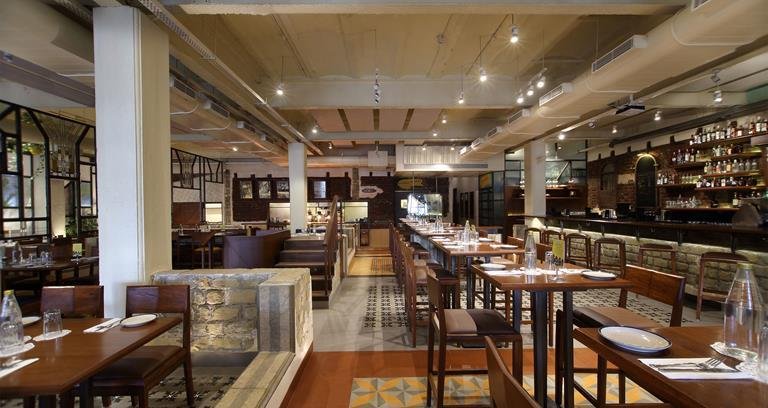
Lower Parel and the Restaurant That Grew With the Neighbourhood
Kamala Mills in Lower Parel was, for decades, exactly what its name suggested: a working textile compound in the industrial belt south of Dadar. The mills closed, the land appreciated, and the neighbourhood became one of Mumbai's more instructive case studies in urban reinvention. Where looms once ran, restaurants, bars, and creative offices moved in. The Bombay Canteen arrived into this context and became, over time, one of the more durable tenants of that transformation.
That durability matters. Lower Parel has seen a significant rotation of dining concepts over the years, many of them capitalising on the neighbourhood's energy before the audience moved on. The Canteen has held its place through consistent critical recognition: a spot at number 91 on World's 50 Best Asia's Leading Restaurants in 2025, a ranking of 343rd in Opinionated About Dining's Asia list the same year, and 91 points from La Liste in their 2026 rankings. In a city where restaurant press cycles are short, a track record across multiple independent rating bodies over multiple years is meaningful evidence of sustained quality.
The shortlist, unlocked.
Hard-to-book tables, cellar releases, and concierge-planned trips.
Get Exclusive Access →The Space: Industrial Shell, Theatrical Interior
The building is Process House on S.B. Road, a repurposed industrial structure whose bones are still visible. Stone walls and high ceilings give the room scale that newer builds in the neighbourhood rarely achieve. The design layers stained glass against that raw architecture, a combination that reads as colonial-era India filtered through a contemporary sensibility rather than period reconstruction.
The bar occupies a prominent position in the room, which is not incidental. Mumbai's contemporary dining scene has increasingly moved toward formats where the bar is a destination in its own right rather than a waiting area. Here, colonial-inspired cocktails arrive in oversized vessels, a format that leans into theatrical presentation. The Canteen Bakery operates as a separate retail offer within the space, selling retro-coded snacks that extend the venue's broader argument about reimagining familiar Indian references. For visitors exploring Mumbai's bar scene, the drinks program here is worth factoring in alongside the food.
The Menu's Position in Mumbai's Contemporary Indian Conversation
Mumbai has developed a specific sub-category of contemporary Indian dining that operates differently from the fine-dining Indian format found at, say, Ziya or the more globally-oriented modern cooking at The Table. The Bombay Canteen sits in a middle tier that is harder to define but arguably more interesting: it draws on recognisable regional Indian dishes and repositions them without obscuring their origins. The menu rotates, which keeps the kitchen from calcifying around signature dishes and forces a certain discipline on the team.
Chef Hussain Shahzad leads the kitchen, and his presence is relevant not as biographical colour but as a marker of continuity at a restaurant that has now accumulated years of critical recognition. In a Mumbai dining scene where chef turnover at ambitious restaurants is common, that continuity helps explain the consistency of the external ratings. Peers in the contemporary Indian space worth mapping against The Canteen include Masque, which operates a more formal tasting-menu format, and Americano, which approaches Indian-influenced cooking from a different angle. Indigo provides a further comparison point in Mumbai's premium but less strictly Indian-focused tier.
Nationally, the conversation about contemporary Indian cooking runs through several different registers. Dum Pukht in New Delhi represents classical Awadhi cooking at a high level. Farmlore in Bangalore approaches regional ingredients from an ingredient-led, more austere direction. Adaa at Falaknuma Palace in Hyderabad anchors its identity in heritage and setting. The Bombay Canteen's position in this national picture is that of a restaurant which made contemporary-regional Indian cooking accessible and energetic rather than ceremonial, and which demonstrated that the format could sustain international critical attention over multiple years.
Beyond India, the appetite for serious Indian cooking has grown in cities far from the subcontinent. Trèsind Studio in Dubai and Opheem in Birmingham represent how that conversation has extended internationally. Within India's own geography, Naar in Kasauli and Bomras in Anjuna operate in very different contexts but share a similar commitment to placing regional cooking in a contemporary frame.
What Lower Parel Means for the Experience
Arriving at Kamala Mills in the evening, the neighbourhood's character comes through quickly. This is not South Mumbai's older, more formal restaurant district, and it is not the expressway-adjacent mall dining of the suburbs. Lower Parel occupies a middle position: accessible, high-energy, and populated by a mix of media, finance, and creative industries that have moved into the former industrial zone. The atmosphere at The Canteen reflects that mix. The room is loud at peak hours, the bar is active, and the overall register is celebratory rather than ceremonial.
That energy is a deliberate editorial choice in the restaurant's format. The oversized cocktail vessels, the retro bakery snacks, the rotating menu, the stained glass against stone walls: these elements combine to create a specific version of dining that takes the material seriously without asking the diner to treat it as a formal occasion. For visitors to Mumbai who want to read the city's contemporary food culture through a single restaurant visit, the Kamala Mills address and its context in the neighbourhood's transformation adds a layer that a more neutral location would not provide. For a broader view of the city's current dining range, our full Mumbai restaurants guide maps the full spectrum across neighbourhoods and price tiers. Those planning a longer stay will also find relevant context in our Mumbai hotels guide and our Mumbai experiences guide.
Planning Your Visit
The restaurant is at Unit-1, Process House on S.B. Road in the Kamala Mills compound, Lower Parel. The address is well-known enough that most drivers and cab services will find it without difficulty, and the Kamala Mills compound itself is a recognised landmark in the neighbourhood. Given the restaurant's consistent presence on Asia-level ratings lists, reservations are advisable, particularly for evening sittings on weekends when the neighbourhood draws significant foot traffic. The Mumbai wineries guide offers additional context if the drinks program is a priority, and the bars guide covers the wider Lower Parel drinking scene for those building an evening around the area. Visitors interested in Goan-influenced cooking nearby may want to cross-reference O Pedro, which operates in a related but distinct register within Mumbai's contemporary Indian dining tier.
Unit-1, Process House, S.B. Road, Kamala Mills, Near Radio Mirchi Office Lower, Parel, Mumbai, Maharashtra 400013, India
+91 88808 02424
Where It Fits
A compact comparison to help you place this venue among nearby peers.
| Venue | Cuisine | Awards | Notes |
|---|---|---|---|
| The Bombay Canteen | Indian | La Liste Top Restaurants (2026): 91pts; Bombay Canteen invites guests into a fes… | This venue |
| O Pedro | Goan | Goan | |
| Ziya | Indian | Indian | |
| Masque | Contemporary Indian | World's 50 Best | Contemporary Indian |
| Indigo | Indian | Indian | |
| The Table | Contemporary Indian | World's 50 Best | Contemporary Indian |
Need a table?
Our members enjoy priority alerts and concierge-led booking support for the world's most difficult tables.
Get Exclusive AccessThe shortlist, unlocked.
Hard-to-book tables, cellar releases, and concierge-planned trips.
Get Exclusive Access →