Khao Kang

Our verdict
Khao Kang is a low-price Thai steam-table counter in Elmhurst, where the point is not ceremony but balance: chile heat, salt, sourness and sweetness arriving through prepared curries and stir-fries rather than made-to-order theatre. Its New York Times praise turned a modest Woodside Avenue address into a serious reference point for Thai cooking in Queens.

Pearl is the En Primeur Club membership app, where members save venues, book tables and use the concierge.
The menu
What to order
- Yellow sour curry
- Sour bamboo shoot fish
- Garlic black pepper pork
- Southern jungle curry
- Thai 5-spice stewed pork with egg
New York City gives the meal its rhythm before the first choice is made: the pace of the city outside, the appetite for directness, and the expectation that good food should not need ceremony to make its case. Khao Kang belongs to the city’s tradition of eating well without unnecessary framing, where the strongest argument is the cooking itself rather than the performance around it.
The format matters less than the discipline. New York’s Thai dining landscape includes polished restaurants, casual rooms and everyday neighborhood staples, but the essential question is the same: how clearly does the food express balance, intensity and intent? The New York Times has recognized Khao Kang in its 2026 Best Restaurants in New York City list, placing it at No. 19 and giving critical weight to a restaurant whose appeal is rooted in Thai cooking rather than spectacle.
Thai balance, served with directness
The serious pleasure of Thai cooking is speed of impact without loss of complexity. Thai food is often reduced in shorthand to spice level, yet the cuisine’s discipline is a four-cornered negotiation. Sweetness can round a chile burn. Sourness can cut through richness. Salt can make herbs read sharper. Heat can arrive fast, fade, or gather slowly enough that the plate changes character as the meal continues.
Khao Kang is useful because it brings that architecture into focus. The meal can be understood through contrast: sharper seasoning against deeper flavors, brightness against richness, heat against sweetness, and salt against sourness. That is not the same experience as a heavily staged restaurant, and it should not be judged by that standard. The point is confidence and calibration. A restaurant can be casual and still serious, and that is where Khao Kang’s reputation sits.
Its low price range also changes the stakes. In a city where Thai dining spans polished rooms, regional specialists, casual restaurants and everyday neighborhood staples, an affordable restaurant can carry as much critical weight as a reservation-driven address. The value is not only financial. It is a reminder that intensity and precision do not require a long format, a cocktail list, or an expensive room.
New York City and the argument for Thai food
New York City has long been one of the country’s strongest places for Thai eating because the audience is not abstract. Restaurants here cook for diners who recognize chile structure, balance and the difference between sweetness used as harmony and sweetness used as compromise. That local pressure produces a different kind of excellence from destination dining. The room does not need to announce seriousness; the food has to hold up across repeat visits, quick meals and regular city routines.
Khao Kang fits that city logic. Its setting places it within a New York dining culture where Thai food is part of the daily fabric rather than only an occasional night out. For travelers staying elsewhere in New York, the decision is less about glamour than appetite for specificity. Some dining rooms offer convenience and polish; others offer density, directness and a lower tolerance for softened flavors. That trade-off is exactly why this restaurant has become part of the larger conversation about Thai cooking in the city.
The critical detail is relevant because it explains the cooking’s sense of purpose. Khao Kang is best understood as a restaurant that does not treat chile as a decorative flourish or a dare. In Thai restaurants outside Thailand, that choice is not cosmetic. It affects the balance of every plate, because reducing heat without recalibrating sour, salty and sweet elements can flatten the dish. The better reading of Khao Kang is not simply “spicy Thai food,” but Thai food that treats chile as structure.
How to place it in a New York dining day
This is a low-ceremony meal rather than a long, staged booking. That makes it well suited to a New York City food itinerary, especially for diners who want Thai cooking without building the day around formality. The price range is $, so the smarter approach is to think in terms of variety, contrast and appetite rather than looking for luxury cues.
That approach also suits the restaurant’s role in the city. Casual Thai dining rewards curiosity, attention and a willingness to let balance lead the meal. Look for contrast in flavor, weight and heat, then let the experience move between sweet, sour, salty and spicy rather than flattening everything into a single expectation. The setting is approachable enough for an everyday meal, but the cooking has enough critical recognition to justify crossing town for readers who care about Thai food beyond the familiar takeout canon.
For a broader Thai map in the city, EP Club’s New York coverage can be read alongside other New York City dining coverage, with each stop pointing to a different way Thai food functions in the city. The wider city planning set sits in Our full New York City restaurants guide, with adjacent context from Our full New York City hotels guide, Our full New York City bars guide, Our full New York City wineries guide and Our full New York City experiences guide.
Outside New York, the same casual-versus-serious question appears in different forms across other cities and regions, where quick-service formats, neighborhood restaurants and more formal dining rooms all test how much seriousness a casual meal can carry. For Thai cooking elsewhere, the useful comparison is not a single named peer but the broader way restaurants translate heat, sweetness, sourness and salt for local audiences while trying not to soften the point of the cuisine.
Frequently asked questions
Can I bring kids to Khao Kang?
Yes, the $ price point and casual feel can make Khao Kang practical for families. The location should be understood simply as New York City.
Is Khao Kang better for a quiet night or a lively one?
It fits a lively, low-ceremony meal more than a quiet night out. Khao Kang is in New York City.
Is Khao Kang Michelin-listed?
The recognition provided for Khao Kang is from The New York Times, which ranked it No. 19 on its 2026 Best Restaurants in New York City list.
What style of cooking does Khao Kang do?
Khao Kang serves Thai cuisine.
Is Khao Kang expensive?
Pricing at Khao Kang is listed as $.
In Context
Comparable venues nearby, for context on price, style, and recognition.
| Venue | Cuisine | Price | Awards | Notes |
|---|---|---|---|---|
| Khao KangThis venue (the venue you are viewing) | Authentic Thai curry canteen | $20–30 | Not listed | Not listed |
| Little Basil | Authentic Thai | $20–30 | Not listed | Gramercy, Authentic Thai |
| Thai Select | Modern Thai | Not listed | Not listed | Chelsea-Hudson Yards, Modern Thai |
| Eim Khao Mun Kai | Thai Khao Mun Kai (Hainanese Chicken Rice) Specialist | $10–20 | Not listed | Elmhurst, Thai Hainanese Chicken Rice |
| Pure Thai Cookhouse | Authentic Thai Noodle Shophouse | $20–30 | Not listed | Hell's Kitchen, Authentic Thai Noodle Shophouse |
| Mommy Pai's | Thai-American Fusion Chicken Fingers | $10–20 | The New Yorker The Best Things I Ate | SoHo-Little Italy-Hudson Square, Thai-American Fusion Chicken Fingers |
Recognition history
Dated appearances from independent guides and award organizations, with the underlying list record or original source where available.
New York Times Best Restaurants in New York City #19
New York Times
Continue exploring
More in New York City
Restaurants in New York City
All restaurants in New York City →
Bars in New York City
All bars in New York City →




Details
- Cozy
- Casual
- Solo
- Casual Hangout
- Family
- Group Dining
- After Work
- Standalone
- Street Scene
- Set Menu
- Counter Dining
- Soft Drinks
- Thai Beverages
Current opening hours
- Monday
- 11 AM–7 PM
- Tuesday
- 11 AM–7 PM
- Wednesday
- 11 AM–7 PM
- Thursday
- 11 AM–7 PM
- Friday
- 11 AM–7 PM
- Saturday
- 11 AM–7 PM
- Sunday
- 11 AM–7 PM
Hours can change for holidays and private events. Hours as of .
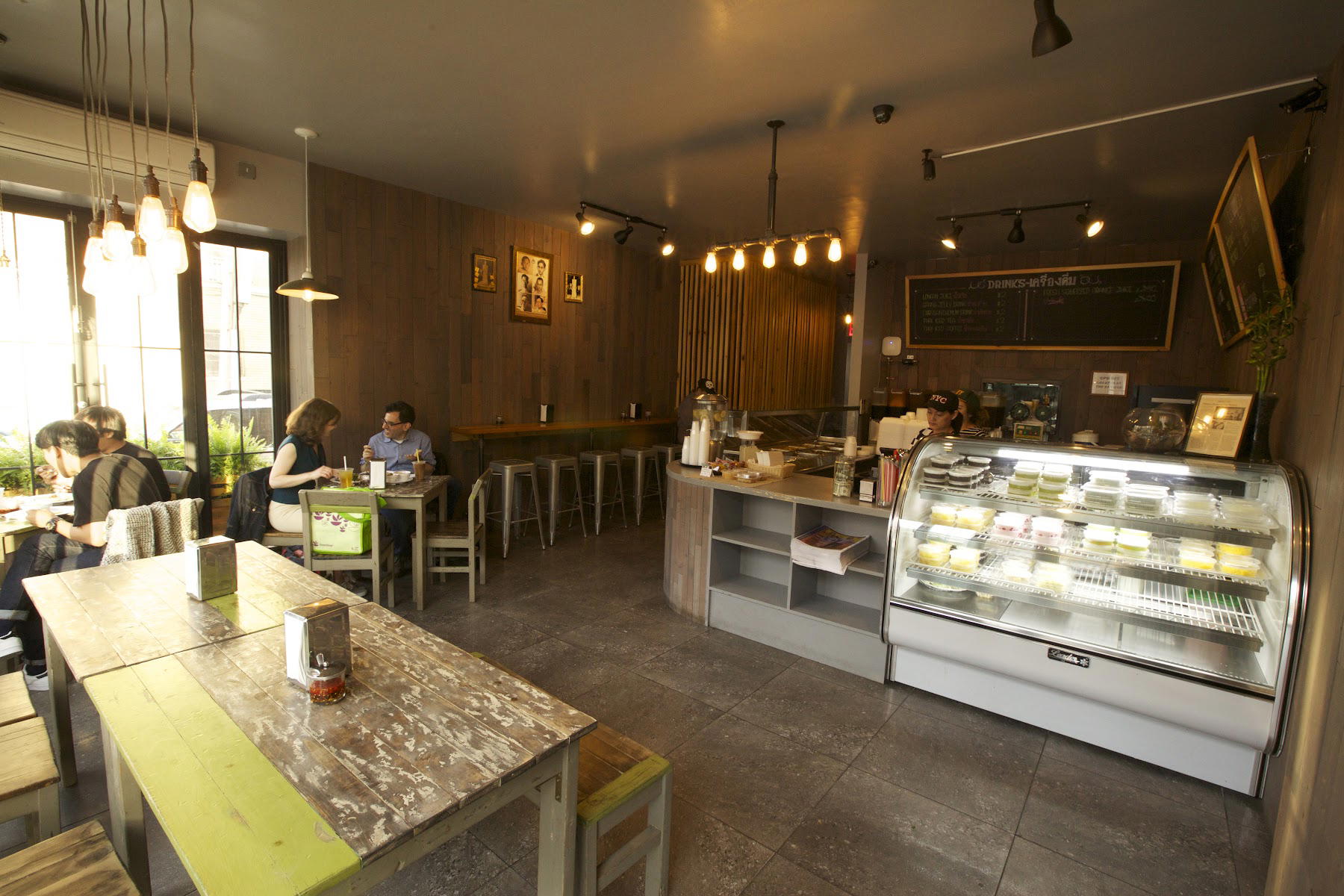
Casual and cozy Thai curry canteen with friendly counter service, airy indoor seating that can open to the street in warm weather, and simple outdoor tables under umbrellas; more functional and bustling than decorative, focused on food rather than design.