
Tabelog 100 #59
Our verdict
Keitoku gives Saitama a compact Chinese and Sichuan address with a sourcing-led point of view: fish, seasonal produce, wine, and a lighter register than the oil-heavy stereotype of the genre. Its Tabelog 100 Chinese EAST 2026 selection places it in a serious regional conversation, while the room’s small scale keeps the experience closer to a local specialist than a destination dining machine.

Pearl is the En Primeur Club membership app, where members save venues, book tables and use the concierge.
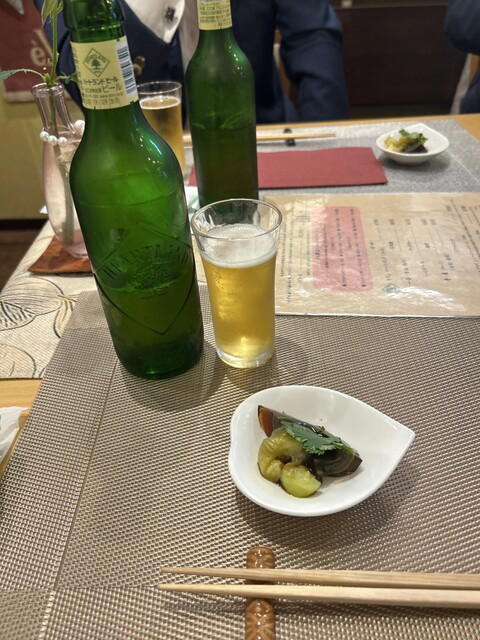
Approaching Keitoku in Saitama, the useful frame is not commuter convenience but a specialist dining stop: a restaurant listed in Chinese and Sichuan categories, with enough public recognition to merit attention beyond a casual nearby choice. Keitoku belongs in the broader Japanese-Chinese conversation, where the pleasure is often in seasoning, balance, and how familiar techniques are adapted to local dining habits.
Saitama’s dining identity is often read lazily through proximity to Tokyo. The better reading is suburban precision: bakeries, udon shops, patisseries, izakaya, and restaurants with enough regulars to keep standards sharp. For that ecosystem, Our full Saitama restaurants guide is the starting point, while nearby sweets culture appears at Acacier Kitaurawa honten and other Saitama pastry counters. Keitoku’s place is narrower and more culinary: Chinese and Sichuan cooking in a local Saitama register.
Light Chinese cooking, seasonal buying, and a measured reading of Sichuan
Japan’s serious Chinese restaurants can be read in several ways. Some lean on occasion dining and ceremony; others translate regional Chinese technique into everyday meals. Keitoku is best approached through the information available about it: a Chinese and Sichuan restaurant in Saitama whose recognition suggests more than ordinary local convenience.
That does not require inventing a fixed house style or chef biography. The appeal, as a guide entry, lies in how a Saitama restaurant in these categories can be read through balance rather than spectacle. The safer expectation is to pay attention to seasoning, aroma, and pace, while allowing the actual meal to define the details.
The drinks angle should be read in the same restrained way. Rather than assuming a single standard template, diners should expect the meal to reward attention to seasoning and structure. In Japan, where Chinese food and careful pairing can be a serious subculture, this is a useful lens, but Keitoku’s more important signal is its Chinese and Sichuan identity within Saitama’s dining field.
A Saitama restaurant with regional recognition, not Tokyo theatre
Tabelog’s Chinese EAST 100 selection in 2026 gives Keitoku its public credential. Its Tabelog score of 3.61 is not the whole story, but in this category it marks a place that has moved beyond simple local convenience into wider notice. For Saitama, that matters: the city has plenty of practical eating, while recognized Chinese and Sichuan addresses form a more specific lane.
The scale should not be overstated without firmer evidence. Keitoku is better described as a focused Saitama address rather than as a grand destination built around theatre. The stronger reading is concentration: a restaurant whose listing, category, price band, and recognition point toward a clear purpose rather than a catch-all dining room.
Against Saitama peers, the comparison is useful. HOP TRIP and Inakaya Irori sit in a casual-drinking or evening-meal band, Musashino Udon Fujiwara Kitayono honten represents regional noodle comfort, and UN GRAND PAS and Acacier Kitaurawa honten speak to pastry strength. Keitoku occupies another lane: Chinese and Sichuan cooking with Tabelog Hyakumeiten recognition, at a dinner price band listed as JPY 3,000 - JPY 3,999.
That context helps plan a broader Saitama day. The city rewards stitching together specialists rather than chasing one grand statement. Other Saitama dining rooms show the everyday scene; Keitoku shows how the same local density can support a recognized Chinese and Sichuan stop. For visitors staying nearby, Our full Saitama hotels guide, Our full Saitama bars guide, Our full Saitama wineries guide, and Our full Saitama experiences guide help frame the wider itinerary.
Who should choose it, and how to read the experience
Keitoku is strongest for diners interested in Chinese and Sichuan cooking in Saitama, especially those who value recognized local specialists over heavily staged destination dining. The value is not in a promised checklist of dishes, but in treating the restaurant as a focused category choice with clear public credentials.
That restraint is partly editorial caution and partly useful advice. The confirmed facts already give enough shape: Saitama location, Chinese and Sichuan categories, 2026 Tabelog Hyakumeiten recognition, a 3.61 listed score, and a dinner budget of JPY 3,000 - JPY 3,999. Beyond that, the best reading is to let the meal, rather than assumptions about décor or format, set expectations.
For travellers comparing Japanese dining categories, Keitoku sits apart from the performance codes of sushi counters or kaiseki rooms. It is closer to category-focused addresses that give a city texture: restaurants where a specific genre is the reason to visit, and where recognition helps separate a name from the wider field. Readers building a broader Japan list can compare that role with other focused dining in Japan and abroad: narrow premises succeed when they are executed with discipline.
Frequently asked questions
Is Keitoku a family-friendly restaurant?
Keitoku is a Chinese and Sichuan restaurant in Saitama, so suitability depends on the diners and the occasion rather than on any confirmed family-specific feature.
Is Keitoku better for a quiet night or a lively one?
The confirmed information points to a Chinese and Sichuan restaurant with Tabelog Chinese EAST 100 recognition, but it does not establish a specific room mood. Choose it for the cooking category and recognition rather than a guaranteed atmosphere.
How much does it cost to eat at Keitoku?
Pricing at Keitoku is listed as JPY 3,000 - JPY 3,999.
What is Keitoku known for?
Keitoku is known as a Chinese and Sichuan restaurant in Saitama with Tabelog Chinese EAST 100 recognition in 2026 and a listed score of 3.61.
Side-by-Side Snapshot
Nearby venues at a similar price tier for orientation.
| Venue | Cuisine | Price | Awards | Notes |
|---|---|---|---|---|
| KeitokuThis venue (the venue you are viewing) | Natural Chinese with Cantonese influence and natural wine | Not listed | Tabelog 100 #59 | Not listed |
| HOP TRIP | Moroccan Craft Beer Bar | Not listed | Tabelog 100 #10 | Yono |
| Inakaya Irori | Traditional Japanese Izakaya with Irori Hearth | Not listed | Tabelog 100 #69 | Urawa-ku |
| Tan Shari Yakiniku Tantatan Musashiurawa | Beef tongue-focused Japanese yakiniku | $30–50 | Tabelog 100 #93 | Musashi-Urawa |
| Jikasei Temomimen Suzunoki | Handmade Flat Noodle Ramen | $10–20 | Not listed | Sayamagaoka |
| Ningyocho | Okonomiyaki & Monjayaki | $30–50 | Tabelog 100 #44 | Omiya Ward |
Recognition history
Dated appearances from independent guides and award organizations, with the underlying list record or original source where available.
Tabelog 100 #59 · No. 59
Tabelog · Tabelog 100 - Chinese cuisine - EAST - 2026
Continue exploring
More in Saitama
Restaurants in Saitama
All restaurants in Saitama →




Bars in Saitama
Browse all →








Details
- Intimate
- Cozy
- Quiet
- Date Night
- Business Dinner
- Group Dining
- Solo
- Family
- After Work
- Casual Hangout
- Live Music
- Standalone
- Natural Wine
- Organic
- Natural Wine
- Local Sourcing
- A La Carte
- Set Menu
- Natural Wine
- Allergy Accommodating
- Organic Focus
Current opening hours
- Monday
- 5:30–10:30 PM
- Tuesday
- 5:30–10:30 PM
- Wednesday
- 5:30–10:30 PM
- Thursday
- 5:30–10:30 PM
- Friday
- 5:30–10:30 PM
- Saturday
- 5:30–10:30 PM
- Sunday
- Closed
Hours can change for holidays and private events. Hours as of .
Small and relaxed with a cozy, jazz-influenced atmosphere; the dining room feels intimate and quiet, suited to slow dinners with carefully prepared Chinese dishes and natural wine.