

Michelin Bib Gourmand
Our verdict
A Bib Gourmand fixture at the lower end of Hong Kong's price spectrum, Kau Kee has held Michelin recognition and Opinionated About Dining placement across multiple consecutive years. Located in North Point, this noodle shop operates within a city tradition where brevity of menu is a mark of confidence, not limitation. Three years of rankings place it firmly inside Hong Kong's most critically consistent casual noodle tier.

Pearl is the En Primeur Club membership app, where members save venues, book tables and use the concierge.
The menu
What to order
- Beef Brisket Noodles in Clear Broth
- Curry Beef Tendon Noodles
- Beef Brisket with E-Fu Noodles
A Counter Principle: What North Point Noodles Look Like When the Menu Earns Its Shortness
Approach the northern edge of Hong Kong Island on Chun Yeung Street and the rhythm of the neighbourhood shifts. North Point runs differently from Central's finance-district density or Wan Chai's restaurant-mile sprawl. The street-level economy here is functional and local, and the food operations that have survived long enough to earn critical recognition did so without the benefit of foot traffic from hotel concierges or expense-account lunches. Kau Kee at number 94 belongs to that category: a noodle shop whose address is a transit point, not a destination district, and whose reputation travels entirely by word of mouth and award citation.
That combination, low price tier, multi-year Michelin Bib Gourmand recognition, and a North Point postcode, places Kau Kee inside a specific and competitive stratum of Hong Kong dining. The Bib Gourmand designation is not a consolation bracket below starred restaurants; it is Michelin's explicit recognition of quality at modest pricing, and sustaining it across 2024 and 2025 reflects consistency over time rather than a single strong year. Opinionated About Dining's Casual Asia list adds a second independent data point: Kau Kee ranked 55th in 2023, climbed to 64th in 2024, and sits at 104th in 2025, a movement that maps onto a broader field expanding rather than any decline in the kitchen.
The Architecture of a Short Menu
In Hong Kong's noodle tradition, the discipline of a short menu is read as a statement of intent. Shops that do one or two things, a specific broth style, a particular noodle gauge, a protein combination that the kitchen has refined over years, operate on a different logic than restaurants that offer range as a selling point. The menu at a shop like this is not a list of options so much as a series of decisions the kitchen has already made on the diner's behalf.
This structure carries meaningful information. When a noodle operation anchors its identity around a narrow format, the broth is the primary variable and the noodle texture is the secondary one. Everything else, the protein cut, the garnish weight, the bowl temperature, becomes a refinement exercise rather than an opportunity for showmanship. For the diner, this means the eating experience is calibrated at a level of detail that menus with thirty items cannot sustain. Hong Kong's most critically regarded casual noodle shops, from the wonton houses of Sham Shui Po to the beef brisket specialists in older Central shopfronts, share this structural logic. Kau Kee's multi-year award positioning puts it in the company of that tradition.
For comparison within the Hong Kong noodle category, the critical record recognises a handful of shops operating at this level of scrutiny. Kwan Kee Bamboo Noodles, Lau Sum Kee on Fuk Wing Street, and Ho To Tai each represent distinct sub-styles within the same general framework of focused, low-price, high-consistency noodle work. Eng Kee Noodle Shop and Hao Tang Hao Mian in Tai Wai extend the field into territories further from Central.
North Point in the Context of Hong Kong's Dining Districts
North Point carries a specific demographic history in Hong Kong. Settled in significant numbers by Shanghainese migrants from the 1950s onward, the district developed a street-food culture that mixed Cantonese staples with mainland Chinese influences, a layering that remains visible in the density of noodle and congee shops along Chun Yeung Street and the surrounding blocks. That history is part of why a noodle shop in this postcode reads differently from an equivalent operation in Tsim Sha Tsui or Causeway Bay. The neighbourhood provides a kind of credential by association: this is an area where locals ate this food long before anyone wrote a review.
For visitors using Hong Kong's transit infrastructure, North Point MTR station puts Chun Yeung Street within easy reach from both sides of the harbour. The practical case for combining a North Point noodle meal with other Island East stops, Quarry Bay, Tai Koo, is direct, and the district's street-market character makes the walk from the station contextually useful rather than merely functional.
Where Kau Kee Sits in the Broader Price Tier
Hong Kong's restaurant pricing distributes across a wider range than most cities of comparable dining density. At one end, three Michelin-starred rooms like Caprice and Ta Vie price at the upper bracket of global fine dining. At the other, the single-dollar sign tier encompasses a category of everyday cooking that the city has been producing and refining for generations. Kau Kee occupies that lower bracket, but within it, the Bib Gourmand signal separates it from the mass of unremarked shops. The distinction matters for planning: this is not a venue you visit because it is cheap, but because it is cheap and critically verified.
Planning Comparison: Hong Kong Noodle Tier
| Venue | District | Price | Key Recognition |
|---|---|---|---|
| Kau Kee | North Point | $ | Michelin Bib Gourmand 2024–2025; OAD Casual Asia 2023–2025 |
| Kwan Kee Bamboo Noodles | Cheung Sha Wan | $ | Michelin recognised |
| Lau Sum Kee | Sham Shui Po | $ | Michelin recognised |
| Ho To Tai | Sham Shui Po | $ | Michelin recognised |
Noodle Culture Across the Region
Hong Kong's noodle shop tradition sits within a broader East and Southeast Asian category that Opinionated About Dining has been systematically ranking since 2023. The Casual Asia list pulls shops from Hangzhou, Shanghai, Fuzhou, Taichung, and Da Nang into the same comparative frame as Hong Kong operations, which allows a reader to map the relative positioning of, say, A Niang Mian Guan in Shanghai or A Bing Bao Shan Mian in Hangzhou against Hong Kong's own critical benchmarks. The same list reaches into Taiwan with entries like A Kun Mian in Taichung and Ajisai, also in Taichung, and into Vietnam with Bà Diệu in Da Nang, Bà Đông in Da Nang, and Baan Chik Pork Noodles in Udon Thani. Alongside A Xin Xian Lao on Gongnong Road in Fuzhou, it represents the kind of single-minded specialist format that tends to age well in critical rankings.
What to Know Before You Go
For planning purposes, peak demand at operations of this profile in Hong Kong typically concentrates around lunchtime on weekdays, with local worker traffic creating a queue dynamic that eases in mid-afternoon. Arriving outside the noon-to-two window is generally the practical move at this category of shop. For accommodation and bar options in Hong Kong to complete the visit, see our full Hong Kong hotels guide, our full Hong Kong bars guide, and our full Hong Kong experiences guide. For the complete picture of the city's restaurant options across all price tiers, our full Hong Kong restaurants guide covers everything from this single-dollar noodle tier to three-starred fine dining, and our Hong Kong wineries guide rounds out the picture for those extending their stay.
Frequently asked questions
Where exactly is Kau Kee?
Kau Kee is located at 94 Chun Yeung St, North Point, Hong Kong, Hong Kong.
What awards or recognition does Kau Kee have?
Kau Kee has received recognition including: Opinionated About Dining Casual in Asia Ranked #104 (2025); Michelin Bib Gourmand (2025); Opinionated About Dining Casual in Asia Ranked #64 (2024); Michelin Bib Gourmand (2024); Opinionated About Dining Casual in Asia Ranked #55 (2023).
What do people recommend at Kau Kee?
The awards record is the most reliable guide: Kau Kee holds a Michelin Bib Gourmand in both 2024 and 2025, awarded specifically for quality at an accessible price point. Opinionated About Dining ranked it #55 in Casual Asia in 2023, climbing to #64 in 2024, which signals consistent peer-level recognition across two independent evaluation systems. The short menu format, characteristic of North Point noodle shops, means the kitchen concentrates on a narrow range of dishes rather than spreading across a broad offering. That pattern typically points visitors toward the house noodle preparations as the focus of any visit.
Fast Comparison
A quick snapshot of similar venues for side-by-side context.
| Venue | Cuisine | Price | Awards | Notes |
|---|---|---|---|---|
| Kau KeeThis venue (the venue you are viewing) | Traditional Cantonese Beef Brisket Noodles | $1–10 | Michelin Bib Gourmand | Not listed |
| 8 1/2 Otto e Mezzo Bombana (Hong Kong) | 3 Michelin-Star Italian Fine Dining | $200–300 | 3 Michelin Stars · World's 50 Best #94 | Italian |
| Ta Vie | Modern French-Japanese Fine Dining | $300–500 | 3 Michelin Stars · World's 50 Best #68 | Japanese - French, Innovative |
| Caprice | Contemporary French Fine Dining | $200–300 | 3 Michelin Stars · World's 50 Best #35 | French, French Contemporary |
| Feuille | Modern Vegetable-Forward French | $200–300 | 1 Michelin Star · World's 50 Best #93 | French Contemporary |
| Neighborhood | Modern French with Asian Influences | $50–100 | 1 Michelin Star · World's 50 Best #24 | International, European Contemporary |
Recognition history
Dated appearances from independent guides and award organizations, with the underlying list record or original source where available.
Michelin Bib Gourmand
Michelin
Opinionated About Dining Casual in Asia Ranked #112
Opinionated About Dining
Full recognition history (6 entries)
Opinionated About Dining Casual in Asia Ranked #104
Opinionated About Dining
Michelin Bib Gourmand
Michelin
Opinionated About Dining Casual in Asia Ranked #64
Opinionated About Dining
Opinionated About Dining Casual in Asia Ranked #55
Opinionated About Dining
Continue exploring
More in Hong Kong
More from Chef Various
Browse all →
Restaurants in Hong Kong
All restaurants in Hong Kong →
Bars in Hong Kong
All bars in Hong Kong →
Hotels in Hong Kong
All hotels in Hong Kong →
Wineries in Hong Kong
All wineries in Hong Kong →
Details
- Well Known
- Rustic
- Lively
- Casual Hangout
- Solo
- Group Dining
- Historic Building
- A La Carte
- Family Style
- Milk Tea
- Iced Coffee
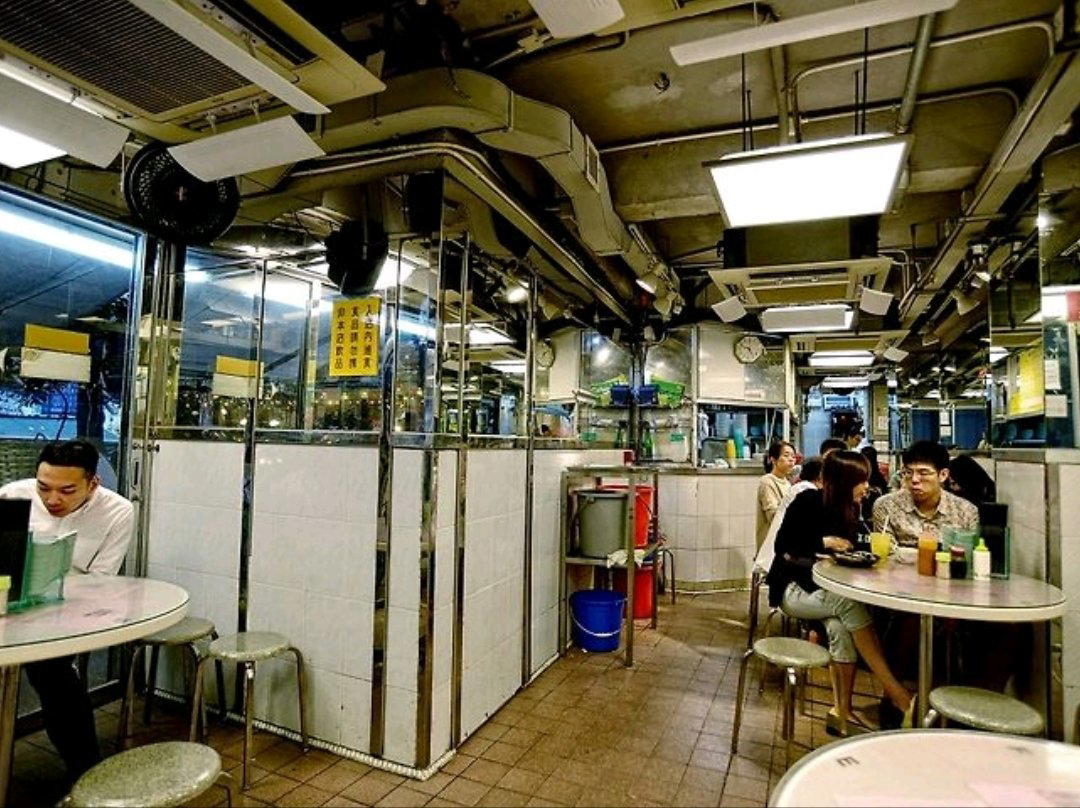
Cramped, no-frills, utilitarian space with communal round tables, slippery floors, and high-energy service; deliberately austere with focus on food over comfort.