Michelin Plate · Guía Repsol 1 Sol
Our verdict
Karak occupies a prime Ciutat Vella address between Valencia's Central Market and Town Hall Square, where chef Rakel Cernicharo, painter as much as cook, builds a Mediterranean-rooted menu stretched toward global influences. The three-tier format ('Small', 'Medium', 'Large') frames a personal, artistic vision backed by consecutive Michelin Plate recognition in 2024 and 2025. For the city's fusion tier, it sets a distinct tone.

Pearl is the En Primeur Club membership app, where members save venues, book tables and use the concierge.
The menu
What to order
- Fermented salmon
- White asparagus panna cotta
- Onion tart
Between the Market and the Square: What Karak's Address Says About Its Ambitions
The block running between Valencia's Central Market and Town Hall Square is one of the city's most trafficked corridors, a place where locals shop for produce at dawn and tourists photograph civic architecture by noon. Restaurants here exist inside a specific tension: proximity to the Mercat Central's extraordinary raw materials on one side, the pressure of a high-footfall tourist zone on the other. Most resolve that tension by defaulting toward safe regionalism. Karak, on Carrer del Músic Peydró, takes the opposite position.
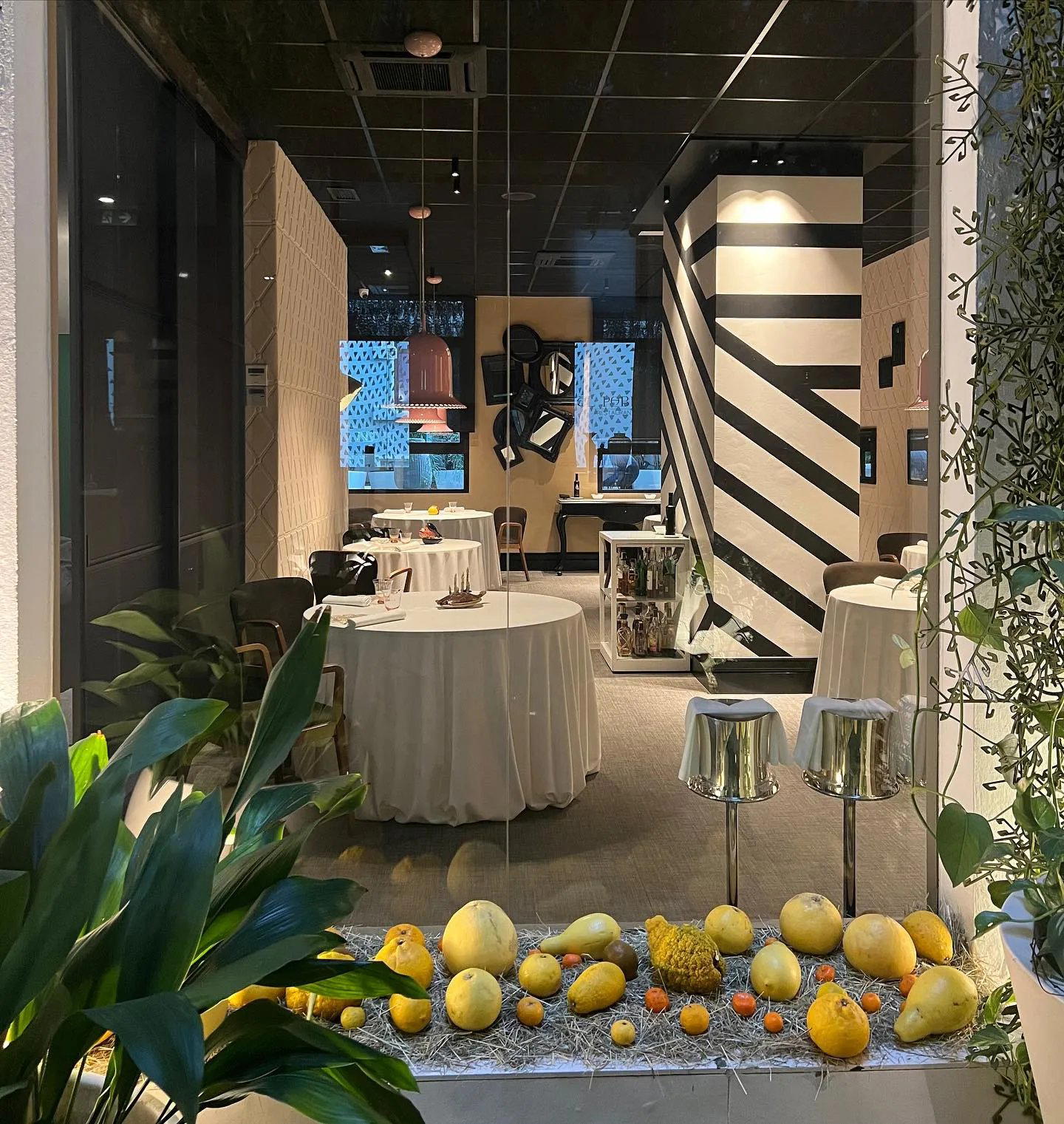
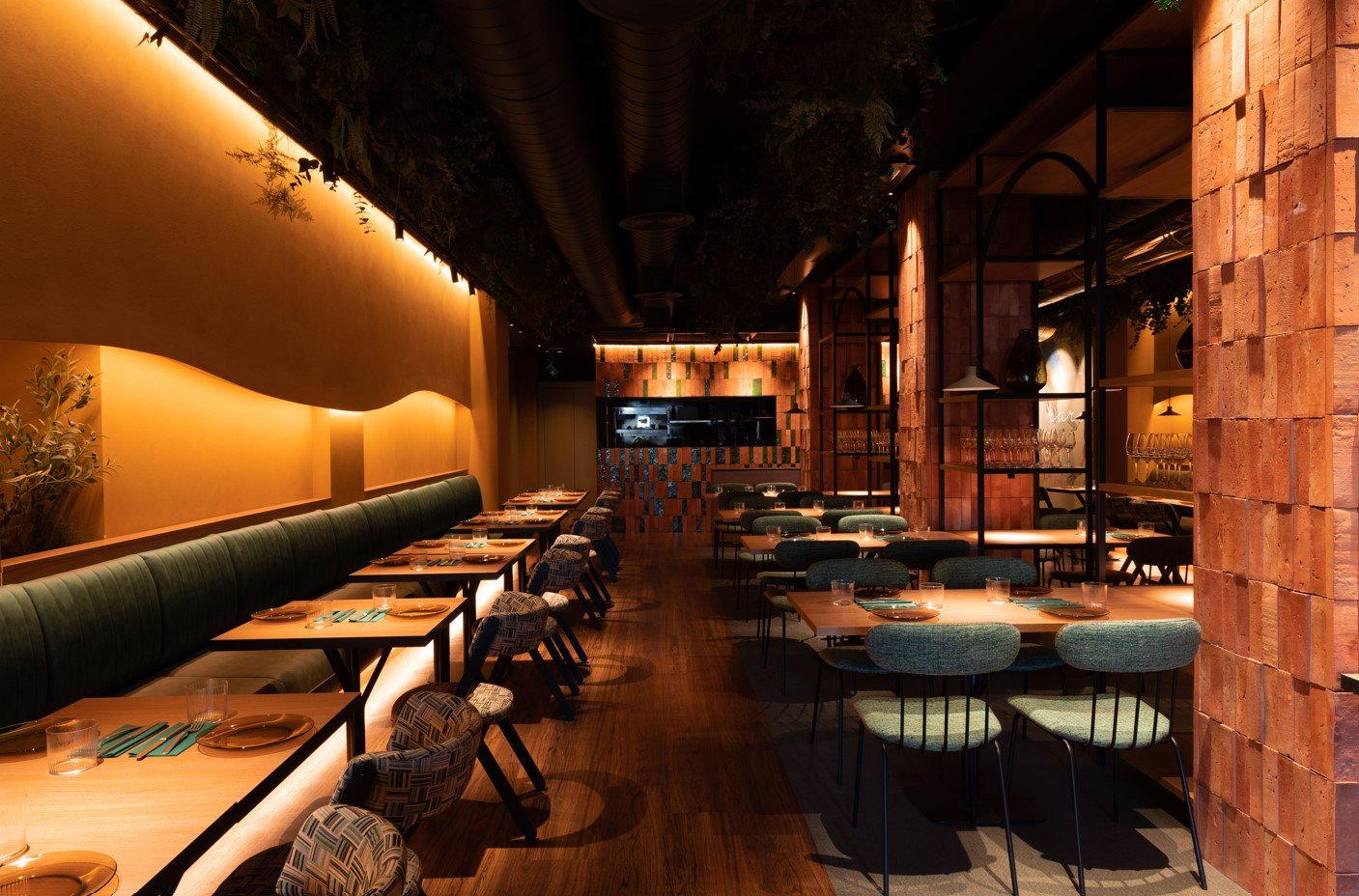
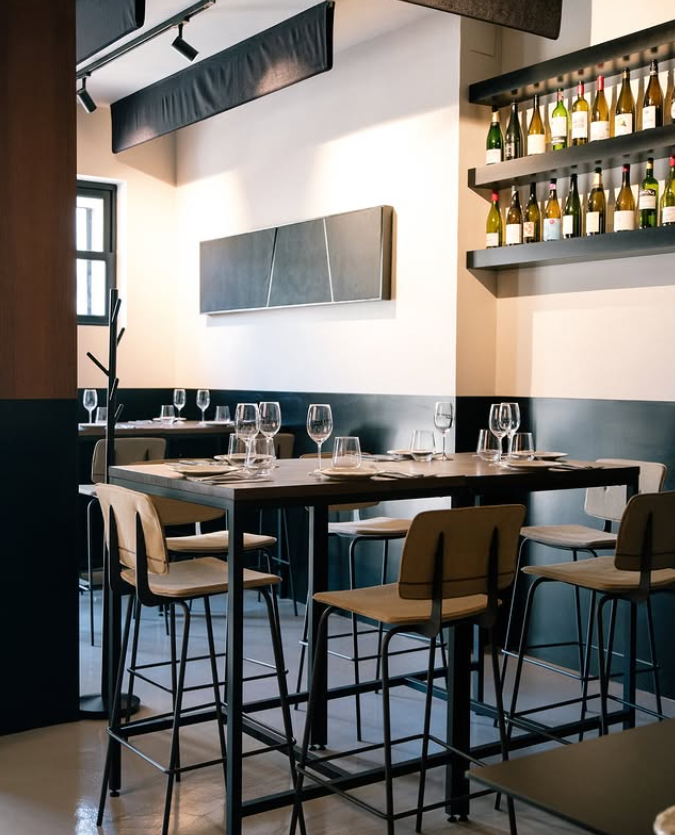
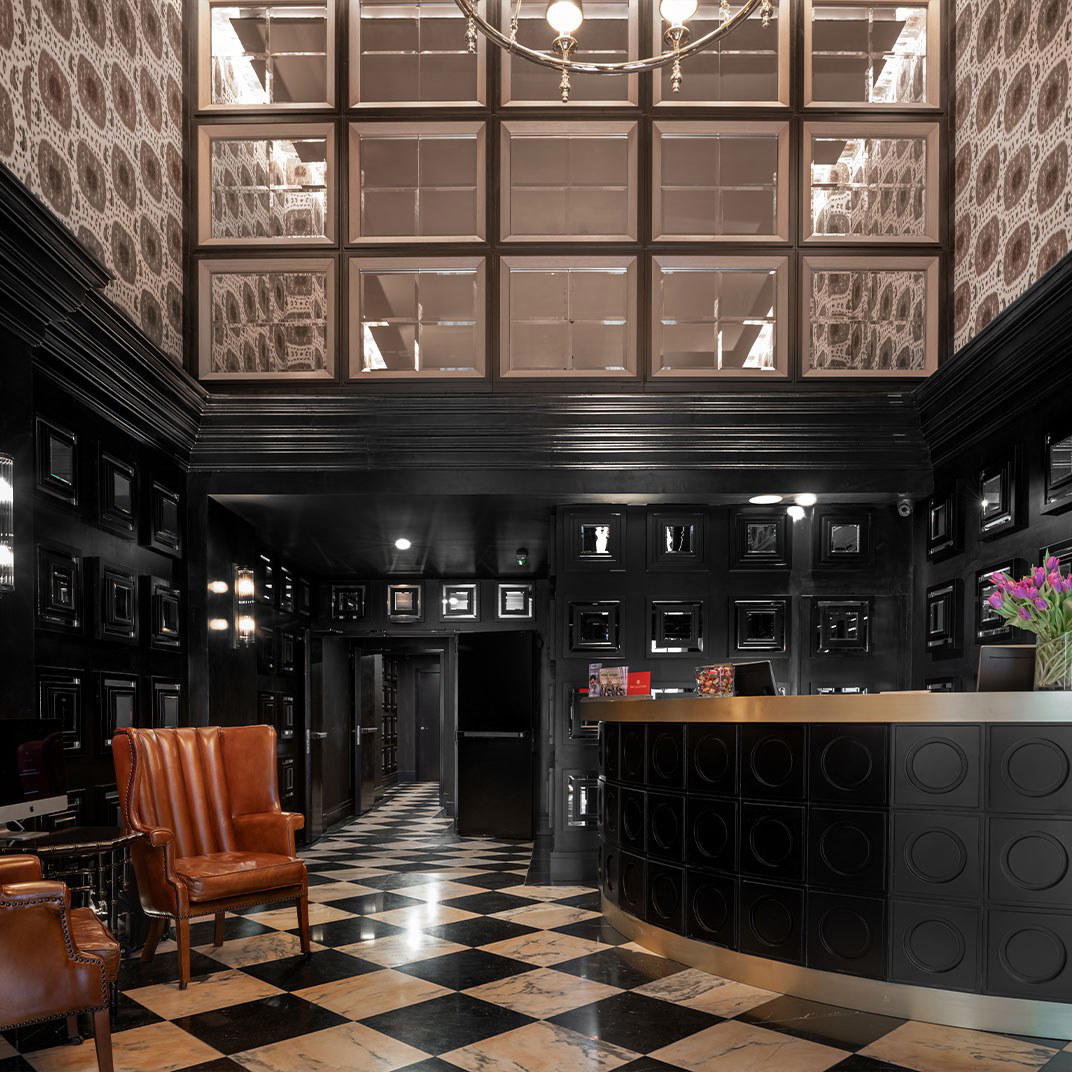
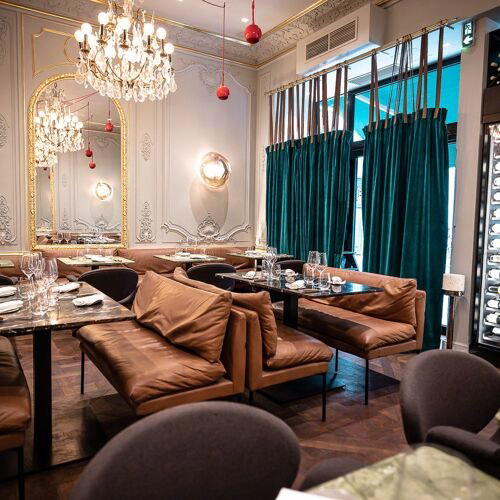
The dining room itself signals the intent before the menu arrives. A large mural occupies a prominent wall, not decorative wallpaper, but work by chef Rakel Cernicharo, whose practice extends into visual art. Her notebook sketches, which map the conceptual logic behind dishes, are part of the restaurant's communicative layer. In a city where kitchen-to-table storytelling often means a brief verbal explanation from front-of-house, this is a more committed and unusual format. The space functions as both restaurant and working document of a creative process.
Mediterranean Roots, International Reach: How Valencia's Fusion Tier Operates
Valencia's fine-dining identity is weighted toward its own tradition. The city's produce infrastructure, rice, citrus, seafood from the Albufera, gives local chefs an argument for staying close to regional forms. That's the model at much of the €€€ and above tier: El Poblet and Ricard Camarena both build from Spanish and Valencian foundations, with creative technique applied to local material. Fierro operates similarly, using a tasting menu format to push Valencian produce through a more experimental lens.
Karak occupies a narrower space within that tier. The kitchen frames Mediterranean food as a departure point rather than a destination, with international fusion elements running alongside it. This positions Karak in a different competitive set from its Michelin-starred neighbours and closer to restaurants like Fraula, which also approaches contemporary cuisine without strict regional allegiance. Within Spain's broader fusion conversation, DiverXO in Madrid at its most extreme, or Ajonegro in Logroño at the regional level, Karak's approach reads as cosmopolitan rather than confrontational. The fusion is personal rather than provocative.
That distinction matters. Spain's best-known creative kitchens, Arzak in San Sebastián, El Celler de Can Roca in Girona, Azurmendi in Larrabetzu, Aponiente in El Puerto de Santa María, Cocina Hermanos Torres in Barcelona, are almost universally anchored in a specific Spanish or regional product identity, using technique to amplify rather than replace that foundation. Karak's willingness to move across cultural reference points is less common in the Valencian market and reflects a different creative logic. The nearest international parallel in terms of cultural fusion breadth might be something like Arkestra in Istanbul, where menu geography is similarly open-ended, or Kaido Sushi Bar in Valencia, which takes a Japanese discipline into a Mediterranean city context.
The Menu Structure and What It Implies
The three-tier format, Small, Medium, and Large, under the rubric 'From survival to transcendence' is a deliberate framing device. Menus structured this way ask the diner to self-select their level of engagement before they arrive, which shifts the contract between kitchen and table. It's an approach that works when the kitchen has sufficient range to justify the scale differences, and when each tier represents a genuinely distinct experience rather than simply more courses. The slogan itself carries an artistic register that aligns with Cernicharo's dual identity as chef and visual artist.
What the structure also does is give the restaurant flexibility across different types of visit. A guest at the smaller end isn't eating a truncated version of the full menu; they're engaging with the concept at a different depth. For a Ciutat Vella restaurant drawing both local regulars and international visitors, that range is commercially intelligent and editorially consistent with the artistic framework. The menu at this price tier in Valencia (€€€, comparable to Saiti or Llisa Negra across the city) positions Karak as accessible relative to the €€€€ tier occupied by Camarena and Riff, without abandoning the creative register.
Michelin Recognition and What the Plate Signals
Consecutive Michelin Plate recognition in 2024 and 2025 places Karak in the inspectors' active radar without the star designation. The Plate, awarded to restaurants that offer good cooking, functions as an indicator of consistent quality rather than a ceiling. In Valencia's Michelin map, which includes two-star and one-star entries at the upper tier, the Plate positions Karak as a restaurant whose cooking is taken seriously but which operates in a different register from the tasting-menu-only formats that dominate starred dining here. For the diner calibrating where Karak sits: it's a recognition of competence and personality, not a marker of technical ambition equivalent to starred peers.
At that volume and score, the restaurant is drawing a broad audience, not just critics and dedicated food tourists. This is consistent with its location between two of Valencia's highest-traffic civic spaces and with a menu format that scales to different levels of commitment.
Planning a Visit
Karak sits at Carrer del Músic Peydró, 9, in the Ciutat Vella district, a short walk from both the Central Market and Town Hall Square, making it accessible from most of the city centre on foot. The €€€ price positioning places it mid-tier for Valencia's creative dining scene.
For those building a broader Valencia itinerary, EP Club covers the city's full dining, drinking, and hospitality scene across dedicated guides: our full València restaurants guide, our full València hotels guide, our full València bars guide, our full València wineries guide, and our full València experiences guide.
Frequently asked questions
What's the pricing like at Karak?
Pricing at Karak is listed as €€€.
What's Karak known for in terms of accolades?
Karak has received recognition including: Boasting a magnificent location in the heart of the city, between Valencia's Central Market and Town Hall Square, media-savvy chef Rakel Cernicharo offers diners a highly cosmopolitan and personal cuisine, based on Mediterranean food but wi….
What do people recommend at Karak?
The menu is structured around three tiers, Small, Medium, and Large, under the slogan 'From survival to transcendence', so the first decision is how far into the kitchen's range you want to go. Karak holds consecutive Michelin Plate recognition for 2024 and 2025, confirming the inspectors consider this a kitchen worth tracking. Chef Rakel Cernicharo's approach is Mediterranean-rooted with deliberate international inflection, so dishes tend to reflect both Valencia's produce strengths and a broader, more personal culinary perspective. The Large format gives the fullest picture of what the kitchen is doing.
How would you describe the cuisine at Karak?
Where is Karak located?
Karak is located at Carrer del Músic Peydró, 9, Ciutat Vella, 46001 València, Valencia, Spain, València.
Cuisine and Awards Snapshot
| Venue | Cuisine | Price | Awards | Notes |
|---|---|---|---|---|
| KarakThis venue (the venue you are viewing) | Modern Mediterranean Fusion | $50–100 | Michelin Plate · Guía Repsol 1 Sol | Not listed |
| Ricard Camarena | Modern Vegetable-Focused Mediterranean Fine Dining | $200–300 | 2 Michelin Stars · World's 50 Best #96 | Modern Spanish, Creative |
| Riff | Modern Mediterranean Fine Dining | $100–150 | 1 Michelin Star · Macarfi 7.8 Food Rating | Mediterranean, Creative |
| Llisa Negra | Modern Spanish Grill & Wood-Fired Paella | $150–200 | Michelin Plate · Macarfi 7.2 Food Rating | Not listed |
| Saiti | Modern Mediterranean | $50–100 | Michelin Plate · Guía Repsol 2 Soles | Not listed |
| Toshi | Japanese-Mediterranean Fusion Omakase | $100–150 | Michelin Plate · Macarfi 7.2 Food Rating | Not listed |
Recognition history
Dated appearances from independent guides and award organizations, with the underlying list record or original source where available.
Michelin Plate
Michelin
Guía Repsol 1 Sol
Guía Repsol
Full recognition history (4 entries)
Michelin Plate
Michelin
Michelin Plate
Michelin