Kappo

Michelin Plate
Our verdict
A twelve-seat omakase counter on MacArthur Boulevard, Kappo earns a 2025 Michelin Plate for its dual-sitting format and the precision of Chef Tiago Penão's work fusing traditional Japanese technique with contemporary sensibility. The room is intimate and the hospitality explicit — Omotenashi is part of the stated program, not an afterthought. Advance booking is essential.

Pearl is the En Primeur Club membership app — saves, bookings, and concierge access live there. Same editors, same standards.
- Address
- 4822 MacArthur Blvd NW, Washington, DC 20007
- Phone
- (202) 885-9086
- Hours
- Mon ClosedTue–Thu 5:30–11 PMFri–Sun 4–11 PM
- Website
- kappodc.com
- Directions
- Get directions
- Booking
- Book on Tock
The menu
What to order
- Wagyu_beef_steak
- Chawanmushi_with_wagyu_and_foie_gras
- Lobster_saikyo_misoyaki
Counter Culture: What Kappo Says About D.C.'s Japanese Dining Moment
MacArthur Boulevard is not where most diners look for a serious omakase counter. The stretch through Palisades reads residential, unhurried, faintly suburban — the opposite of the concentrated dining districts downtown where D.C.'s Michelin-recognised Japanese spots tend to cluster. That dislocation is part of what makes Kappo instructive. The twelve-seat counter on this quiet Northwest address has earned a 2025 Michelin Plate, which places it on the map of credentialled Japanese dining in the city without the logistical gravity of a Penn Quarter or Shaw address. Walking in, the gap between the exterior context and the interior register is immediate and deliberate.
Tokyo vs. Kyoto, Translated to a D.C. Counter
The tension that defines serious Japanese dining abroad often traces back to a metropolitan argument: the Tokyo approach, which prizes technique for its own sake, speed of execution, and the spectacle of innovation, against the Kyoto sensibility, where restraint and hospitality are the architecture and the food moves within them rather than above them. Kappo, as a format and as a name, sits firmly in the latter tradition. The Japanese term from which it takes its name — "cut and cook", is not a culinary philosophy so much as a structural one. Kappo restaurants in Japan historically occupied a middle register between the formal ceremony of kaiseki and the looser improvisation of izakaya, giving the chef room to respond to guests directly. What that means in practice is a counter format where the distance between kitchen and diner collapses, and hospitality becomes a live variable rather than a scripted sequence.
That Omotenashi, the particular Japanese conception of selfless, anticipatory hospitality, is explicitly named as part of Kappo's program is significant. In D.C.'s growing omakase tier, which includes counters like Omakase at Barracks Row and Shōtō, the service dimension varies considerably. Some operations are technically focused, running tight, choreographed progressions with minimal interaction. Others position the counter as a conversation. Kappo's stated emphasis on Omotenashi signals an alignment with the Kyoto end of that spectrum, where the guest's experience as a whole, not just the food, is the primary output.
Chef Tiago Penão and the Logic of Non-Japanese Mastery
Chef Tiago Penão's presence at the counter is itself a point worth contextualising. Non-Japanese chefs leading omakase programs in the United States have become less exceptional over the past decade, but the credential question remains live. The 2025 Michelin Plate is the relevant marker here: it signals that the inspectors found consistent quality and care without flagging any conceptual mismatch. The approach described, traditional technique fused with contemporary sensibility, executed through precise and well-conceived dishes, places Kappo in a cohort of counters that use Japanese structure as a rigorous frame rather than a set of fixed recipes. For comparison, the Tokyo counters that attract the most sustained international attention, including those recognised by Michelin in Japan's capital such as Myojaku and Azabu Kadowaki, often share that same axis: structural fidelity paired with the chef's own interpretive voice.
Within D.C.'s broader fine dining field, the Michelin Plate sits below the Star tier occupied by restaurants like Albi, but it represents meaningful critical acknowledgment in a city where the Michelin Guide has expanded its coverage significantly since its D.C. launch. The Plate designation specifically indicates food quality worth noting, a credential that carries more weight in a small-format, high-ticket counter than in a larger operation where consistency is easier to achieve through volume.
The Room: Twelve Seats, Two Sittings
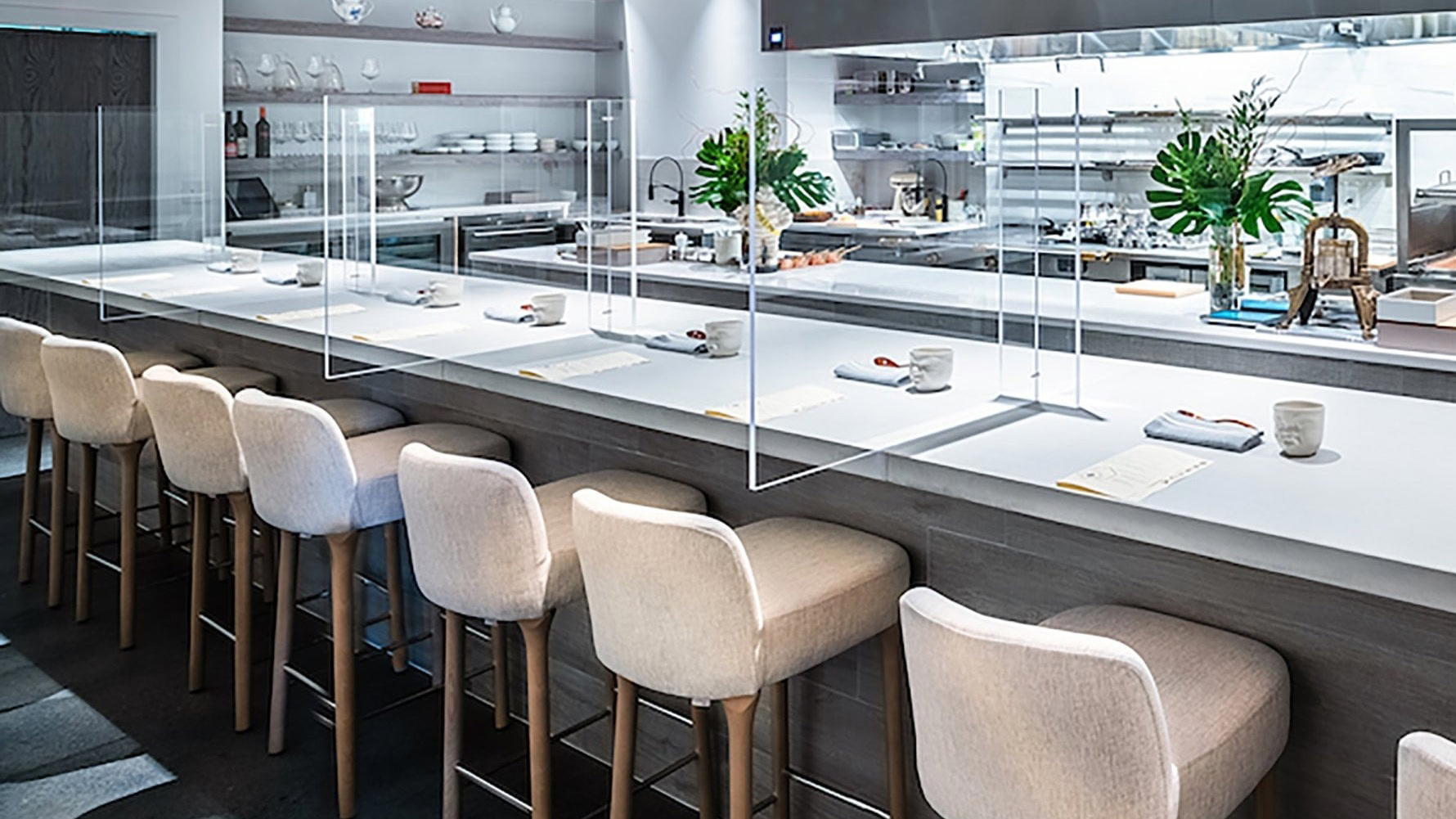
The counter seats twelve, which is at the intimate end of the D.C. omakase range but not the smallest available. Two sittings per service means the kitchen runs the same sequence twice in an evening, a structure that imposes consistency on the team and limits total covers significantly. For context, counters operating on this model typically serve fewer than thirty guests per evening, which creates the pricing logic common to this tier: high per-cover cost as a function of limited throughput rather than ingredient cost alone.
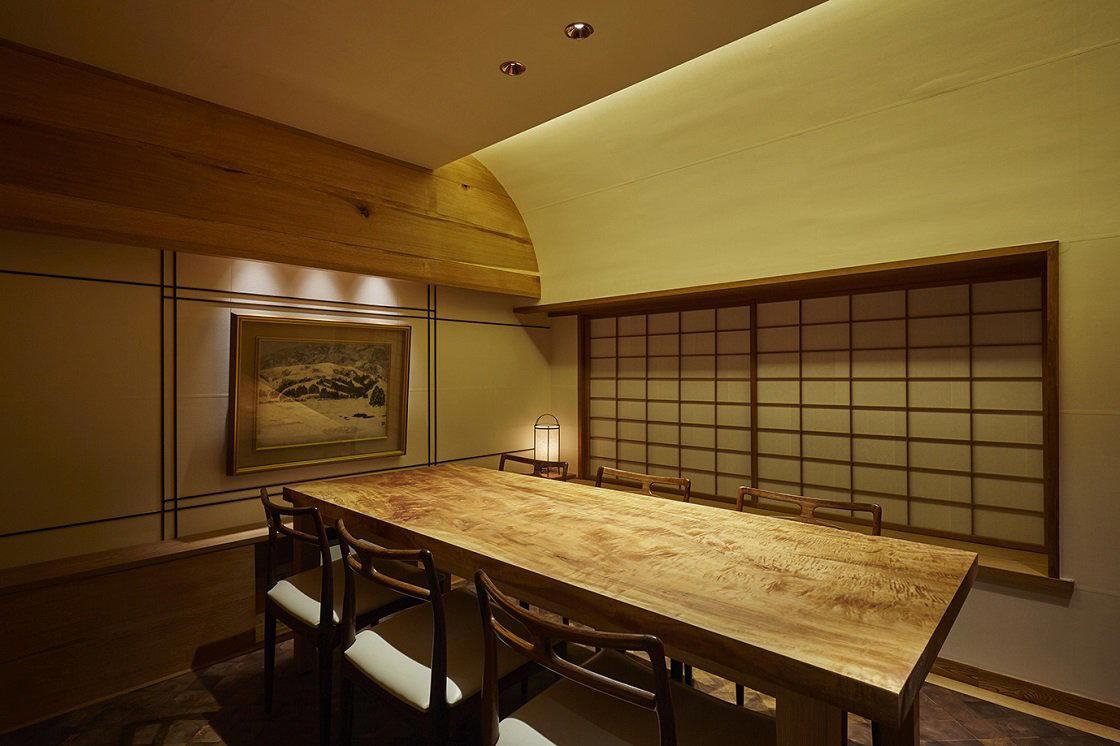
The room has been recently refurbished, and the contrast between the residential surroundings and the interior elegance is a recurring note from those who have visited. The physical environment at a twelve-seat counter matters in ways it does not at larger restaurants, every element of the room is within sightline, and the design either supports the intimacy of the format or works against it. The description of Kappo's room as elegant and intimate suggests the former.
Kappo in D.C.'s Wider Japanese Dining Picture
Washington's Japanese dining scene has deepened over the past several years, moving beyond the sushi-and-ramen binary that defined it through much of the 2010s. The emergence of serious omakase counters, counter-format Japanese barbecue operations like Beloved BBQ at Love, Makoto, and the expansion of the Michelin Guide's coverage have collectively raised the ceiling. Kappo occupies a specific niche within that: counter-format, single-menu, high-hospitality, with a chef whose technical range spans both Japanese tradition and contemporary register. That combination appears less frequently in D.C. than in New York or Los Angeles, which makes the Palisades location less of an anomaly and more of a statement about where the city's serious Japanese dining can now sustain itself.
Kappo is D.C.'s contribution to that national conversation, situated on an unexpected block in the northwest quadrant of the city.
Planning Your Visit
Kappo operates two sittings per service, which means the window for each seating is fixed and latecomers disrupt a kitchen running to a precise rhythm. Advance booking is necessary, the twelve-seat format fills quickly, particularly on weekends. The address at 4822 MacArthur Blvd NW is not metro-accessible in any practical sense; driving or a rideshare from central D.C. is the standard approach. The price range sits at the $$$$ tier, consistent with D.C.'s other high-format omakase counters. For a broader orientation to where Kappo sits within the city's dining field, see our full Washington, D.C. restaurants guide, as well as our guides to hotels, bars, wineries, and experiences in the city. If you are planning a broader fine dining evening in the area, Perry's is a nearby alternative for a different register entirely.
Frequently asked questions
What do people recommend at Kappo?
The omakase format at Kappo means there is no menu to choose from, the kitchen runs a single sequence for all twelve diners, so the question of what to order does not apply in the usual sense. What guests consistently note is the precision of the dishes and the quality of the hospitality, with Omotenashi explicitly part of the program. The 2025 Michelin Plate confirms that the inspectors found the food at a level worth recommending across the full sequence. Chef Tiago Penão's approach, fusing traditional Japanese technique with contemporary sensibility, means the menu changes to reflect the kitchen's current direction rather than fixed signature dishes. If you have dietary restrictions or preferences, communicating them at the time of booking is standard practice for counters operating at this level. For comparable omakase experiences in the city, Omakase at Barracks Row and Shōtō offer points of comparison at a similar price tier.
Side-by-Side Snapshot
| Venue | Cuisine | Price | Awards | Notes |
|---|---|---|---|---|
| KappoThis venue — the venue you are viewing | Kappo-Style Japanese Tasting Menu | $150–200 | Michelin Plate | Not listed |
| Albi | Modern Levantine Fine Dining | $300–500 | 1 Michelin Star · World's 50 Best #6 | United States, Middle Eastern |
| Causa | Modern Peruvian Fine Dining | $150–200 | 1 Michelin Star · James Beard Award Best Chef: Mid-Atlantic | Peruvian |
| Oyster Oyster | Modern Vegetable-Focused Tasting Menu | Not listed | 1 Michelin Star · James Beard Award Outstanding Chef #1 | New American, Vegetarian, Vegetarian (Sustainable) |
| Bresca | Modern French Bistronomy | $150–200 | 1 Michelin Star · James Beard Award Semi Finalist | Modern French, Contemporary |
| Gravitas | Modern American Fine Dining | $150–200 | 1 Michelin Star | New American, Contemporary |
Recognition history
Dated appearances from independent guides and award organizations, with the underlying list record or original source where available.
Michelin Plate
Michelin
Full recognition history (2 entries)
Michelin Plate
Michelin
Continue exploring
More in Washington DC
Restaurants in Washington DC
Browse all →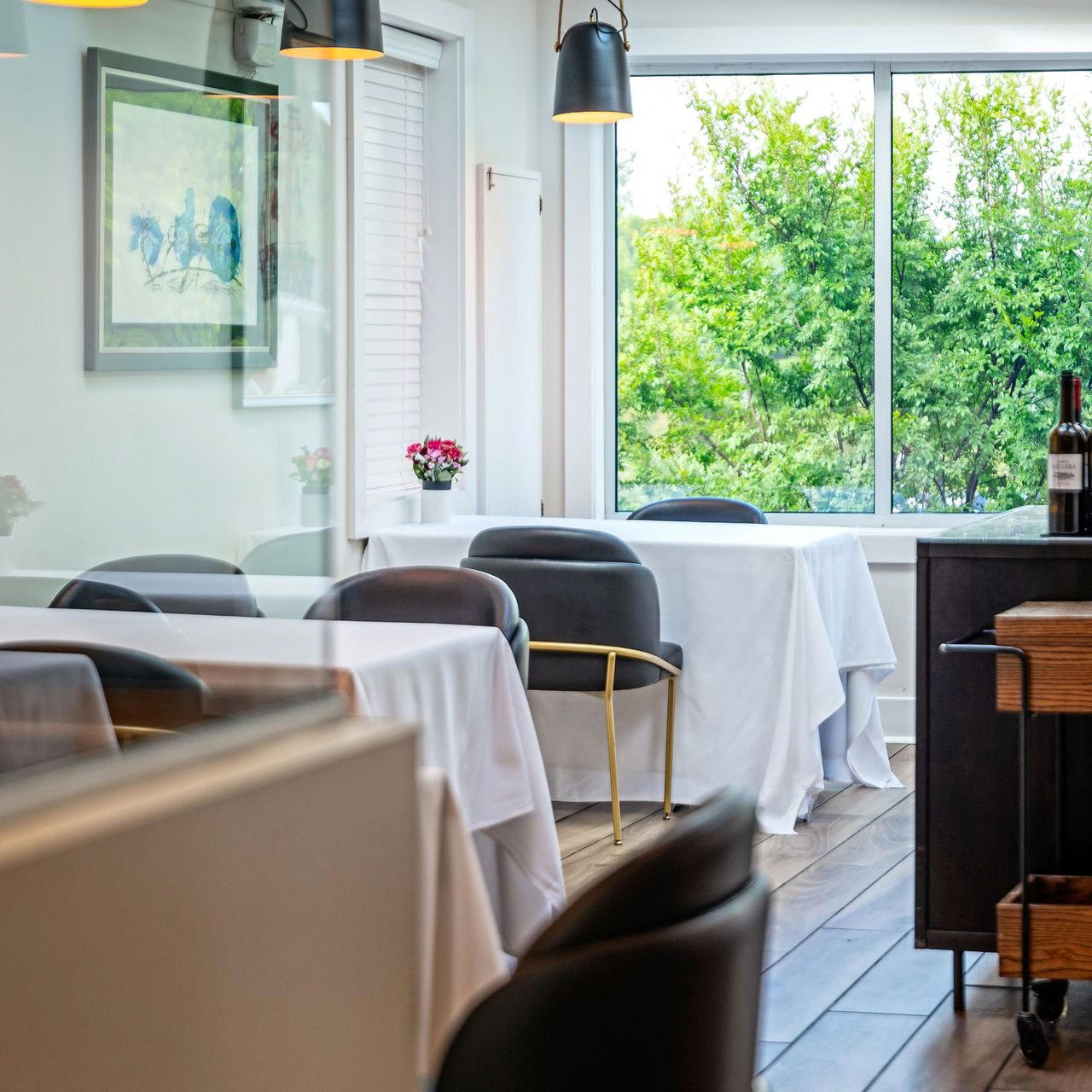
Bars in Washington DC
Browse all →
Hotels in Washington DC
Browse all →
Details
- Cozy
- Elegant
- Minimalist
- Intimate
- Date Night
- Special Occasion
- Chefs Counter
- Open Kitchen
- Sake Program
- Extensive Wine List
- Tasting Menu
- Counter Dining
- Sake
- Wine
Current opening hours
- Monday
- Closed
- Tuesday
- 5:30–11 PM
- Wednesday
- 5:30–11 PM
- Thursday
- 5:30–11 PM
- Friday
- 4–11 PM
- Saturday
- 4–11 PM
- Sunday
- 4–11 PM
Hours can change for holidays and private events. Last verified .
Cozy and minimalist decor with counter seating facing the sunken kitchen.