
Kamezawa Do fits Tokyo’s quieter gift-sweets tradition rather than the city’s tasting-menu theatre. In Jinbocho, a district shaped by bookshops, students, publishers, and old cafés, its take-out wagashi format makes sense: precise Japanese sweets for visits, family tables, and small celebrations, backed by selection in Tabelog’s 2023 Tokyo Japanese sweets and sweets-café 100 list.
Pearl is the En Primeur Club membership app — saves, bookings, and concierge access live there. Same editors, same standards.
- Address
- Japan, 〒101-0051 Tokyo, Chiyoda City, Kanda Jinbocho, 1 Chome−12−1 帆刈ビル 1F
- Phone
- +81 3-3291-1055
- Website
- kamezawado.co.jp
 Saves & bookings on Pearl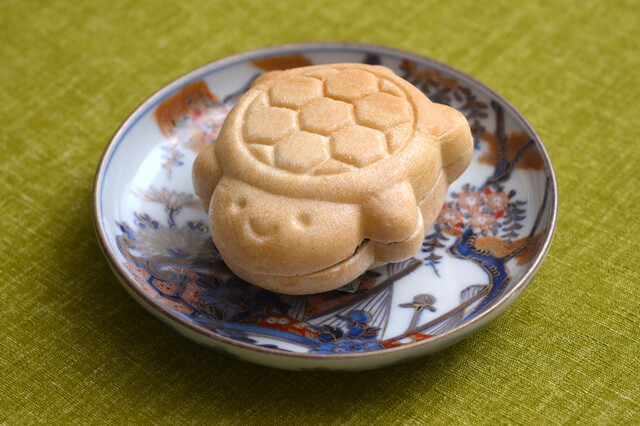
Jinbocho announces itself in paper before pastry: secondhand bookshops, narrow storefronts, office workers cutting through side streets, and the slower rhythm of a district that has never needed neon to prove its appetite. Here, wagashi works differently from restaurant dining. It is bought with purpose, carried carefully, and opened elsewhere: at home, at an office, for a family visit, or as thanks. Kamezawa Do belongs to that tradition, where the occasion is carried in the box, not staged at the table.
Tokyo’s premium food culture is often read through counters and reservation scarcity, but its sweets culture follows another code. Wagashi shops trade in repeat use, seasonal awareness, and the social grammar of gifting. Dorayaki and daifuku are not just snack categories; they belong to a language of visits, apologies, congratulations, and household hospitality. Selection for Tabelog’s 2023 Tokyo Japanese traditional sweets and Japanese sweets café 100 list signals reputation in a category built less on spectacle than consistency.
Jinbocho's celebration food is built for carrying, not lingering
The absence of eat-in service is part of the point. Tokyo has many sweets cafés for a seated break, but the older wagashi-shop rhythm is transactional in the dignified sense: choose, pay, leave, present. For milestone meals, that makes the shop useful in a way a restaurant cannot be. A box of Japanese sweets can precede dinner, follow a home-cooked gathering, or cross town as a host gift. It suits birthdays and family visits because it does not demand the occasion for itself.
That format also separates it from Jinbocho’s casual meal economy. The neighbourhood has long supported curry shops, coffee rooms, university-adjacent lunches, and practical cafés; comparison venues such as Trois Bagues, Gavial, Sabouru 2, Ishigama Bake Bread Sabo Tamutamu, and Sabouru sit in that broader low-to-mid everyday bracket. Wagashi has a narrower role. It is not where the group spends the afternoon; it is where the person who understands the errand stops before the gathering begins.
The useful reading is category discipline. Dorayaki and daifuku are familiar forms, so the difference is not novelty but execution, local trust, and suitability for purpose. In Tokyo, that can matter more than menu sprawl. A shop with take-out service, no private rooms, and a sweets-focused identity is easy to misread as a restaurant. Judged as occasion infrastructure, it becomes more interesting: compact, practical, and culturally specific.
Recognition matters differently in Tokyo's wagashi tier
Tabelog’s Hyakumeiten selections are not Michelin stars, and should not be treated as the same credential. Their value is in mapping strong category performers across a defined field. For Japanese traditional sweets in Tokyo, that field is dense, from department-store counters to neighbourhood specialists and long-running family shops. Selection in the 2023 Tokyo sweets list places Kamezawa Do inside a vetted citywide conversation, not just a local errand circuit.
That matters for travellers. Tokyo’s restaurant scene can reward obsessive planning, but wagashi rewards understanding how locals use food socially. A visitor who only books omakase counters misses a quieter layer of Japanese hospitality: sweets taken to someone else’s table, shared with tea, or bought to mark the season without turning the moment into performance. The shop’s family-friendly listing reinforces that reading. This is not adult-only ceremony; it belongs to domestic occasions as much as connoisseurship.
There is also price context, without making the visit bargain hunting. Jinbocho supports everyday spending patterns, and sweets shops in this bracket compete on trust and habit rather than luxury theatre. Against peer casual venues nearby, the appeal is not a longer stay or broader menu; it is a focused purchase with social value. That is why wagashi can feel disproportionately meaningful at a celebration. The object is modest, but the gesture is legible.
How to fold it into a Tokyo food day
The strongest itinerary logic is to treat this as a precise stop, not the centre of a day. Jinbocho pairs naturally with bookstores, academic Tokyo, and nearby cultural wandering; the sweets purchase can sit before a train ride, after coffee, or on the way to a family meal. For a fuller restaurant plan, Our full Tokyo restaurants guide gives the broader dining map, while Our full Tokyo hotels guide, Our full Tokyo bars guide, Our full Tokyo wineries guide, and Our full Tokyo experiences guide cover the surrounding trip architecture.
For nearby or same-city contrast, the useful comparison is breadth. Tokyo’s casual dining can move from grilled seafood at. 鮪と炭火焼き うお炭 秋葉原店 to themed café culture at 2D Cafe, curry at 3 Chome no Curry Ya San, yakitori at 124. KAGURAZAKA (Yakitori), and Shinjuku dining at 12/10 Shinjuku ten. Kamezawa Do sits outside that meal-first logic. It is the sweet punctuation mark in a day built around other rooms.
Across Japan and beyond, that distinction helps frame how portable food carries meaning. A sukiyaki meal such as -Grilled beef Sukiyaki- KAMAKURA TANUKIAN 鎌倉 たぬき庵 in Kamakura anchors an occasion through sitting down; a café such as.cafe in Osaka or.know in Kumamoto shapes time through atmosphere; a focused counter or specialist address such as (Shoku) Vietnam in Kawasaki, [Curry Senmon Ten] Maruyama Kyoju. in Sapporo, [ki:] in Kyoto, Jōdo Saké Bar in Los Angeles, or Onigiri Time in Pasadena shows how narrow formats carry cultural weight. Wagashi does the same, with a quieter social function: it turns arrival into a gesture.
The critical read is simple. This is not for diners seeking a long meal or chef-driven narrative. It is for travellers who understand that Tokyo’s food culture is also made of errands done well: the correct sweet, from the correct kind of shop, carried to the correct occasion. In a city fluent in ceremony, that restraint is not minor. It is the form.
Peers Worth Knowing
Comparable venues by price and recognition.
| Venue | Cuisine | Price | Notes |
|---|---|---|---|
| Kamezawa DoThis venue — the venue you are viewing | Japanese Confectionery (Wagashi) | $ | Not listed |
| Tonkatsu Marugo | Tonkatsu (Japanese Pork Cutlet) | $ | Chiyoda |
| Oniyanma Shimbashi ten | Stand-up Sanuki Udon | $ | Minato |
| Asakusa Naniwaya | Traditional Japanese taiyaki & kakigori café | $ | Taitō |
| Asahi Chonai Kai | Sapporo-style miso ramen | $ | Itabashi |
| E-chan Shokudo | Early-morning Tokyo ramen counter | $ | Meguro |
Recognition history
Dated appearances from independent guides and award organizations, with the underlying list record or original source where available.
Tabelog 100 #20 · No. 20
Tabelog · Tabelog 100 - Japanese traditional sweets / Japanese sweets cafe - TOKYO - 2023









At a Glance
- Classic
- Cozy
- Casual Hangout
- Family
- Solo
- Standalone
Current opening hours
- Monday
- 9:30 AM–6 PM
- Tuesday
- 9:30 AM–6 PM
- Wednesday
- 9:30 AM–6 PM
- Thursday
- 9:30 AM–6 PM
- Friday
- 9:30 AM–6 PM
- Saturday
- 10 AM–6 PM
- Sunday
- Closed
Hours can change for holidays and private events. Last verified .
Traditional, neighborhood confectionery atmosphere with a small, old-established shop feel focused on takeaway sweets.