
Tabelog 100 #90
Our verdict
Kakui Ni Iku Ka puts Kobe’s yoshoku tradition into a compact lunch-counter frame, with hamburger steak at the center rather than as a supporting plate. The draw is less about ceremony than structure: a narrow category, modest pricing, 12 seats, and a 2025 Tabelog 100 Yoshoku WEST selection that places it inside western Japan’s current conversation around Japanese-style Western cooking.

Pearl is the En Primeur Club membership app, where members save venues, book tables and use the concierge.
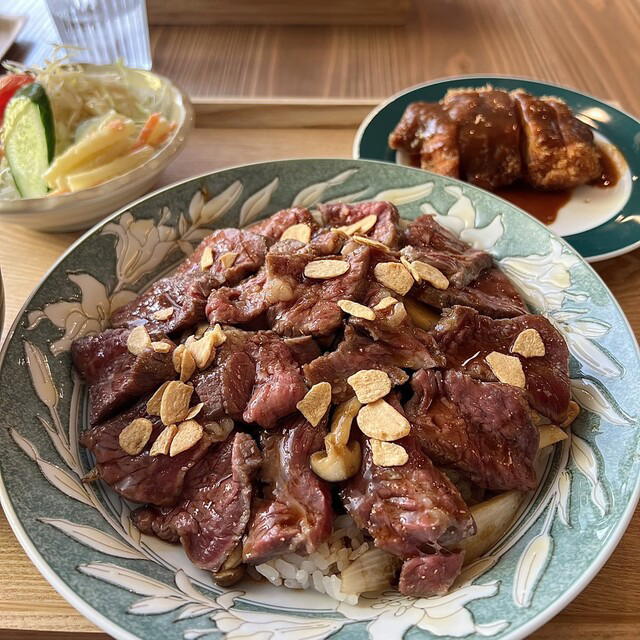
Kobe is not only the polished face of destination dining. The approach to Kakui Ni Iku Ka sets a quieter register: Kobe, a modest mood, and the compressed rhythm of a price-conscious yoshoku meal rather than harbor-view steakhouse theater. Japanese-style Western cooking often reveals itself through familiar dishes and tightly edited menus. Built on adaptation rather than luxury, the category translates Western technique into Japanese lunch culture through demi-glace, cutlets, omelet rice, croquettes, and hamburger steak.
In Kobe, that tradition sits beside the city’s louder beef narrative. Visitors often think first of teppanyaki and wagyu, but everyday Western-style cooking has its own hierarchy. Kakui Ni Iku Ka belongs to the focused end, where the public category already makes the point. Its public category is yoshoku and hamburger steak, and its 2025 selection for Tabelog 100 Yoshoku WEST gives the restaurant a signal beyond neighborhood loyalty. In a city dominated by premium beef, this is a different Kobe choice: price-conscious and built around a narrow plate vocabulary.
Hamburger steak as the whole argument, not a side note
Yoshoku menus can sprawl from fried shrimp to curry, hayashi rice, pork cutlet, gratin, and omurice, with hamburger steak as one familiar option. Stronger contemporary yoshoku rooms often narrow the field, repeat the format, and ask whether one everyday dish can carry the restaurant’s identity. Kakui Ni Iku Ka works in that lane, with hamburger steak named in its public category rather than buried in a longer Western-Japanese menu.
That structure says more than a dish list. Hamburger steak in Japan is not a burger-patty imitation; it is a fork-and-rice dish tied to home cooking, department-store dining, and neighborhood grills. Its seriousness depends on proportion, heat control, sauce discipline, and the relation between rice, meat, and garnish. At this tier, attention comes from making the familiar feel exact, not from luxury ingredients or multi-course pacing.
The 2025 Tabelog 100 Yoshoku WEST selection is the key trust signal. Tabelog’s Hyakumeiten lists tend to reward category strength rather than international fine-dining language, which suits yoshoku. A WEST yoshoku listing places Kakui Ni Iku Ka among western Japan’s recognized specialists for this cooking style, not Kobe’s broader high-spend destinations. The distinction matters: it competes on everyday Japanese-Western craft, not cellar depth, imported tableware, or a chef-led tasting menu.
Kobe's low-priced yoshoku tier is more revealing than its luxury script
The stated average spend of JPY 1,000 to JPY 1,999 puts the restaurant where execution must carry everything. There is little room for higher-priced distractions: long explanations, rare ingredients, or elaborate pairings. Value is judged by repeatability and pace. A focused yoshoku format sharpens the equation, making the experience less anonymous while giving timing and purpose more weight than in a larger family restaurant.
Within Kobe, the comparison set matters. Kobe Turkish Rice, Grill Ippei Shinkaiti honten, Place de Pasto, and Fuji all sit in the JPY 1,000 to JPY 1,999 range, framing Kakui Ni Iku Ka as part of an affordable specialist tier rather than a splurge. The difference is editorial, not decorative: travelers chasing Kobe beef may miss how much of the city’s dining intelligence lives in compact, inexpensive formats. For a broader read on that spread, see Our full Kobe restaurants guide.
Location also shapes the decision. Kobe sits outside the simplest one-note reading of the city as only a beef-and-waterfront destination, changing the audience. This is not the same as planning a polished evening around a luxury script. It is a targeted meal move for travelers building a day around Kobe’s local dining rather than only its most famous counters. Nearby planning can pair with Kobe’s wider hospitality map through Our full Kobe hotels guide, Our full Kobe bars guide, Our full Kobe wineries guide, and Our full Kobe experiences guide.
How to place it in a Kobe eating day
The smart use case is a meal with intent. The listed budget keeps the decision simple, while the focused yoshoku category makes the purpose clear before you arrive. In Kobe, that means treating Kakui Ni Iku Ka less as a generic stop and more as a specific answer to a specific craving. Timing still matters for any popular restaurant, especially for visitors folding the stop into a single Kobe day.
There is no chef biography needed for the restaurant to be legible. Yoshoku rarely needs a personality cult to make sense. The useful reading is structural: a Kobe restaurant recognized in 2025 for hamburger steak within the yoshoku category. That signals traction inside a genre where local diners are exacting about comfort food. For readers comparing Kobe’s meat-centered dining, the premium grilled-beef lane can be considered generically, while coffee, casual dining, and neighborhood alternatives run through other Kobe dining rooms.
Nationally, the appeal fits a larger Japanese pattern: small specialists turning everyday formats into destination meals without fine-dining codes. Travelers mapping that idea across Japan can think more broadly about focused casual formats in other cities, where a narrow dish vocabulary and a modest price point can create as much conviction as a luxury menu. Abroad, the same appetite appears differently in casual Japanese-leaning dining, though Kakui Ni Iku Ka remains rooted in Kobe’s yoshoku context.
The verdict is direct: Kakui Ni Iku Ka is for diners who take humble formats seriously. It is not the Kobe meal for ceremony, beef branding, or a long evening. Choose it for yoshoku discipline at close range, supported by a 2025 category selection and a format focused enough to make the cooking feel exposed.
Frequently asked questions
What are Kakui Ni Iku Ka's hours?
Specific hours are not provided here. Check the latest listing before visiting Kakui Ni Iku Ka in Kobe.
What's the price range at Kakui Ni Iku Ka?
Pricing at Kakui Ni Iku Ka is listed as JPY 1,000 - JPY 1,999.
What's Kakui Ni Iku Ka's location?
Kakui Ni Iku Ka is located in Kobe.
What's Kakui Ni Iku Ka best at?
The clearest draw is yoshoku, especially hamburger steak, which is the category listed for Kakui Ni Iku Ka in Kobe. Tabelog selected it for the Yoshoku WEST 100 in 2025, keeping the focus on Japanese-style Western cooking rather than a sprawling luxury format.
Can Kakui Ni Iku Ka adjust for dietary needs?
The listing does not specify dietary accommodations, so the safest approach is to check before going. Kakui Ni Iku Ka is listed in Kobe with yoshoku and hamburger steak as its public categories.
Comparable Options
Comparable venues by cuisine and category.
| Venue | Cuisine | Price | Awards | Notes |
|---|---|---|---|---|
| Kakui Ni Iku KaThis venue (the venue you are viewing) | Yoshoku (Japanese-style Western) | Not listed | Tabelog 100 #90 | Not listed |
| Kobe Turkish Rice | Japanese Yoshoku Turkish Rice | $10–20 | Tabelog 100 #24 | JPY 1,000 - JPY 1,999 JPY 1,000 - JPY 1,999 |
| 植月 | Japanese Kaiseki | Not listed | Not listed | Not listed |
| Grill Ippei Shinkaiti honten | Yoshoku (Japanese-Style Western Cuisine) | $10–20 | Tabelog 100 #27 | JPY 1,000 - JPY 1,999 JPY 1,000 - JPY 1,999 |
| Place de Pasto | French-inspired bakery & deli | Not listed | Tabelog 100 #63 | JPY 1,000 - JPY 1,999 JPY 1,000 - JPY 1,999 View spending breakdown |
| Fuji | Okonomiyaki (Japanese savory pancakes) | $10–20 | Tabelog 100 #27 | JPY 1,000 - JPY 1,999 JPY 1,000 - JPY 1,999 |
Recognition history
Dated appearances from independent guides and award organizations, with the underlying list record or original source where available.
Tabelog 100 #90 · No. 90
Tabelog · Tabelog 100 - Yoshoku - WEST - 2025
Continue exploring
More in Kobe
Restaurants in Kobe
All restaurants in Kobe →

Bars in Kobe
Browse all →



Hotels in Kobe
All hotels in Kobe →

Wineries in Kobe
Browse all →
Details
- Standalone
- A La Carte
Current opening hours
- Monday
- Closed
- Tuesday
- 11 AM–1:30 PM
- Wednesday
- 11 AM–1:30 PM
- Thursday
- 11 AM–1:30 PM
- Friday
- 11 AM–1:30 PM
- Saturday
- 11 AM–1:30 PM
- Sunday
- Closed
Hours can change for holidays and private events. Hours as of .