
Tabelog 100
Our verdict
A Nagoya kissaten near Meieki with a regulars’ rhythm: breakfast service, coffee-shop comfort, bread, counter seating and a price band under JPY 999. KAKO Yanagibashi ten carries Tabelog Kissaten 100 selections from 2021 and 2022, which places it in a tighter category than the city’s ordinary station-area cafés.

Pearl is the En Primeur Club membership app — saves, bookings, and concierge access live there. Same editors, same standards.
The menu
What to order
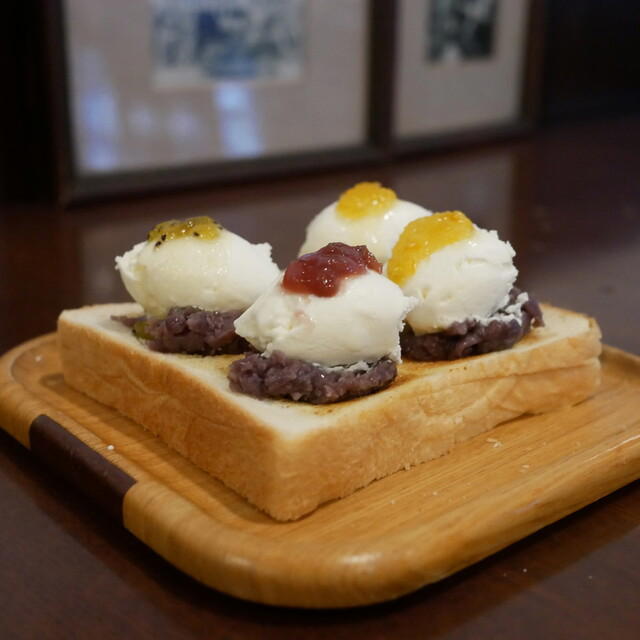
- Chantilly Rouge Special
- Homemade toasted bread
- Red bean paste toast
- Japanese breakfast set
Morning in Nagoya has its own choreography: commuters moving fast, streets waking up, and coffee shops doing the quiet civic work that chain cafés rarely manage. In Nagoya, the kissaten is not a nostalgia act. It is a daily utility, a breakfast room, a solo counter, a place where the first decision of the day can be as modest as coffee and bread. KAKO Yanagibashi ten belongs to that older rhythm, with a category identity that sits between Japanese coffee shop, café and bread counter.
The regulars’ perspective matters here because Nagoya’s coffee culture is built on repetition rather than spectacle. The city’s morning-service tradition rewards places that can handle habitual use: low-friction ordering, a price point that encourages return visits and enough structure for solo diners, friends and families to read the room quickly. This is not the same dining decision as a sushi counter in Nagoya, where Tachigui Sushi Kiwami Meieki 4 chome ten and Kiwami sit in a different conversation. It is closer to the everyday kissaten lane occupied by Joshin Ya, though KAKO Yanagibashi ten has recognition in the specific kissaten category.
Why Nagoya's kissaten regulars still matter
Japan’s kissaten tradition is often flattened into “retro café” shorthand, but Nagoya complicates that reading. The city made breakfast coffee culture part of its social infrastructure: business travellers use it before the day begins, office workers fold it into weekday routines, and older customers treat it as an extension of daily life. A place categorized around kissa, café and bread is operating in that practical zone, not in the destination-dining economy.
Tabelog recognized KAKO Yanagibashi ten in 2022, with a listed score of 3.69. That recognition matters less as a trophy than as category proof. Kissaten are judged differently from tasting-menu restaurants: consistency, atmosphere, bread, coffee-shop pacing and the ability to serve repeat customers all carry weight. The point is not a chef-driven narrative or a design-led concept, but the way the shop reads as part of Nagoya’s lived-in coffee culture.
The comparison with coffee house KAKO Hanaguruma honten is useful because it signals a small local universe rather than an isolated shop. In a city where many visitors chase obvious hits, the KAKO name points toward a more specific habit: coffee, bread and morning service as a Nagoya grammar. Readers mapping a wider trip can cross-check dining choices in Our full Nagoya restaurants guide, then separate café mornings from dinners, hotel logistics and evening drinking via Our full Nagoya hotels guide and Our full Nagoya bars guide.
The draw is routine, not theatre
The useful thing to understand before going is scale. A kissaten in this register is built for everyday access rather than long-form dining. The experience remains materially old-school in one important way: the appeal is not about spectacle, but about the practical rhythm of a Japanese coffee shop. For travellers, that means reading it as a modest, everyday stop rather than a reservation-led occasion.
Price band, listed at - JPY 999 - JPY 999, is part of the point. Nagoya has plenty of meals that pull a trip in other directions: Salamanger de Casino sits in a different dining lane, while the Nagoya sushi counters pull the decision toward a different kind of lunch or dinner plan. A kissaten works differently. Its value is not rarity but repeatability. That is why regulars can make a place feel more instructive than a formal award list: the room teaches how the city uses coffee, bread and morning time.
There is also a useful restraint in what is publicly signalled. The venue is categorized as kissa, café and bread. No chef figure dominates the narrative, and that is appropriate for the format. Kissaten culture is rarely chef-led in the fine-dining sense; it is operational, atmospheric and habit-forming. Seating, where available in this kind of setting, is not a stage for culinary performance. It is a vantage point on local routine.
For travellers building a Nagoya itinerary, this is the kind of place to put before the day’s larger commitments rather than after them. The shop is in Nagoya, which makes it practical for a city coffee stop or a low-commitment pause between larger plans. The cleaner play is to use it when the kissaten format is doing what Nagoya taught it to do: turning coffee and bread into a useful part of the day.
Where it fits in a Nagoya plan
KAKO Yanagibashi ten is not the answer to every Nagoya dining question. It is the answer when the question is: where does the city’s coffee-shop tradition still function as daily life? For more formal meals, the comparison set changes quickly; for broader planning, Our full Nagoya experiences guide and Our full Nagoya wineries guide help separate food stops from the rest of the trip. Readers extending the route across Japan can also compare how casual formats shift in other cities through other cafés, casual counters and everyday dining rooms beyond Nagoya.
EP Club readers using Nagoya as part of a wider dining map may also want to hold this place against more structured restaurant pages and other unnamed dining rooms. Outside Japan, casual Japanese-adjacent formats read differently again, but those comparisons sit far from the Nagoya morning-coffee frame. For KAKO Yanagibashi ten, the sharper read is local and modest: a recognized Nagoya kissaten in the kissa, café and bread lane.
Frequently asked questions
What days is KAKO Yanagibashi ten closed?
The provided public record for KAKO Yanagibashi ten does not specify regular closing days. Check the venue's official channels for the latest hours before going.
Is KAKO Yanagibashi ten more mid-range or high-end?
Pricing at KAKO Yanagibashi ten is listed as - JPY 999 - JPY 999.
Where do I go for KAKO Yanagibashi ten?
Nagoya.
What's the standout thing about KAKO Yanagibashi ten?
Its strongest credential is Tabelog recognition for 2022, with a listed score of 3.69. The appeal is clear: a Nagoya kissaten categorized as Japanese coffee shop, café and bread, built around routine rather than lingering spectacle.
Can KAKO Yanagibashi ten adjust for dietary needs?
The provided public record does not list a special dietary-program setup. Check the venue's official channels for the latest details.
Does KAKO Yanagibashi ten work for a family meal?
The provided public record does not specify family policies. Its listed categories are Japanese coffee shop, café and bread, so treat it as an easy coffee stop in Nagoya and check the venue's official channels for the latest details.
Accolades, Compared
Comparable venues by cuisine and category.
| Venue | Cuisine | Price | Awards | Notes |
|---|---|---|---|---|
| KAKO Yanagibashi tenThis venue (the venue you are viewing) | Japanese Kissaten / Coffee Shop | $1–10 | Tabelog 100 | Not listed |
| O Dashi to Ginshari Chuka Soba Nito | Ramen & chuka soba near Nagoya Station | $1–10 | Tabelog 100 #47 | Nakamura |
| Betokon Ramen Shinkyo Meieki nishiguchi ten | Health-conscious spicy ramen | $10–20 | Tabelog 100 #12 | Nakamura |
| tokyo miso style IKEDA | Tokyo-style miso ramen shop | $1–10 | Tabelog 100 #68 | Nakamura |
| Ramen Suiren | Cozy Bali-inspired ramen counter | $1–10 | Tabelog 100 #46 | Shōwa |
| Chuka Soba Naru | Ramen & Tsukemen | $10–20 | Tabelog 100 #76 | Chikusa |
Recognition history
Dated appearances from independent guides and award organizations, with the underlying list record or original source where available.
Tabelog 100
Tabelog · Tabelog 100 - Kissaten - 2026
Full recognition history (2 entries)
Tabelog 100 #77 · No. 77
Tabelog · Tabelog 100 - Kissaten - 2022
Continue exploring
More in Nagoya
Details
- Cozy
- Classic
- Quiet
- Casual Hangout
- Solo
- Family
- Standalone
- Beer Program
- Street Scene
- A La Carte
- Set Menu
- Coffee
- Tea
Current opening hours
- Monday
- 7 AM–5 PM
- Tuesday
- 7 AM–5 PM
- Wednesday
- 7 AM–5 PM
- Thursday
- Closed
- Friday
- 7 AM–5 PM
- Saturday
- 7 AM–5 PM
- Sunday
- 7 AM–5 PM
Hours can change for holidays and private events. Last verified .
Retro Japanese coffee-shop atmosphere with a relaxed, spacious feel, window seating, and sunlight creating a comfortable morning setting.