
A compact Kanda udon address with 28 seats, counter-and-table service, and recognition on Tabelog’s Udon EAST 100 selection for 2024. The appeal sits in Tokyo’s sharper end of everyday dining: low spend, fast turnover, and a menu grammar built around udon, tempura, and curry udon rather than tasting-menu theatre.
Pearl is the En Primeur Club membership app — saves, bookings, and concierge access live there. Same editors, same standards.
- Address
- Japan, 〒101-0047 Tokyo, Chiyoda City, Uchikanda, 1 Chome−18−11 東京ロイヤルプラザ 102
- Phone
- +81 3-5577-3644
- Website
- kagawa-ippuku.jp
 Saves & bookings on Pearl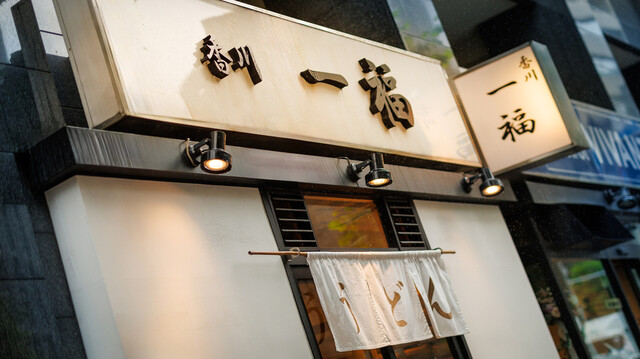
Uchikanda is not Tokyo’s stage set for food pilgrims. It is office Tokyo: station exits, mid-rise blocks, quick lunches, and narrow ground-floor rooms that earn loyalty through speed and consistency rather than ceremony. Here, udon plays a different role from sushi or kaiseki. It is daily infrastructure: a meal for a workday break, solo dinner, or late-afternoon reset without turning the room into an occasion.
Kagawa Ippuku Kanda ten belongs to that practical Tokyo register, but its presence on Tabelog’s Udon EAST 100 selection for 2024 places it above anonymous noodle-shop territory. The compact format has counter and table seating, and the food identity is tightly drawn around udon, tempura, and curry udon. That combination signals a shop built for repeatable decisions, not a sprawling menu, and places it among Tokyo’s stronger low-spend specialists, where a narrow brief can carry more authority than range.
Udon as office-district dining, not destination theatre
Tokyo’s serious casual dining is often misread from abroad. Its expensive counters draw attention, but much of its eating culture runs through inexpensive specialist rooms that treat one category with discipline. Udon is especially revealing because its value is not tied to luxury ingredients. The difference is in the system: noodle handling, broth style, temperature, pacing, and how tempura or curry shifts the meal from light to substantial.
That makes Kanda a useful setting. Around Uchikanda and Ogawamachi, lunch must move, yet satisfy an audience that eats this way often enough to notice shortcuts. Daytime service carries the sharper rhythm: solo diners, office pairs, quick decisions, and a room built on efficiency. Evening changes the proposition. The same format becomes less about beating the lunch clock and more about udon as a low-commitment dinner, especially for travellers who have spent several meals inside Tokyo’s reservation economy and want the city at a more ordinary register.
The venue’s Tabelog score of 3.62 and repeated selection history across Udon 100 lists in 2017, 2018, 2019, 2020, 2022, and 2024 give the address a useful trust signal without making it a trophy meal. The appeal is not rarity. It is seeing how Tokyo’s everyday formats remain highly sorted, publicly judged, and fiercely competitive.
The lunch-versus-dinner split defines the value
Lunch is the sharper test. In a business district, value is not only the bill; it is the total transaction. A focused udon menu, counter seating, and no-frills categories such as tempura or curry udon suit the midday economy because they reduce indecision. The meal must be quick without feeling careless, and the format rewards diners who know what they want before the room does the thinking.
Dinner reads differently. Tokyo has many casual evening options, but plenty ask for either drinking commitment or a longer sit-down rhythm. Udon offers a full meal without the performance of a restaurant night. That makes this address useful after a day in central Tokyo, especially when the city’s acclaimed dining tiers feel over-planned. Treat evening here not as a consolation prize after lunch, but as a different mood: calmer, less transactional, and still anchored in a format that needs no ceremony to convince.
Within Tokyo’s low-spend specialist bracket, the comparison is not only other udon shops. It is the wider category of focused casual rooms: curry counters, bakeries, coffee specialists, and compact Indian restaurants that win by repetition and local demand. Biriyani Osawa, Atsunko Pan, Spice Box, Sanmalo Toukyou ten, and Coffee Senmonten Ace occupy adjacent value territory in different genres. The shared lesson: Tokyo’s inexpensive dining can be highly selective, and recognition in a narrow category often says more than a broad menu.
How it fits into a Tokyo eating day
This is not a place to schedule around like an omakase counter or hotel dining room. It works better as a precision insert: central, compact, and category-specific. Pair it with a day already moving through Kanda, Jimbocho, Akihabara, or Marunouchi rather than forcing a cross-town detour. The room’s scale and format suit solo dining and small groups, useful in a city where many serious meals are either counter-only or socially structured around drinking.
The menu categories make it adaptable. Udon can stay light; tempura adds weight; curry udon pulls the meal toward comfort and substance. That flexibility explains the lunch-versus-dinner divide. At midday, the leaner reading fits the office-district pace. Later, the heartier side works when the goal is dinner without excess planning.
For broader Tokyo context, place this stop alongside nearby and citywide casual picks rather than luxury-only itineraries. EP Club’s Tokyo restaurant coverage includes . 鮪と炭火焼き うお炭 秋葉原店, 12/10 Shinjuku ten, 124. KAGURAZAKA (Yakitori), 2D Cafe, and 3 Chome no Curry Ya San. For wider planning, use Our full Tokyo restaurants guide, Our full Tokyo hotels guide, Our full Tokyo bars guide, Our full Tokyo wineries guide, and Our full Tokyo experiences guide.
The same value-driven reading travels beyond Tokyo. Compare the role of a focused Japanese meal at -Grilled beef Sukiyaki- KAMAKURA TANUKIAN 鎌倉 たぬき庵 in Kamakura, a casual specialist such as.cafe in Osaka, or regional small-format entries including.know in Kumamoto, (Shoku) Vietnam in Kawasaki, [Curry Senmon Ten] Maruyama Kyoju. in Sapporo, and [ki:] in Kyoto. Even outside Japan, the same lens helps with category-led rooms such as Jōdo Saké Bar in Los Angeles and Onigiri Time in Pasadena: the point is not scale, but clarity of purpose.
The editorial verdict is measured but firm. Kagawa Ippuku Kanda ten is strongest for travellers who want Tokyo’s food culture below the luxury threshold, where recognition, repetition, and utility meet. Lunch gives the tighter office-district read; dinner gives the more relaxed version. Both explain why a modest udon shop can matter in a city often reduced to reservation trophies.
Recognition Snapshot
Comparable venues side-by-side for orientation.
| Venue | Cuisine | Price | Notes |
|---|---|---|---|
| Kagawa Ippuku Kanda tenThis venue — the venue you are viewing | Sanuki udon & curry udon | $ | Not listed |
| Sabouru 2 | Yoshoku & Napolitan Pasta Kissaten | $ | Chiyoda |
| Sumibi Baisen Coffee Rin | Japanese Kissaten / Coffee Shop | $ | Chūō |
| Karinto Kozakura | Traditional Japanese karinto & wagashi shop | $ | Taitō |
| Taishu Sakaba Souya | Traditional Japanese standing bar (taishu sakaba) | $ | Minato |
| Kadoya | Japanese traditional sweets (wagashi) shop | $ | Adachi |
Recognition history
Dated appearances from independent guides and award organizations, with the underlying list record or original source where available.
Tabelog 100 #45 · No. 45
Tabelog · Tabelog 100 - Udon - EAST - 2024







At a Glance
- Cozy
- Lively
- Classic
- Solo
- Casual Hangout
- After Work
- Family
- Group Dining
- Standalone
- Local Sourcing
Current opening hours
- Monday
- 11 AM–8 PM
- Tuesday
- 11 AM–8 PM
- Wednesday
- 11 AM–8 PM
- Thursday
- 11 AM–8 PM
- Friday
- 11 AM–8 PM
- Saturday
- 11 AM–8 PM
- Sunday
- 11 AM–5 PM
Hours can change for holidays and private events. Last verified .
Casual no-smoking udon shop with counter-style, fast-turnover seating; bright and functional rather than decorative, often busy at mealtimes but still comfortable for solo diners and small groups.