Kaatje bij de Sluis

1 Michelin Star
Our verdict
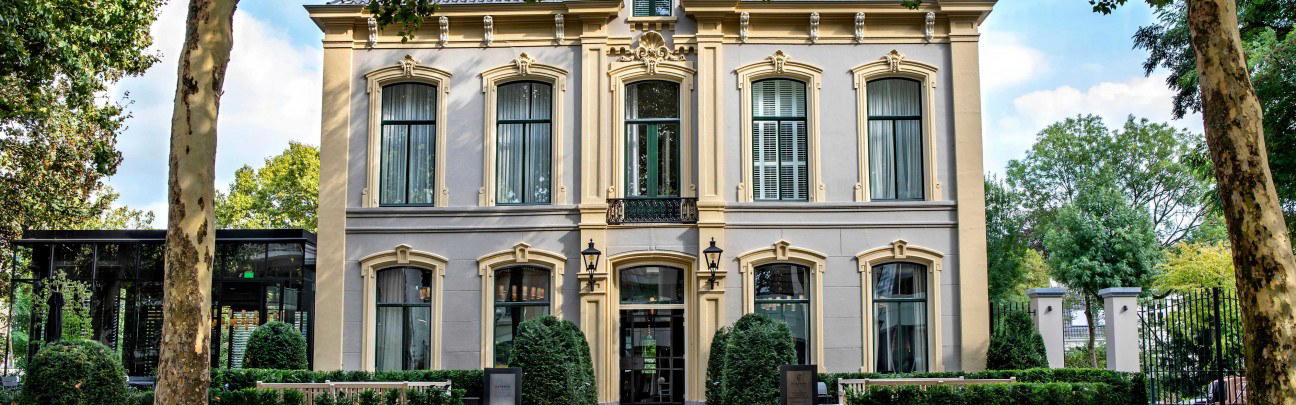
Holding at least one Michelin star almost continuously since 1978, Kaatje bij de Sluis occupies a converted canal-side building in the historic village of Blokzijl. The kitchen works strictly with organic and locally sourced produce, applying classical French technique to regional Dutch ingredients in combinations that balance precision with occasional daring. A window table overlooking the lock and the surrounding brick gabled houses is the standard by which all other seats are judged.

Pearl is the En Primeur Club membership app, where members save venues, book tables and use the concierge.
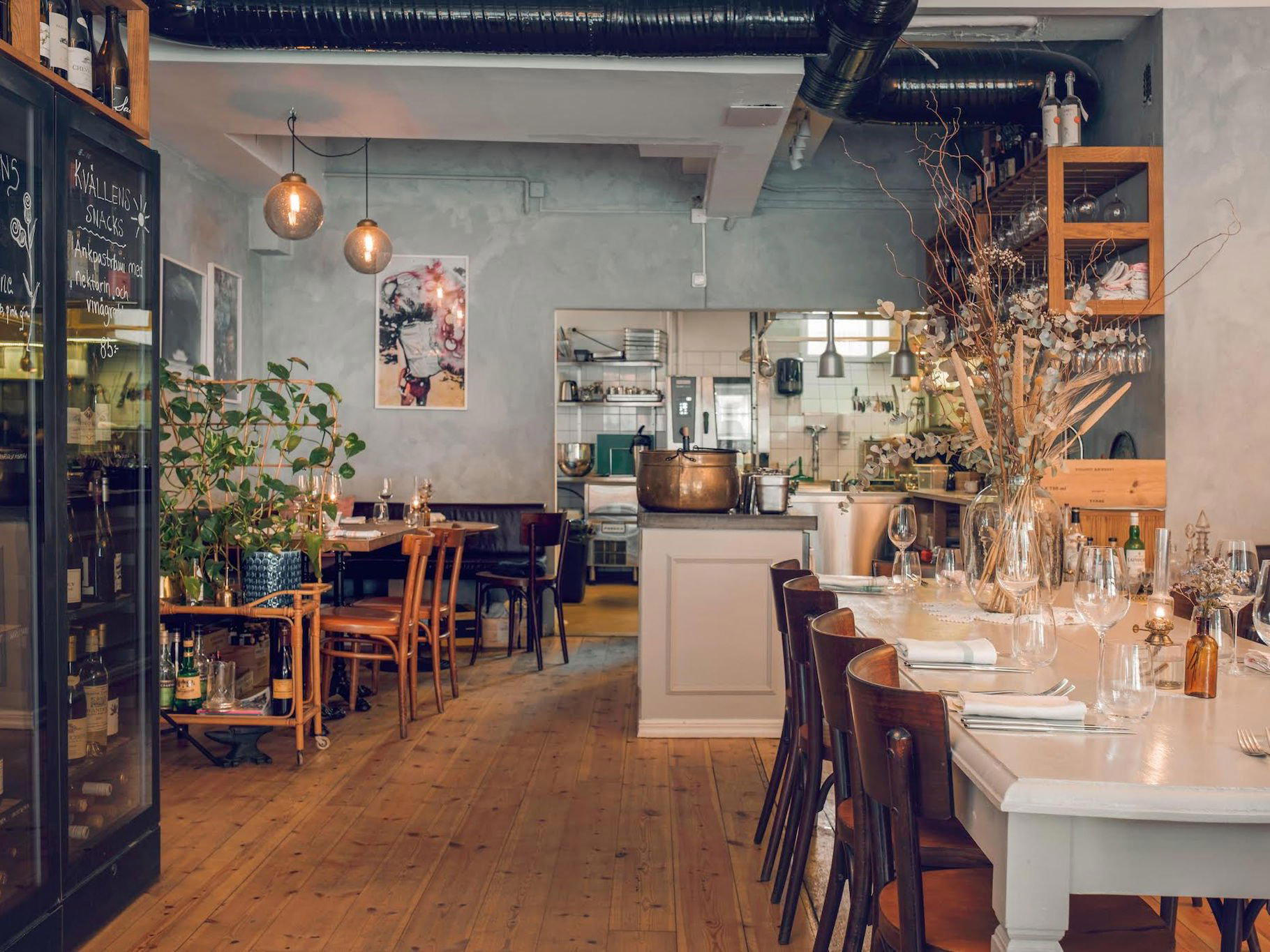
Where a Dutch Canal Village and a Michelin Kitchen Meet
Blokzijl sits in the province of Overijssel, a compact fortified trading town whose seventeenth-century brick facades and narrow lock have survived largely intact. The scale is almost absurdly modest for a destination that carries Michelin weight: a single main street, a harbour entrance controlled by a sluice gate, and the kind of quiet that makes a car door closing sound intrusive. Kaatje bij de Sluis occupies a building directly on Brouwerstraat, positioned so that a table by the window frames the lock and the gabled houses opposite as a piece of standing still life. On the upper floor, those with the right table can also pick out a storks' nest across the street, a detail that says something about both the season (storks arrive in spring and leave by early autumn) and the pace of place. For readers considering the broader context of Dutch fine dining beyond Amsterdam, Blokzijl fits into a pattern visible elsewhere in the Netherlands: Michelin-starred kitchens that have taken root in provincial towns or villages with enough heritage to make the journey worthwhile in its own right, a pattern also evident at De Lindenhof in Giethoorn and De Groene Lantaarn in Staphorst.
Nearly Five Decades of Continuous Recognition
The longevity here is the editorial fact that matters most. Kaatje bij de Sluis has held at least one Michelin star in almost every year since 1978, a run that places it in a small group of Dutch restaurants with multi-decade decorated histories. The one-year gap in that record, acknowledged by Michelin's own listing, does nothing to undermine the overall trajectory; if anything, the candour of noting it reinforces rather than diminishes the restaurant's standing. To hold a star consistently across nearly five decades is to survive multiple shifts in kitchen personnel, supply chains, guest expectations, and the Michelin Guide's own evolving criteria. That the restaurant currently carries its 2024 star as a going concern, not a heritage award, signals that the kitchen is working to current standards rather than coasting on accumulated reputation.
For comparison, the regional fine-dining tier in the Netherlands has its own internal hierarchy. De Librije in Zwolle, roughly an hour's drive south, operates at three stars. 't Nonnetje in Harderwijk and De Lindehof in Nuenen both sit at two. Kaatje bij de Sluis at one star occupies the entry point to that tier, but its decades-long record gives it a different kind of authority than newer one-star additions to the guide.
Organic Sourcing as Kitchen Logic, Not Marketing Position
The organic and local sourcing at Kaatje bij de Sluis functions as a structural constraint on the kitchen rather than a promotional badge. In a region where polders, waterways, and small-scale agricultural production define the land itself, sourcing locally is partly a matter of geography: the produce is there. The endive referenced in Michelin's own notes on the restaurant is a case in point. Blokzijl endive, chicory grown in the Overijssel and Flevoland region, carries a particular bitterness shaped by the soil and drainage conditions of reclaimed Dutch land. That bitterness, when paired with the richness of Canadian lobster in an open lasagne format with a bay-leaf-infused bisque, becomes a functional flavour contrast rather than a garnish. The dish illustrates a wider principle in this style of cooking: regional produce is not selected for its local credentials alone but because its specific flavour properties do work on the plate.
This approach connects Kaatje bij de Sluis to a broader movement in Dutch fine dining that has been building for two decades. De Nieuwe Winkel in Nijmegen, which also holds Michelin recognition and lists its cuisine as organic, represents a more radical application of the same sourcing logic: a fully plant-based tasting menu built from Dutch agricultural produce. Kook Atelier op Oost in Oosterend takes a similar ethos to the Wadden Islands. Kaatje bij de Sluis sits in a different register, the kitchen works with classical French technique and a full range of proteins, but the sourcing discipline is consistent with that broader regional pattern.
The cheese and wine selection at Kaatje bij de Sluis has drawn specific note in Michelin's assessment. In a fine-dining context at the €€€€ price tier, the cheese and wine program is where a kitchen either demonstrates that its sourcing philosophy extends to every course or reveals that it treats those elements as afterthoughts. At Kaatje bij de Sluis, both receive attention proportionate to the rest of the meal.
The Dining Room and What It Tells You
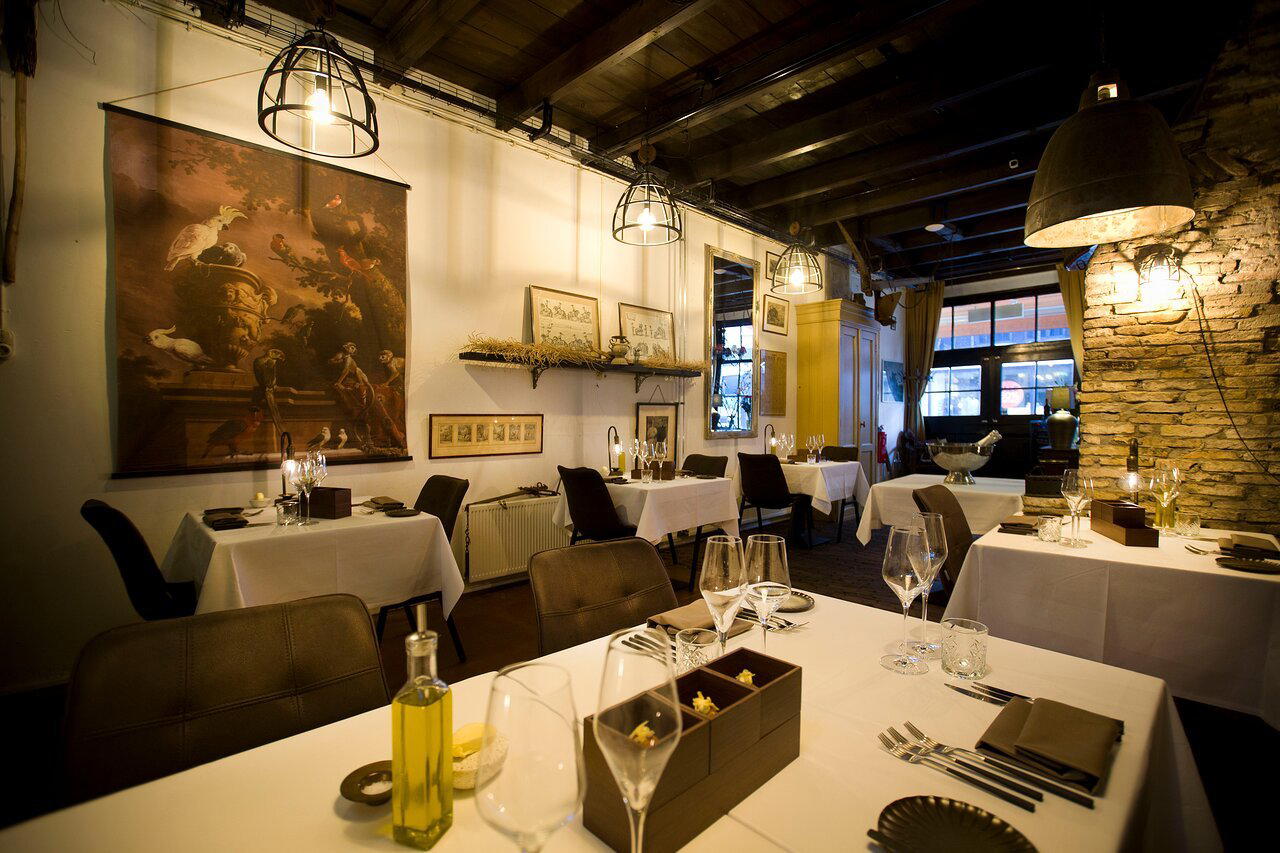
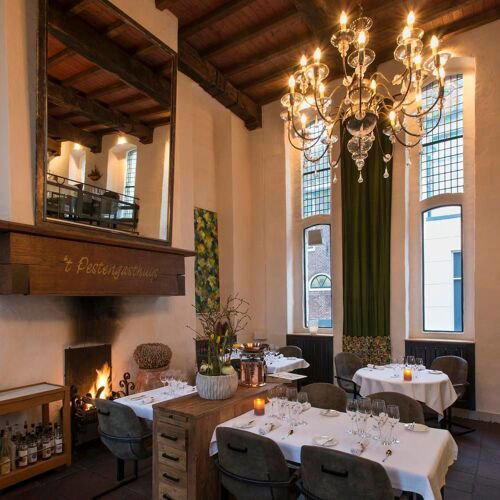
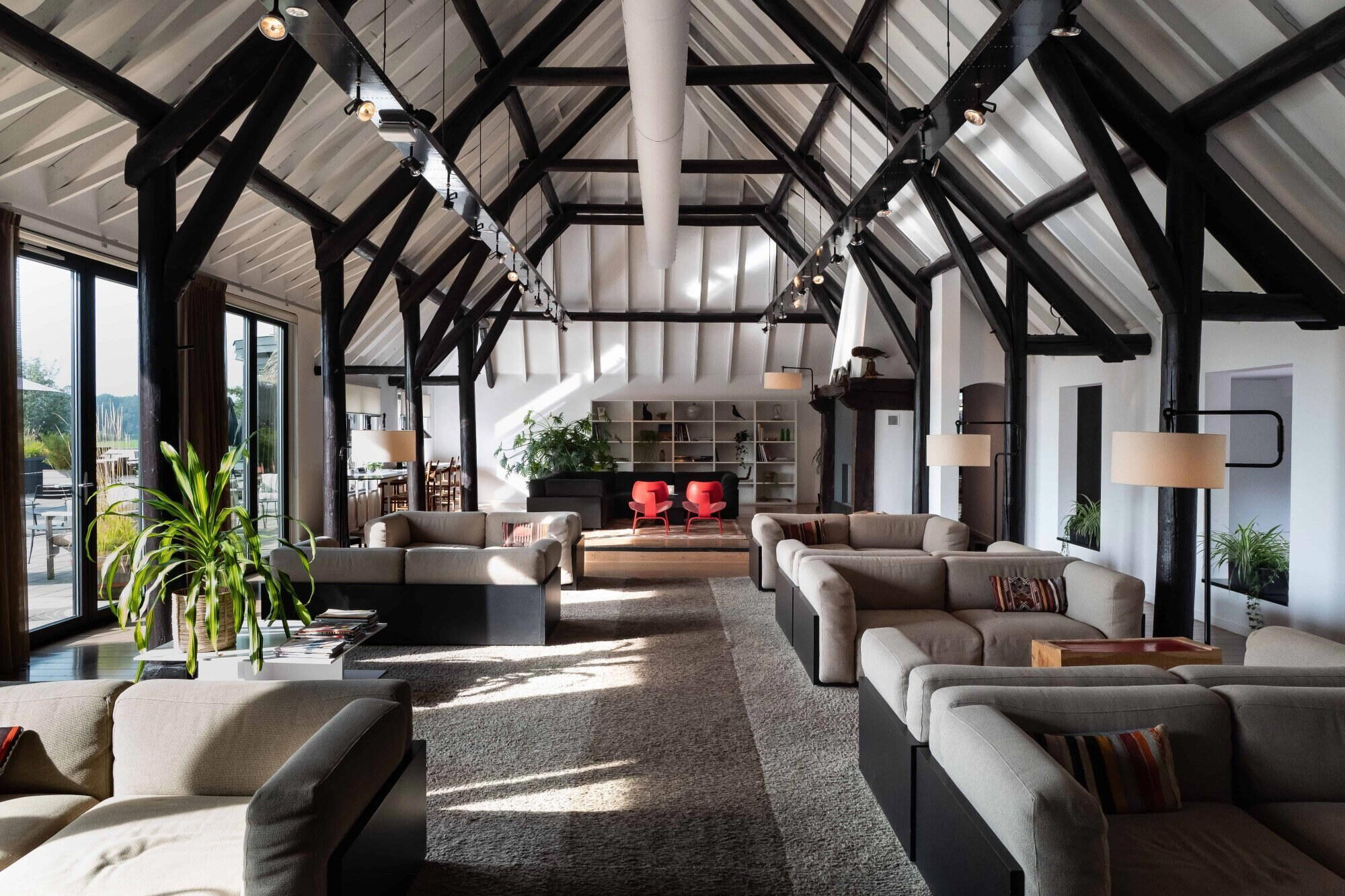
The wall decorated with cartoons is one of those details that resists easy categorisation. In a room carrying a Michelin star, decorative choices usually signal either rigorous minimalism or accumulated heritage. Cartoons suggest something else: a lightness of self-regard that is either confidence or character, possibly both. The upper floor adds a second dimension, both literally and in terms of the view it provides over the lock and the storks' nest. Whether a guest ends up on the ground or upper floor matters to the overall experience, and a table by the window, on either level, should be requested at the time of booking.
Interior functions in counterpoint to the seriousness of the kitchen. Dutch fine dining has historically been comfortable with this kind of tonal mix; the country's tradition of domestic hospitality, where warmth and quality coexist without requiring formal austerity, shows up in how its decorated restaurants tend to feel. This is a different atmosphere from the studied minimalism of, say, Ciel Bleu in Amsterdam or the urban intensity of Aan de Poel in Amstelveen. At Kaatje bij de Sluis, the setting does part of the work, and the room knows it.
How This Kitchen Fits the Broader Dutch Fine Dining Map
Netherlands has a denser concentration of Michelin-starred restaurants per capita than most European countries, and the distribution outside Amsterdam is geographically wide. A number of the most interesting decorated addresses sit in small towns or rural settings, which shapes what the experience means in practice: a meal here is also a commitment to visiting a place, not just a restaurant. Blokzijl requires deliberate travel. The nearest major rail connection is Steenwijk, from which the village is accessible by road. Guests driving from Amsterdam should allow approximately two hours; from Zwolle, the journey is shorter. This is the kind of trip that makes sense as an overnight, and the village's scale means accommodation options are limited, checking availability before committing to a dinner reservation is the practical sequence. Our full Blokzijl hotels guide covers what is available in and around the village.
For those building a wider itinerary around the region's decorated dining, the Overijssel and Gelderland corridor offers several reference points. Beyond the restaurants already mentioned, De Bokkedoorns in Overveen, Brut172 in Reijmerstok, and De Treeswijkhoeve in Waalre each represent a different regional variation on the same theme of high-technique cooking grounded in Dutch and Belgian produce. For a global reference point on how classical French-trained precision applies to seafood sourcing at the highest level, Le Bernardin in New York City provides a useful parallel, though the aesthetic and scale are categorically different.
Our full Blokzijl restaurants guide maps the wider dining picture in the town. For those staying longer, our Blokzijl bars guide, wineries guide, and experiences guide cover the surrounding options.
Planning a Visit
Kaatje bij de Sluis sits at the €€€€ price tier, which in the Dutch fine-dining context typically means a full tasting menu experience with wine pairing running to several hundred euros per head. Given the restaurant's Michelin standing and the fact that Blokzijl draws visitors specifically for this address, reservations should be made well in advance, particularly for weekend evenings and the spring-to-autumn window when the village is at its most accessible and the storks are in residence. The combination of a long-established decorated kitchen in a small heritage village with limited competing attractions means that the restaurant operates as a destination in the full sense: the journey is the point, and the meal is why you make it.
Frequently asked questions
What's the price range at Kaatje bij de Sluis?
Pricing at Kaatje bij de Sluis is listed as €€€€.
What part of town is Kaatje bij de Sluis in?
Kaatje bij de Sluis is located at Brouwerstraat 20, 8356 DV Blokzijl, Netherlands, Blokzijl.
In Context: Similar Options
| Venue | Cuisine | Price | Awards | Notes |
|---|---|---|---|---|
| Kaatje bij de SluisThis venue (the venue you are viewing) | Modern French Fine Dining | $100–150 | 1 Michelin Star | Not listed |
| De Librije | Modern Dutch Fine Dining | $200–300 | 3 Michelin Stars · World's 50 Best #46 | Modern Cuisine |
| Aan de Poel | Modern French Fine Dining | $150–200 | 2 Michelin Stars · La Liste Top Restaurants | Creative |
| De Lindehof | Contemporary Dutch, Creative | Not listed | Michelin 2 Star | Not listed |
| Fred | Modern French Fine Dining | $200–300 | 2 Michelin Stars · La Liste Top Restaurants | Creative French |
| De Nieuwe Winkel | Botanical Fine Dining | $300–500 | 2 Michelin Stars · La Liste Top Restaurants | Organic |
Recognition history
Dated appearances from independent guides and award organizations, with the underlying list record or original source where available.
Michelin 1 Star
Michelin
Full recognition history (2 entries)
Michelin 1 Star
Michelin
Continue exploring
More in Blokzijl
Restaurants in Blokzijl
All restaurants in Blokzijl →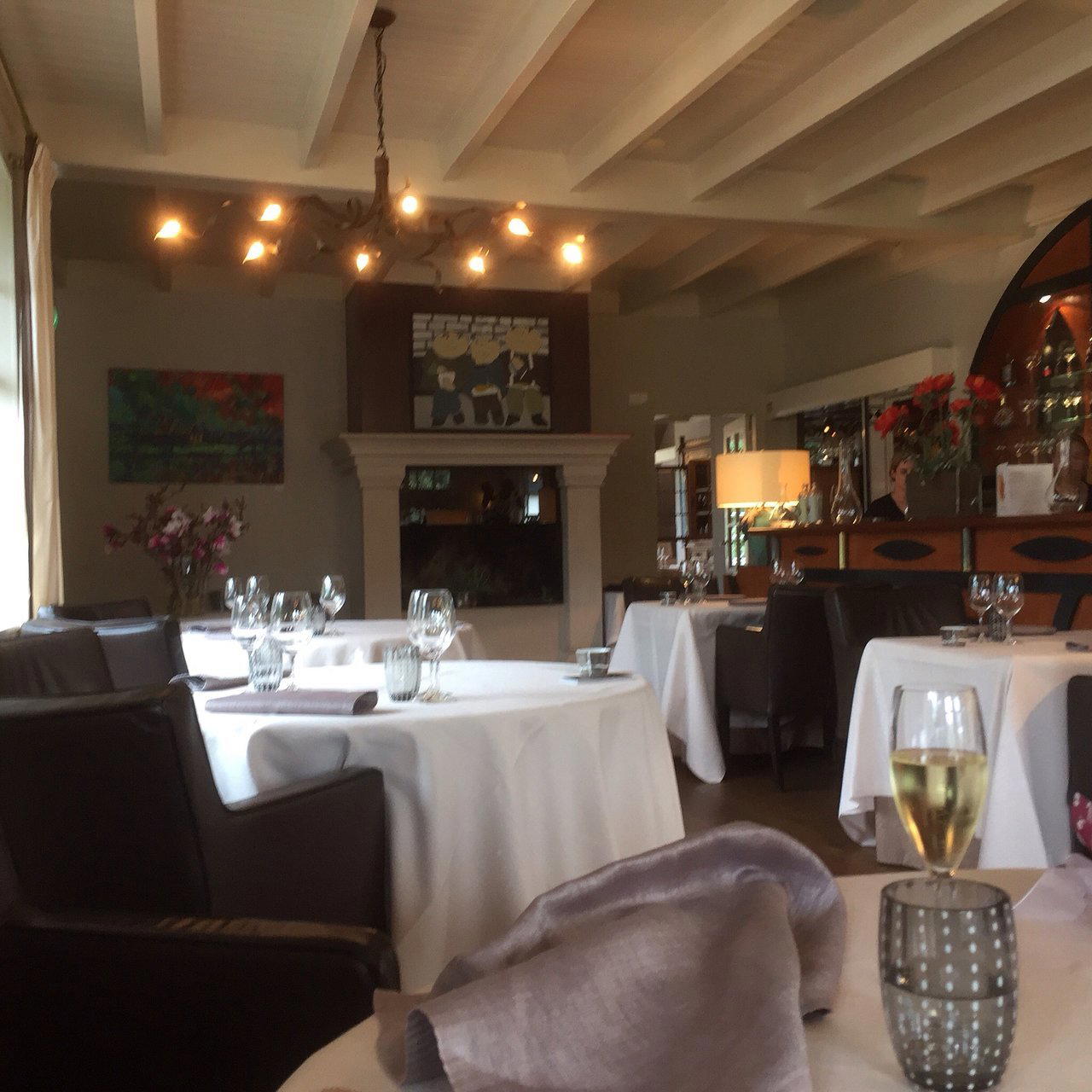
Bars in Blokzijl
Browse all →
Details
- Romantic
- Cozy
- Elegant
- Intimate
- Classic
- Date Night
- Special Occasion
- Celebration
- Waterfront
- Historic Building
- Extensive Wine List
- Waterfront
- Tasting Menu
- Allergy Accommodating
Warm, intimate atmosphere in a historic building with views of the sluis and canal houses; cozy and charming with a timeless feel.