
Tabelog 100 #74
Our verdict
Juutei belongs to Osaka’s yoshoku tradition: Japanese Western cooking built around comfort, sauce work, and everyday ingredients rather than ceremony. Its Tabelog 100 Yoshoku WEST 2025 selection, 30-seat dining room, and Namba location put it in the city’s serious casual bracket, especially for hamburger steak and omurice.

Pearl is the En Primeur Club membership app, where members save venues, book tables and use the concierge.
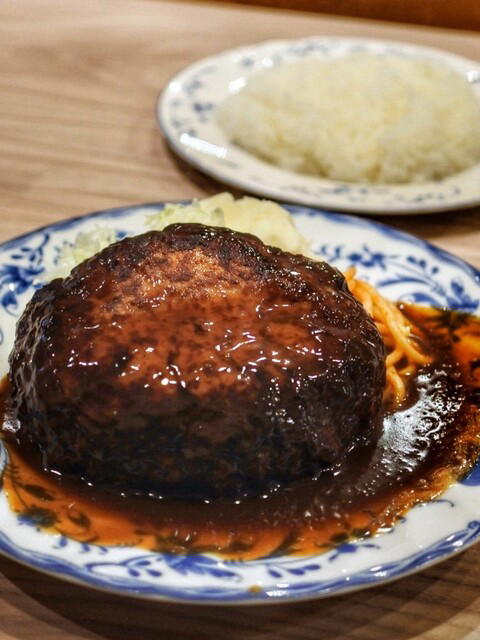
Approaching Osaka’s dining grid, the mood shifts from station traffic to the city’s everyday restaurant rhythm: short menus, close-set tables, and cooking that must justify itself plate by plate. Yoshoku fits naturally here. It is Western cooking translated through Japanese habits of rice, sauce, portion, and speed, with ingredients treated less as luxury markers than tests of consistency. Juutei sits inside that tradition, not above it, and that is the point.
Osaka’s food reputation is often flattened into street snacks and counter theatre, but yoshoku is one of the city’s quieter measures of taste. The category rewards sourcing and prep in ways easy to miss: ground meat that cannot hide behind garnish, eggs that expose timing, properly cut and held cabbage, and demi-glace-style sauces with depth that do not become sweet paste. The meal is not about rarity, but whether familiar ingredients are handled with enough discipline to justify a repeat visit.
Osaka yoshoku, judged by sauce, eggs, and ordinary ingredients
The restaurant’s Tabelog 100 Yoshoku WEST 2025 selection places it among regional specialists rather than destination tasting-menu rooms. That distinction matters. Yoshoku is not a chef’s-table genre; it is public cuisine, built for lunch, families, office workers, and visitors who want substance without ritual. The listed categories, Japanese-style Western cuisine, hamburger steak, and omurice, define a form where sourcing shows through texture and balance rather than luxury language.
Hamburger steak is a useful test because it leaves little room for distraction. Grind, fat ratio, seasoning, and pan work register immediately, and the sauce must support rather than smother. Omurice works differently but asks the same question: can a kitchen keep the egg tender, the rice seasoned, and the portion coherent during regular service? These are not rare ingredients. They are ingredients that punish carelessness.
That logic makes Osaka a persuasive home for this kind of restaurant. The city feeds a mixed crowd, not a single dining tribe. Within a compact dining day, Osaka moves from snack counters to department-store dining, bakeries to late meals, tourists to local regulars. For a broader map of the city’s dining range, Our full Osaka restaurants guide gives the useful macro view; nearby contrasts can include other Osaka dining rooms and casual counters across the city. Yoshoku has to hold its own by being direct, consistent, and clear about value.
A small dining room keeps the focus on throughput and craft
The room is best understood as practical rather than theatrical. That sets a different tempo from Osaka’s more formal dining rooms. The focus is not chef performance, but whether the kitchen can deliver familiar cooking with control across regular service. The public-facing feel suits the genre. Yoshoku is strongest when the room feels part of the city rather than sealed from it.
The format also says more than it first appears. A restaurant built around core yoshoku dishes is operating in practical Osaka mode: food must work for people’s schedules, not only seated occasions. It signals a kitchen organised around repeatable staples rather than fragile compositions. For travellers, the restaurant sits closer to a local canteen of record than a staged dining event.
Payment and booking details should be checked directly before visiting, as everyday restaurants in Japan can vary in how they handle cards, cash, and service updates. Arrive prepared, and treat the meal as part of Osaka’s everyday food economy rather than a frictionless hotel-concierge experience. Visitors building a fuller Osaka trip can pair that expectation with Our full Osaka hotels guide, Our full Osaka bars guide, Our full Osaka wineries guide, and Our full Osaka experiences guide.
Where it fits in Osaka's casual dining hierarchy
The useful comparison is not haute cuisine, but other low-ceremony Osaka stops where pricing, speed, and specificity define the appeal. Tenmasa and Hokkyoku Nanba honten sit in another casual lane, while Creperie Alcyon belongs to a different European-derived casual format. Havana occupies another casual lane. Juutei’s case rests on yoshoku recognition, the 2025 Tabelog selection, and a menu identity tied to hamburger steak and omurice rather than breadth.
That makes it a sharper choice for travellers who want Osaka beyond obvious categories. The city’s casual food culture is not only takoyaki, okonomiyaki, or sushi before a train. It also includes Western-origin dishes so naturalised they read as Japanese comfort food. Yoshoku’s source materials, meat, egg, rice, cabbage, sauce, show how Japan absorbs foreign forms and makes them answer to local appetite. The cooking is familiar on paper, but the standards are Japanese: precision, portion discipline, and repeatability.
Juutei is strongest as an Osaka meal with context: a place to read the city’s democratic dining habits through yoshoku rather than a restaurant to overcomplicate. The Tabelog 100 Yoshoku WEST 2025 recognition gives it a public credibility marker; the format keeps expectations grounded. Diners seeking chef biography, tasting-menu pacing, or rare produce should choose another category. Diners interested in how everyday ingredients become civic cuisine will understand why Juutei has stayed visible.
For wider Japanese dining comparisons beyond Osaka, EP Club’s restaurant archive ranges across other unnamed dining rooms and narrow-format specialists in Japan and abroad. The broader lesson is the same: modest categories become memorable when sourcing, timing, and execution are treated seriously.
Frequently asked questions
When can I go to Juutei?
Check Juutei’s official channels for current opening hours before visiting.
How much does it cost to eat at Juutei?
Pricing at Juutei is listed as dinner: JPY 2,000 - JPY 2,999; lunch: JPY 1,000 - JPY 1,999.
Where exactly is Juutei?
Osaka.
What's Juutei best at?
Juutei is strongest on yoshoku staples, especially hamburger steak and omurice, which sit at the center of its listing. The Tabelog 100 Yoshoku WEST 2025 selection supports that focus.
Can Juutei handle vegetarian requests?
The menu focus is Japanese-style western cuisine, with hamburger steak and omurice named in the public record, so vegetarian choices may be limited. Juutei is in Osaka, and the menu is built around those core dishes rather than a documented separate vegetarian offering. Check the venue's official channels for the latest details.
Is Juutei okay with children?
Juutei’s public listing centers on Japanese-style western cuisine, hamburger steak, and omurice in Osaka. For children’s policies and current service details, check the venue's official channels before visiting.
How It Stacks Up
Comparable venues at a similar level for quick context.
| Venue | Cuisine | Price | Awards | Notes |
|---|---|---|---|---|
| JuuteiThis venue (the venue you are viewing) | Classic Osaka yoshoku (Japanese-style Western) | $10–20 | Tabelog 100 #74 | Not listed |
| Havana | Creative Japanese Izakaya & Stand-Up Bar | $20–30 | Tabelog 100 #62 | Chūō |
| Ganesh m Kitahama ten | Specialty Japanese curry house with global curry influences | $10–20 | Tabelog 100 #77 | Chūō |
| Stand Ruten | Modern Japanese Standing Izakaya | $20–30 | Tabelog 100 #2 | Kita |
| Teuchi Soba Noda | Traditional Hand-made Soba | $20–30 | Tabelog 100 #32 | Katano City |
| Chitose (千とせ) | Osaka-style Okonomiyaki | $10–20 | Not listed | Minami Horie |
Recognition history
Dated appearances from independent guides and award organizations, with the underlying list record or original source where available.
Tabelog 100 #74 · No. 74
Tabelog · Tabelog 100 - Yoshoku - WEST - 2025
Continue exploring
More in Osaka
Restaurants in Osaka
All restaurants in Osaka →



Bars in Osaka
All bars in Osaka →
Hotels in Osaka
All hotels in Osaka →

Wineries in Osaka
Browse all →
Details
- Classic
- Cozy
- Intimate
- Casual Hangout
- Family
- Solo
- Date Night
- Standalone
- Historic Building
- A La Carte
Current opening hours
- Monday
- 11:30 AM–2:30 PM, 5–7:30 PM
- Tuesday
- 11:30 AM–2:30 PM, 5–7:30 PM
- Wednesday
- Closed
- Thursday
- 11:30 AM–2:30 PM, 5–7:30 PM
- Friday
- 11:30 AM–2:30 PM, 5–7:30 PM
- Saturday
- 11:30 AM–2:30 PM, 5–7:30 PM
- Sunday
- 11:30 AM–2:30 PM, 5–7:30 PM
Hours can change for holidays and private events. Hours as of .
Old‑school Osaka yoshoku spot with a retro, slightly worn interior, simple wooden tables, and warm, down‑to‑earth service, creating a cozy, nostalgic atmosphere that feels like stepping back into Showa‑era Japan.