Junsei
Junsei occupies a quiet address on Seymour Place in Marylebone, positioning itself within London's growing tier of Japanese-influenced restaurants that operate below the noise of the West End. Where many London venues in this neighbourhood lean toward European fine dining, Junsei offers a counterpoint worth tracking for those who follow the city's Japanese dining scene closely.
Pearl is the En Primeur Club membership app — saves, bookings, and concierge access live there. Same editors, same standards.
- Address
- 132 Seymour Pl, London W1H 1NS, United Kingdom
- Phone
- +44 20 7723 4058
- Website
- junsei.co.uk
- Directions
- Get directions
 Saves & bookings on Pearl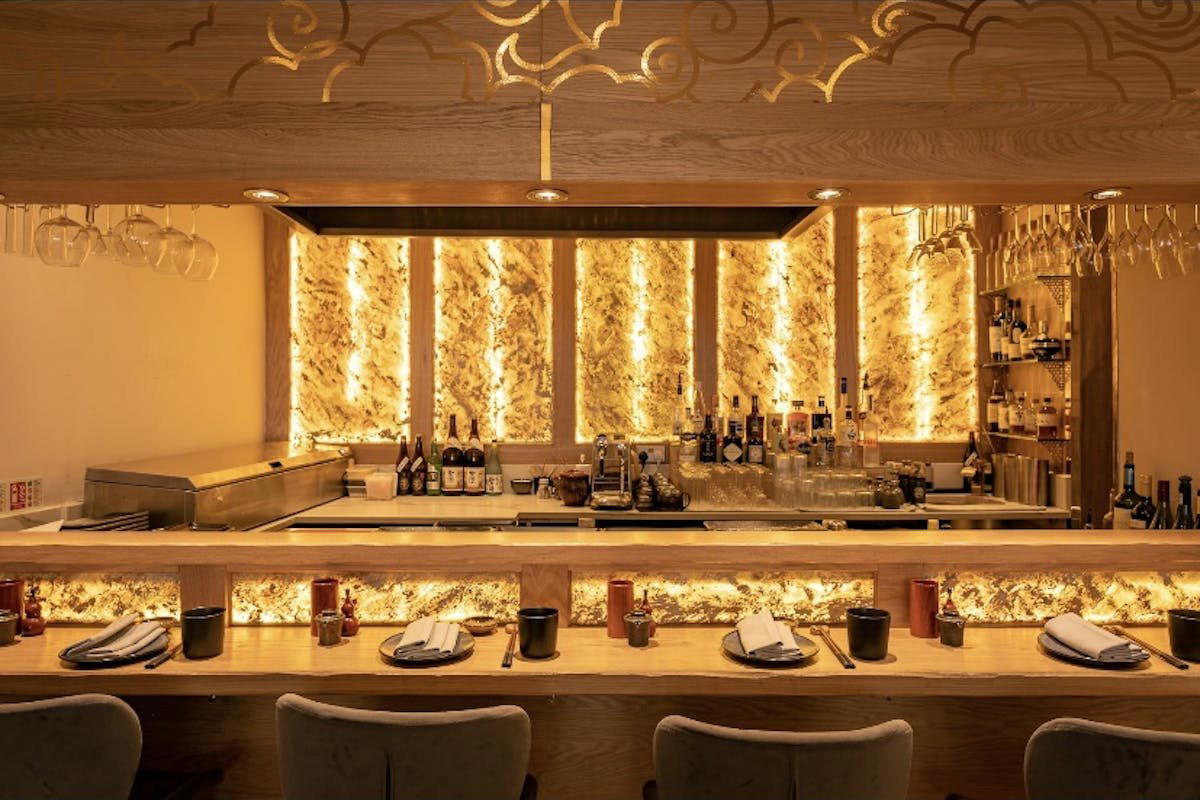
Where Marylebone's Japanese Dining Sits in 2024
London's Japanese restaurant scene has spent the past decade sorting itself into distinct tiers. At one end sit the high-volume conveyor-belt chains and accessible ramen shops; at the other, a smaller cohort of precision-driven rooms that operate closer to the omakase tradition, intimate, technique-focused, and deliberately difficult to replicate at scale. Junsei, at 132 Seymour Place in Marylebone W1H, is an Authentic Japanese Yakitori restaurant with a recommended reservation policy and an average spend of about $50 per person. The neighbourhood sits within walking distance of Marble Arch and Edgware Road, but its dining character is quieter and more residential than the Mayfair corridor to the south.
That residential register matters. Japanese restaurants that succeed in non-Japanese-quarter London postcodes tend to do so by building a local following rather than relying on tourist footfall. The format that sustains them is typically built around repeat visitors who return for a consistent, calibrated experience rather than spectacle. Seymour Place, with its Georgian townhouse scale and low street traffic, is the kind of address that suits that model.
The Sensory Register of the Room
Japanese dining rooms at the premium end of the London market have largely moved away from the minimalist-to-the-point-of-coldness aesthetic that characterised the first wave of high-end sushi houses here in the 2000s. The shift has been toward warmth without clutter: natural materials, controlled lighting, and a spatial arrangement that focuses attention on the counter or the plate rather than the room itself. Counter seating, where it exists, collapses the distance between kitchen and guest in a way that no other format replicates, the smell of freshly cut fish, the sound of a knife on a board, the visual rhythm of a chef assembling a dish are all part of the meal in a way that table service cannot deliver.
London venues operating in this register include a small number of omakase-format rooms that have built reputations through booking depth rather than marketing spend. The counter model signals a particular commitment: it limits covers, concentrates the chef's attention, and removes the anonymity of the larger dining room. Its address and positioning suggest a room built for focus rather than volume.
Junsei in the Context of London's Japanese Scene
To understand where Junsei sits, it helps to map the broader field. London's premium Japanese dining tier is smaller than Tokyo's by several orders of magnitude, but it has matured considerably since the early 2010s. Restaurants drawing on Japanese technique now occupy multiple sub-categories: traditional sushi counters, kaiseki-influenced tasting menus, izakaya-format rooms with serious kitchen programs, and fusion operations that use Japanese technique as a starting point rather than an endpoint.
The Michelin guide has increasingly recognised Japanese restaurants in London, and the allocation of stars to venues in this category has pushed the entire tier upward in terms of guest expectations around precision, ingredient quality, and service calibration. London's three-Michelin-star restaurants, CORE by Clare Smyth, Restaurant Gordon Ramsay, Sketch, The Lecture Room and Library, and The Ledbury, all operate in the European fine dining tradition, but they have set the standard for what premium London dining looks like at the highest price point. Japanese-influenced venues operating below that Michelin ceiling but above the casual tier occupy a productive middle ground: lower price points than the starred European rooms, but with comparable demands on technique and sourcing.
For comparison, venues like Dinner by Heston Blumenthal demonstrate how precision and research-led menus can coexist with accessible hospitality at the two-Michelin-star level. Japanese rooms that draw on similar values, precision, restraint, ingredient provenance, operate in a parallel track. Beyond London, the UK's serious dining scene runs through The Fat Duck in Bray, L'Enclume in Cartmel, Moor Hall in Aughton, Gidleigh Park in Chagford, and Hand and Flowers in Marlow, all European-led, which illustrates how narrow the field remains for Japanese technique at the premium end outside the capital. Within London, venues like hide and fox in Saltwood show how the boundary between European and Japanese influence continues to blur at the serious end of the market.
Internationally, the benchmark for what Japanese-influenced fine dining can achieve at the highest level is set by rooms like Atomix in New York City, which has demonstrated that Korean and Japanese technique-led tasting menus can compete directly with particularly decorated European rooms on any measurable standard. Le Bernardin in New York City offers a different comparison point: a room where French technique applied to seafood with near-Japanese precision has sustained decades of critical recognition. These reference points matter for London diners evaluating where a venue like Junsei sits in a global frame.
What the Address Tells You
Marylebone's dining scene has consolidated around a particular type of guest: affluent local residents, hotel guests from the area's significant stock of five-star properties, and a professional class that prefers quieter rooms to the more performative dining of Mayfair and the West End. This guest profile tends to reward consistency over novelty and is more likely to generate the repeat-visit pattern that sustains a small, focused operation. It is a harder audience to win quickly, but more durable once won.
The Seymour Place address specifically sits between Edgware Road and Gloucester Place, in a pocket of W1H that sees less foot traffic than the Baker Street or Marylebone High Street corridors. For a Japanese restaurant that relies on atmosphere and precision rather than passing trade, that positioning is a considered choice rather than a constraint.
Planning Your Visit
Junsei is open Monday 5-10 PM, Wednesday through Thursday 5-10 PM, Friday and Saturday 12-11 PM, and Sunday 12-9 PM; it is closed Tuesday. Address: 132 Seymour Place, London W1H 1NS. Getting there: Marble Arch (Central line) is the nearest Underground station, approximately ten minutes on foot; Edgware Road (Circle, District, Hammersmith and City lines) offers an alternative. Reservations are recommended. Dress: Smart casual.
The Minimal Set
Comparable venues nearby, for context on price, style, and recognition.
| Venue | Cuisine | Price | Notes |
|---|---|---|---|
| JunseiThis venue — the venue you are viewing | Marylebone, Authentic Japanese Yakitori | $$$ | Not listed |
| Shiro Sushi | Broadgate, Contemporary Japanese Sushi | $$$ | Not listed |
| Sticks'n'Sushi Greenwich | Not listed | $$$ | Greenwich, Japanese-Danish Fusion Sushi & Yakitori |
| Colony Club | Mayfair, Japanese Fusion with Teppanyaki | $$$$ | Not listed |
| Aki London | Not listed | $$$$ | Marylebone, Modern Kyoto-Inspired Japanese |
| wagamama ealing | Not listed | $$ | Ealing Broadway, Japanese-inspired Pan-Asian Ramen and Noodles |
Continue exploring
More in London
Restaurants in London
Browse all →
Bars in London
Browse all →
Hotels in London
Browse all →


At a Glance
- Cozy
- Intimate
- Modern
- Date Night
- Special Occasion
- Open Kitchen
- Chefs Counter
- Sake Program
- Craft Cocktails
Current opening hours
- Monday
- 5–10 PM
- Tuesday
- Closed
- Wednesday
- 5–10 PM
- Thursday
- 5–10 PM
- Friday
- 12–11 PM
- Saturday
- 12–11 PM
- Sunday
- 12–9 PM
Hours can change for holidays and private events. Last verified .
Cozy and intimate with warm lighting, open kitchen views of charcoal grilling, and an authentic Japanese izakaya atmosphere.