One of Paris's most recognisable belle époque brasseries, Julien occupies a landmark room on the Rue du Faubourg Saint-Denis in the 10th arrondissement — a neighbourhood that has shifted dramatically over the past two decades. The gilded interior, original 1880s tilework, and vaulted ceilings place it at the intersection of architectural preservation and evolving Parisian dining culture.
Pearl is the En Primeur Club membership app — saves, bookings, and concierge access live there. Same editors, same standards.
- Address
- 16 Rue du Faubourg Saint-Denis, 75010 Paris, France
- Phone
- +33147701206
- Website
- bouillon-julien.com
- Directions
- Get directions
 Saves & bookings on Pearl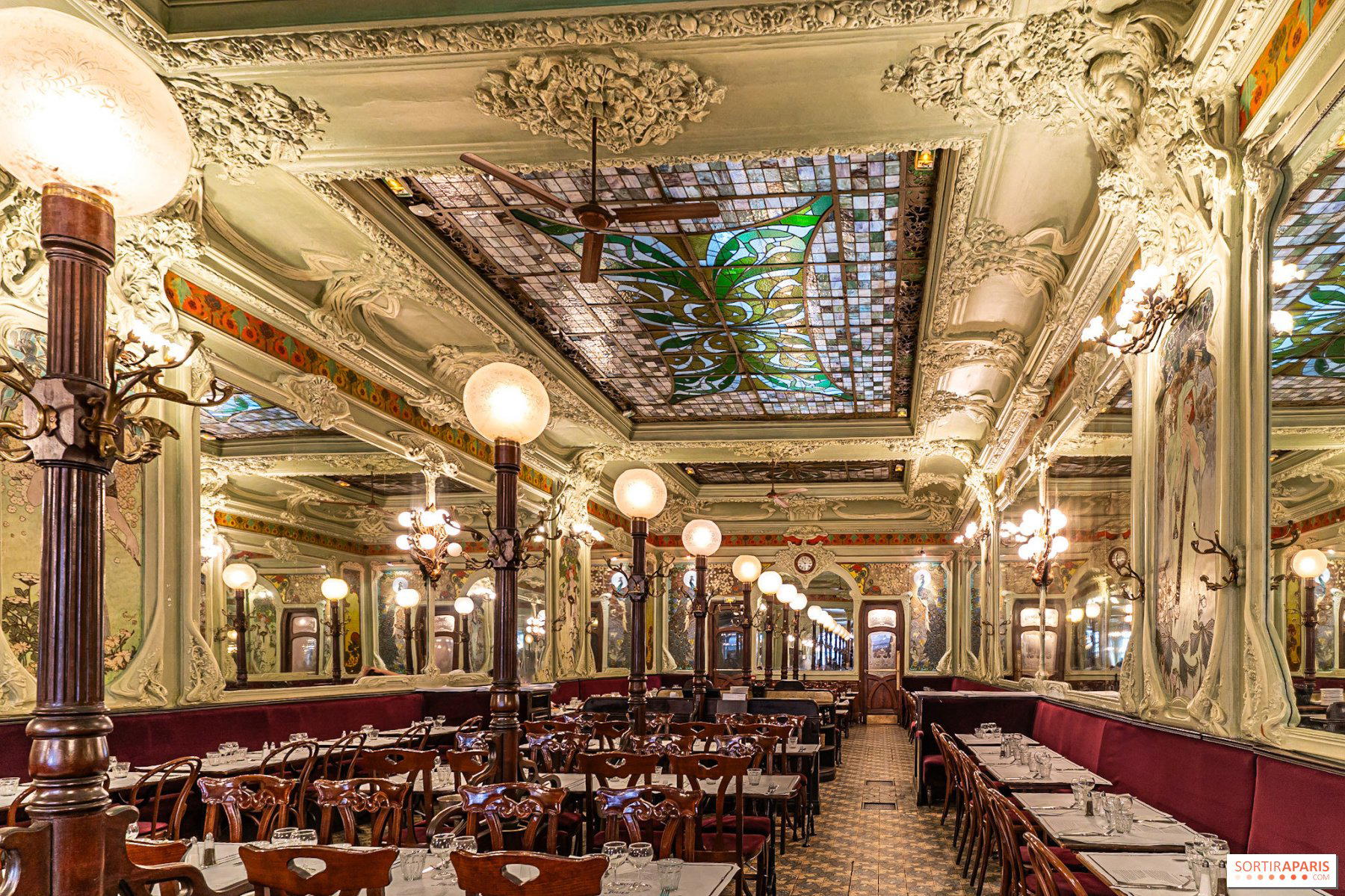
A Room That Predates the Neighbourhood It Now Finds Itself In
Approach the Rue du Faubourg Saint-Denis on any given evening and the street gives you everything at once: kebab counters, wholesale fabric merchants, the tail end of the covered Passage Brady, and then — without warning — the ornate facade of Julien. The building's art nouveau exterior, with its curving stonework and period lettering, belongs to a different Paris: the Paris of the 1880s, when this stretch of the 10th arrondissement was a bourgeois thoroughfare and the brasserie was a serious civic institution. The neighbourhood has changed considerably since then. Julien, at least architecturally, has not.
That tension between the room and its surroundings is the most honest thing about dining here. Grand brasseries in Paris tend to cluster in more predictable postcodes, the 6th, the 8th, the established theatre districts. Julien's position on Faubourg Saint-Denis has always made it slightly anomalous, and that anomaly has become a defining feature rather than a liability as the 10th has transformed into one of the city's most culturally mixed and energetically contested arrondissements.
The Belle Époque Interior as an Argument for Continuity
French brasserie dining has gone through cycles of reinvention and abandonment over the past thirty years. In the 1990s, the format was considered tired; in the 2000s, chefs like Yves Camdeborde and the broader bistronomie movement redirected serious appetite toward smaller, lower-overhead rooms. The grand brasserie appeared, for a time, to be purely a tourist proposition. What has happened since is more nuanced. A subset of these rooms, those with genuine architectural integrity and consistent cooking, have re-emerged as a distinct category: not the cutting-edge creativity of places like Alléno Paris au Pavillon Ledoyen or the refined classicism of L'Ambroisie, but something with its own logic, durable, specific, and increasingly appreciated on its own terms.
Julien's interior is among the most intact examples of the form in Paris. The stained glass panels, the ceramic tile work, the elongated mirrors, the plasterwork ceilings, these were produced at the height of the art nouveau movement and have survived more or less as installed. In a city where heritage interiors are frequently stripped and reimagined, a room this complete is uncommon. For comparison, the dining rooms at Le Cinq at the Four Seasons George V or Kei have been shaped by deliberate contemporary design investment. Julien's character comes from what was not changed rather than what was added.
The Brasserie Format and How It Has Been Renegotiated at Julien
The classic Parisian brasserie formula, continuous service, printed menus, shellfish towers, steak frites, onion soup, was consolidated in the late 19th and early 20th centuries and remained largely static for decades. Its Alsatian roots (many of the original Paris brasseries were founded by Alsatian migrants after 1871) gave it sauerkraut, choucroute garnie, and a beer-forward drinks culture that sat alongside the wine-led bistro. Julien operates within this tradition. The format signals continuity: this is not a room that pivots seasonally toward contemporary techniques or chases the editorial attention that destinations like Arpège command.
What has evolved, across the brasserie category broadly, is the expectation around execution. The grand rooms that have maintained relevance have done so by shoring up the quality of the core repertoire rather than reinventing it. Escargots, confit de canard, tarte tatin, these dishes are assessed now against a more demanding baseline than they were in the mid-20th century, when the format had no serious competition. Julien is positioned in that evolved context: a room where the architecture draws you in and the kitchen is expected to hold its side of the proposition.
France's broader dining scene has produced extraordinary range outside Paris, from Mirazur in Menton to Flocons de Sel in Megève, from Bras in Laguiole to Auberge de l'Ill in Illhaeusern, and the institutional weight of venues like Paul Bocuse in Collonges-au-Mont-d'Or or Troisgros in Ouches demonstrates what French culinary heritage can look like when it is actively maintained and evolved. Julien operates in a different register, more accessible, more populist, but the underlying question is the same: how does a historic room stay relevant without erasing what made it worth preserving?
The 10th Arrondissement Context
A decade ago, placing a serious dinner recommendation on Faubourg Saint-Denis would have been a contrarian position. The street and the surrounding 10th were known for their density and informality rather than for destination dining. That has changed materially. The Canal Saint-Martin quarter to the east developed a strong restaurant culture through the 2010s, and the arrondissement's central position, reachable from République, Strasbourg-Saint-Denis, and Gare du Nord, made it an increasingly practical choice for residents across multiple neighbourhoods. Julien benefits from this shift without having engineered it. The room was always there; it is the neighbourhood that caught up.
For visitors arriving via Eurostar at Gare du Nord, the address is under ten minutes on foot, a logistical convenience that puts Julien in a different planning position from the €€€€ rooms in the 8th that require a cross-city journey. It sits in a different tier from AM par Alexandre Mazzia or Assiette Champenoise in Reims in terms of ambition and price register, but for readers whose Paris itinerary already includes a serious meal elsewhere, at Au Crocodile-level ambition or above, Julien answers a different question: where to eat well in a room worth remembering, without the full orchestration of a tasting menu evening.
For the full picture of where Julien sits within the wider Paris dining scene, see our full Paris restaurants guide.
Know Before You Go
Address: 16 Rue du Faubourg Saint-Denis, 75010 Paris, France
Nearest Metro: Strasbourg-Saint-Denis (Lines 4, 8, 9) or Bonne Nouvelle (Lines 8, 9)
From Gare du Nord: Approximately 10 minutes on foot, a practical option for Eurostar arrivals
Format: Classic Parisian brasserie with continuous service, no fixed sittings, no mandatory tasting menu
Booking: Walk-ins are accepted at many brasseries of this type, though weekend evenings in the current 10th arrondissement dining environment benefit from advance reservation
Seasonal note: Spring and early summer bring the fullest run of the brasserie's traditional shellfish offer; the room is at its atmospheric peak in winter, when the stained glass and heated interior contrast sharply with the street outside
How Julien Paris compares with similar nearby venues.
| Venue | Cuisine | Price |
|---|---|---|
| 52 Faubourg St-Denis | Modern Cuisine | €€ |
| Urfa Durum | Kurdish | Not listed |
| Tanguy Crêperie | Creperie | Not listed |
Continue exploring
More in Paris
Restaurants in Paris
Browse all →
Bars in Paris
Browse all →
Hotels in Paris
Browse all →





At a Glance
- Classic
- Elegant
- Well Known
- Casual Hangout
- Group Dining
- Historic Building
Current opening hours
- Monday
- 11:45 AM–12 AM
- Tuesday
- 11:45 AM–12 AM
- Wednesday
- 11:45 AM–12 AM
- Thursday
- 11:45 AM–12 AM
- Friday
- 11:45 AM–12 AM
- Saturday
- 11:45 AM–12 AM
- Sunday
- 11:45 AM–12 AM
Hours can change for holidays and private events. Last verified .
Decadent Art Nouveau with pale-green walls, stained glass skylights, mirrors, and mahogany bar creating a historic yet lively atmosphere.
Know Before You Go
- Getting there
- 16 Rue du Faubourg Saint-Denis, 75010 Paris, France