On a narrow Saint-Germain-des-Prés street that has fed Parisians since the market days of the Marché Saint-Germain, Lobineau sits in one of the 6th arrondissement's most loaded dining addresses. The street's character, the proximity to the covered market, and the dense concentration of serious eating nearby place it firmly inside one of Paris's most closely watched dining corridors.
Pearl is the En Primeur Club membership app — saves, bookings, and concierge access live there. Same editors, same standards.
- Address
- 7 Rue Lobineau, 75006 Paris, France
- Phone
- +33140460688
- Website
- lobineau.fr
- Directions
- Get directions
 Saves & bookings on Pearl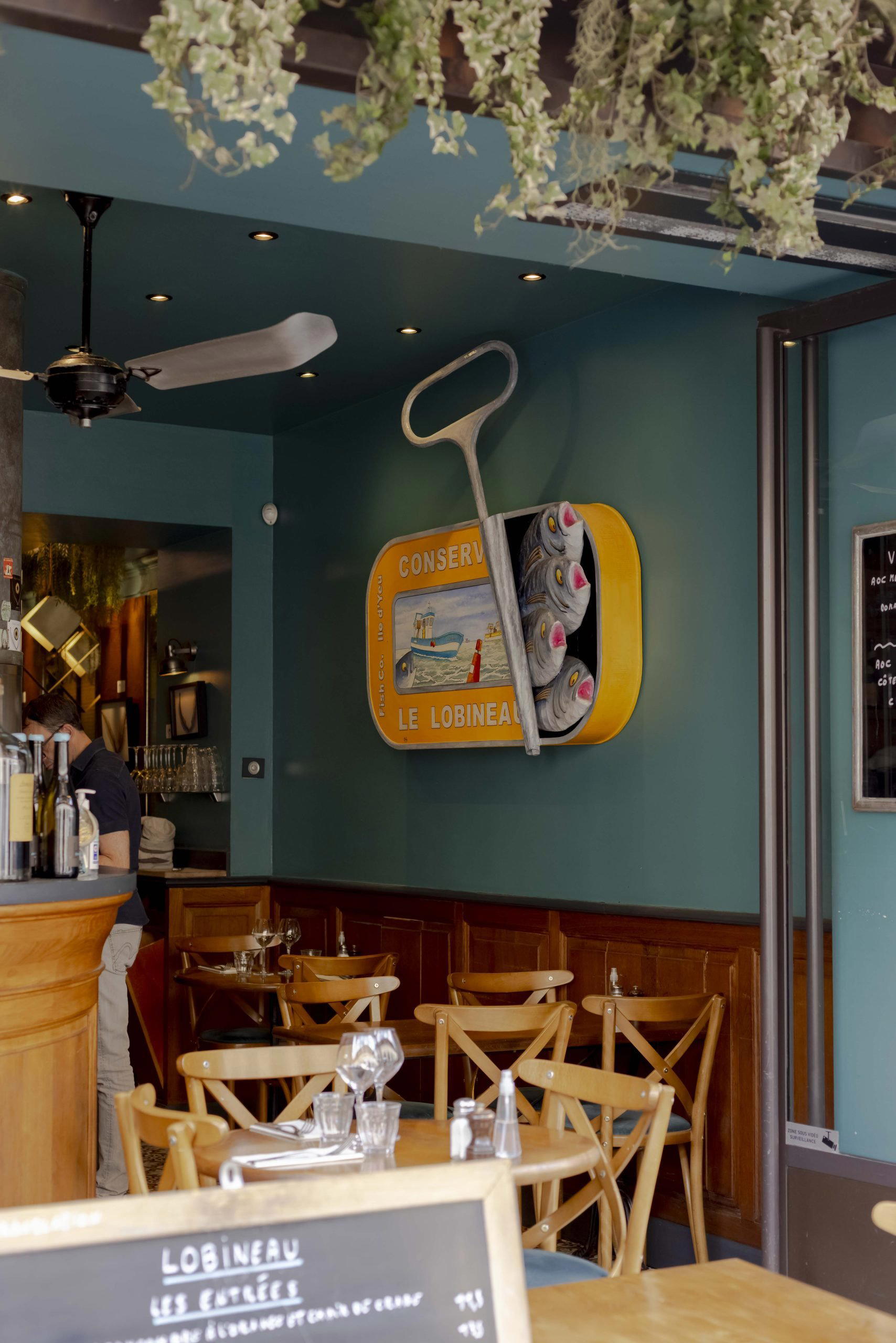
A Street That Sets the Tone Before You Arrive
Rue Lobineau runs parallel to the Marché Saint-Germain in the 6th arrondissement, a covered market structure that has anchored this corner of Paris since the early nineteenth century. The street itself is short, shaded, and carries the particular density of a neighbourhood where provision and pleasure have occupied the same few blocks for generations. Walking it toward an address like number seven, you are already inside one of Paris's most instructive dining corridors: close enough to Boulevard Saint-Germain to carry its intellectual associations, far enough from the boulevard's tourist pressure to feel like you are eating where the arrondissement actually lives.
That geographic positioning matters for how to read any address on Rue Lobineau. The 6th has developed a two-speed dining character in recent years. The boulevard-facing restaurants serve a broad international clientele and price accordingly. The streets behind, running toward the market and the quieter residential blocks to the south, maintain a more concentrated local identity. Lobineau sits in that second register, on a street where the foot traffic is purposeful rather than ambient.
The 6th Arrondissement's Dining Character
Paris's Left Bank has always calibrated its restaurants against a different set of expectations than the grands boulevards or the palace-hotel dining rooms of the 8th. The 6th, in particular, operates in a register that prizes seriousness over spectacle. The arrondissement is home to addresses like Arpège, where Alain Passard's vegetable-centred tasting menu has been a reference point for French fine dining since the 1990s, and to L'Ambroisie, Bernard Pacaud's three-Michelin-star institution on Place des Vosges, which defines the upper register of classical French cooking in the city. These are not the same category of address as Lobineau, but they establish the ambient expectation of the Left Bank diner: that a serious meal is a considered one.
That expectation extends to how the 6th approaches the midrange and neighbourhood tier. The concentration of market infrastructure in this corner, anchored by the Marché Saint-Germain, has historically produced a particular kind of restaurant: one that sources closely, cooks in a recognisably French idiom, and treats the room as a place for sustained meals rather than quick covers. The addresses that persist on streets like Rue Lobineau tend to do so because they hold up against the scrutiny of a neighbourhood that eats out regularly and with attention.
Where Lobineau Sits in the Paris Dining Conversation
Paris's restaurant market at the neighbourhood level has bifurcated in a way that mirrors broader trends in French dining. On one side, the category of destination restaurants pulling international diners: the three-star palaces, the chef-driven creative addresses like Alléno Paris au Pavillon Ledoyen, the technically ambitious rooms such as Kei and Le Cinq at the Four Seasons Hôtel George V. On the other side, the neighbourhood addresses that serve primarily as local references, where the audience is the arrondissement itself rather than a visitor arriving with a reservation from overseas.
Lobineau's address on Rue Lobineau places it in the second category by context. This is not a criticism. The neighbourhood restaurant in a Parisian market district occupies a specific and important role in the city's food culture, one that is harder to sustain than it appears. The competitive pressure from casual bistrots, wine bars, and the expanding natural wine café format means that addresses in this tier must hold a clear position to survive. The ones that do tend to offer something that the more fashionable formats do not: consistency, a room that feels inhabited rather than designed, and food that is understood by its regulars rather than decoded by first-timers.
For international visitors building a Paris itinerary around serious French cooking, the 6th's neighbourhood tier is worth including alongside the destination addresses. The full spectrum of what this city does with food only becomes legible when you have eaten at both registers. For context on the wider French fine dining scene beyond Paris, addresses like Mirazur in Menton, Bras in Laguiole, Flocons de Sel in Megève, and Troisgros in Ouches demonstrate how seriously France takes cooking at every geographic register, not just in the capital. The same ambition, expressed differently, runs from Auberge de l'Ill in Illhaeusern to AM par Alexandre Mazzia in Marseille.
The Sensory Register of a Market-District Address
The immediate environment of Rue Lobineau is a significant part of the dining experience before you have ordered anything. The Marché Saint-Germain, which occupies the block between Rue Lobineau and Rue Mabillon, generates a particular kind of ambient sensory context: the smell of fresh produce in the mornings, the sounds of a covered market operating at rhythm, the visual texture of a neighbourhood managing the coexistence of everyday commerce and premium consumption. French markets of this type, operating in the centre of residential arrondissements, have been disappearing from Paris faster than they are replaced, which makes their remaining presence in the 6th all the more significant as a contextual framing for the street.
Walking Rue Lobineau in the early evening, after the market stalls have closed but before the full dinner hour, gives a particular reading of how this part of the 6th calibrates itself. The street is quiet by boulevard standards, the light changes quickly in narrow Left Bank streets, and the foot traffic is almost entirely residential. This is the tone of the address.
Planning Your Visit
The 6th arrondissement is accessible from several metro lines, with Saint-Sulpice (Line 4) and Mabillon (Line 10) both within a short walk of Rue Lobineau. The Marché Saint-Germain itself operates on defined market hours, and the rhythm of the street changes markedly between market and non-market days. For visitors building a broader Paris itinerary, our full Paris restaurants guide maps the city's dining across arrondissements and price tiers. Those planning to move between Paris and other French regions should note that the regional addresses, from Assiette Champenoise in Reims to Au Crocodile in Strasbourg to Auberge du Vieux Puits in Fontjoncouse, reward planning that accounts for travel time and reservation lead times specific to each location. International points of comparison for classic French technique in a global context include Le Bernardin in New York City and, for contrast in contemporary format, Atomix. And for Burgundy-era reference in France's own canon, Paul Bocuse's Auberge du Pont de Collonges remains the historical benchmark.
Address: 7 Rue Lobineau, 75006 Paris, France. Nearest metro: Mabillon (Line 10) or Saint-Sulpice (Line 4).
How Lobineau Paris compares with similar nearby venues.
| Venue | Cuisine | Price |
|---|---|---|
| L’Huitrerie Regis | Oyster Bar | Not listed |
| Le Paris | Modern Cuisine | €€ |
| Yoshinori | Modern Cuisine | €€€€ |
| L'Ouzeri | Greek | €€ |
Continue exploring
More in Paris
Restaurants in Paris
Browse all →
Bars in Paris
Browse all →
Hotels in Paris
Browse all →

At a Glance
- Elegant
- Cozy
- Intimate
- Date Night
- Special Occasion
- Standalone
- Local Sourcing
Current opening hours
- Monday
- Closed
- Tuesday
- 12–2:30 PM, 6:30–10:30 PM
- Wednesday
- 12–2:30 PM, 6:30–10:30 PM
- Thursday
- 12–2:30 PM, 6:30–10:30 PM
- Friday
- 12–2:30 PM, 6:30–10:30 PM
- Saturday
- 12–2:30 PM, 6:30–10:30 PM
- Sunday
- Closed
Hours can change for holidays and private events. Last verified .
Nice and calm atmosphere with a refined, cozy feel.