Julia




A 22-cover restaurant in Villa Crespo, Julia Buenos Aires applies rigorous product discipline to Argentine ingredients, limiting each dish to five seasonal components. Recognised with a Michelin Plate in 2025 and a place on Opinionated About Dining's Top Restaurants in South America list, it operates at the quieter, more considered end of Buenos Aires's modern dining tier.
Pearl is the En Primeur Club membership app — saves, bookings, and concierge access live there. Same editors, same standards.
- Address
- Loyola 807, C1414 C1414AUQ, Cdad. Autónoma de Buenos Aires, Argentina
- Phone
- +54 11 7519-0514
- Website
- instagram.com
- Directions
- Get directions
 Saves & bookings on Pearl
Where Villa Crespo Meets Progressive Plate Work
Julia is a Buenos Aires restaurant in Villa Crespo, recognised on the World’s 50 Best Restaurants list at No. 50 in 2025. The neighbourhood gives the first signal. Villa Crespo sits one barrio west of Palermo, far enough from the tourist circuit that the restaurants here tend to serve locals rather than itineraries. Loyola 807 is a residential block, and Julia occupies it with the kind of low-profile confidence that characterises the better end of Buenos Aires's neighbourhood dining scene. Twenty-two covers. No large format signage. The room is small enough that cooking decisions made at the pass reach every table simultaneously.
At this scale, the format demands a specific kind of cooking philosophy. Julia Buenos Aires operates within what its kitchen describes as 'indie food': confident, colourful dishes built from no more than five seasonal ingredients per plate. That constraint, far from limiting, disciplines the cooking toward clarity. When a dish contains five components, each one carries weight. There is no garnish to hide behind, no sauce to compensate for produce that isn't ready. The menu shifts with micro-seasonality, which in Buenos Aires means tracking what Argentine farms and producers are delivering week by week, not just season by season.
Local Products, Imported Rigour
Argentina has one of South America's most varied agricultural profiles: Patagonian lamb, high-altitude Andean produce, Atlantic seafood, Pampas beef, and a domestic vegetable supply shaped by a long growing calendar. The challenge for Buenos Aires's contemporary kitchens has always been less about sourcing and more about how to bring systematic discipline to that abundance. Applying precise technique to local product without flattening its character is the central question modern Argentine restaurants are working through, and Julia's five-ingredient rule is a clear answer to it.
This approach places Julia in a specific comparable set within Buenos Aires's serious dining tier. Aramburu, which holds two Michelin stars, works in the modern Argentine creative register at a larger scale and higher price point. Trescha and Casa Cavia both occupy the territory where Argentine ingredients meet a more considered cooking intelligence. Julia's distinction within that grouping is its insistence on reduction: fewer ingredients, smaller room, tighter focus. The 2025 Michelin Plate recognition and a position on Opinionated About Dining's Leading Restaurants in South America 2025 list confirm it is being read as part of this progressive cohort rather than as a neighbourhood curiosity.
The contrast with Buenos Aires's dominant dining tradition is instructive. Don Julio, which holds a Michelin star, and places like Ajo Negro operate on a different register: that of the parrilla and the deep Argentine barbecue tradition where product quality is the cooking and technique largely stays out of the way. Julia's product-driven approach shares that reverence for the raw ingredient, but brings it through a different discipline: European-inflected plate structure, seasonal menu rotation, and the kind of cook-per-cover ratio that only works at 22 seats.
Reading the Menu Through Its Constraints
The five-ingredient ceiling is a useful lens for reading whatever Julia is currently serving. It means every dish on the menu has been pressure-tested for redundancy. If two components do the same work, one gets cut. The result tends toward cooking where texture, temperature, and sourcing do the heavy lifting rather than elaboration. That is a recognisable approach in ambitious European restaurants, particularly in Scandinavian and Basque kitchens, but it translates interestingly onto Argentine product, where the flavour profiles are distinct enough to carry minimalist treatment. Restaurants like Frantzén in Stockholm and FZN by Björn Frantzén in Dubai demonstrate how far the principle of ingredient-first minimalism can stretch across different culinary contexts; Julia applies a version of that same discipline to a South American pantry.
Chef Julio Martín Báez opened Julia in 2019, which placed the restaurant in the early stage of what became a broader turn toward small-format, product-focused dining in Buenos Aires's creative tier. Since then, Julia has accumulated recognition without changing its footprint: the room is still 22 covers, the format still rotates with the market, and the operating model still relies on the kind of proximity between kitchen and table that larger rooms cannot replicate.
Buenos Aires's Wider Modern Dining Picture
Julia sits within an Argentine restaurant scene that has been deepening its technical ambition throughout the 2020s. Buenos Aires's upper-tier restaurants now draw international attention, with Michelin arriving in Argentina in 2024 validated what local critics had been tracking for years. The award cycle has created a clearer hierarchy: starred restaurants at the formal end, Plate-recognised venues like Julia in the serious-but-approachable middle, and a wide body of neighbourhood restaurants still working through what modern Argentine cooking means.
For travellers spending time across Argentina rather than concentrating exclusively in Buenos Aires, the country's broader dining geography rewards attention. Azafrán in Mendoza connects regional wine culture to precise modern cooking. Cavas Wine Lodge in Alto Agrelo operates in wine country with a different kind of produce access. EOLO in El Calafate, Awasi Iguazu in Puerto Iguazu, and La Bamba de Areco in San Antonio de Areco each map a different corner of Argentine hospitality, and El Colibri in Santa Catalina represents the country's more remote dining options.
Planning Your Visit
Julia's 22-cover format means the room books tightly. At this size, popular evenings fill weeks in advance, particularly given the restaurant's OAD recognition and Michelin Plate status attracting both local regulars and international visitors. It is worth booking as early as possible and treating walk-in access as unlikely on peak nights. The address is Loyola 807 in Villa Crespo. The $$$$ price tier positions Julia at the higher end of Buenos Aires's neighbourhood dining, comparable to the contemporary creative restaurants in Palermo and Recoleta, though below the full tasting-menu price points of Michelin-starred operators. Given the cover count, this is a room where the kitchen's attention is distributed across a small number of guests, and the format reflects that concentration.
Reputation First
Comparable venues nearby, for context on price, style, and recognition.
| Venue | Cuisine | Price | Awards | Notes |
|---|---|---|---|---|
| JuliaThis venue — the venue you are viewing | Modern Indie Fusion | $$$$ | Michelin Plate, World's 50 Best #50 | Not listed |
| Mishiguene | Modern Jewish Immigrant Cuisine | $$$ | Michelin Plate, World's 50 Best #69 | Palermo |
| Ness | Modern Argentine Fire Cooking | $$$ | World's 50 Best #64 | Núñez |
| Niño Gordo | Asian-Argentine Fusion Grill | $$$ | Michelin Plate, World's 50 Best #21 | Palermo |
| El Preferido de Palermo | Classic Italian Bodegón | $$$ | Michelin Plate, World's 50 Best #24 | Palermo |
| Tegui | Contemporary Argentine Fine Dining | $$$$ | World's 50 Best #49 | Recoleta |
Recognition history
Dated appearances from independent guides and award organizations, with the underlying list record or original source where available.
Michelin Plate
Michelin
Opinionated About Dining Top Restaurants in South America Ranked #62
Opinionated About Dining
Michelin Plate
Michelin
Opinionated About Dining Top Restaurants in South America
Opinionated About Dining
The Best Chef One Knife
The Best Chef
World's 50 Best Latin America's Best Restaurants #50
World's 50 Best
Continue exploring
More in Buenos Aires
Restaurants in Buenos Aires
Browse all →
Bars in Buenos Aires
Browse all →
Hotels in Buenos Aires
Browse all →
Wineries in Buenos Aires
Browse all →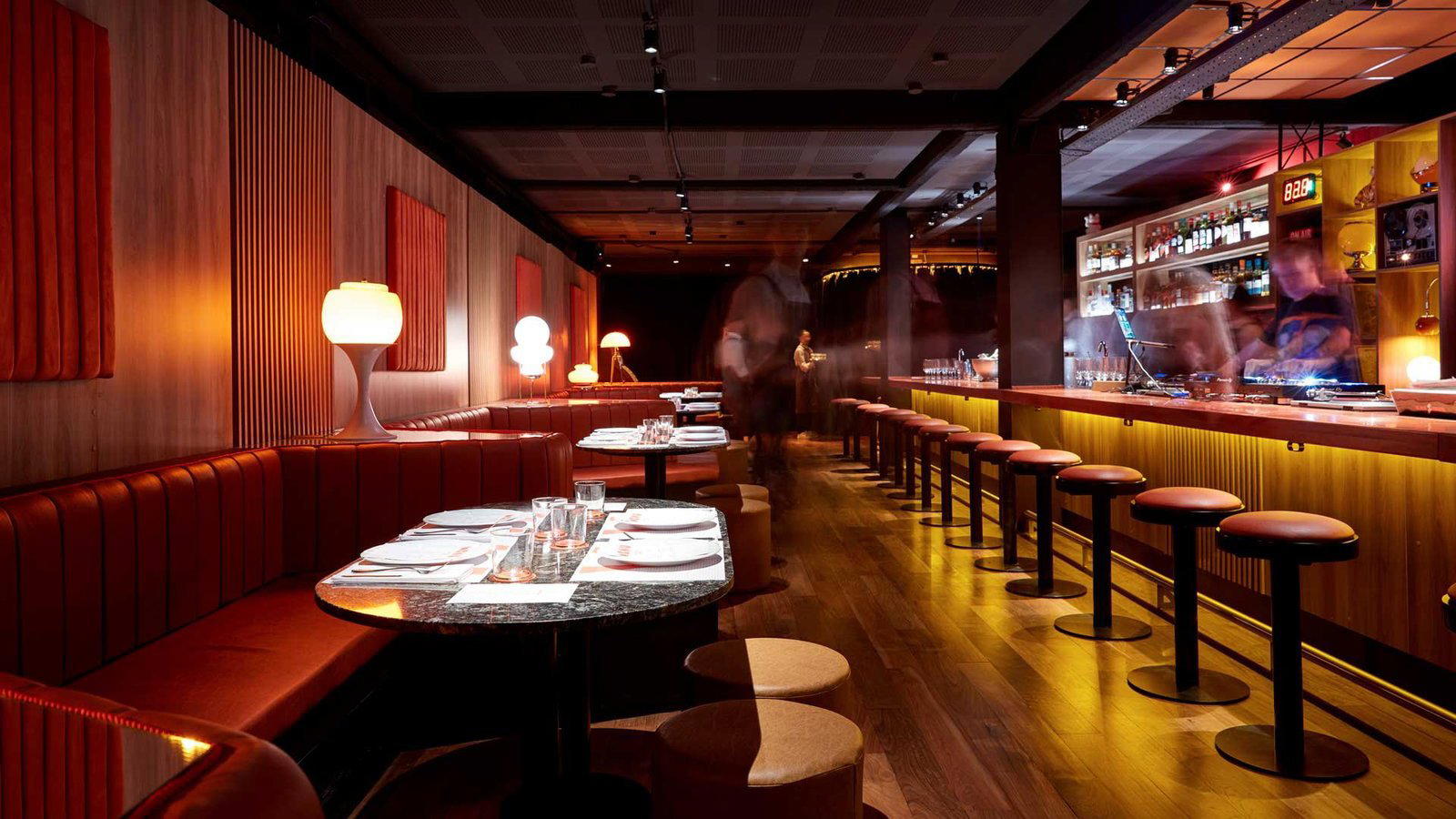
At a Glance
- Intimate
- Modern
- Cozy
- Elegant
- Date Night
- Special Occasion
- Open Kitchen
- Extensive Wine List
- Local Sourcing
Current opening hours
- Monday
- 7–11 PM
- Tuesday
- 7–11 PM
- Wednesday
- 7–11 PM
- Thursday
- 7–11 PM
- Friday
- 7–11 PM
- Saturday
- Closed
- Sunday
- Closed
Hours can change for holidays and private events. Last verified .
Small, intimate, and homey atmosphere with cozy seating in a modern bistro-style space featuring brushed cement floors and pine-green paintwork.