


A Michelin-starred table in the heart of Bonnieux, JU - Maison de Cuisine puts Provençal terroir at the centre of a daily carte blanche menu shaped by Algerian-influenced spice and an unusually vegetable-forward approach. Chef Julien Allano's stone-walled room draws an international clientele to a village the gastronomic world has firmly rediscovered. Rated Notable by We're Smart.
Pearl is the En Primeur Club membership app — saves, bookings, and concierge access live there. Same editors, same standards.
- Address
- 2 Rue Lucien Blanc, 84480 Bonnieux, France
- Phone
- +33 4 90 75 88 62
- Website
- ju-maisondecuisine.com
- Directions
- Get directions
 Saves & bookings on Pearl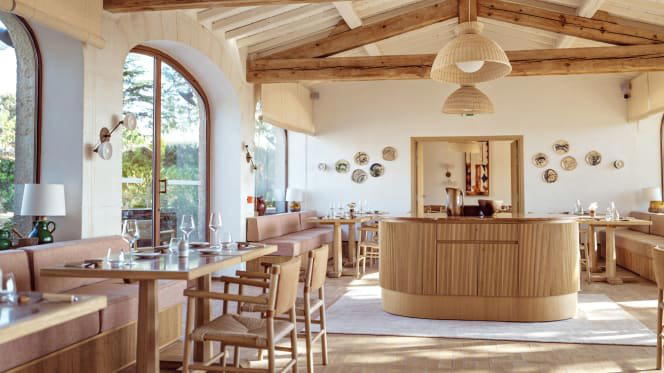
A Village Address That Now Draws an International Room
JU - Maison de Cuisine is a one-Michelin-star restaurant in Bonnieux, France, serving Modern Provençal Gastronomique at about $85 per person. Bonnieux, in the Luberon, is a village of ochre stone and steep lanes that has long attracted artists and second-home owners but, until recently, did not command serious attention from the food-focused traveller. That changed when Chef Julien Allano, previously at La Mirande in Avignon and Le Clair de la Plume in Grignan, chose a traditional building on Rue Lucien Blanc as the site for his own project. The signal was quiet but the result has been decisive: a 2025 Michelin star, a We're Smart 'Notable' rating for vegetable-forward thinking, and a dining room that, on most evenings, is conducted almost entirely in languages other than French. For a restaurant in a Provençal village of fewer than 1,500 inhabitants, that kind of pull tells you something specific about how dining demand can land in a small place.
The Room as an Argument for Restraint
Walking into JU, the architecture does most of the contextual work. Exposed stonework, untreated walnut furnishings made by hand, a wooden counter behind which the kitchen operates in full view, the room reads as a deliberate rejection of the polished, hotel-adjacent finish that defines the other end of the Luberon market. Venues such as La Bastide, priced at €€€€, sit in a more formal register. JU at €€€ occupies a position where the room signals seriousness through material honesty rather than gloss. Handcraft and age, the stonework, the wood grain, do the same work that a white-tablecloth room might do elsewhere, but they anchor the experience in the specific place rather than in a generalised idea of fine dining. Downstairs, the cheese course takes place in a vaulted cellar dating to the 13th century.
Where the Ingredients Come From, and Why That Frames Everything
The carte blanche menu at JU changes regularly, and the sourcing logic is close to the surface of every plate. Heirloom wheat varieties, peanuts from Malataverne, green beans from a farm neighbouring the restaurant, pigeon from Sarrians, the ingredient list reads less like a provenance feature and more like a map of the surrounding region drawn through a chef's purchasing decisions. This is a meaningful distinction. Provençal cooking has long used local produce as a given, but the specificity here, named farms, named varieties, named villages, reflects a sourcing rigour that puts JU in the same conversation as French destination tables such as Bras in Laguiole, where the terroir surrounding the kitchen is treated as the primary creative material, not a supporting detail.
Vegetables are not incidental here. They occupy a prominent structural role across the menu, an approach that earned the We're Smart recognition and sets JU apart from most of the Luberon's restaurant offer. The nearby La Table des Amis and Le Mas Les Eydins - Christophe Bacquié represent different priorities, which makes JU's vegetable-forward positioning distinct within the village's immediate dining set. The cuisine does not exclude meat; pigeon and other proteins appear on the menu. But the architecture of each plate consistently elevates vegetable elements rather than treating them as accompaniment.
The Algerian Influence and What It Does to Provençal Cooking
Southern French cooking has been absorbing North African flavour references for generations, particularly in Marseille and the wider Provence-Alpes-Côte d'Azur region, where the demographic history of pied-noir and North African immigrant communities reshaped the food culture from the 1960s onward. What Allano does with that inheritance is fold it into a haute cuisine register rather than keeping it in the bistro or street-food sphere where those influences typically sit. Spice accents and fresh herb combinations rooted in Algerian cooking tradition surface in dishes otherwise built on hyper-local Provençal ingredients, a culinary synthesis that has a logic specific to this chef's background but also resonates within a broader southern French context. Restaurants working in a similar integrative mode at higher price points include Mirazur in Menton, where Mediterranean edge and multicultural influence have defined a globally recognised cooking identity. JU operates at a different scale and in a different village, but the impulse, to make a regional cuisine more honest about the full range of its influences, is recognisable across both tables.
What 'Carte Blanche' Means in Practice
The menu format at JU is not a set tasting menu in the conventional sense but a carte blanche structured in several sections, with the specific content shifting to reflect what the kitchen sourced that day or that week. For the guest, this requires a degree of surrender; there is no opportunity to plan around a known dish, and the experience differs meaningfully between visits. In return, the kitchen operates without the compromise that comes from holding a static menu through changing seasons. For context on how this format functions at the summit of the French market, the multi-day immersions at Troisgros - Le Bois sans Feuilles or the daily recalibration at Flocons de Sel in Megève represent the same underlying philosophy applied to larger, more established operations. At JU, the format sits inside a smaller, more intimate room, which concentrates both the risk and the reward.
Bonnieux in the Wider Luberon Dining Picture
The Luberon has historically operated as a region where visitors eat well but rarely eat at a level that would draw a dedicated trip. The handful of serious addresses tend to be attached to hotels or to the broader Provence-lifestyle tourism economy. JU represents something more independent: a chef's own project, chosen for its village identity, not for a hotel contract or a resort infrastructure. Bonnieux's return to the gastronomic map is largely its story. For visitors spending time in the Luberon and wanting to anchor an itinerary around a single meal, JU is a strong argument for Bonnieux specifically. The village's other options, including La Bergerie for grills at a lower price point and La Bastide for a more formal Provençal register, round out the local dining picture.
Planning a Visit
JU - Maison de Cuisine is located at 2 Rue Lucien Blanc in Bonnieux, in the heart of the village. Advance booking is essential. The restaurant sits in the €€€ price tier, which, relative to La Table des Amis and La Bastide at €€€€, represents a lower spend for a Michelin-starred table in the village. The cheese experience in the 13th-century vaulted cellar is part of the meal format rather than a separate booking.
Quick Comparison
Comparable venues nearby, for context on price, style, and recognition.
| Venue | Cuisine | Price | Awards | Notes |
|---|---|---|---|---|
| JU - Maison de CuisineThis venue — the venue you are viewing | Modern Provençal Gastronomique | $$$$ | Michelin 1 Star | Not listed |
| La Bastide | Modern Provençal Fine Dining | $$$$ | Michelin 1 Star | Bonnieux |
| La Table des Amis | Modern Provençal Fine Dining | $$$$ | Michelin 2 Star | Bonnieux |
| Le Mas Les Eydins - Christophe Bacquié | Modern Provençal Fine Dining | $$$$ | Not listed | Bonnieux |
| La Bergerie | Provençal Bistro | $$$ | Michelin Plate | Bonnieux |
| Un p'tit coin de cuisine | French Bistro with Mediterranean Flair | $$ | Not listed | Bonnieux old town |
Recognition history
Dated appearances from independent guides and award organizations, with the underlying list record or original source where available.
Michelin 1 Star
Michelin
Gault & Millau Remarkable Restaurant
Gault & Millau
Michelin 1 Star
Michelin
We're Smart World 2 Radishes
We're Smart World
Michelin Plate
Michelin
Continue exploring
More in Bonnieux
Restaurants in Bonnieux
Browse all →
Bars in Bonnieux
Browse all →
Hotels in Bonnieux
Browse all →
At a Glance
- Romantic
- Elegant
- Intimate
- Sophisticated
- Cozy
- Date Night
- Special Occasion
- Celebration
- Open Kitchen
- Wine Cellar
- Historic Building
- Chefs Counter
- Sommelier Led
- Farm To Table
- Local Sourcing
- Organic
Current opening hours
- Monday
- Closed
- Tuesday
- Closed
- Wednesday
- Closed
- Thursday
- Closed
- Friday
- Closed
- Saturday
- Closed
- Sunday
- Closed
Hours can change for holidays and private events. Last verified .
Warm, authentic, and unpretentious atmosphere with exposed stone vaults, custom walnut furnishings, and soft ceramic lighting; intimate 9-table setting with visible chef at work behind wooden counter creating a sense of connection and storytelling.