Jong Ga House
"Jong Ga House, Grand Lake Lake Merritt by Huge. Jong Ga House has been serving up authentic Korean food for 15 years. There's always a full house, so be sure to plan ahead if you want to grab dinner after 8 pm. Every meal starts with 15 small dishes of cold appetizers. Try the spicy tofu soup, the seafood pancake and of course the authentic Korean barbecue."
Pearl is the En Primeur Club membership app — saves, bookings, and concierge access live there. Same editors, same standards.
- Address
- 372 Grand Ave, Oakland, CA 94610
- Phone
- +1 510 444 7658
- Website
- jonggahouse.com
- Directions
- Get directions
 Saves & bookings on Pearl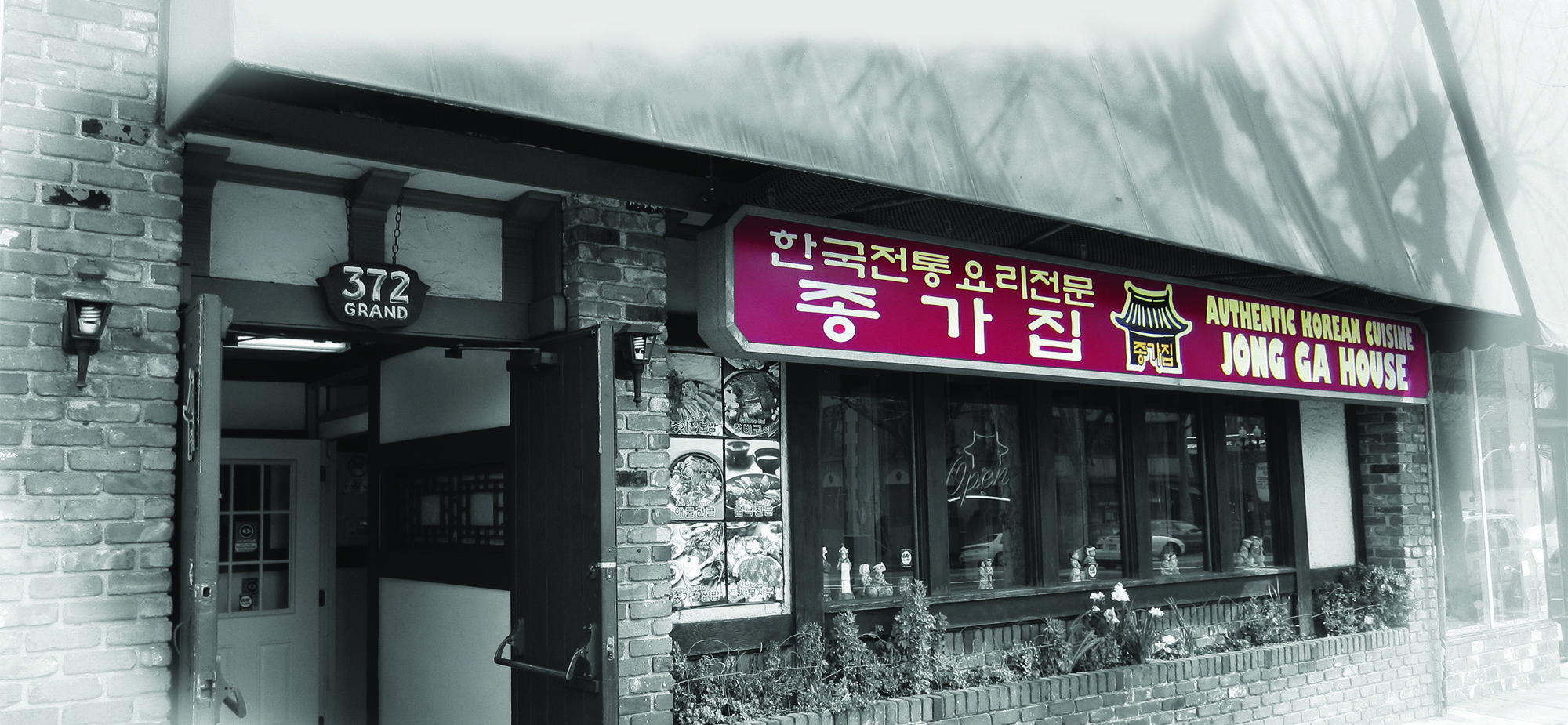
Grand Avenue and the Korean Table It Keeps
Grand Avenue in Oakland's Grand Lake neighborhood occupies a particular position in the city's dining geography: it runs long enough to hold a real mix of regulars-first restaurants alongside newer openings, and it sits far enough from the Temescal and Uptown corridors that it retains a neighborhood-first character rather than a destination-dining one. Jong Ga House, at 372 Grand Ave, belongs to that fabric. It is a Korean restaurant in a city where Korean cooking, outside of the Koreatown concentrations of Los Angeles, tends to arrive in one of two forms: the sprawling tabletop-grill format designed for groups, or the smaller, more personal house-style operation where banchan and soup define the meal. Jong Ga House occupies the second category, which in Oakland's dining scene is the less common and, for regular customers, the more valued one.
What Korean House Cooking Looks Like Here
House-style Korean cooking, as it functions outside Korea's metropolitan centers, has evolved considerably over the past two decades in American cities. Early Korean restaurants in most U.S. markets outside Los Angeles and New York leaned heavily on the barbecue format, partly because the theater of tabletop grilling translated well to American dining expectations. The more everyday registers of Korean home cooking, specifically the soups, the braised dishes, the fermented preparations, and the rotating small plates that structure a proper meal, arrived later and more quietly. In Oakland specifically, that quieter, more domestic style of Korean cooking now has a small but committed audience, one that knows what it is looking for and returns for it consistently. Jong Ga House operates within that context.
The name itself signals the register. "Jong Ga" in Korean carries connotations of the head household, the family line, the main house, as opposed to a branch or a newer establishment. Whether that framing is genealogical or aspirational matters less than what it communicates about the kind of cooking being offered: something grounded, repetitive in the leading sense, and oriented around a set repertoire rather than seasonal reinvention. This contrasts sharply with the tasting-menu ambitions of restaurants like Atomix in New York City, where Korean fine dining has been codified into a rigorous, award-documented format, or the farm-to-table architecture of Blue Hill at Stone Barns in Tarrytown. Jong Ga House is not competing in that register. It is competing for the table that returns every two weeks.
Evolution on a Neighborhood Scale
The evolution of a restaurant like Jong Ga House does not follow the same trajectory as, say, a fine-dining institution such as The French Laundry in Napa or Le Bernardin in New York City, where reinvention tends to be publicized, reviewed, and tracked across decades of critical coverage. At the neighborhood Korean house level, change is subtler: a dish that drops off the rotation, a banchan selection that shifts with a supplier relationship, the slow calibration of heat levels and salt to a local palate that has been coming through the door long enough to have preferences. This is evolution by accumulation rather than by announcement, and it is what distinguishes a restaurant that has genuinely embedded itself in a neighborhood from one still performing for first-time guests.
Oakland's dining scene has absorbed a significant amount of change in recent years, with the closures and openings that followed pandemic disruptions reshuffling which restaurants held their regular base and which did not. The restaurants that survived in neighborhoods like Grand Lake tended to be those with a dependable core rather than a hype cycle, and that pattern is visible across the broader Oakland dining ecosystem. Consider the different registers holding ground on the city's streets: alaMar Dominican Kitchen, Agave Uptown, and 3 Bottled Fish each represent a different community anchor, and together they illustrate how Oakland's most durable restaurants tend to be those with a clear identity rather than a broad appeal strategy. The restaurant fits that pattern.
Placing Jong Ga House in Oakland's Korean Dining Context
Oakland is not a Korean dining city in the way that Los Angeles or even parts of the South Bay are. The Korean restaurant density here is lower, which means individual operations carry more weight for the community they serve. For Korean residents and Korean food regulars in the East Bay, a reliable house-cooking option on Grand Avenue fills a gap that a drive to Koreatown or a ferry to San Francisco would otherwise require. That structural position, being one of relatively few options in a geography underserved by the cuisine, is itself a kind of durability signal. It does not require Michelin recognition or a presence on the 50 Best lists to hold relevance. It requires consistency and community trust, which are harder to manufacture and easier to lose.
For visitors moving through Oakland's broader dining options, the neighborhood context matters. Grand Avenue runs adjacent to Lake Merritt, which means arriving by foot from the lake's eastern shore is direct if you are already in that part of the city. The area around the restaurant also supports broader exploration: Alem's Coffee and 8th St Cafe represent the Ethiopian and Hong Kong-style tea house traditions that give Oakland's dining its particular cross-cultural texture. For a fuller picture of how these places fit together, our full Oakland restaurants guide maps the city's dining by neighborhood and category.
For broader reference points on what Korean cooking looks like at its most formalized end in American fine dining, Atomix provides the clearest case study. At the other end of the ambition spectrum, places like Lazy Bear in San Francisco, Smyth in Chicago, Providence in Los Angeles, Addison in San Diego, Single Thread Farm in Healdsburg, Emeril's in New Orleans, Atelier Moessmer Norbert Niederkofler in Brunico, and The Inn at Little Washington demonstrate how high-investment dining constructs a completely different relationship between kitchen and guest. The restaurant is not in that conversation, nor should it be evaluated against it. The relevant comparable set is the small, consistent, neighborhood-anchored restaurant that a city needs more of and rarely discusses publicly until it is gone.
Planning Your Visit
The restaurant is located at 372 Grand Ave in Oakland's Grand Lake neighborhood. The restaurant recommends reservations, is casual in dress, and is priced at about $25 per person.
Accolades, Compared
Comparable venues nearby, for context on price, style, and recognition.
| Venue | Cuisine | Price | Notes |
|---|---|---|---|
| Jong Ga HouseThis venue — the venue you are viewing | Authentic Korean Barbecue | $$ | Not listed |
| Seoul Gom Tang | Traditional Korean Gomtang | $$ | Mosswood |
| Oriental B.B.Q. Chicken Town | Korean Fried Chicken & BBQ | $$ | Bushrod Park |
| Joodooboo | California Korean Tofu & Banchan | $$ | Longfellow |
| Ohgane Korean BBQ | Traditional Korean BBQ | $$ | Temescal |
| FuseBOX | Korean-Japanese Fusion Izakaya | $$ | West Oakland |
Continue exploring
More in Oakland
Restaurants in Oakland
Browse all →
Bars in Oakland
Browse all →
Hotels in Oakland
Browse all →




At a Glance
- Classic
- Family
- Group Dining
- Casual Hangout
- Sake Program
Current opening hours
- Monday
- 11 AM–11 PM
- Tuesday
- 11 AM–11 PM
- Wednesday
- 11 AM–11 PM
- Thursday
- 11 AM–11 PM
- Friday
- 11 AM–11 PM
- Saturday
- 11 AM–11 PM
- Sunday
- 12–11 PM
Hours can change for holidays and private events. Last verified .
Traditional and bustling atmosphere with a full house during peak dinner hours.