Joodooboo



What began in 2022 as a banchan shop centred on freshly made tofu has evolved into one of Oakland's more considered Korean kitchens. Joodooboo, on Market Street, occupies a quiet register of the cuisine, delicate, ingredient-forward, and focused on dooboo as a serious culinary subject rather than a supporting player. The result is a room that rewards attention over appetite.
Pearl is the En Primeur Club membership app — saves, bookings, and concierge access live there. Same editors, same standards.
- Address
- 4201 Market St, Oakland, CA 94608
- Phone
- 510-500-1001
- Website
- joodooboo.co
- Directions
- Get directions
 Saves & bookings on Pearl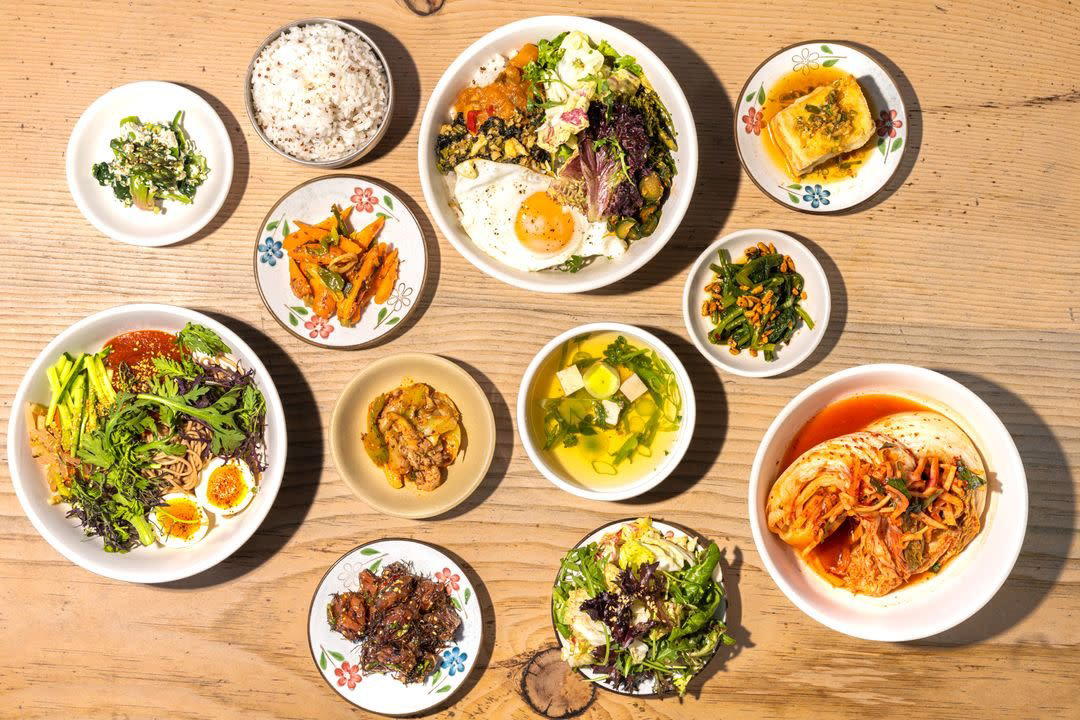
The Softer Grammar of Korean Cooking
Korean food in the American imagination tends toward the assertive: gochujang heat, the smokiness of a charcoal grill, ferments sharp enough to make your eyes water. That version of the cuisine is real and worth chasing, but it represents one register of a far wider tonal range. At the quieter end of that range sits dooboo, fresh tofu, and the tradition of banchan built around restraint, repetition, and the quality of base ingredients. Joodooboo is a casual California Korean tofu and banchan restaurant at 4201 Market St in Oakland, with.
The restaurant debuted in 2022, initially operating as a banchan shop with an emphasis on house-made dooboo. That origin matters because it established the premise: the ingredient comes first, and everything else follows from it. In kitchens where tofu is made fresh rather than sourced from industrial supply chains, the texture and flavour profile shift substantially. Fresh dooboo carries moisture, a faint sweetness, and a softness that disappears within hours of production. Building a menu around that perishability is a choice that commits the kitchen to daily production discipline, the opposite of a kitchen padded with long-shelf-life staples.
Ingredient Logic at Market Street
The broader context for Joodooboo's sourcing approach sits inside a larger national conversation about Korean cuisine and ingredient integrity. Restaurants like Atomix in New York City have demonstrated that Korean cooking can hold its own in fine-dining brackets when ingredient sourcing and technique are applied rigorously. That conversation has filtered into less formal, more neighbourhood-scaled operations, where the same sourcing principles show up in lower-key formats, counter service, small menus, banchan-led meals.
Joodooboo sits in that neighbourhood-scaled tier, but its editorial identity connects to a wider movement in American dining where hyper-focused ingredient sourcing is the primary argument. You can draw a line between this approach and restaurants like Blue Hill at Stone Barns in Tarrytown or Single Thread Farm in Healdsburg, the price brackets and formality levels are entirely different, but the underlying logic (start with the ingredient, build backward) is shared. Joodooboo simply runs that logic through a Korean framework, with tofu as the anchor rather than heritage grain or estate-grown produce.
Steve Joo's cooking has drawn descriptors, delicate, subtle, gentle, that are unusual for a Korean restaurant in an American city. Those adjectives do real work here. They describe a kitchen that is not trying to compete on the axis of fermented intensity or grilled-meat satisfaction, but is instead making the case that the soft, the mild, and the lightly seasoned can carry as much meaning as the bold. That is a harder argument to make, and making it requires ingredients that can hold attention without amplification.
Oakland as Context
Oakland's restaurant scene has developed its own logic over the past decade, distinct from San Francisco's more publicised dining culture. The city supports a wide range of immigrant-led and diaspora kitchens operating at neighbourhood scale, alongside a smaller tier of more formally ambitious rooms. Joodooboo sits in a middle zone: more considered than a casual takeout operation, less theatrical than the destination-dining tier represented elsewhere in the Bay Area by places like Lazy Bear in San Francisco or The French Laundry in Napa.
The Market Street address places the restaurant in a stretch of Oakland that functions as a working commercial strip rather than a curated dining district. That setting is consistent with the restaurant's register. There is no design flourish to signal arrival, no neighbourhood prestige to borrow. The food has to carry the visit, and specifically, the tofu has to carry the food. That is a confident editorial position for any kitchen to take.
Oakland's broader dining range offers useful comparisons. 3 Bottled Fish and alaMar Dominican Kitchen each represent ingredient-led approaches from different culinary traditions operating in the same city. Analog and Anula's Cafe add to a picture of Oakland as a city where small, focused operations often outperform their scale. Alem's Coffee suggests a similar ethos applied to a different category. Across these venues, the pattern is consistent: tight focus, ingredient specificity, and a resistance to the kind of menu sprawl that tends to dilute kitchen identity. Joodooboo fits that pattern cleanly.
How It Compares in the Korean Fine-Casual Register
The American Korean restaurant category has expanded significantly since 2015, moving from a model dominated by large communal grill tables into a more differentiated field. At one end, Michelin-recognised tasting menus have established Korean technique as fine-dining material, Atomix being the clearest example. At the other end, a growing number of operations have focused on specific Korean culinary sub-traditions: fermentation, preserved seafood, temple food, and banchan as a primary meal format rather than a prelude.
Joodooboo operates in that last zone. Its origins as a banchan shop signal an interest in the supporting cast of Korean meals, now promoted to lead role. The dooboo focus places it in an even more specific niche: the tradition of sundubu (soft tofu) and dubu jorim (braised tofu) as serious preparations rather than filler. Compared to high-formality Korean cooking at venues like Atomix, Joodooboo operates without ceremony, but the underlying seriousness about sourcing and process is related. The difference is register, not commitment.
Nationally, the conversation about ingredient provenance in fine and near-fine dining has been well documented at restaurants like Providence in Los Angeles, Smyth in Chicago, and Addison in San Diego. What Joodooboo represents is that same conversation translated into an accessible, neighbourhood-scaled Korean format, without the tasting-menu structure or the price point that typically accompanies it.
Planning a Visit
Joodooboo is at 4201 Market St, Oakland, CA 94608. Given its origins as a counter-service banchan shop and its continued focus on house-made tofu as a perishable daily production, arriving early in a service is advisable, not because the room fills dramatically, but because fresh dooboo production has natural limits.
Comparable Spots, Quickly
Comparable venues nearby, for context on price, style, and recognition.
| Venue | Cuisine | Price | Notes |
|---|---|---|---|
| JoodoobooThis venue — the venue you are viewing | California Korean Tofu & Banchan | $$ | Not listed |
| JUNE'S PIZZA | Wood-Fired Artisan Pizza | $$ | Clawson |
| Casserole House | Korean Jeongol Hot Pots | $$ | Temescal |
| Hen House | Southern Soul Food - Chicken and Waffles | $$ | Jack London District |
| Sura Korean Cuisine | Korean Cuisine | $$ | Temescal |
| Tacos El Último Baile | Tacos al Carbon | $$ | Fruitvale |
Recognition history
Dated appearances from independent guides and award organizations, with the underlying list record or original source where available.
James Beard Award Semi Finalist
James Beard Award
Michelin Bib Gourmand
Michelin
San Francisco Chronicle Top 100 Bay Area Restaurants #14
San Francisco Chronicle
Continue exploring
More in Oakland
Restaurants in Oakland
Browse all →
Bars in Oakland
Browse all →
Hotels in Oakland
Browse all →






At a Glance
- Cozy
- Casual
- Minimalist
- Casual Hangout
- Solo
- Group Dining
- Standalone
- Open Kitchen
- Farm To Table
- Organic
- Local Sourcing
Current opening hours
- Monday
- Closed
- Tuesday
- 12–3 PM, 4:30–8 PM
- Wednesday
- 12–3 PM, 4:30–8 PM
- Thursday
- 12–3 PM, 4:30–8 PM
- Friday
- 12–3 PM, 4:30–8 PM
- Saturday
- 12–3 PM, 4:30–8 PM
- Sunday
- Closed
Hours can change for holidays and private events. Last verified .
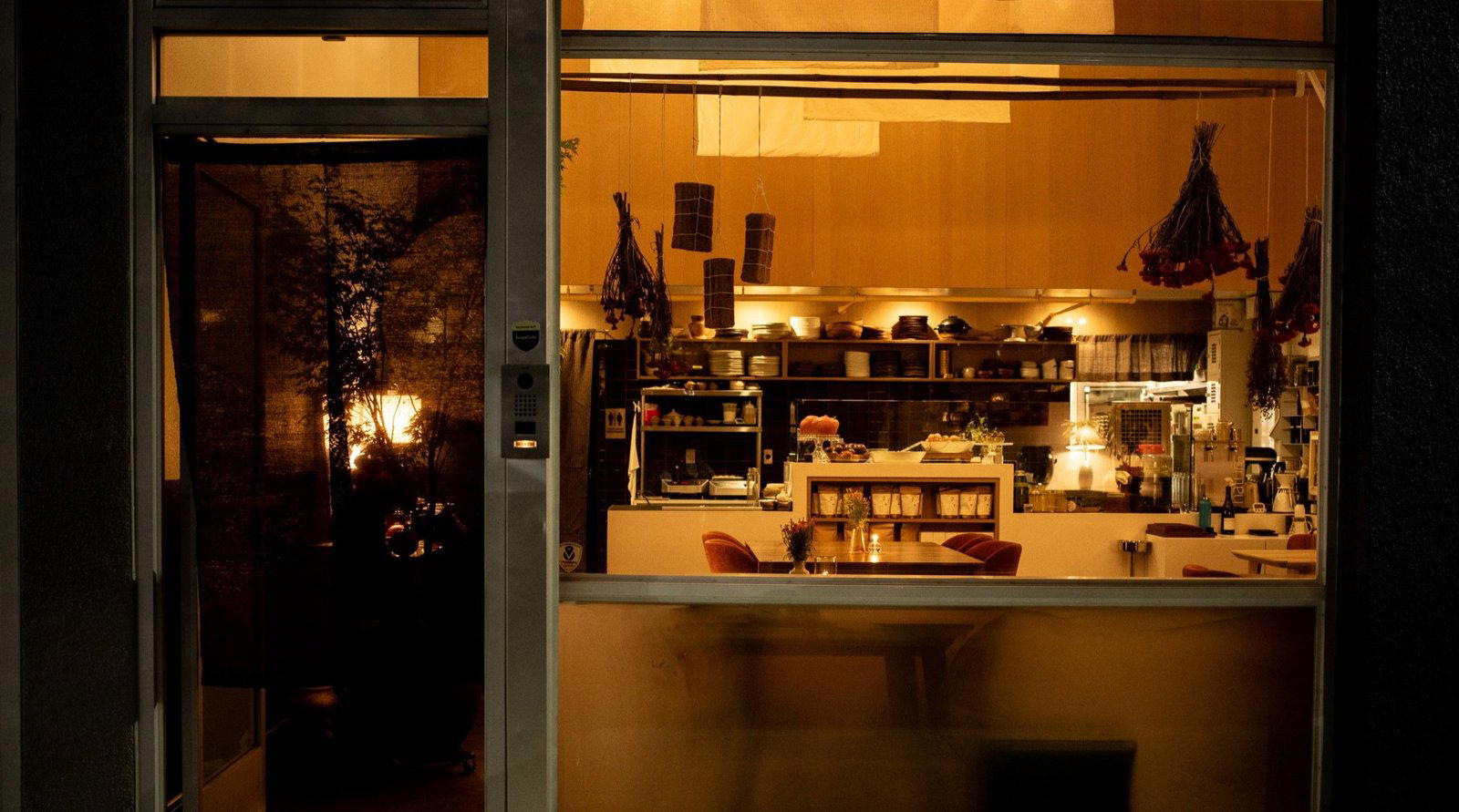
Cozy, laid-back cafe-like atmosphere with farm-to-table vibes and intentional, playful plating.