Seoul Gom Tang
Seoul Gom Tang serves Traditional Korean Gomtang at 3801 Telegraph Ave in Oakland, with Gomtang, Mul Naengmyun, and Sundaegug Soup on the menu for lunch or dinner.
Pearl is the En Primeur Club membership app — saves, bookings, and concierge access live there. Same editors, same standards.
- Address
- 3801 Telegraph Ave, Oakland, CA 94609
- Phone
- (510) 597-9989
- Directions
- Get directions
 Saves & bookings on Pearl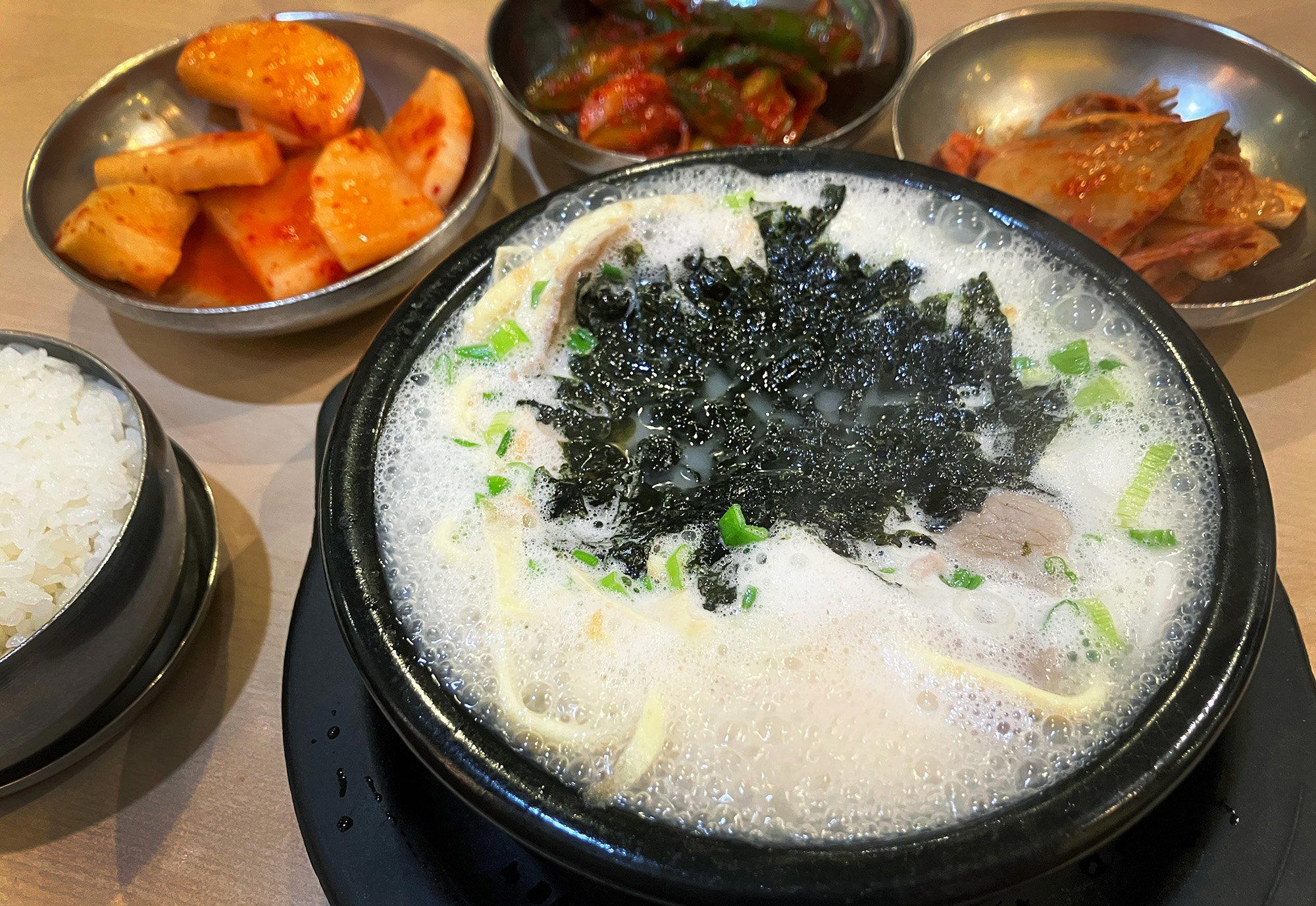
Telegraph Avenue and the Bowl That Takes All Day
Seoul Gom Tang is a casual Traditional Korean Gomtang restaurant at 3801 Telegraph Ave in Oakland, with. Seoul Gom Tang at 3801 Telegraph Ave sits inside that current, a spot oriented around one of Korean cooking's most disciplined preparations: gom tang, the long-simmered bone broth that Korean kitchens have built an entire culinary tradition around. The address places it in a corridor where diners move between Vietnamese pho houses, East African coffee spots like Alem's Coffee, and Mexican taquerias, a stretch that reflects Oakland's layered food identity better than most city blocks.
What Gom Tang Actually Is
Gom tang belongs to a category of Korean soups that require patience before a single bowl reaches a table. The base is built from beef bones, typically knuckle, leg, or ox spine, simmered for hours at a steady temperature until the broth turns milky white from collagen and marrow. The result is a soup that carries flavor not through seasoning added during cooking but through the extraction process itself. Salt arrives at the table in a small dish, left to the diner. This is the defining characteristic of the tradition: the kitchen's job is the broth, the diner's job is calibration.
That sourcing logic matters in Oakland's current food environment. The Bay Area has developed one of the country's most scrutinized supply chains for protein, driven partly by proximity to Northern California ranching and partly by a dining culture that has made ingredient provenance a standard expectation rather than a premium differentiator. Restaurants at different price points, from tasting-menu destinations like Single Thread Farm in Healdsburg to neighborhood counters, have normalized the question of where the beef comes from. For a bone-broth preparation like gom tang, that question is not incidental. The quality of the raw material, specifically the density of collagen in the bones and the absence of off-notes, determines what ends up in the bowl. There is no sauce to compensate, no aromatics to redirect attention.
The Oakland Korean Food Context
Oakland's Korean food scene operates differently from the concentrated corridors found in Los Angeles's Koreatown or the outer boroughs of New York. It is smaller and more dispersed, which means individual spots develop loyal neighborhood followings rather than competing for tourist traffic. Within the East Bay, Korean restaurants tend toward the functional end of the format spectrum: rice plates, soon dubu, barbecue, and noodle soups that serve the community rather than perform for an audience. Seoul Gom Tang's address on Telegraph puts it in a working neighborhood context rather than a designated dining district.
For comparison's sake, the Korean fine-dining pole in the United States currently runs through New York, where Atomix in New York City has brought tasting-menu ambition to Korean technique. The restaurant operates at a completely different register, one where the value is in access to an honest, labor-intensive preparation rather than theatrical service or wine pairings. Both formats are legitimate; they are simply answering different questions.
Other Oakland spots operating in the neighborhood-anchor mode include 8th St Cafe in the Chinatown corridor and alaMar Dominican Kitchen, which anchors its own loyal following around Caribbean home cooking. The pattern across these restaurants is similar: the draw is a specific preparation done with consistency, not a curated atmosphere or celebrity chef lineage.
The Broth as the Point
In Korean cooking tradition, gom tang is often described as medicinal as much as culinary. It appears in winter, after illness, during recovery, and at tables where someone needs feeding rather than impressing. That framing shapes what to expect from the experience: a bowl that is warming and filling in a way that requires no explanation and no performance. The accompaniments, typically rice, kimchi, and sliced boiled beef, function as complements to the broth rather than independent dishes competing for attention.
This is a format where the sourcing conversation becomes direct. The bones need to be clean and collagen-rich to produce the milky result that defines gom tang visually and texturally. The beef used for slicing into the soup needs to be of sufficient quality to hold its structure through extended cooking without becoming fibrous or off-tasting. In a city where diners have grown accustomed to asking these questions at restaurants across price tiers, from farm-to-table flagships like Blue Hill at Stone Barns to neighborhood counters, the expectation exists even where it goes unspoken.
Temescal and Its Dining Neighbors
The Temescal neighborhood, which runs along Telegraph from roughly 40th Street northward, has absorbed significant restaurant density over the past decade. It sits adjacent to Rockridge and is walkable from several BART-accessible blocks, making it a practical destination for East Bay diners without cars. The neighborhood's mix includes Agave Uptown for Mexican, 3 Bottled Fish for seafood, and a rotating collection of independent spots that reflect the area's independent-operator character. The restaurant occupies a specific niche within that mix: a Korean specialist in a neighborhood that skews toward general-audience formats.
Cuisine and Awards Snapshot
Comparable venues nearby, for context on price, style, and recognition.
| Venue | Cuisine | Price | Notes |
|---|---|---|---|
| Seoul Gom TangThis venue — the venue you are viewing | Traditional Korean Gomtang | $$ | Not listed |
| Sura Korean Cuisine | Korean Cuisine | $$ | Temescal |
| Ohgane Korean BBQ | Traditional Korean BBQ | $$ | Temescal |
| Kang Tong Degi | Korean BBQ Pork Belly | $$ | Temescal |
| FuseBOX | Korean-Japanese Fusion Izakaya | $$ | West Oakland |
| The Half Orange | American with Korean fusion | $$ | Fruitvale |
Continue exploring
More in Oakland
Restaurants in Oakland
Browse all →
Bars in Oakland
Browse all →
Hotels in Oakland
Browse all →




At a Glance
- Cozy
- Classic
- Casual Hangout
- Family
Current opening hours
- Monday
- 11 AM–3 PM, 5–10 PM
- Tuesday
- 11 AM–3 PM, 5–10 PM
- Wednesday
- 11 AM–3 PM, 5–10 PM
- Thursday
- 11 AM–3 PM, 5–10 PM
- Friday
- 11 AM–3 PM, 5–10 PM
- Saturday
- 11 AM–3 PM, 5–10 PM
- Sunday
- 11 AM–3 PM, 5–10 PM
Hours can change for holidays and private events. Last verified .
Casual and cozy atmosphere typical of a neighborhood soup-focused Korean restaurant.