
Sumida’s old-school wagashi culture is the point here: quick, modestly priced sweets rather than a drawn-out restaurant meal. Jiman Kusamochi sits in the daytime end of Tokyo eating, with Tabelog 100 recognition for Japanese traditional sweets and a take-out format that makes it closer to a neighborhood errand than a formal dessert course.
Pearl is the En Primeur Club membership app — saves, bookings, and concierge access live there. Same editors, same standards.
- Address
- 1 Chome-5-9 Tsutsumidori, Sumida City, Tokyo 131-0034, Japan
- Phone
- +81 3-3611-6831
- Website
- jimankusamoti.com
- Directions
- Get directions
 Saves & bookings on Pearl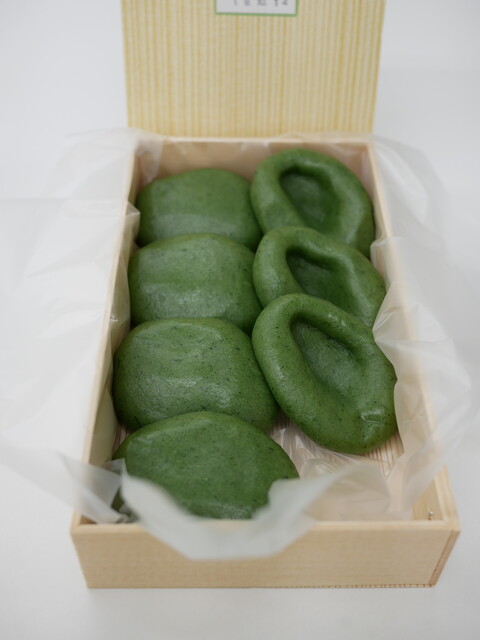
On eastern Tokyo’s sweets map, the city changes register. Central luxury counters and late reservations give way to small-fronted wagashi shops, local associations, station walks and daytime buying habits. Jiman Kusamochi belongs to that older rhythm: Japanese traditional sweets, a sweets-cafe category listing, dorayaki in the broader register, and a take-out format closer to daily life than ceremony.
That distinction matters. Tokyo dessert is not one culture: patisserie counters built for afternoon queues, department-store gift halls calibrated for packaging, kissaten desserts tied to coffee, and wagashi shops whose appeal depends on season, texture and restraint. In Sumida, sweets function around neighborhood movement: bought in daylight, carried away, shared at home or eaten as a small stop between errands.
Sumida wagashi belongs to daylight, not dinner theatre
The lunch-versus-dinner divide is clear because the venue is not an evening restaurant. Tokyo’s formal dining economy often makes dinner the expensive, status-heavy sitting; wagashi reverses that logic. Value sits in daytime purchase, and the mood is practical rather than performative. Jiman Kusamochi is listed with average spending under JPY 999, far from high-cost tasting counters and below many casual restaurant lunches.
Low ticket does not mean low cultural weight. The shop was selected for Tabelog 100 Japanese traditional sweets / Japanese sweets cafe Tokyo in 2023, with a Tabelog score of 3.82. In a category where craft is measured through repetition rather than spectacle, that recognition signals Tokyo sweet shops competing on freshness, balance, texture and local loyalty, not just presentation.
The eastern Tokyo comparison is instructive. Kototoi Dango and Chomeiji Sakura Mochi share a sub- JPY 999 sweets tier, while Restaurant Katayama Higashimukoujima honten and Uwo Toku move the same area into heavier meal spending. That spread explains why wagashi differs from lunch or dinner planning. Treat it as a precise stop rather than the anchor of a day: not breadth of menu or duration of service, but a short, focused encounter with a local food tradition.
Kusamochi as a local marker, not a plated finale
The defining idea is in the name. Kusamochi, a mugwort rice cake associated with Japanese confectionery tradition, signals texture and aroma rather than the sugar-forward logic of many Western desserts. The wider listing also places the shop among Japanese traditional sweets, Japanese sweets cafe venues and dorayaki. That range is specialized yet broad enough to explain why it appears in Tokyo’s wagashi conversation rather than as a single-item curiosity.
There is no need to inflate the format. Take-out service preserves how many Tokyo sweets are actually used: portable, time-sensitive and modest in scale. It is also more democratic than the city’s reservation-led dining culture. Where omakase and dégustation rooms ask for time, advance planning and high spend, wagashi shops ask guests to understand timing, neighborhood and restraint.
For travelers, Jiman Kusamochi corrects the idea that Tokyo dining prestige only lives at counters with chefs in front of eight seats. Awards culture in Japan also extends to humble categories, and Tabelog’s Hyakumeiten selections are useful for reading everyday specialties. A sweets shop selected in that field tells a different story from a Michelin-starred restaurant: less luxury, more category depth.
The absence of a chef-driven narrative is part of the point. Wagashi culture is shop-led and product-led. The sweets, neighborhood and timing carry more meaning than a personality profile. In Sumida, the ward’s older commercial fabric gives these shops a different energy from the polished retail floors of Ginza or Shinjuku.
How to fit it into a Tokyo food day
Plan it as a daylight sweets stop, not dinner. That framing protects the experience from the wrong expectations. Evening meals can be built elsewhere, from yakitori and soba to curry, seafood and sukiyaki, while this shop fills the quieter slot between transit, sightseeing and a later reservation. Readers building a broader route can cross-check Our full Tokyo restaurants guide, then use this as a small-format counterpoint to heavier bookings.
Within Tokyo, the contrast is broad. 124. KAGURAZAKA (Yakitori) points toward skewers and evening pacing; 3 Chome no Curry Ya San shows single-dish specialization in another register; 2D Cafe reflects visual cafe culture; 12/10 Shinjuku ten and. 鮪と炭火焼き うお炭 秋葉原店 sit in different urban dining moods. The restaurant is quieter than all of them, which is exactly why it belongs in a serious Tokyo itinerary.
Keep surrounding planning simple. Accommodation, bars and cultural scheduling can be handled through Our full Tokyo hotels guide, Our full Tokyo bars guide, Our full Tokyo wineries guide and Our full Tokyo experiences guide. For a wider Japan food map, compare the format against -Grilled beef Sukiyaki- KAMAKURA TANUKIAN 鎌倉 たぬき庵 in Kamakura.cafe in Osaka.know in Kumamoto, (Shoku) Vietnam in Kawasaki, [Curry Senmon Ten] Maruyama Kyoju. in Sapporo and [ki:] in Kyoto. Overseas Japanese formats, such as Jōdo Saké Bar in Los Angeles and Onigiri Time in Pasadena, underline the same point: small Japanese food forms travel well, but Tokyo’s neighborhood originals teach the grammar with less explanation.
The editorial read is simple. This is not the place for a long meal, late-night scene or chef’s counter performance. It is a daytime wagashi address with recognized category credibility, modest spend and a take-out cadence. In a city where dining ambition is often measured by scarcity, the restaurant argues for another measure: a short stop that makes the surrounding neighborhood more legible.
Recognition Snapshot
Comparable venues for context, by category and price tier.
| Venue | Cuisine | Price | Notes |
|---|---|---|---|
| Jiman KusamochiThis venue — the venue you are viewing | Traditional Japanese wagashi & kusa mochi shop | $ | Not listed |
| Kameju | Traditional Japanese wagashi & dorayaki shop | $ | Taitō |
| Cuit Bonne | Japanese European-style curry & dining bar | $ | Chūō |
| Tadokoro Foods Eat-in | Fish roe pasta & rice bowls eat-in counter | $ | Chūō |
| JAPANESE ICE OUCA | Japanese Ice Cream and Shaved Ice | $ | Shibuya |
| Tokoi | Musashino-style udon | $ | Suginami |
Recognition history
Dated appearances from independent guides and award organizations, with the underlying list record or original source where available.
Tabelog 100 #72 · No. 72
Tabelog · Tabelog 100 - Japanese traditional sweets / Japanese sweets cafe - TOKYO - 2023









At a Glance
- Classic
- Cozy
- Solo
- Casual Hangout
- After Work
- Family
- Standalone
- Historic Building
- Local Sourcing
Current opening hours
- Monday
- 9 AM–5 PM
- Tuesday
- 9 AM–5 PM
- Wednesday
- Closed
- Thursday
- 9 AM–5 PM
- Friday
- 9 AM–5 PM
- Saturday
- 9 AM–5 PM
- Sunday
- 9 AM–5 PM
Hours can change for holidays and private events. Last verified .
Simple, old-school Japanese sweets shop with a calm, nostalgic feel; most guests purchase takeout but a few counter seats offer a quiet break for tea and mochi.