Japadog on Robson Street sits at an intersection that Vancouver's food scene rarely revisits: fast street food delivered through a Japanese flavour lens, on one of the city's most pedestrian-dense corridors. It operates in a category of its own within the city's quick-service register, where the format is familiar but the references are not. For visitors calibrating between high-end Japanese counters and casual outdoor eating, this is a useful data point.
Pearl is the En Primeur Club membership app — saves, bookings, and concierge access live there. Same editors, same standards.
- Address
- 530 Robson St, Vancouver, BC V6B 2B7, Canada
- Phone
- +1 604 569 1158
- Website
- japadog.com
- Directions
- Get directions
 Saves & bookings on Pearl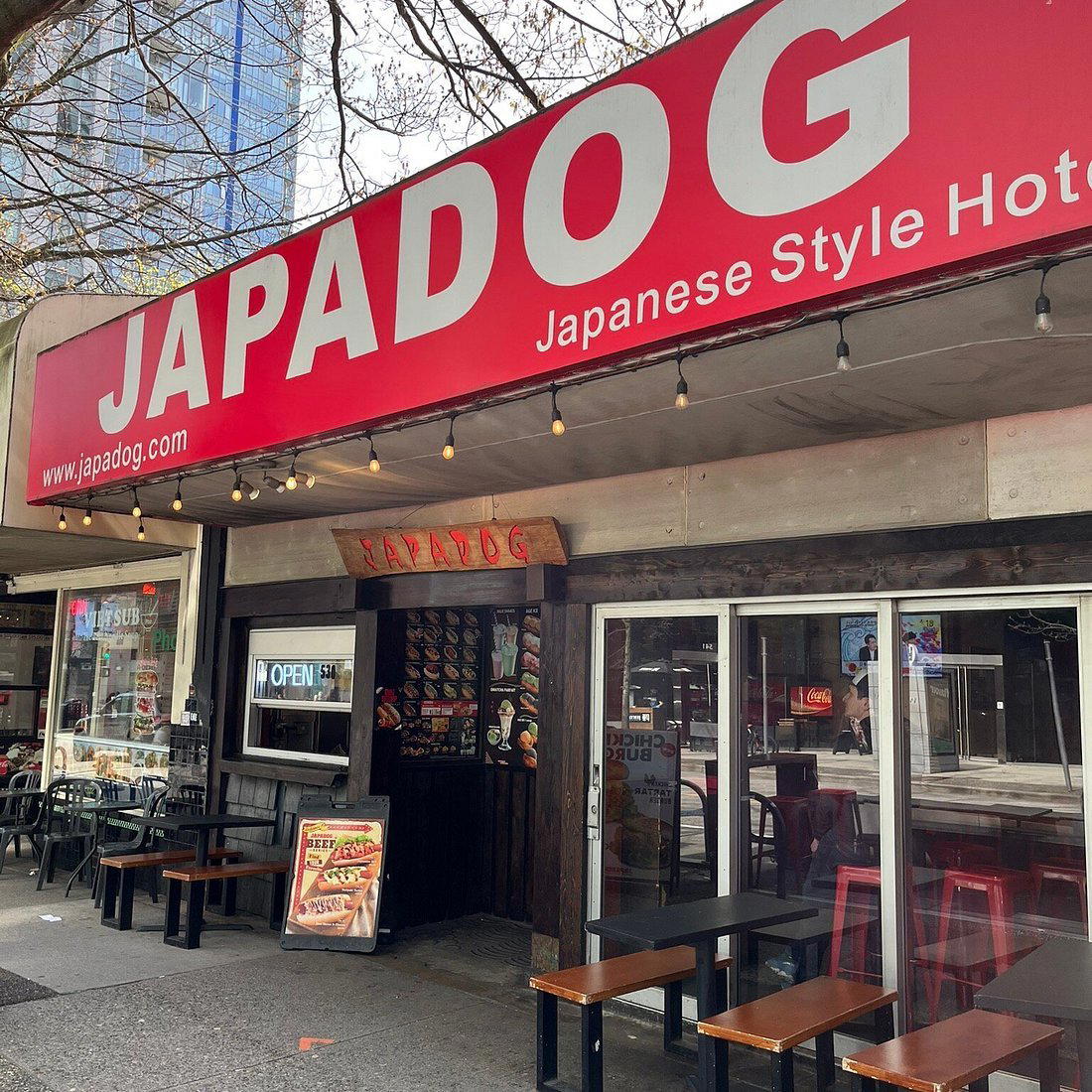
Street Food at the Junction of Two Traditions
Vancouver's street food scene has long operated in the space between its Pacific Rim identity and its North American infrastructure. Hot dogs are as Canadian as any food gets at the civic level, appearing at every stadium, corner cart, and neighbourhood festival across the country. What Japadog does is hold that familiar format up against Japanese flavour logic, the kind of condiment and topping combinations that a Vancouver with one of North America's largest Japanese-Canadian communities would naturally produce. The result is less a novelty act and more a coherent expression of how this city actually eats: casually, outdoors, with one foot in each culinary tradition.
Robson Street, where the 530 address sits, is one of Vancouver's most foot-trafficked corridors, running through the downtown core and anchoring a stretch that connects shopping, tourism, and residential density. The setting matters editorially because street food in cities like Vancouver tends to cluster around transit nodes and waterfront access, whereas Robson places Japadog squarely in a zone of constant, mixed pedestrian movement. That positioning reflects something real about who eats there: it is not destination dining in the sense that Masayoshi ($$$$ · Japanese) or Kissa Tanto ($$$$ · Fusion) represent, but it is also not accidental. It is a deliberate anchor on a street where foot traffic converts reliably.
The Format and What It Signals
Japanese street food has its own compressed grammar: precision in small portions, attention to contrast between textures and temperatures, sauces that balance sweet, salty, and umami within a single bite. Applying that grammar to the North American hot dog is a formally interesting problem. The hot dog is already a vehicle food, a bread-and-protein delivery format that takes on meaning from what surrounds it. Japanese condiment traditions, from teriyaki glazes to nori strips to bonito flakes, operate on the same logic of transformation through topping. Placing the two together is less fusion in the marketing sense and more a recognition that they share structural assumptions.
This kind of cross-cultural format work has precedent across Canada's larger cities, where immigrant food traditions regularly reconfigure familiar formats rather than simply replicating home cuisine. What distinguishes the Japadog approach from generic fusion is specificity: the Japanese references are particular enough to read as intentional rather than decorative. That specificity is what separates format-led concepts from novelty items that fade once the initial curiosity recedes. Japadog has been present in Vancouver long enough that it no longer reads as a trend, it reads as part of the city's established casual food vocabulary.
Where It Sits in Vancouver's Quick-Service Register
Vancouver's food media conversation concentrates heavily on its high-end contemporary and Japanese fine-dining tiers, venues like AnnaLena ($$$$ · Contemporary) and Barbara ($$$$ · Contemporary) occupy significant column space, but the city also has a dense and genuinely serious street-food culture that rarely gets the same analytical attention. Food carts and quick-service formats serve a different function than tasting menus: they are the daily infrastructure of how a city eats, and they reflect culinary values at a different price point than a $$$$ omakase counter or a prix-fixe service.
Japadog does not compete with iDen & QuanJuDe Beijing Duck House ($$$$ · Chinese) or the structured dining rooms that dominate EP Club's Vancouver recommendations. It operates in a separate register entirely, which is why it merits a different evaluative frame. The relevant comparison set is other street-format quick-service concepts that carry genuine culinary intentionality rather than simply convenience. Against that peer group, Japadog's Japanese-inflected approach gives it a distinct enough identity that it has sustained relevance well past its launch period.
For visitors already planning meals at the higher end of Vancouver's dining tiers, understanding where quick-service options land matters for trip planning. The gap between an omakase evening and a casual lunch on Robson is significant in format, price, and register, but both reflect something coherent about the city's relationship with Japanese food culture. Vancouver's Japanese restaurant ecosystem is one of the deepest in North America outside Japan itself, which means even its casual formats tend to carry more reference points than equivalent street food in cities with smaller Japanese-Canadian communities.
Sustainability in the Quick-Service Format
The environmental conversation around street food and quick-service formats has sharpened considerably across Canadian cities as municipal governments have tightened waste reduction requirements for outdoor food vendors. The street cart and quick-service model operates with specific sustainability constraints that full-service restaurants do not face in the same way: packaging waste is more visible, sourcing chains are harder to communicate at the point of sale, and the pressure to keep costs low can work against premium ethical sourcing.
Within that context, quick-service operators who manage to source proteins with any degree of traceability and reduce single-use packaging are operating against structural headwinds. Environmentally progressive street food programs in Canada, including operations in cities like Montreal and Toronto that have received editorial attention from outlets covering the Canadian dining scene, such as venues adjacent to the quality tier of Jérôme Ferrer - Europea in Montreal or Alo in Toronto in terms of sourcing seriousness, tend to be the ones that treat the format as a genuine culinary project rather than a convenience play. Whether Japadog has made explicit commitments in this space is not documented in available public records, but the framework matters for how quick-service formats should be evaluated going forward.
The broader Canadian dining conversation around ethics and sourcing, visible in operations as different as Eigensinn Farm in Singhampton and Fogo Island Inn Dining Room in Joe Batt's Arm, has historically concentrated in the fine-dining tier. The question of how those values percolate into street-food formats is one the Canadian food scene has not fully resolved. Japadog sits within that unresolved question, a quick-service concept in a city that takes its Japanese food traditions seriously and is increasingly attentive to how its food system operates.
Planning a Visit
Robson Street is accessible from downtown Vancouver on foot and sits within easy reach of the central transit network. For visitors building a full day around the city's food scene, the Robson Street location works as a standalone midday stop between more structured evening reservations. The street-food format means walk-up access is the operational model. Readers planning broader Vancouver itineraries will find additional context across the city's dining tiers. Visitors comparing across Canada's restaurant cities may also find useful orientation in coverage of venues like Tanière³ in Quebec City, The Pine in Creemore, Restaurant Pearl Morissette in Lincoln, Narval in Rimouski, Cafe Brio in Victoria, and Busters Barbeque in Kenora. For international reference points, Le Bernardin in New York City and Lazy Bear in San Francisco sit at the opposite end of the formality spectrum.
The Essentials
Comparable venues nearby, for context on price, style, and recognition.
| Venue | Cuisine | Price | Notes |
|---|---|---|---|
| JAPADOGThis venue — the venue you are viewing | Downtown, Japanese Fusion Hot Dogs | $ | Not listed |
| Bae Side Co. | False Creek, Pan-Asian Fusion Tapas | $$ | Not listed |
| Peya | Grandview-Woodland, French-Indian Fusion | $$$ | Not listed |
| Banter Room | Not listed | $$ | Yaletown, West Coast Fusion with International Influences |
| Sal y Limon | Sunset, Authentic Mexican Taqueria | $ | Not listed |
| Kokoro Tokyo Mazesoba | Downtown, Tokyo-Style Mazesoba | $$ | Not listed |
Continue exploring
More in Vancouver
Restaurants in Vancouver
Browse all →
Bars in Vancouver
Browse all →

At a Glance
- Trendy
- Lively
- Energetic
- Well Known
- Casual Hangout
- Late Night
- Standalone
Current opening hours
- Monday
- 10 AM–3 AM
- Tuesday
- 10 AM–3 AM
- Wednesday
- 10 AM–3 AM
- Thursday
- 10 AM–3 AM
- Friday
- 10 AM–4 AM
- Saturday
- 10 AM–4 AM
- Sunday
- 10 AM–3 AM
Hours can change for holidays and private events. Last verified .
Casual, bustling street food atmosphere with quick service and lively energy from late-night crowds.