

Michelin Plate · We're Smart World 3 Radishes
Our verdict
Among Avignon's mid-range tables, Italie là-bas occupies a distinct position: an Italian address earning Michelin recognition in a city whose dining scene skews heavily toward Provençal and modern French. Holding both a Michelin Plate (2025) and a Bib Gourmand (2024), it delivers trans-Alpine cooking with a marked emphasis on vegetable-forward dishes, at a price point that makes it one of the more accessible Michelin-recognised options in the old city.

Pearl is the En Primeur Club membership app, where members save venues, book tables and use the concierge.
The menu
What to order
- Vitello_tonnato
- Scialatielli_aux_tellines
Italian Cooking in a French City: Where Italie là-bas Sits
Avignon's dining scene has long been defined by its relationship with Provençal produce and the French culinary tradition. The restaurants that draw the most sustained critical attention La Mirande, Pollen, and La Vieille Fontaine, all operate within a French or modern European idiom. Against that backdrop, a dedicated Italian table with Michelin recognition is a notable exception rather than the rule. Italie là-bas, at 5 Rue Violette in the old city, has earned both a Michelin Plate (2025) and a Bib Gourmand (2024), positioning it as an address that has been formally assessed and found to offer cooking of genuine quality at a price that doesn't require the same commitment as the city's higher-end rooms.
The Bib Gourmand designation is a useful calibration tool. Michelin awards it to restaurants offering meals considered good value relative to quality, a different signal from a star, but a meaningful one. At the €€ price point, Italie là-bas operates in the same tier as Acte 2, and well below the €€€€ range of La Vieille Fontaine or Pollen. That combination of formal recognition and accessible pricing makes it one of the more strategically positioned tables in the city for visitors who want Michelin assurance without the formal-dining overhead.
The Room on Rue Violette
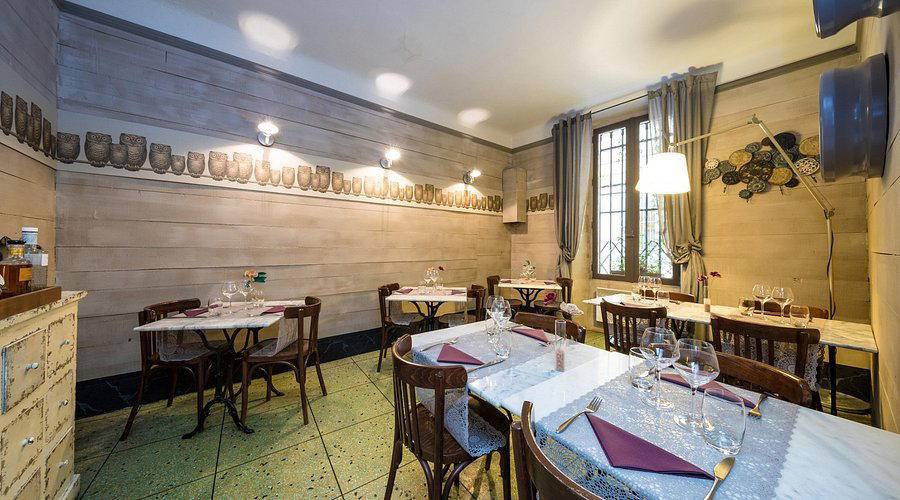
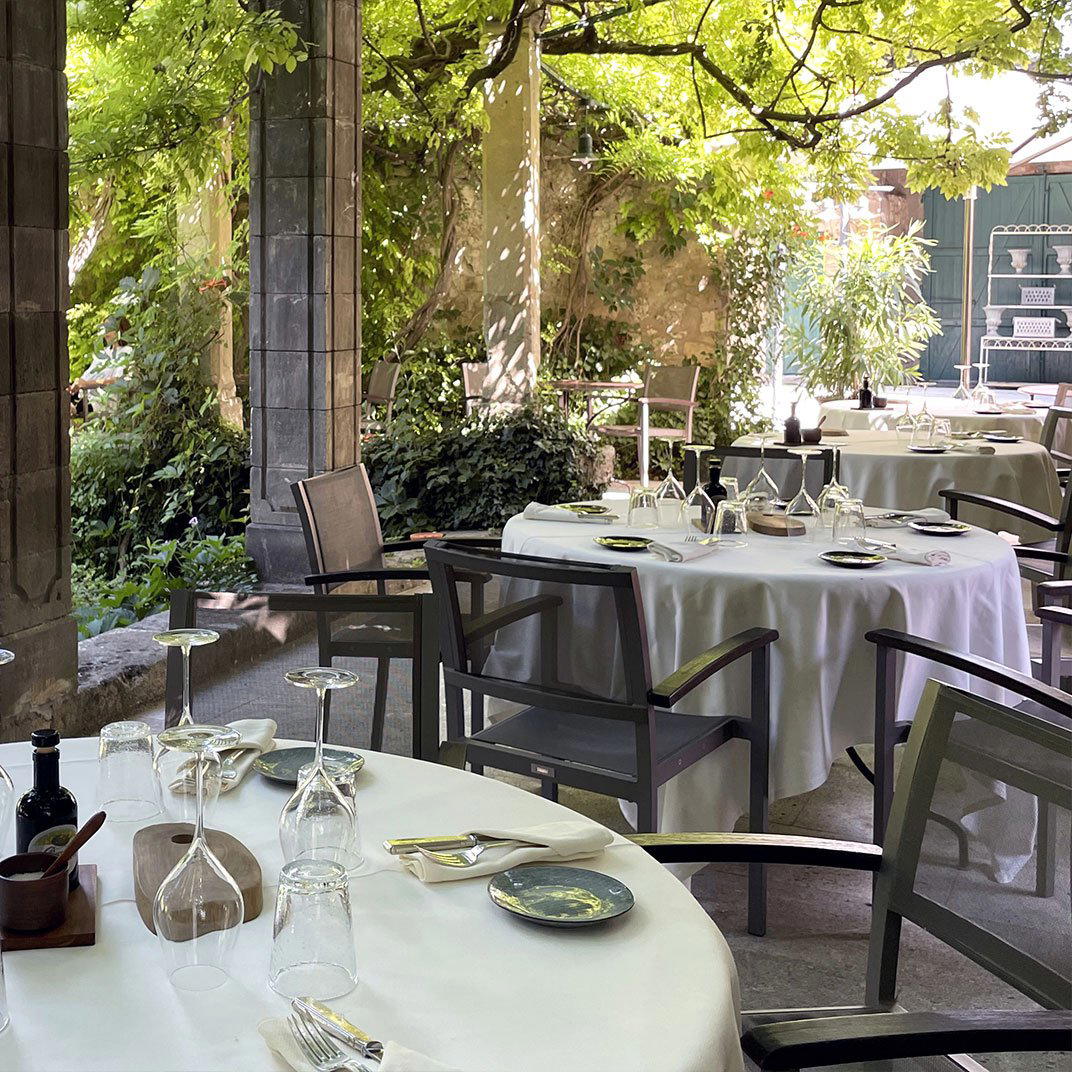
Rue Violette runs through the heart of the intra-muros, the walled historic centre that contains the bulk of Avignon's serious restaurant addresses. The street itself is narrow and pedestrian in character, the kind of address that announces a restaurant before you've read the sign. Arriving at an Italian table in this context, stone walls, French city hum, the Rhône valley light filtering into the old streets, creates a particular friction that works in the room's favour. The cooking is trans-Alpine, but the physical world around it is unmistakably Provençal, and that juxtaposition gives the meal a specificity it might lack in a more obviously Italian setting.
Vegetables as the Organising Principle
Italian cooking is often discussed through its meat, pasta, and seafood traditions, but the vegetable culture of the peninsula, from the slow-cooked soffritto base of the north to the grilled and marinated preparations of the south, is equally serious and frequently underrepresented abroad. Italie là-bas has been noted specifically for its vegetable dishes, to the point where they represent a distinct editorial position rather than a supplement to a protein-led menu. The bufala burger with roasted beetroot, balsamic, buffalo mozzarella, marinated mushrooms, and beetroot mayonnaise, and a poached egg preparation with parsnip and truffle, are the dishes that have circulated through critical word-of-mouth about this address.
Both dishes indicate a kitchen thinking about Italian ingredients, buffalo mozzarella, balsamic, in combination with techniques and pairings that extend beyond their regional origins. This is not strictly traditional Italian cooking; it sits closer to the contemporary Italian approach where the national ingredient canon is applied with structural freedom. For a city in southern France, so close to the Italian border yet so thoroughly Provençal in character, that register makes considerable sense.
Italian Wine and Food at the Table: The Pairing Case
One of the persistent arguments in Italian dining is that the cuisine and its wines are genuinely inseparable in a way that doesn't always apply to other national traditions. Italian wine regions are extraordinarily diverse, from the Nebbiolo-dominated north through Sangiovese country in Tuscany and Umbria to the Nero d'Avola and Nerello Mascalese of the south and Sicily, and the cooking evolved alongside those wines rather than in parallel to them. A dish built around balsamic reduction, buffalo mozzarella, and roasted beetroot has specific textural and acidity considerations that a northern Italian red handles differently from a Sardinian Vermentino or a Campanian Fiano.
At an Italian restaurant outside Italy, the wine program becomes a statement of intent. Whether the list anchors to Italian regions or incorporates the surrounding Rhône and Languedoc-Roussillon appellation context, both logistically available and culturally relevant in Avignon, says something about how the kitchen understands the relationship between cuisine and glass. For those interested in how Italian wine culture travels, Italie là-bas offers a case study in how a trans-Alpine table functions when planted in one of France's most wine-saturated regions. The broader French restaurant context, at tables like Bibendum, operates with a different pairing logic; the Italian frame here requires its own internal coherence.
It's worth noting that Italian restaurants outside Italy have found serious critical traction at various points across the global dining scene. 8 1/2 Otto e Mezzo Bombana in Hong Kong and cenci in Kyoto both represent the category at its most ambitious export level. Italie là-bas is operating at a different scale and price register, but the underlying proposition, Italian cooking earning recognition on foreign soil, places it in a lineage of addresses that have made that argument successfully.
Where It Sits Against Avignon's Broader Dining Field
Avignon's Michelin-recognised addresses at the upper end, the tables that appear in conversations alongside Mirazur in Menton or the longer-established grands restaurants of France like Paul Bocuse's Auberge du Pont de Collonges, Flocons de Sel in Megève, or Bras in Laguiole, operate at a different altitude. Italie là-bas is not in that conversation. What it represents is a more functional category of Michelin recognition: the Bib Gourmand tier, which signals accessible quality and has consistently proven to be among the most practically useful designations in the guide for travelling diners.
Within Avignon specifically, its Italian identity makes it structurally distinct from Acte 2 and the other modern French tables operating at the same price range. It fills a gap rather than competing head-on, and the critical endorsement, including the local journalist referral that circulated the address before its Michelin recognition formalised that recommendation, suggests it has been doing so consistently enough to earn a stable reputation.
Planning a Visit
Italie là-bas is at 5 Rue Violette, 84000 Avignon, within the walled city and walkable from the main transport approaches to the centre. At the €€ price point and with Michelin Bib Gourmand status, it draws attention from visitors and locals alike, which means advance planning is advisable rather than optional during the festival season (July and August, when Avignon's footfall increases sharply) and on weekend evenings year-round. Booking details are best confirmed directly with the venue. For those building a broader itinerary, our full Avignon restaurants guide covers the range of the city's table, and the Avignon hotels guide, bars guide, wineries guide, and experiences guide cover the rest of the city's offer in the same depth.
For those operating across the full range of the French table, from Alléno Paris au Pavillon Ledoyen at the summit to mid-market Michelin-recognised rooms in secondary cities, Italie là-bas represents the kind of address that a well-organised trip to the south makes room for: specific, affordable, formally endorsed, and doing something no other address in the city is doing.
Frequently asked questions
Is Italie là-bas a family-friendly restaurant?
At the €€ price point in central Avignon, the format is casual enough to accommodate families without difficulty.
What's the vibe at Italie là-bas?
Italie là-bas occupies a specific niche in Avignon's dining scene: an Italian address with Michelin Bib Gourmand recognition (2024) and a Michelin Plate (2025), priced at the €€ level in a city where the critical conversation usually centres on Provençal and modern French cooking. The atmosphere follows from that position, informal in register, focused in intent, without the ceremonial weight of the city's higher-priced rooms.
What should I order at Italie là-bas?
The vegetable-forward dishes are the ones that have generated the most sustained recommendation from those who know the address. The cuisine is Italian in ingredient and tradition, with Michelin recognition confirming consistent execution; the bufala burger with roasted beetroot and buffalo mozzarella, and the poached egg with parsnip and truffle, represent the kitchen's most-cited output. An Italian table earning Bib Gourmand status typically demonstrates that its strengths are reliable rather than occasional, which makes exploring beyond obvious comfort choices a reasonable approach here.
The Quick Read
| Venue | Cuisine | Price | Awards | Notes |
|---|---|---|---|---|
| Italie là-basThis venue (the venue you are viewing) | Modern Italian Fine Dining | $50–100 | Michelin Plate · We're Smart World 3 Radishes | Not listed |
| La Vieille Fontaine | Modern Provençal Fine Dining | $50–100 | Michelin Plate | Modern Cuisine |
| Acte 2 | Modern French Seasonal Tasting Menu | $50–100 | Michelin Plate | Modern Cuisine |
| La Fourchette | Provençal French Bistro | $30–50 | Michelin Plate | Traditional Cuisine |
| Sevin | Modern Seasonal Provençal | $50–100 | Michelin Plate | Modern Cuisine |
| Pollen | Modern French Fine Dining | $100–150 | 1 Michelin Star · Star Wine List | Modern Cuisine |
Recognition history
Dated appearances from independent guides and award organizations, with the underlying list record or original source where available.
Michelin Plate
Michelin
We're Smart World 3 Radishes
We're Smart World
Full recognition history (4 entries)
Michelin Plate
Michelin
Michelin Bib Gourmand
Michelin
Continue exploring
More in Avignon
Restaurants in Avignon
All restaurants in Avignon →
Bars in Avignon
Browse all →

Details
- Cozy
- Elegant
- Intimate
- Romantic
- Date Night
- Special Occasion
- Historic Building
- Local Sourcing
- Tasting Menu
- A La Carte
- Vegetarian Friendly
Current opening hours
- Monday
- Closed
- Tuesday
- Closed
- Wednesday
- 12–1:30 PM, 7–9:30 PM
- Thursday
- 12–1:30 PM, 7–9:30 PM
- Friday
- 12–1:30 PM, 7–9:30 PM
- Saturday
- 12–1:30 PM, 7–9:30 PM
- Sunday
- 12–1:30 PM
Hours can change for holidays and private events. Hours as of .
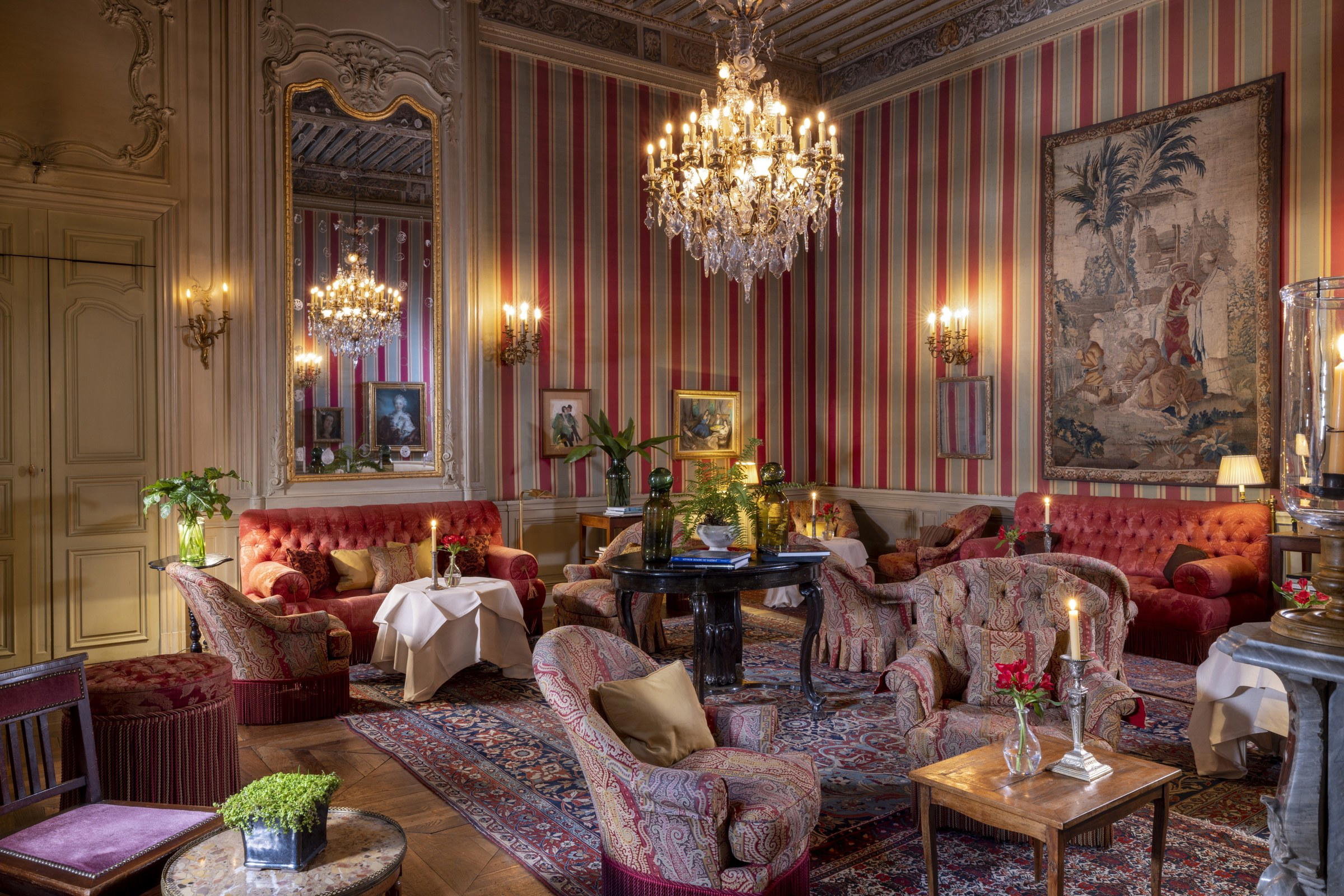
Welcoming and enchanting setting in a peaceful alley with warm, attentive service, cozy decor blending bistro furniture and design touches.