INIS
Our verdict
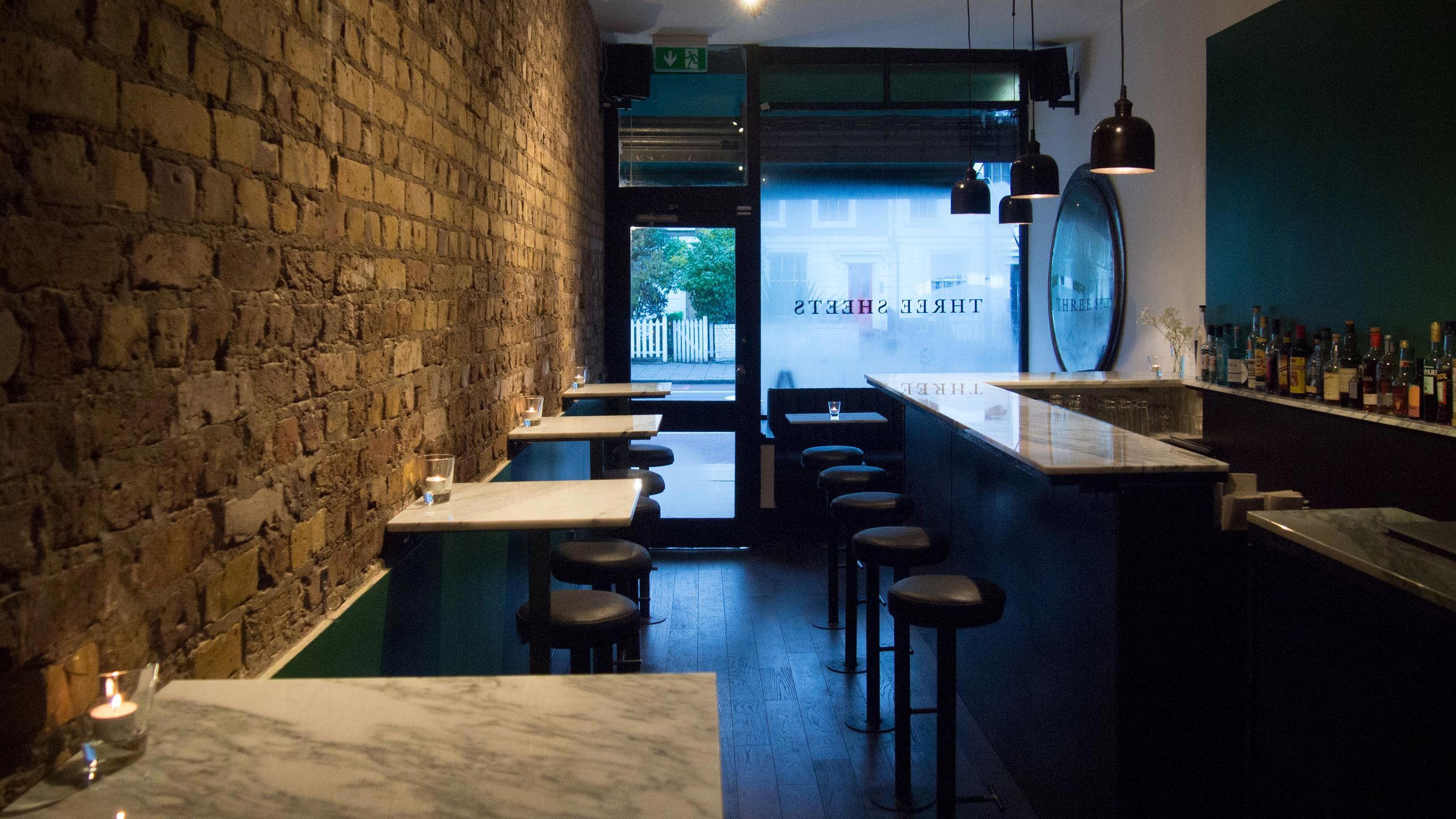
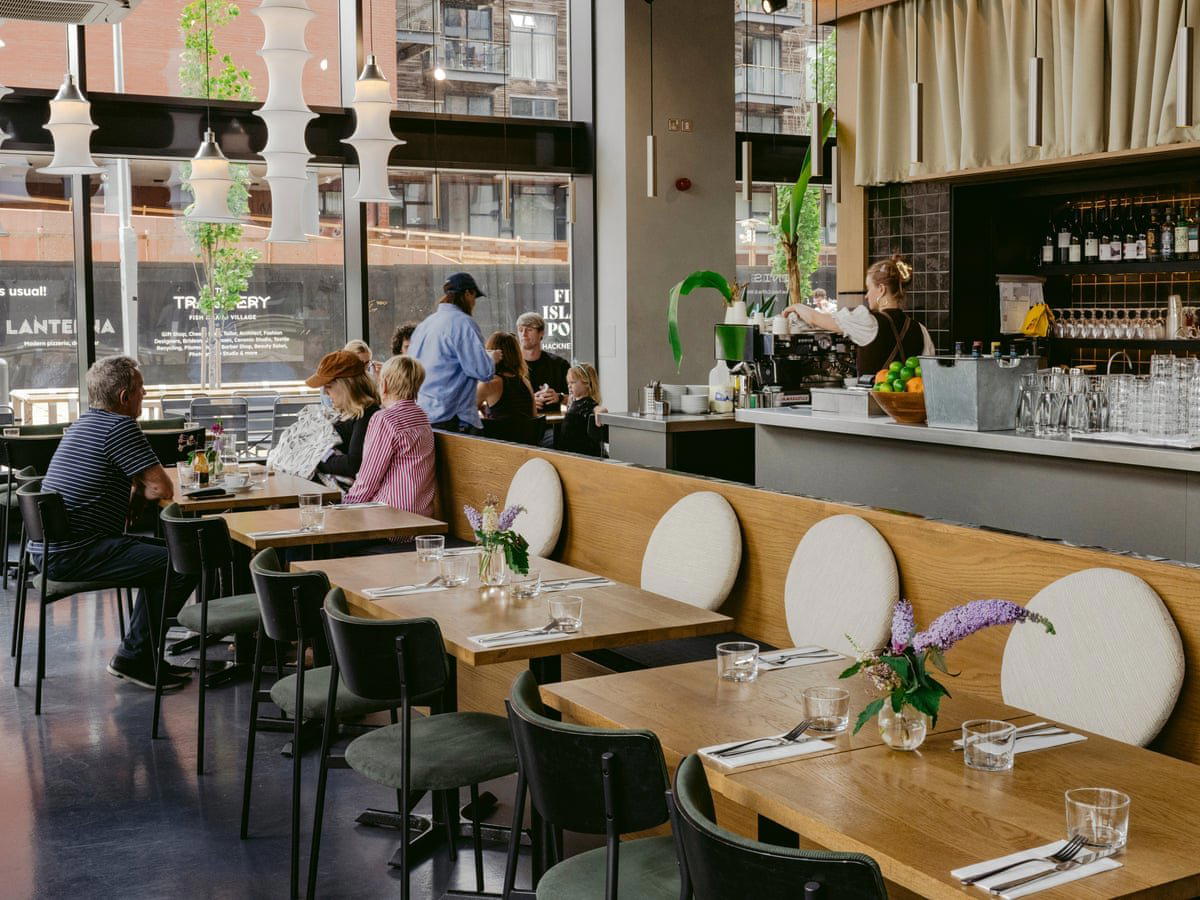
INIS occupies a spare address on Fish Island, E3, within a neighbourhood that has shifted quietly but decisively from industrial fringe to a considered dining destination. The venue's position in East London places it at a remove from the West End fine-dining corridor, offering a different entry point into the city's multi-course restaurant scene. Booking and format details are best confirmed directly before visiting.

Pearl is the En Primeur Club membership app — saves, bookings, and concierge access live there. Same editors, same standards.
The menu
What to order
- Full Irish Breakfast
- Sunday Roast
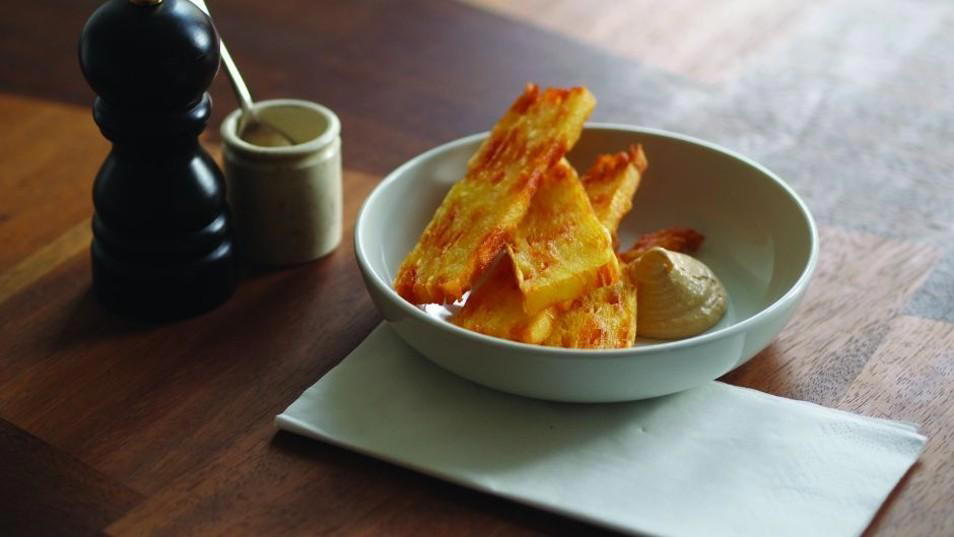
- Potato Scallops
Fish Island and the East London Dining Shift
For most of its post-industrial life, Fish Island sat between Hackney Wick and Bow, useful mainly to those who worked in its warehouses or passed through on the canal towpath. That has changed. The arrival of deliberate, format-conscious restaurants in E3 reflects a broader pattern across London: serious kitchens choosing locations where rents permit longer tasting menus, quieter rooms, and smaller covers rather than chasing the West End premium. INIS, at 13 Rookwood Way, sits inside that pattern. The address is not incidental — it signals a particular set of choices about what kind of dining experience the space is built around.
Across London, the split between high-volume destination restaurants and low-capacity format-driven rooms has become more pronounced over the past decade. The Michelin-starred corridor running through Notting Hill, Chelsea, and Mayfair — venues like CORE by Clare Smyth, Restaurant Gordon Ramsay, and Sketch, The Lecture Room and Library, operates under a different set of commercial pressures than a room in E3. East London venues tend to set their own terms more freely: fixed menus, tighter seatings, less ceremony around the room itself and more around what arrives at the table.
The Architecture of a Tasting Progression
The multi-course format, when it works, does something a la carte cannot: it builds an argument. Each course functions less as a standalone dish and more as a statement in a sequence, and the quality of that sequence depends on pacing, contrast, and internal logic. London's most discussed tasting rooms, The Ledbury in Notting Hill and Dinner by Heston Blumenthal in Knightsbridge among them, are assessed as much on this architecture as on the cooking itself. A meal that moves well from a light, acidic opener through progressive richness to a dessert that closes rather than merely ends is a harder technical achievement than any single dish.
INIS, positioned in Fish Island's emerging dining cluster, invites assessment through this same lens. The East London context means that expectations arrive differently: without the inherited weight of a Michelin address in SW3 or W11, a room in E3 earns its authority more immediately through what happens across the table. That is, arguably, a more honest condition for progressive dining. There is less institutional scaffolding, and the progression of the meal has to carry more of the work itself.
Internationally, the venues that have most influenced the contemporary tasting format treat the progression as a single composed work. Atomix in New York City, which runs a prix-fixe counter format with annotated course cards, and Le Bernardin, where the menu's internal movement from raw to barely-touched to classically prepared carries its own rigour, both demonstrate that the arc of a meal is itself a creative decision.
What the Location Signals
Fish Island's position between the Olympic Park and the canal network means that arriving at INIS requires intention. This is not an address you pass by accident. The nearest overground and tube connections, Hackney Wick on the Overground and Pudding Mill Lane on the DLR, place the venue within reach of central London in under thirty minutes, but the journey is directional rather than central. That kind of address self-selects its guests: people who have booked, planned, and chosen this over easier options closer in.
That dynamic shapes the room's atmosphere in ways that are worth naming directly. Restaurants that require deliberate travel tend to have quieter, more focused dining rooms. The background noise of a passing trade or a tourist-adjacent crowd is largely absent. The experience of a structured progression in that kind of room, quieter, more concentrated, reads differently than the same menu served in a high-footfall Mayfair address. This is not a judgement about which is preferable, but a factual distinction about what kind of evening each produces.
For comparison, the shift toward deliberate-destination dining outside city centres is well-established in the UK. L'Enclume in Cartmel, Moor Hall in Aughton, Waterside Inn in Bray, and Le Manoir aux Quat'Saisons in Oxford have all built reputations on the premise that travelling to a room is itself part of the agreement the diner makes. Within London, INIS in E3 operates on a smaller version of that same logic. The distance is measured in stops rather than counties, but the principle holds.
East London in the Wider UK Fine Dining Picture
London's fine dining scene has never been monolithic, but the geographic concentration of its most-discussed rooms has historically favoured west and central postcodes. The east of the city has grown a credible food scene at the neighbourhood level for well over a decade, but format-led, progression-focused restaurants have been slower to establish themselves there relative to the density of talent. That is shifting. Venues with serious tasting-format ambitions choosing E3 addresses are part of a broader redistribution of serious cooking across the city's zones.
Nationally, rooms like Gidleigh Park in Chagford, Hand and Flowers in Marlow, hide and fox in Saltwood, Midsummer House in Cambridge, Opheem in Birmingham, and Restaurant Andrew Fairlie in Auchterarder demonstrate that serious tasting-format dining operates effectively outside London's premium districts. The common thread is a willingness to define the dining experience on the kitchen's terms rather than the location's prestige. INIS's Fish Island address fits that same disposition within the London geography. See our full London restaurants guide for broader context on how the city's dining map is currently distributed.
Planning Your Visit
Address: 13 Rookwood Way, Fish Island, London E3 2XT. Getting there: Hackney Wick Overground and Pudding Mill Lane DLR are both within walking distance; allow 25-35 minutes from central London. Reservations: Format: Tasting-progression format venues in this part of East London typically require advance booking and run fixed seatings; confirm current format, pricing, and availability before travel. Dress: Not specified; East London tasting rooms in this tier generally lean toward smart-casual rather than formal.
Frequently asked questions
Where is INIS located?
INIS is located at 13 Rookwood Way, Fish Island, London E3 2XT, United Kingdom, London.
How do I get to INIS at Fish Island, and is it easy to reach by public transport?
INIS is at 13 Rookwood Way, Fish Island, London E3 2XT, within walking distance of both Hackney Wick Overground and Pudding Mill Lane DLR — two stations that together make the address accessible from central London without a car. Fish Island is not a neighbourhood you arrive in by chance, so building travel time into your plan is sensible. The dual station access does mean you can approach from either the Overground or Elizabeth Line connections via Stratford.
What's the best thing to order at INIS?
INIS operates a multi-course tasting format, so ordering is not a matter of selecting individual dishes — the menu is set and progresses as a structured sequence. The address at 13 Rookwood Way, Fish Island, is the kind of room where the kitchen drives the decision entirely. If you have dietary requirements, check the venue's official channels before your visit.
Is INIS reservation-only?
Given the tasting menu format and the destination nature of Fish Island — not a street you pass through by accident — INIS is almost certainly operating on a reservation basis. Walk-ins are not a practical assumption for a room of this format in this location.
What makes INIS worth seeking out?
Fish Island sits at the intersection of the Olympic Park and the Hackney Wick canal network, and INIS is one of the few serious tasting menu destinations that has positioned itself in this post-industrial corridor rather than in the traditionally dominant west and central London dining belt. Arriving requires intention, and the format — a structured multi-course progression — rewards that commitment. For those tracking the geographic shift in London fine dining, this is the address to watch in E3.
At-a-Glance Comparison
Comparable venues nearby, for context on price, style, and recognition.
| Venue | Cuisine | Price | Awards | Notes |
|---|---|---|---|---|
| INISThis venue — the venue you are viewing | British & Irish Seasonal | $20–30 | Not listed | Not listed |
| The Kitchen | British and European | Not listed | Relais Chateaux Award | Walthamstow Village |
| Newman Arms | British Pie Pub | $20–30 | Not listed | Fitzrovia |
| The Plough At Norwood Green | British Gastropub | $20–30 | Not listed | Southall Green |
| Riding House Cafe | Modern British Brasserie | $50–100 | Not listed | Fitzrovia |
| Fishers | Traditional British Fish & Chips | $20–30 | Not listed | Hurlingham |