
Michelin Plate
Our verdict
In de Zon sits in the West Flemish countryside near Kemmel, earning consecutive Michelin Plate recognition in 2024 and 2025 for its traditional cuisine rooted in the agricultural rhythms of the region.. At the €€€ price point, it occupies a considered middle tier in Belgian regional dining.

Pearl is the En Primeur Club membership app — saves, bookings, and concierge access live there. Same editors, same standards.
- Address
- Dikkebusstraat 80, 8950 De klijte, Belgium
- Phone
- +32 57 21 26 26
- Hours
- Mon–Tue ClosedWed 12–9:30 PMThu 12–5 PMFri 12–9:30 PMSat 6–9:30 PMSun 12–6 PM
- Website
- indezon.be
- Directions
- Get directions
The menu
What to order
- Paling in 't groen
- Shrimp croquettes
- Pork cheeks
Where the Fields Meet the Table in West Flanders
The road to Kemmel passes through one of Belgium's most quietly productive agricultural zones. The Heuvelland, the cluster of low hills that defines this corner of West Flanders, has been feeding people long before it became a footnote in First World War histories. Farms here supply chicory, hops, potatoes, and game to a network of regional kitchens that still take the idea of provenance seriously. In de Zon, on Dikkebusstraat in De Klijte, sits at the end of that supply chain — close enough to the source that the distance between field and plate stays short. That proximity shapes what traditional cuisine means in this specific geography, and it is worth understanding that context before reading the menu.
The address itself tells you something about the format. De Klijte is not a destination with foot traffic. Guests arrive with a purpose, which in Belgium's regional dining culture usually means a multi-course lunch or dinner anchored by seasonal produce and classic technique. The Flemish countryside tradition of the eetcafé shading into something more serious is well established across this province, and In de Zon operates within that lineage: a kitchen that applies care and precision without the orchestrated theatre of the urban fine-dining circuit.
What Michelin Plate Recognition Actually Signals Here
In de Zon has held a Michelin Plate in both 2024 and 2025. The Plate, distinct from a star, signals that Michelin's inspectors consider the kitchen to be producing food of good quality. It does not imply the creative ambition or tasting-menu architecture of starred restaurants, but it does mean the cooking clears a threshold that most restaurants in the region do not reach. For a venue at the €€€ price tier, that recognition matters: it positions In de Zon above the reliable local bistro bracket without placing it in competition with the ambitious creative kitchens clustered in Roeselare or Ghent.
The comparison is instructive. West Flanders' higher-end dining corridor includes Boury in Roeselare, operating at three Michelin stars and a €€€€ price point with a distinctly creative-French register. De Jonkman in Sint-Kruis and Bartholomeus in Heist similarly occupy the starred, modernist tier. In de Zon is not positioned against those addresses.
Ingredient Sourcing as the Kitchen's Core Logic
Traditional cuisine in the Belgian sense is not nostalgia cooking. It is produce-first cooking, where classical preparations exist as a frame to highlight what is available rather than to impose a fixed menu identity regardless of season. The Heuvelland supports that approach structurally. Game from the surrounding woodlands, vegetables from the polders edging toward the coast, dairy from farms within a short radius: these are not marketing claims in this part of Belgium, they are geographic facts. Kitchens that ignore that supply chain are the exception in this region, not the rule.
The €€€ price tier reflects a kitchen that sources at quality but does not operate on the allocation model of starred venues further afield. At Willem Hiele in Oudenburg, for instance, the sourcing philosophy extends to a hyper-local, almost obsessive provenance framework. In de Zon operates in the same broad tradition but with less ideological rigidity — a kitchen cooking confidently from what the region produces, without turning that into a manifesto. That is a meaningful distinction for guests deciding how much conceptual weight they want with their meal.
For diners comparing the Belgian traditional cuisine category across the country, d'Eugénie à Emilie in Baudour and Castor in Beveren offer useful reference points from other provinces, each rooted in local produce and classical technique, though each with its own regional inflection. Internationally, the tradition finds parallels at addresses like Auberge Grand'Maison in Mûr-de-Bretagne and Auga in Gijón, where rural sourcing and classical method remain the kitchen's first language.
A 4.7 Rating and What It Actually Confirms
Google's 4.7 aggregate across 117 reviews is a more useful signal than the raw number suggests. At the low end of the triple-digit review count, a 4.7 is hard to sustain unless the kitchen is consistent across multiple visits and across different guest profiles. Michelin Plate recognition is awarded based on inspector visits, not public consensus, but when both signals align, as they do here, the case for reliability strengthens considerably. Guests are not rolling the dice on a single talented cook having a good night. They are booking a kitchen that has been observed to perform at a defined level, repeatedly.
That 4.7 across 117 reviews also points toward a guest experience that extends beyond the plate. In Belgian regional dining, service register, room comfort, and the pace of a meal matter to how a kitchen is perceived. A kitchen delivering technically on the plate but poorly calibrated on service would produce a more volatile review profile. The relative stability of this figure implies a coherent overall experience.
Planning a Visit
In de Zon is at Dikkebusstraat 80, 8950 De Klijte, in the Kemmel commune. The surrounding Heuvelland is most accessible by car; the nearest significant rail junction is Ieper (Ypres), roughly ten minutes by road. The €€€ price point positions this as an occasion meal rather than a casual stop, and the regional tradition strongly favours the long lunch format over quick midweek dinners.
For a broader picture of where In de Zon sits within the local scene, [our full Kemmel restaurants guide]() maps the area's dining options across price tiers. The surrounding region also rewards extended exploration: [our Kemmel hotels guide](), [bars guide](), [wineries guide](), and experiences guide cover the practical details of building a longer stay. For guests arriving from Brussels and looking to set a dining benchmark before heading west, Bozar Restaurant and L'air du temps in Liernu represent the capital and Wallonia's respective high points before the Flemish register takes over.
Frequently asked questions
Does In de Zon work for a family meal?
At the €€€ price tier, In de Zon sits above casual family dining and is better suited to a considered occasion. Belgian traditional cuisine restaurants at this level typically follow a structured service format. Families with older children who are comfortable at a slower, course-driven table will find the setting appropriate; those with young children would likely be better served elsewhere.
What kind of setting is In de Zon?
In de Zon is a rural restaurant in De Klijte, within the Kemmel commune of West Flanders, at Dikkebusstraat 80. The Heuvelland's low agricultural hills define the immediate surroundings, and the location is most practical by car. The €€€ pricing and consecutive Michelin Plate recognition in 2024 and 2025 point to a room calibrated for deliberate dining rather than drop-in meals.
What awards or recognition does In de Zon have?
In de Zon has received recognition including: Michelin Plate (2025); Michelin Plate (2024).
What dish is In de Zon famous for?
No individual signature dish is confirmed in the available record. The Michelin Plate, held across both 2024 and 2025, confirms inspectors found the kitchen consistent within the traditional Belgian cuisine category, which in West Flanders typically centres on regional produce and classical preparations. Specific menu items would need to be verified directly with the restaurant.
Fast Comparison
| Venue | Cuisine | Price | Awards |
|---|---|---|---|
| In de ZonThis venue — the venue you are viewing | Traditional Flemish Bistro | $20–30 | Michelin Plate |
| Boury | Modern Frlemish, Creative French | Not listed | Michelin 3 Star |
| Comme chez Soi | French - Belgian, Classic Cuisine | Not listed | Michelin 1 Star |
| Hertog Jan at Botanic | Modern Flemish, Creative | Not listed | Michelin 2 Star |
| L'Eau Vive | French, Modern French | Not listed | Michelin 2 Star |
| La Durée | French-Belgian, Creative | Not listed | Michelin 2 Star |
Recognition history
Dated appearances from independent guides and award organizations, with the underlying list record or original source where available.
Michelin Plate
Michelin
Full recognition history (3 entries)
Michelin Plate
Michelin
Michelin Plate
Michelin
Continue exploring
More in Kemmel
Restaurants in Kemmel
Browse all →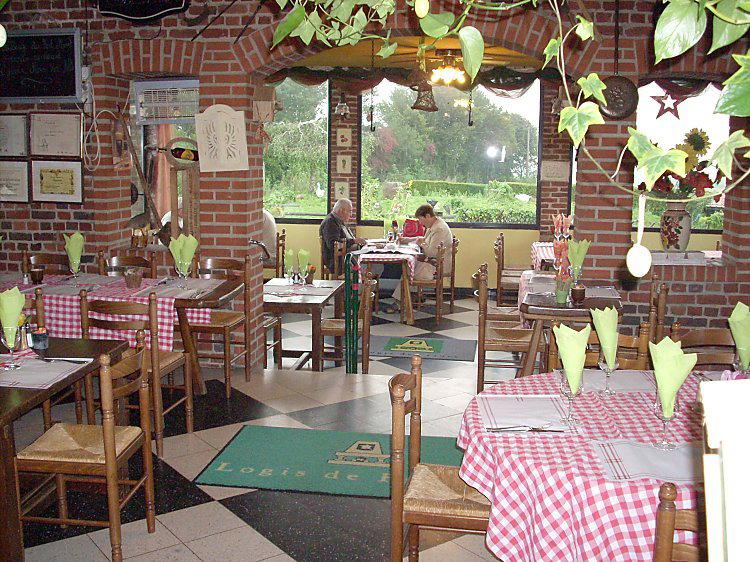
Hotels in Kemmel
Browse all →

Wineries in Kemmel
Browse all →
Details
- Cozy
- Rustic
- Scenic
- Family
- Casual Hangout
- Terrace
- Garden
- Garden
- Mountain
- A La Carte
Current opening hours
- Monday
- Closed
- Tuesday
- Closed
- Wednesday
- 12–9:30 PM
- Thursday
- 12–5 PM
- Friday
- 12–9:30 PM
- Saturday
- 6–9:30 PM
- Sunday
- 12–6 PM
Hours can change for holidays and private events. Last verified .
Cozy retro farmhouse atmosphere with candles creating a homely welcoming feel.