Il_mattarello
Our verdict
Il Mattarello sits on Linnésgade in central Copenhagen, occupying the Italian trattoria end of a dining scene better known for New Nordic restraint. Where the city's high-profile counters pursue fermentation and forage, Il Mattarello works from a different tradition: pasta rolled by hand, sauces built from long cooking, and a format closer to Bologna than to Borholm. An alternative register for Copenhagen's most Italian-inflected meal.

Pearl is the En Primeur Club membership app — saves, bookings, and concierge access live there. Same editors, same standards.
- Address
- Linnésgade 17, 1363 København, Denmark
- Hours
- Mon–Fri 10 AM–7 PMSat–Sun 10 AM–6 PM
- Website
- ilmattarello.dk
- Directions
- Get directions
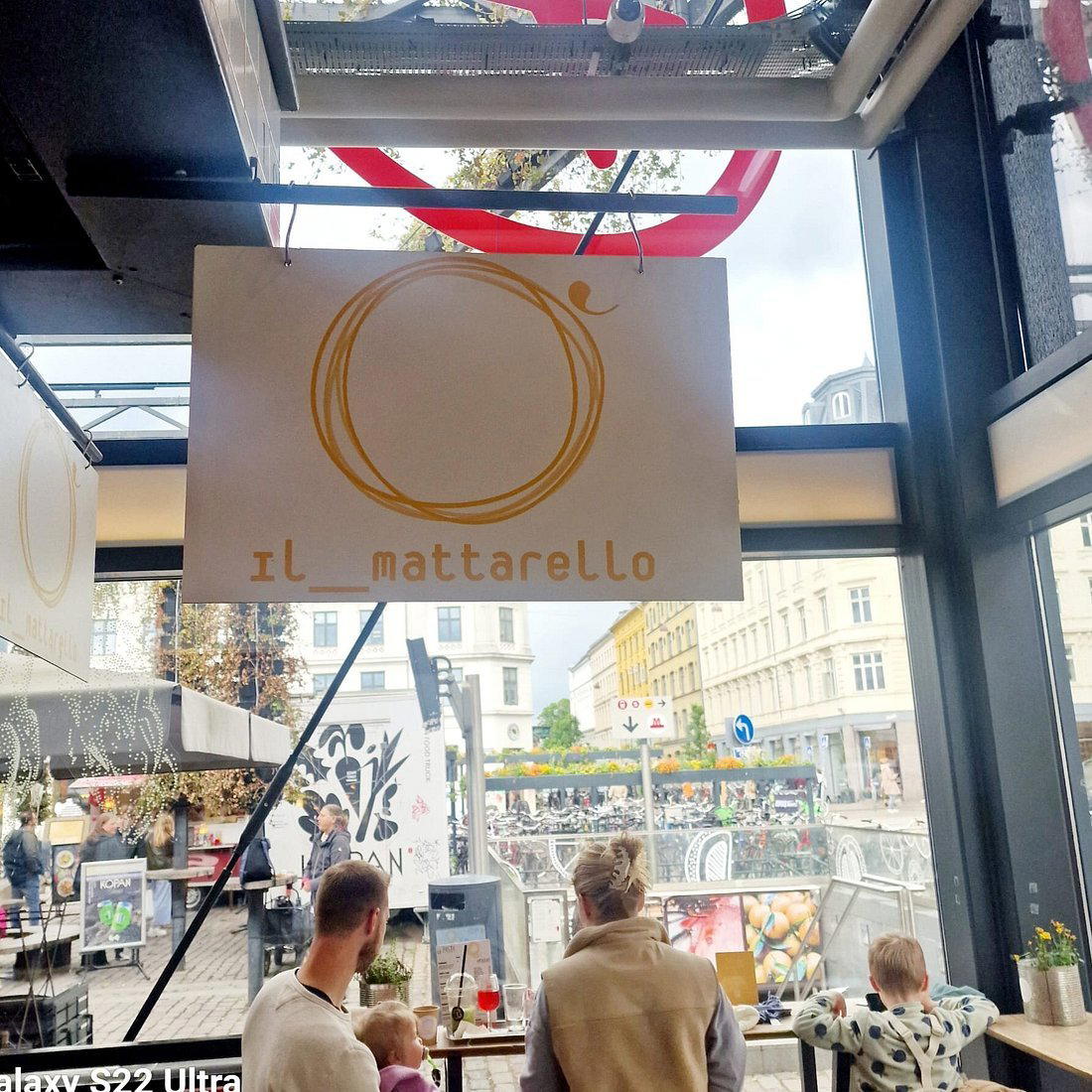
A Different Frequency on Linnésgade
Copenhagen's dining reputation has been shaped, for more than a decade, by a particular vocabulary: foraged herbs, fermented dairy, hyper-seasonal tasting menus, and the quiet austerity of New Nordic plating. The city that gave the world Noma and Geranium is genuinely one of the most scrutinised dining capitals in Europe, and the weight of that reputation presses on almost every table in the city. Il Mattarello, on Linnésgade 17 in the Indre By district, does not try to participate in that conversation. It works from a different set of references entirely, and that deliberate distance is, in its own way, a clear editorial statement about what the room is for.
Linnésgade runs through one of central Copenhagen's quieter residential pockets, a neighbourhood of low-traffic streets and ground-floor businesses that serve locals rather than tourists on Nordic pilgrimages. Arriving here, the contrast with the theatre of Alchemist's multi-act format or the precision of Koan's kaiseki-Nordic hybrid is immediate. Il Mattarello operates in a register that is domestic rather than ceremonial, Italian in its working logic rather than Scandinavian.
What the Menu Architecture Reveals
The name itself is the first structural signal. A mattarello is a rolling pin, the wooden dowel used across Italian home kitchens and northern Italian pastificio counters to sheet pasta to the thickness the cook, not a machine, decides. Naming a restaurant after this tool announces a particular hierarchy of values before a guest sits down: handcraft over automation, the pasta section as load-bearing rather than decorative, and a kitchen identity rooted in technique that predates modernist intervention by several centuries.
This matters because it places Il Mattarello in a specific subcategory within Italian dining abroad. Italian restaurants in northern European capitals tend to cluster at two ends of a spectrum: the casual pizza-pasta trattoria with a broad, accessible menu, and the contemporary Italian fine-dining counter that uses Italian ingredients as material for a tasting-menu format. The mattarello as emblem suggests a third position, one closer to the regional specificity of Emilia-Romagna or Piemonte, where pasta is not a category but a craft with measurable technical standards. Tagliatelle cut to the width of a Bolognese tower's diagonal, sfoglia thin enough to read through: these are the inherited benchmarks that a pasta-led kitchen either meets or quietly avoids.
In Copenhagen's current scene, that positioning sits somewhat apart from the dominant mode. The city's highest-profile rooms, from Kadeau's Bornholm-larder approach to the structured progression of menus at Jordnær in Gentofte, prioritise the tasting-menu format and Nordic provenance. An Italian kitchen built around fresh pasta production occupies a different competitive set, one measured not against Copenhagen's Michelin leaderboard but against the handful of Italian-tradition restaurants across northern Europe that take pasta seriously as a primary discipline.
Handmade Pasta in a Nordic Context
Fresh pasta production at a meaningful level of craft is not especially common in Scandinavian cities, where the raw ingredients, specifically the soft-wheat flour and egg yolk ratios that define Emilian sfoglia, require sourcing decisions that a kitchen committed to local provenance would find uncomfortable. The willingness to import and use those ingredients at the right spec, rather than substituting Nordic grains and calling it a local interpretation, is itself a form of editorial clarity. It tells you where the kitchen's primary loyalty sits: to the tradition being referenced, not to the geography it now occupies.
This is a choice that European and American diners have increasingly come to appreciate. The global rise of pasta-focused restaurants, from the casual neighbourhood formats of London's Lina Stores to the more serious tasting rooms of New York, reflects a recognition that handmade pasta is a technically demanding craft deserving its own dedicated context, not just a prelude section on an Italian-American menu. Compared to the technically exacting seafood focus of Le Bernardin in New York City or the ingredient-led precision of Atomix in New York City, a pasta-led format occupies a quieter register of ambition, but the craft demands are no less real.
In Denmark beyond Copenhagen, the emphasis on seasonal and regional identity is a theme that runs through rooms as different as Frederikshøj in Aarhus, Henne Kirkeby Kro in Henne, Alimentum in Aalborg, and ARO in Odense. Il Mattarello's decision to stay true to an Italian-sourcing logic, rather than Danify its ingredients, makes it an outlier in a national conversation dominated by terroir loyalty. That is not a criticism. It is a description of the particular kind of authority the kitchen chooses to claim.
Seasonality and Timing
Italian pasta kitchens follow seasonal rhythms that align more closely with Italian agricultural calendars than Danish ones. Autumn and winter tend to favour the richer, longer-cooked sauces that northern Italian tradition handles well: braises, ragu built over hours, fillings that rely on aged cheeses and cured pork. Spring brings lighter options, fresh herbs, sauces that stay closer to the raw ingredient. For a visitor planning around these rhythms, the colder months in Copenhagen, roughly October through March, represent the season when a heavy bowl of hand-rolled pasta carries the most logic relative to the weather outside. Copenhagen winters are long and genuinely cold, and a kitchen working in the northern Italian idiom is well-suited to them.
For a broader survey of where Copenhagen's dining sits in 2024 and 2025, including the full range from New Nordic tasting menus to neighbourhood specialists, the EP Club Copenhagen restaurants guide maps the scene in more detail. Other Danish destinations with serious dining credentials include Domæne in Herning, Dragsholm Slot Gourmet in Hørve, Frederiksminde in Præstø, LYST in Vejle, and MOTA in Nykøbing Sjælland.
Know Before You Go
- Address: Linnésgade 17, 1363 København, Denmark
- Area: Indre By, central Copenhagen
- Price range: Not confirmed; assume mid-range Italian trattoria pricing until verified
- Leading season: Autumn and winter for the full weight of the northern Italian pasta repertoire
- Note: Phone, website, and hours are; verify before visiting
Frequently asked questions
at Il Mattarello?
Given that the restaurant's name references the rolling pin used to make fresh pasta by hand, the pasta section is the logical anchor of any meal here. In the Italian trattoria tradition that Il Mattarello appears to reference, this means egg-based doughs shaped to order rather than dried pasta as a base. The surrounding courses, antipasti and secondi, typically serve the pasta rather than compete with it in a kitchen operating under this philosophy.
Should I book Il Mattarello in advance?
Copenhagen's dining rooms at the more serious end of the spectrum, including the €€€€ tier occupied by Geranium and Noma, require booking weeks or months ahead. Il Mattarello operates in a different category, but Italian restaurants with genuine handmade pasta credentials tend to attract a loyal local following that keeps occupancy high. Booking ahead is advisable; walk-in availability on evenings and weekends cannot be assumed, particularly during the autumn and winter months when demand for this style of cooking peaks in Copenhagen.
Is Il Mattarello a good option for visitors who want to eat Italian rather than New Nordic in Copenhagen?
Yes, and the address at Linnésgade 17 places it within easy reach of central Copenhagen without requiring a trek to the outer districts. For visitors who have already experienced the New Nordic tasting-menu format at rooms like Kadeau or want a meal oriented around pasta craft rather than Nordic produce, Il Mattarello represents a coherent alternative in a city where that alternative is genuinely scarce. The Italian trattoria format it appears to work within is relatively underrepresented at the craft end of Copenhagen's scene, which itself is a form of distinction.
Comparable Venues
Comparable venues nearby, for context on price, style, and recognition.
| Venue | Cuisine | Price | Awards | Notes |
|---|---|---|---|---|
| Il_mattarelloThis venue — the venue you are viewing | Authentic Roman Pasta Lab | $20–30 | Not listed | Not listed |
| Osteria16 | Authentic Italian Antipasti | $30–50 | Not listed | Vesterbro-Kongens Enghave |
| Il gusto giusto | Italian Pizza and Pasta | $20–30 | Not listed | Østerbro |
| Osteria 16 | Authentic Italian Antipasti | Not listed | Not listed | Vesterbro-Kongens Enghave |
| Il Buco | Sustainable Italian Trattoria | Not listed | Not listed | Amager Vest |
| Pirlo | Italian Osteria with Nordic Flair | $50–100 | Star Wine List | Amager Øst |
Continue exploring
More in Copenhagen
Restaurants in Copenhagen
Browse all →
Bars in Copenhagen
Browse all →
Hotels in Copenhagen
Browse all →

Details
- Cozy
- Intimate
- Casual Hangout
- Open Kitchen
- Organic
- A La Carte
- Vegetarian Friendly
Current opening hours
- Monday
- 10 AM–7 PM
- Tuesday
- 10 AM–7 PM
- Wednesday
- 10 AM–7 PM
- Thursday
- 10 AM–7 PM
- Friday
- 10 AM–7 PM
- Saturday
- 10 AM–6 PM
- Sunday
- 10 AM–6 PM
Hours can change for holidays and private events. Last verified .
Casual bustling market atmosphere with friendly Italian service and convivial energy.