Michelin Plate
Our verdict
On the second floor of VIVRE in Lumphini, I-SANG positions Korean-Thai fusion in territory that Bangkok's tasting-menu circuit has rarely explored. Chef Lee Sanggun works a concise menu that draws on Chiang Rai rice, local seafood, and Thai vegetables, threading them through Korean technique. The result sits closer to the serious end of Bangkok's cross-cultural dining scene than to novelty fusion.

Pearl is the En Primeur Club membership app, where members save venues, book tables and use the concierge.
Where Lumphini's Quiet Money Meets Korean Technique
Soi Langsuan has long functioned as one of Bangkok's more composed dining addresses. The street runs through Lumphini, the patch of Pathum Wan where embassies, private members' clubs, and mid-rise residences keep foot traffic deliberate rather than chaotic. It is not the city's loudest dining corridor, and that restraint shapes what succeeds there. Restaurants on this stretch tend toward the considered end of the spectrum, drawing guests who plan rather than wander. I-SANG, on the second floor of the VIVRE building at 34/3, fits that register precisely.
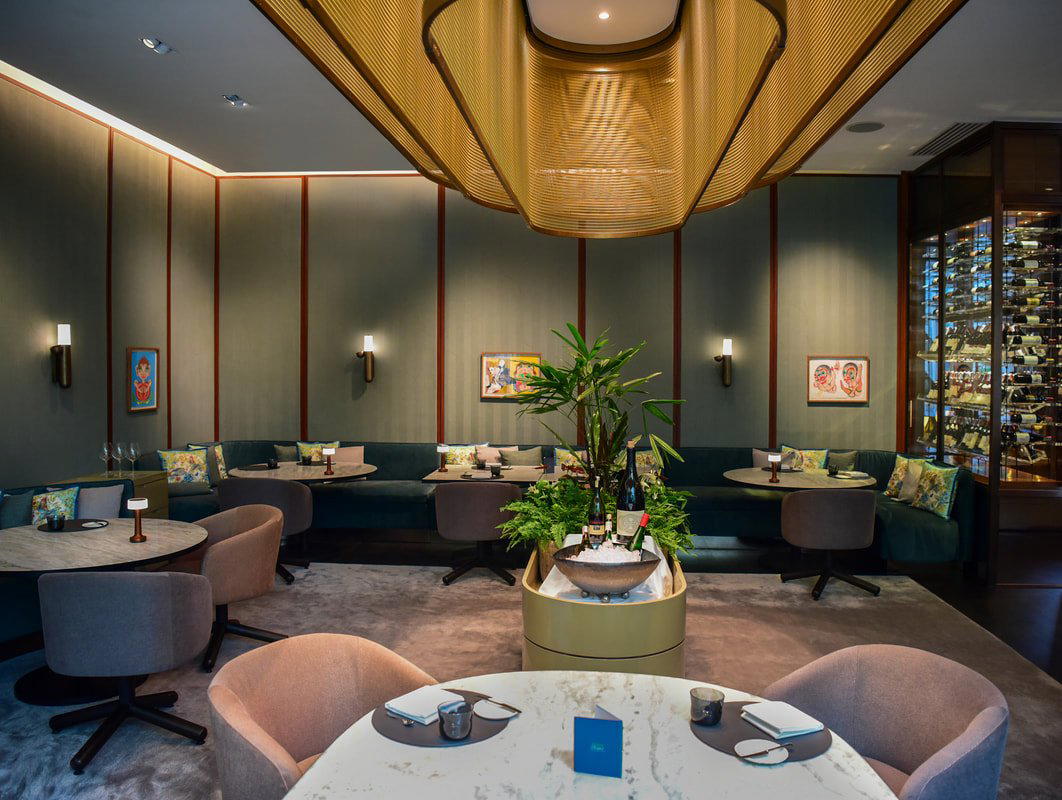
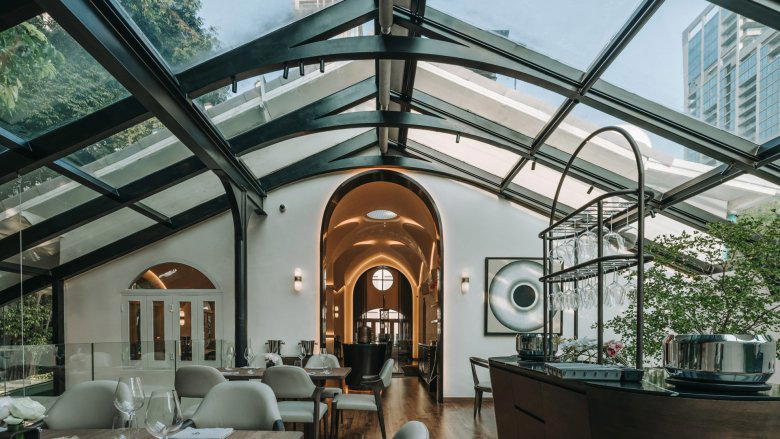
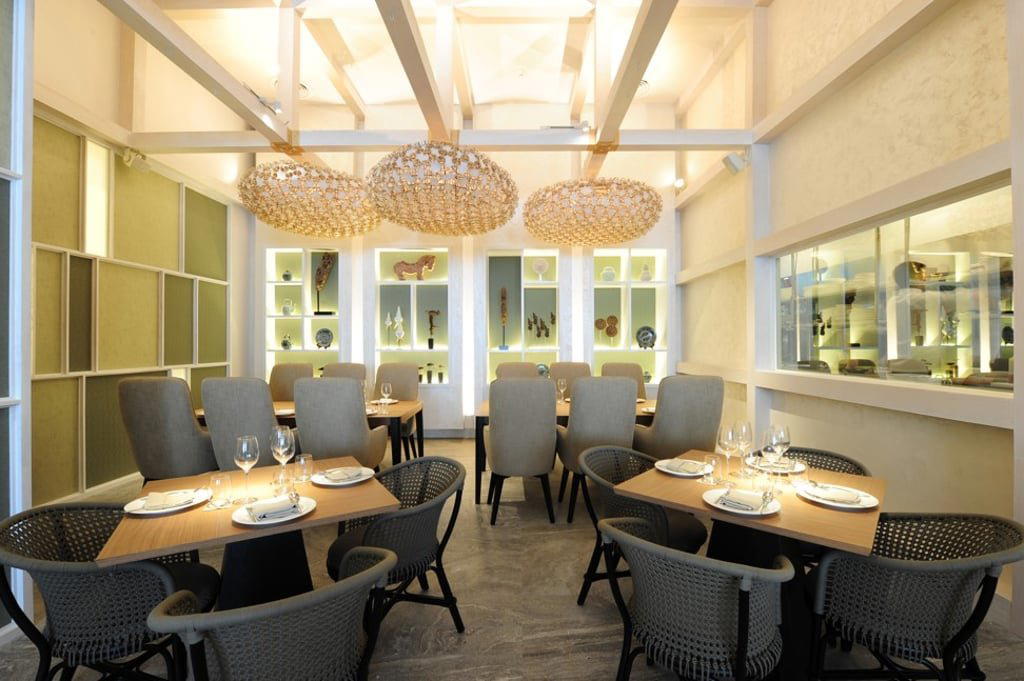
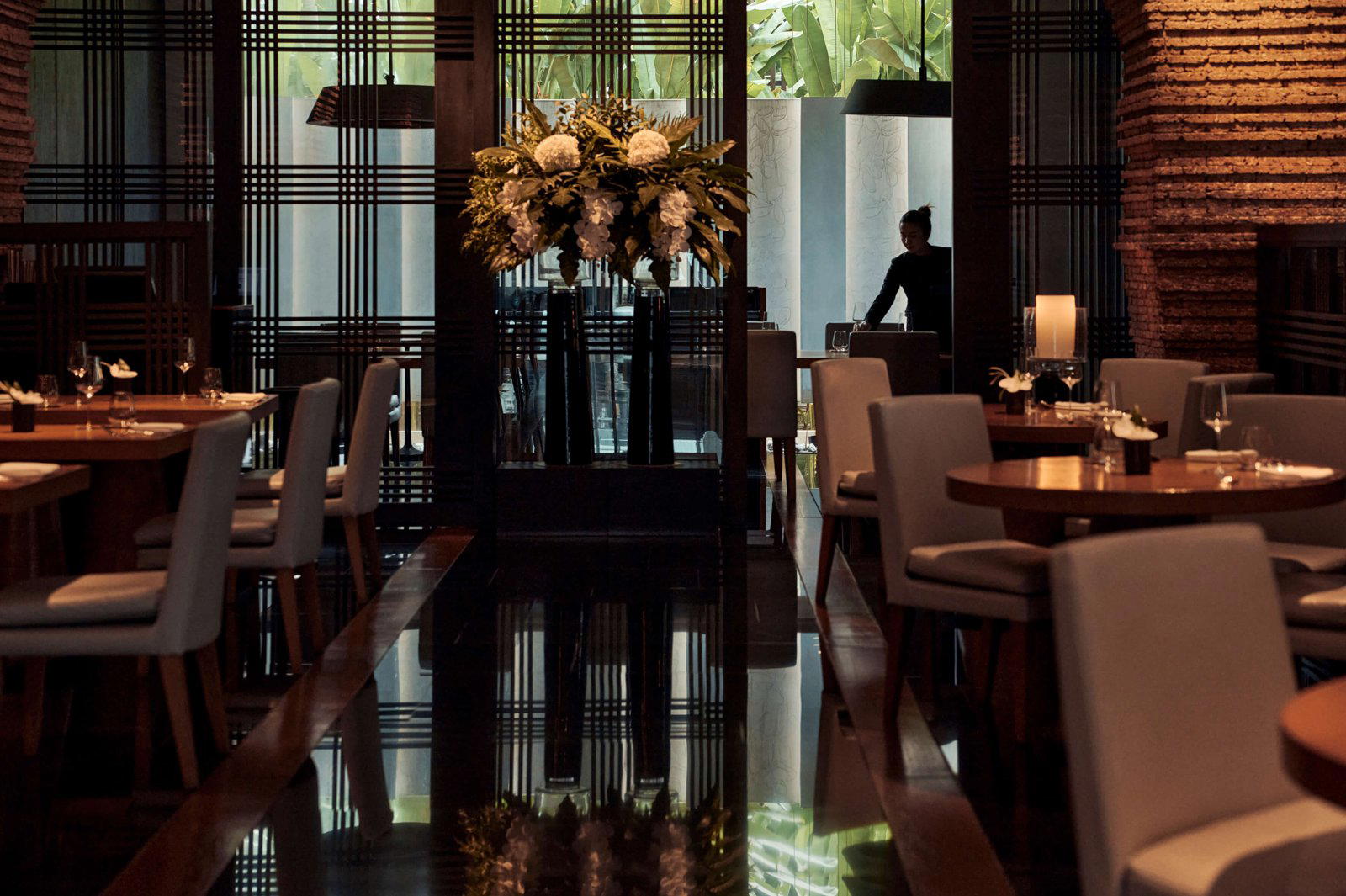
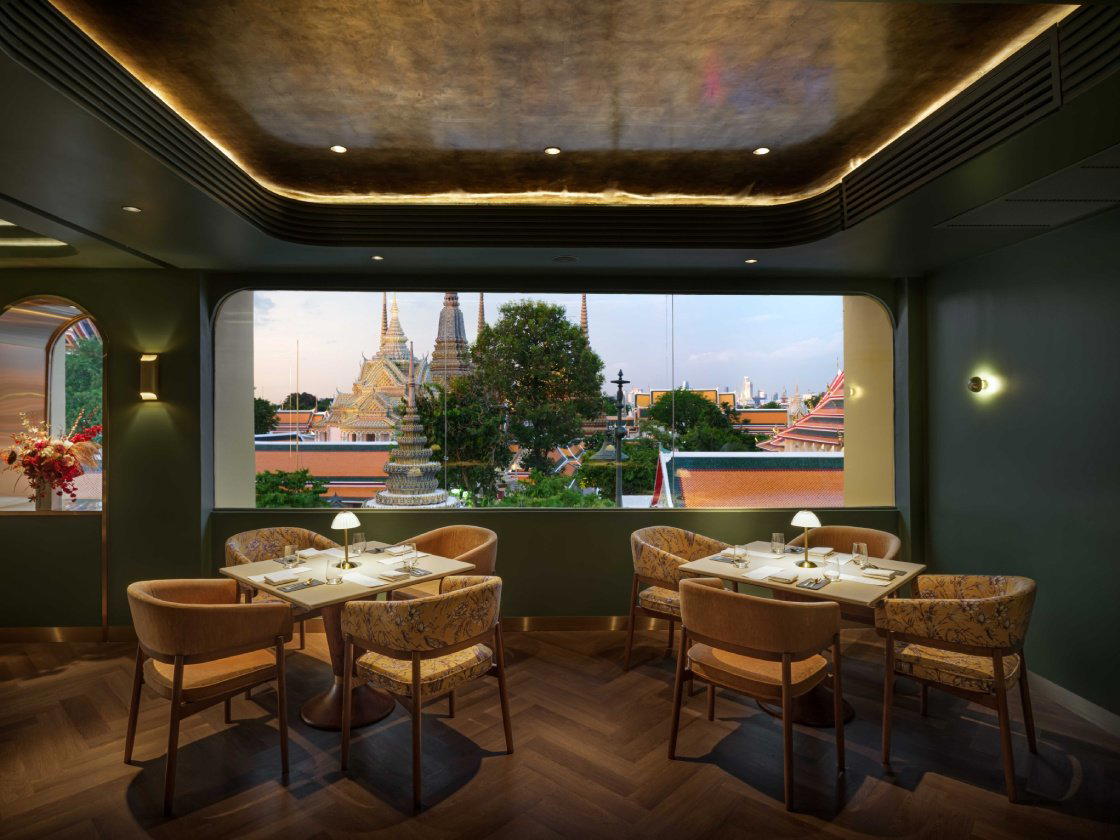
The room reads as an immediate counter-statement to the ornate interiors that dominate Bangkok's premium restaurant tier. Taupe tones, natural light, and clean lines create a space that feels genuinely calm rather than performatively minimal. In a city where restaurant design often competes with the food for attention, I-SANG's interior recedes, which is a deliberate and accurate signal about what the kitchen prioritises.
The Korean-Thai Axis: Why This Fusion Has Traction in Bangkok
Bangkok has spent the last decade building one of Southeast Asia's most varied fine-dining ecosystems. The city now sustains Michelin-recognised Thai specialists like Sorn at three stars and Baan Tepa at two, alongside internationally framed tasting menus from Sühring (German), Côte by Mauro Colagreco (Mediterranean), and Gaa (Modern Indian). What that ecosystem had not fully developed, until recently, was a credible Korean anchor in the premium segment.
Korean food's Bangkok presence had historically skewed toward casual barbecue and mid-market comfort eating. The city's Korean community is significant, and the demand for those formats remains strong, but the tasting-menu tier had a gap. I-SANG fills it, and the approach is particular: rather than importing Korean fine dining wholesale, the kitchen uses Thai ingredients as raw material and Korean technique as the frame. Chiang Rai rice, local seafood, and Thai vegetables run through a menu built around Korean culinary logic. That is a more demanding position than straight importation, because it requires the kitchen to make the fusion work at the produce level rather than at the plating level.
Dishes that appear on the menu illustrate the method. The naengchae, a Korean cold vegetable dish traditionally dressed in a sweet and tangy sauce, arrives bright and colourful, with the visual register of something confident rather than cautious. The perilla oil guksu, a noodle dish, reads as comfort food processed through a fine-dining sensibility. The crispy crab is described as a playful riff on Korean fried chicken, which is a knowing reference: Korean fried chicken has become a global shorthand for a particular style of crunch and glaze, and applying that logic to crab is both a technical and a cultural gesture. The in-house pickles, a cornerstone of any serious Korean kitchen, confirm that the pantry work extends beyond the main courses.
This approach is not unique to Bangkok in the broader global context, but it is relatively rare within the city. Restaurants like Atomix in New York City have shown how Korean fine dining can command serious critical attention when it operates at the highest technical level, and Le Bernardin demonstrates what sustained focus on a single culinary tradition can build over decades. I-SANG is working in a different register, one grounded in cross-cultural sourcing, but the ambition to operate in that serious company is visible in the menu's construction.
How I-SANG Sits in Bangkok's Premium Tasting-Menu Tier
The question worth asking about any tasting-menu restaurant in Bangkok is where it sits in the city's price-and-ambition hierarchy. At the leading end, three-star Sorn and two-star Baan Tepa represent the pinnacle of the Thai specialists. Sühring, Côte, and Gaa compete in the international-cuisine segment at comparable price points. I-SANG enters as a Korean-Thai hybrid without the Michelin imprimatur those venues carry, which places it in a tier where the kitchen's track record and the menu's internal logic carry the credibility burden.
The concise tasting menu format is the right choice for that position. A concise menu signals editorial confidence: the kitchen is not padding the guest experience with filler courses, it is presenting what it has chosen to stand behind. For a restaurant making a case in a competitive market, that restraint is an argument in itself. It also aligns with the room's visual language, where nothing is present that does not need to be there.
Bangkok's broader dining geography is worth noting for visitors making a multi-day itinerary. The city's fine-dining addresses spread across several districts, and cross-referencing I-SANG with other destinations requires planning. Thailand's premium dining scene extends beyond Bangkok: PRU in Phuket and Aeeen in Chiang Mai represent serious kitchens in other cities, while AKKEE in Pak Kret and Angeum in Phra Nakhon Si Ayutthaya show how quality is dispersing away from the capital. For those building a Thailand itinerary, Agave in Ubon Ratchathani and The Spa in Lamai Beach round out a picture of how varied the country's dining geography has become.
For the Bangkok portion of any trip, EP Club's full guides cover the city's range: see our full Bangkok restaurants guide, our full Bangkok hotels guide, our full Bangkok bars guide, our full Bangkok wineries guide, and our full Bangkok experiences guide.
Know Before You Go
- Address: 2F VIVRE, 34/3 Soi Langsuan, Lumphini, Pathum Wan, Bangkok 10330, Thailand
- Format: Concise tasting menu
- Getting there: Soi Langsuan runs between Ploenchit Road and Wireless Road; the BTS Ploenchit station (Sukhumvit Line) is the practical access point, a short walk from the northern end of the street
- Dress code: No confirmed policy, but the room's register suggests smart-casual at minimum
- Hours: Not confirmed at time of publication; verify before visiting
Frequently asked questions
Is I-SANG award-winning?
I-SANG has received recognition including: Taupe tones, natural light and clean lines lend this modern Korean restaurant a calm, minimalist charm. Chef Lee Sanggun channels global experience into a concise tasting menu that smartly fuses Korean roots with Thai produce – vegetables, ….
How do I find I-SANG?
I-SANG is located at 2F VIVRE, 34/3 Soi Langsuan, Lumphini, Pathum Wan, Bangkok 10330, Thailand, Bangkok.
What do people recommend at I-SANG?
The crispy crab draws consistent attention as a deliberate reinterpretation of Korean fried chicken applied to local Thai seafood. The perilla oil guksu is noted for its comfort and depth, while the naengchae, described as bright and colourful, rounds out the dishes most discussed by diners. All pickles are made in-house, which signals the kitchen's commitment to preparation from the ground up.
Is I-SANG reservation-only?
I-SANG operates a concise tasting-menu format at its second-floor address on Soi Langsuan in Lumphini, Bangkok. Tasting-menu restaurants in this format typically run limited seatings with fixed covers, making advance booking the practical approach. Contacting the restaurant directly via its Soi Langsuan address is the recommended route to confirm availability.
What has I-SANG built its reputation on?
I-SANG's standing in Bangkok rests on a specific proposition: applying Korean culinary technique to northern Thai and local produce, most notably Chiang Rai rice and Thai seafood. The tasting menu is concise rather than sprawling, and the kitchen's in-house pickle programme reinforces a house-made ethos. The Lumphini setting, on the composed dining strip of Soi Langsuan, positions the restaurant within Bangkok's premium tasting-menu tier.
Do they accommodate allergies at I-SANG?
For a tasting-menu restaurant of this format in Bangkok, the standard practice is to communicate dietary requirements at the time of reservation. Reaching out directly through the Soi Langsuan address before booking is the most reliable way to verify what the kitchen can adjust.
Does I-SANG use Thai regional produce throughout its menu, or only in select dishes?
The sourcing approach at I-SANG runs through the menu rather than appearing as a single showcase ingredient. Chiang Rai rice, Thai vegetables, and local seafood all feature across the tasting menu, with Korean technique applied as the consistent throughline. The crispy crab, for instance, draws on a Thai seafood ingredient while referencing Korean fried chicken as a culinary framework, indicating that the Thai-Korean dialogue is structural, not incidental.
Just the Basics
Comparable venues nearby, for context on price, style, and recognition.
| Venue | Cuisine | Price | Awards | Notes |
|---|---|---|---|---|
| I-SANGThis venue (the venue you are viewing) | Modern Korean | Not listed | Michelin Plate | Not listed |
| ELECTRIC SHEEP | Modern Mediterranean with Thai Ingredients | $50–100 | Michelin Plate | Talat Noi, Modern Mediterranean with Thai Ingredients |
| Si Sawat | Modern Thai | $30–50 | Michelin Plate | Si Lom, Modern Thai |
| Antito | Creative Northern Italian | $20–30 | Michelin Plate | Bang Rak Khwaeng, Creative Northern Italian |
| Arva | Italian Harvest Cuisine | $100–150 | Michelin Plate | Makkasan, Italian Harvest Cuisine |
| Duet by David Toutain | Modern French Fine Dining | $200–300 | Michelin Plate | Suan Lumphini, Modern French Fine Dining |
Recognition history
Dated appearances from independent guides and award organizations, with the underlying list record or original source where available.
Michelin Plate
Michelin