

1 Michelin Key · Small Luxury Hotels of the World Member
A restored cluster of three century-old teak houses on a quiet canal in Bangkok Noi, Siri Sala Private Thai Villa operates in a category that few Bangkok properties occupy: genuinely private, historically rooted, and oriented around small-group stays rather than hotel-scale hospitality. The five-year restoration that brought it back from near-ruin places it in a different conversation from the city's riverside luxury towers.

Pearl is the En Primeur Club membership app, where members save venues, book tables and use the concierge.
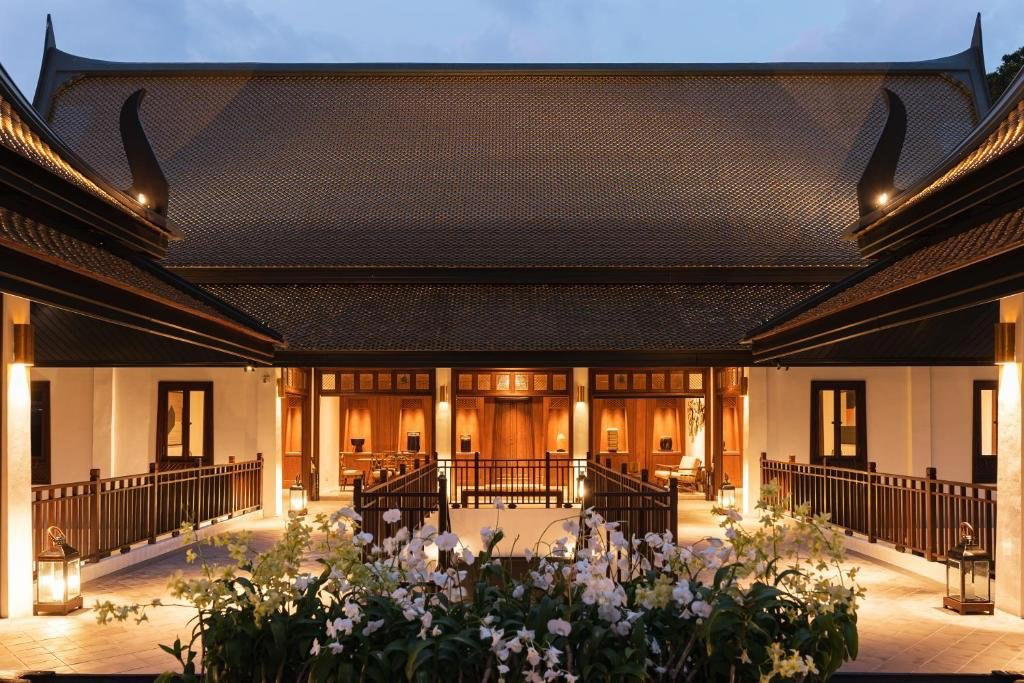
Canal-Side Bangkok, Before the City Got Loud
Bangkok Noi sits on the Thonburi side of the Chao Phraya, a district that developed at a different pace from the commercial corridors of Sukhumvit or Silom. The canals here, the khlongs that once defined daily life across the city, still carry boat traffic in the early morning, and the teak structures along their banks recall a residential Bangkok that predates the concrete boom by generations. It is in this context that Siri Sala Private Thai Villa makes its clearest argument: not as a hotel that references Thai heritage in its decor, but as a place where the heritage is the structure itself.
Three century-old teak houses, restored over five years after falling into serious disrepair, now operate as a private villa compound. That restoration timeline matters. A five-year project on timber buildings of this age is not a renovation in any conventional sense; it is closer to conservation work, the kind that involves sourcing period-appropriate materials and structural decisions about what to preserve versus rebuild. The result sits in a niche that Bangkok's larger luxury properties, Mandarin Oriental Bangkok, Capella Bangkok, Four Seasons Bangkok at Chao Phraya River, do not occupy, regardless of how accomplished their design programs are.
The Private Villa Format in Bangkok's Accommodation Spectrum
Thailand's premium accommodation market has long divided between large international flagships and smaller, design-led properties with limited keys. Within Bangkok specifically, the balance tilts heavily toward the former: the The Peninsula Bangkok, Rosewood Bangkok, and Park Hyatt Bangkok all operate at scale, with full-service infrastructure and international brand positioning. The Okura Prestige Bangkok and The Siam offer points of differentiation, but both remain hotel-format properties with multiple rooms and conventional front-of-house operations.
Siri Sala operates on a different model entirely. The private villa format, common in Thailand's island and resort markets, at properties like Samujana Villas in Koh Samui or Six Senses Yao Noi in Phang Nga, is relatively rare within the capital itself. A compound of historic teak houses on a working canal, configured for exclusive-use group stays, fills a gap in the city's offering that no amount of suite inventory at a luxury tower can replicate. The peer comparison is not Grand Hyatt Erawan Bangkok in Pathum Wan; it is closer to properties like Amanpuri in Phuket or Four Seasons Resort Chiang Mai, where the setting is irreplaceable and the format is built around small-group experience rather than individual room nights.
What the Setting Asks of Its Guests
A canal-side compound in Bangkok Noi is not a neutral base for city-wide exploration in the way that a Sukhumvit hotel is. The neighbourhood sits west of the river, connected to the rest of Bangkok by a combination of canal boats, tuk-tuks, and occasional taxi runs. The Chao Phraya Express Boat reaches Tha Chang and Saphan Taksin piers, and from there the city opens up. But the point of Siri Sala is not efficient transit access, it is the quality of what you return to. The canal, the teak, the absence of hotel-lobby scale: these are the draw, and they require a guest disposition that values that texture over proximity to the BTS Skytrain.
This suits the property's stated orientation toward families, close groups, and private retreats rather than transient solo travelers. The exclusive-use format means the compound functions as a temporary household rather than a hotel corridor, a distinction that shapes everything from how meals are arranged to how the space is used through the day. For guests accustomed to resort-format private villas, at Anantara Layan Phuket Resort or Phulay Bay, A Ritz-Carlton Reserve in Krabi, the model is familiar; the novelty is that it now exists inside the capital.
Teak Architecture and the Restoration Question
Thai teak house architecture carries significant cultural weight. The refined timber structure, the steeply pitched rooflines, and the joinery techniques involved represent a building tradition that has largely given way to concrete construction across urban Thailand. Genuine century-old teak structures in Bangkok are not common, and those that survive intact enough to be restored are rarer still. The five-year timeline at Siri Sala reflects the complexity of working with aged tropical hardwood: sourcing replacement material, maintaining structural integrity while updating for habitation, and preserving the spatial language of rooms that were built for a different way of living.
The result is a property that teaches its guests something about domestic Thai life in the canal-district era, not through interpretive panels or museum framing, but through the proportions of the rooms, the relationship between interior and exterior, and the acoustic quality of timber construction beside water. That is a different kind of hospitality from what the city's international luxury hotels deliver, and it is not better or worse so much as categorically distinct.
Planning a Stay: What to Know
Siri Sala sits at 28/8/34 Charan Sanitwong Road in the Arun Amarin sub-district of Bangkok Noi, a location that requires deliberate planning rather than spontaneous arrival. Given the exclusive-use format, the property is leading approached as a destination in itself rather than a touring base, particularly for groups who want consecutive days of low-pressure Bangkok time rather than a packed itinerary. Guests travelling to Thailand and comparing the Bangkok urban villa experience against resort alternatives elsewhere in the country, Soneva Kiri in Trat, Pimalai Resort and Spa in Koh Lanta, or Anantara Golden Triangle Elephant Camp and Resort in Chiang Rai, should note that Siri Sala offers a specifically urban version of the private compound format, with the Chao Phraya river system and Bangkok Noi's temple district within reach by water.
Booking and pricing details are best confirmed directly with the property given the private-use format; rates and availability will reflect whole-compound rather than per-room logic. For those building a broader Thailand itinerary, our full Bangkok restaurants guide covers the city's dining in detail, and properties like Aleenta Resort and Spa in Pranburi or Anantara Rasananda Koh Phangan Villas provide comparable private-format options if the itinerary extends south.
Comparison Snapshot
Comparable venues nearby, for context on price, style, and recognition.
| Venue | Cuisine | Price | Awards | Notes |
|---|---|---|---|---|
| Siri Sala Private Thai VillaThis venue (the venue you are viewing) | Restored traditional Thai stilt houses with modern luxury amenities, blending heritage preservation with contemporary comfort. | Not listed | 1 Michelin Key · Small Luxury Hotels of the World Member | Not listed |
| Lancaster Bangkok | Luxurious modern tower with wellness focus and city views | $200–300 | Preferred Hotels Member | Khlong Toei Nuae |
| Grand Hyatt Erawan Bangkok | Contemporary Thai-European architectural design with postmodern style employing traditional Thai elements; resort-style facilities in urban business district setting. | $100–200 | Michelin Selected | Rajdamri Road, Central Bangkok |
| MUU BANGKOK HOTEL | Contemporary apartment hotel with self-catering suites | Not listed | Michelin Selected · La Liste Top Hotels | Khlong Tan |
| 137 Pillars Residences Bangkok | Contemporary luxury serviced residences with heritage-inspired boutique suites. | $300–500 | 1 Michelin Key · La Liste Top Hotels | Sukhumvit |
| Grande Centre Point Terminal 21 | Modern luxury serviced apartments in the city center | $100–200 | Not listed | Khlong Toei Nuae |
Recognition history
Dated appearances from independent guides and award organizations, with the underlying list record or original source where available.
Michelin 1 Key
Michelin
Small Luxury Hotels of the World Member
Small Luxury Hotels of the World
Full recognition history (3 entries)
Michelin Selected
Michelin
Continue exploring
More in Bangkok
Hotels in Bangkok
All hotels in Bangkok →
Bars in Bangkok
All bars in Bangkok →
Details
- Romantic
- Quiet
- Elegant
- Scenic
- Sophisticated
- Romantic Getaway
- Family Vacation
- Celebration
- Group Retreat
- Destination Wedding
- Private Villa
- Waterfront
- Garden
- Terrace
- Historic Building
- Private Dining
- Butler Service
- Wi Fi
- Pool
- Spa
- Room Service
- Concierge
- Airport Transfer
- Parking
- Air Conditioning
- Laundry Service
- Massage
- Waterfront
- Garden
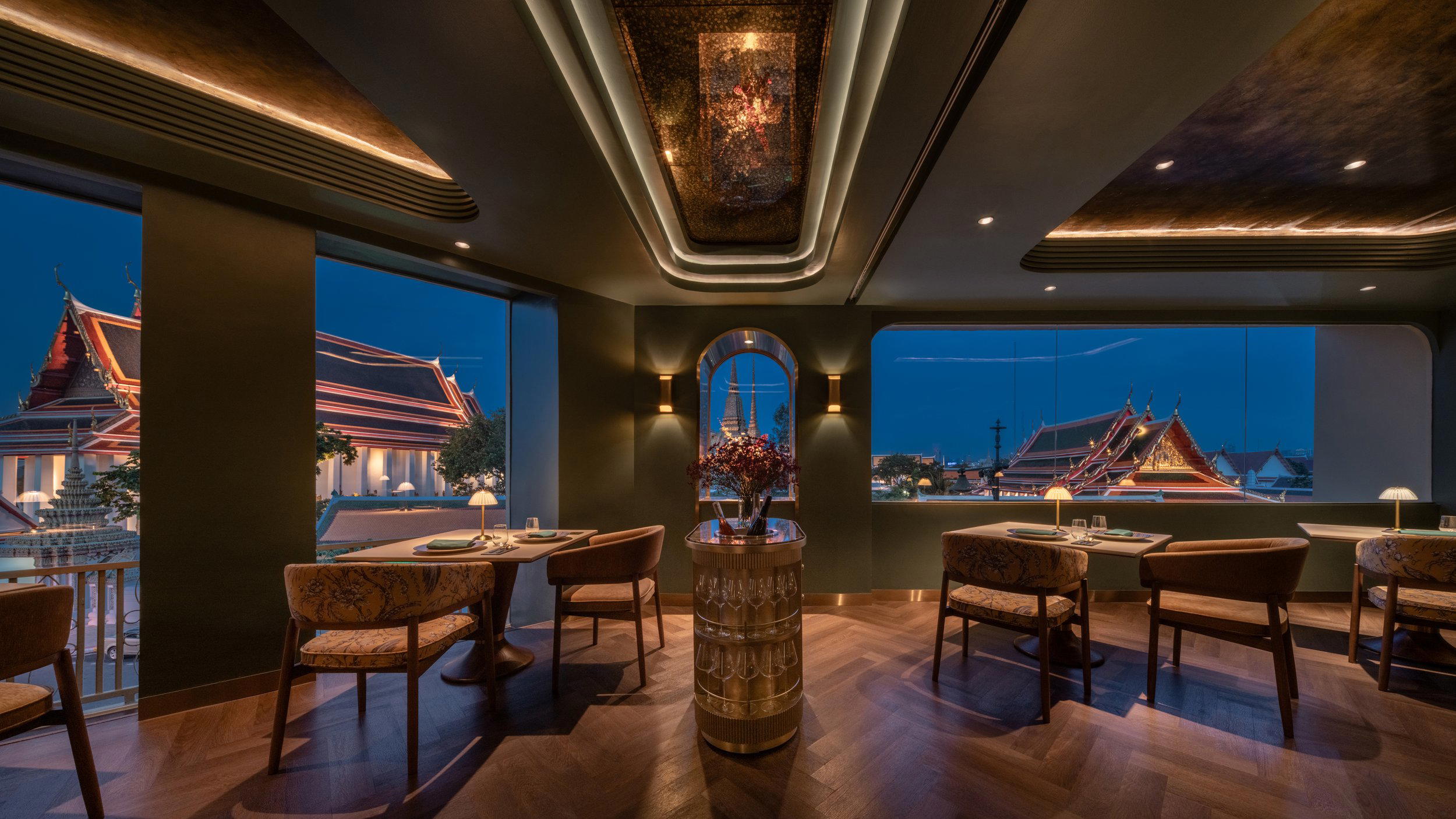
Serene and luxurious with soft lighting by the pool and terrace, intimate dining spaces, and peaceful riverside setting with gentle breezes and sunset views over the Chao Praya and Bangkok Noi canal.