I Kriti occupies a address on Veranzerou Street in central Athens, placing it within reach of the city's denser residential and commercial quarters rather than the tourist-facing dining strip. For visitors exploring Athens beyond the Acropolis-adjacent restaurant circuit, it represents a different register of the city's Cretan dining tradition, where the island's produce-led cooking meets an urban neighbourhood crowd.
Pearl is the En Primeur Club membership app — saves, bookings, and concierge access live there. Same editors, same standards.
- Address
- Veranzerou 5, Athina 106 77, Greece
- Phone
- +30 21 0382 6998
- Directions
- Get directions
 Saves & bookings on Pearl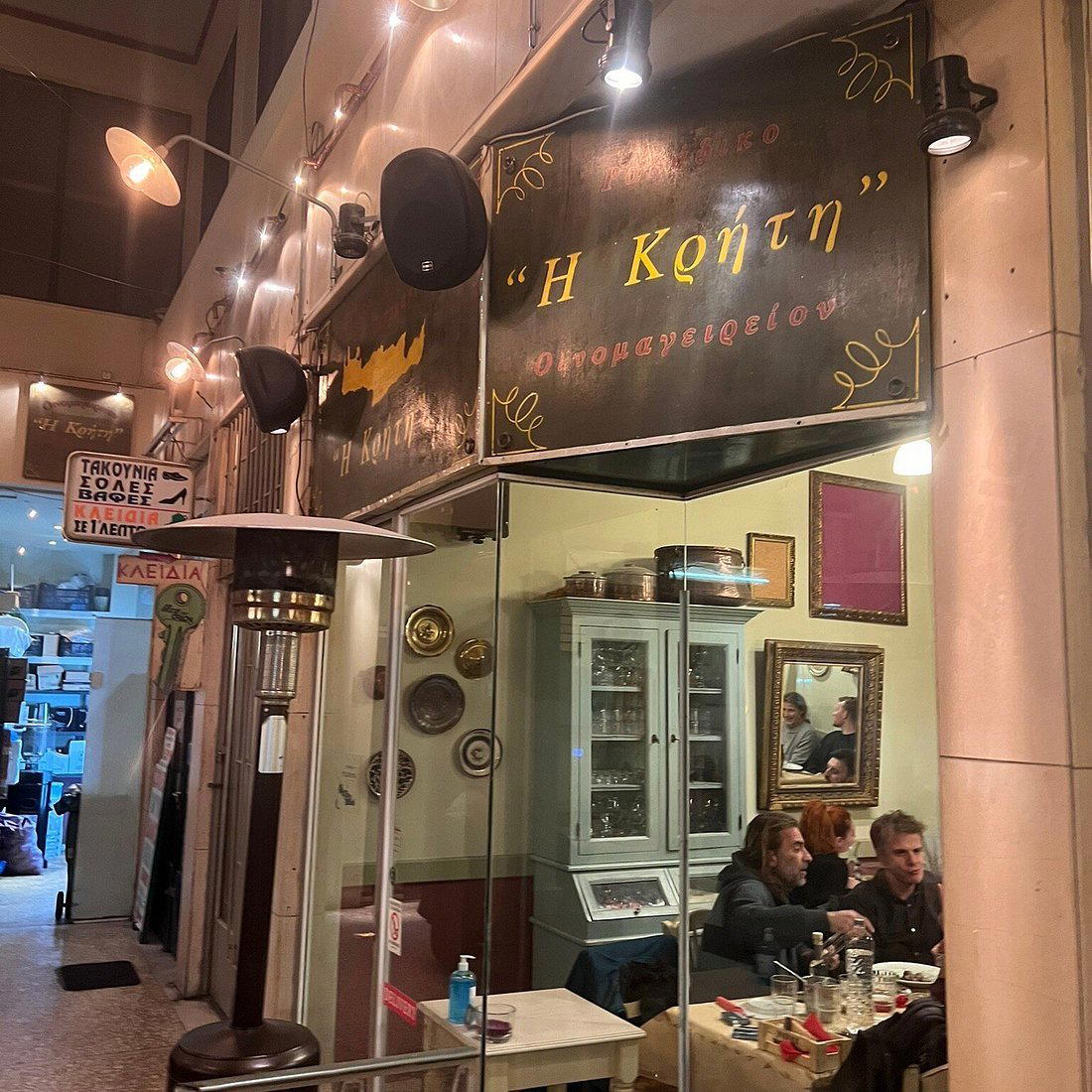
Veranzerou Street and the Athens Dining Zones That Don't Face the Monuments
Central Athens organises its restaurant life into two distinct bands. The first is monument-adjacent: Monastiraki, Thissio, Koukaki, where every second terrace frames the Acropolis and menus adjust accordingly, pricing against tourist footfall rather than competitive kitchen standards. The second band runs through the less-photographed quarters: Exarchia, Omonia, the streets around Veranzerou, where the crowd is local, the room designs are functional rather than cinematic, and the food is more likely to be anchored in regional Greek tradition than in fusion ambition. I Kriti is a restaurant at Veranzerou 5 in Athens, serving authentic Cretan Greek food.
Veranzerou is not a dining destination in the way that Kolonaki or the Monastiraki square are dining destinations. It is a working central-Athens street, close enough to Omonia Square to share its utilitarian atmosphere, far enough from the Acropolis sight lines to have no interest in performing for out-of-town visitors. Restaurants that survive on streets like this do so because local Athenians return to them, not because passing tourists stumble through the door. That dynamic sets the terms of engagement at I Kriti before you have read a menu.
Cretan Cooking in Athens: A Tradition With a Specific Logic
To understand what a restaurant named after Crete is doing in central Athens, it helps to understand the migration patterns that shaped the city's neighbourhood food culture over the twentieth century. Large numbers of Cretans settled in Athens through successive decades, and they brought with them a cooking tradition that is materially different from mainland Greek cuisine: heavier use of wild greens, more olive oil as a cooking medium rather than a finishing element, a repertoire built around dried legumes, aged cheeses like graviera and anthotiro, and braised meats prepared with the slow-cooking logic of a rural kitchen rather than a restaurant one.
Cretan tavernas in Athens function as a specific sub-category of the city's dining offer. They are not the same as contemporary Greek restaurants running creative interpretations of island produce, the model you find at venues like Hytra or Delta, both of which use Greek ingredients as material for technically ambitious cooking. Nor are they the same as the upmarket contemporary Greek category represented by Botrini's or Hervé. A Cretan taverna in Athens is more conservative in format, more direct in flavour, and more dependent on the quality of its sourced ingredients than on kitchen technique in the modernist sense.
This is not a criticism. It reflects a different set of priorities: the slow-braised lamb with stamnagathi (Cretan chicory), the dakos assembled with proper Cretan barley rusk, the legume soups that require good dried product and patient cooking rather than elaborate plating. The cooking tradition is more demanding in some respects than contemporary cuisine, because there is nowhere to hide when the ingredients are this central and the preparations this unadorned. Athens has a cluster of Cretan tavernas that sustain themselves on exactly these terms, and I Kriti addresses that same audience from its Veranzerou address.
The Neighbourhood as Context for the Experience
Arriving on Veranzerou from the direction of Omonia, the street feels like the functional Athens that visitors moving between tourist sites rarely encounter. The buildings are mid-century commercial, the foot traffic is purposeful rather than leisurely, and the rhythm of the area owes more to the city's working centre than to its cultural-quarter character. This is the neighbourhood context that shapes what a meal at I Kriti is likely to feel like: a local room, a practical atmosphere, an experience more interested in feeding you well than in staging a dining event.
Athens has spent the past decade producing a wave of internationally referenced restaurants, venues that now appear in 50 Best lists and attract the same kind of destination-diner circuit that fills seats in Copenhagen or Tokyo. Makris Athens addresses the creative end of that spectrum. But that wave has not erased the older, neighbourhood-facing layer of the city's food culture. If anything, the contrast between the two registers has become more pronounced: as the fine-dining tier grows more sophisticated and more expensive, the taverna tier becomes more clearly defined as a different kind of value proposition, one measured in cooking tradition and ingredient quality rather than in tasting menu architecture.
For visitors who want to read the city's food culture across its full range, the neighbourhood taverna is as instructive as the Michelin-recognised room. Understanding what a proper dakos is, or what slow-braised goat tastes like when the animal has been sourced from the right island supplier, is relevant context for making sense of what the ambitious restaurants are reinterpreting. The Veranzerou address places the restaurant closer to that instructive end of the spectrum than to the destination-dining end.
How I Kriti Sits Against the Athens Dining Field
Athens dining splits broadly into three price tiers: the fine-dining bracket, where venues like Botrini's (priced at €€€€) and Spondi operate; a mid-tier of contemporary Greek restaurants like Hytra (€€€) and Aleria (€€€); and a neighbourhood tier of traditional tavernas and regional specialists where price reflects ingredient cost and kitchen labour rather than any concept premium. The restaurant, given its Veranzerou address and its Cretan regional identity, sits in the third tier.
What distinguishes the Cretan specialist from other taverna categories in Athens is the specific sourcing logic: the island's olive oil, its aged cheeses, its barley products, and its wild greens are not easily replicated from mainland suppliers, and the better Cretan restaurants in Athens maintain supply relationships that keep those ingredients traceable. That sourcing specificity is where the value comparison with mid-tier contemporary Greek restaurants becomes interesting: you may be paying less, but the ingredient provenance argument is, in some cases, equally serious.
For comparison points in the broader Greek dining geography, venues like Old Mill in Elounda (Crete itself) and Selene in Santorini represent the island-ingredient tradition interpreted through a more polished, destination-hotel register. Aktaion in Firostefani and Almiriki in Mykonos work within similar island-produce frameworks adapted for specific tourism contexts. The restaurant's position in central Athens, by contrast, answers to a local urban audience with no scenic premium built into the price.
Planning a Visit
Veranzerou 5 is walkable from Omonia Metro station (Line 1 and Line 2 intersect at Omonia), making the logistics of reaching it from most central Athens hotels direct. The neighbourhood is active throughout the day and into the evening, though it is not a late-night dining area in the way that Monastiraki or Psirri can be. Its hours are Wednesday to Saturday from 1 PM to 12 AM, with Sunday service from 1:30 to 10:30 PM; it is closed Monday and Tuesday. Reservations are recommended.
Elsewhere in Greece coverage, Etrusco in Kato Korakiana, Olais in Kefalonia, To Psaraki in Vilcahda, Myconian Ambassador Thalasso Spa in Platis Gialos, Myconian Utopia Resort in Elia, and Avaton Luxury Beach Resort in Halkidiki represent the range of regional dining contexts across the country. For international reference points on serious restaurant investment at different price levels, Le Bernardin in New York City and Lazy Bear in San Francisco sit in the EP Club coverage as benchmarks for what formally ambitious cooking looks like at the highest tier.
A Tight Comparison
Comparable venues nearby, for context on price, style, and recognition.
| Venue | Cuisine | Price |
|---|---|---|
| I KritiThis venue — the venue you are viewing | Omonoia, Authentic Cretan Greek | $$ |
| Ama Lachei | Lofos Strefi, Modern Greek Meze | $$ |
| ARCADIA RESTAURANT | Makrygianni, Traditional Greek Taverna | $$ |
| Aoritis Kritis Thimises | Kolonaki, Traditional Cretan Greek | $$ |
| Migniardise | Veikou, Greek Bakery Cafe | $$ |
| Ατίταμος | Exarcheia, Traditional Greek | $$ |
Continue exploring
More in Athens
Restaurants in Athens
Browse all →
Bars in Athens
Browse all →
Hotels in Athens
Browse all →
At a Glance
- Cozy
- Rustic
- Intimate
- Group Dining
- Casual Hangout
- Family
- Terrace
- Local Sourcing
Current opening hours
- Monday
- Closed
- Tuesday
- Closed
- Wednesday
- 1 PM–12 AM
- Thursday
- 1 PM–12 AM
- Friday
- 1 PM–12 AM
- Saturday
- 1 PM–12 AM
- Sunday
- 1:30–10:30 PM
Hours can change for holidays and private events. Last verified .
Cozy and charming with multiple differently decorated dining rooms, informal atmosphere, garden-like outdoor area under night lights, and a peaceful terrace.