Google: 4.7 · 1,350 reviews
Hotel Suitess occupies one of Dresden's most historically charged addresses, directly facing the Frauenkirche on the square that defines the city's rebuilt baroque centre. The property sits at the intersection of contemporary hospitality and a neighbourhood dense with cultural memory, making it a reference point for visitors who want the Altstadt at their doorstep without the anonymity of a large chain hotel.
 Discover on Pearl
Pearl is the En Primeur Club membership app — saves, bookings, and concierge access live there. Same editors, same standards.
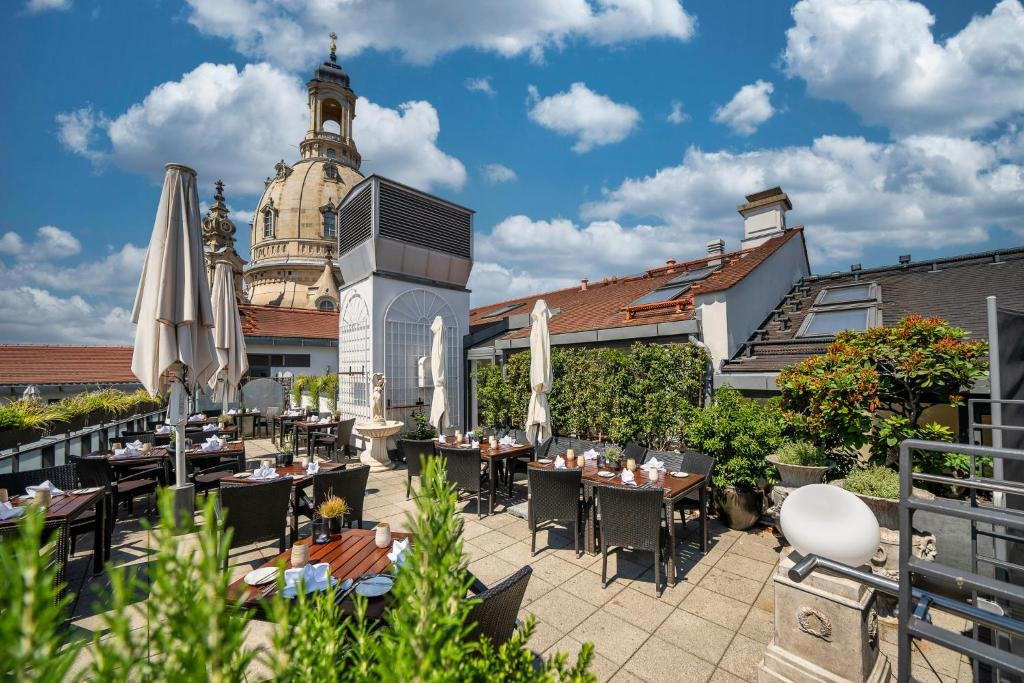
Facing the Frauenkirche: What This Address Actually Means
An der Frauenkirche 13 is not a quiet side street. It is, by any measure, one of the most freighted pieces of real estate in central Europe. The square immediately in front of Hotel Suitess is anchored by the Frauenkirche, the sandstone Lutheran church that was reduced to rubble in February 1945, left as a deliberate ruin by the East German government for decades, and rebuilt stone by stone between 1994 and 2005. To stand at the entrance of this hotel and look across the cobblestones is to read several centuries of German history in a single glance. That context is not incidental to the experience of staying here. It defines it.
Dresden's Altstadt has been rebuilt and reimagined so many times that the city occupies an unusual position in European cultural geography. It is simultaneously one of the most baroque-saturated urban environments on the continent and one of the most modern, because virtually everything you see has been reconstructed within living memory. Hotels in this neighbourhood inherit that layered identity whether they choose to or not.
Dresden's Hotel Scene and Where This Property Sits
The premium hotel market in Dresden has developed along two broad lines over the past two decades. On one side are large-footprint properties, several of them affiliated with international groups, that trade on the city's renaissance as a conference and cultural destination. On the other are smaller, more characterful addresses that position themselves through location specificity and a more considered design approach. Hotel Suitess belongs to the latter category, with its Frauenkirche-facing position providing a locational credential that no amount of interior renovation can manufacture for a property elsewhere in the city.
For comparison, the broader German fine hospitality market shows that address precision increasingly matters at the premium end. Properties like Bülow Palais in Dresden's Neustadt demonstrate how a specific neighbourhood identity can anchor a property's positioning as firmly as any award or star rating. In Dresden's Altstadt specifically, proximity to the Frauenkirche functions as a trust signal in the way that a Marais address functions in Paris or a Mitte location functions in Berlin.
The Cultural Weight of Eating and Staying in the Altstadt
Dresden's dining culture has undergone a parallel reconstruction to its architecture. The city that emerged from reunification had limited fine dining infrastructure, and what has developed since the mid-1990s reflects both the ambitions of a newly confident Saxon cultural capital and the practical reality of building a hospitality industry from a narrow base. The current scene is varied: elements operates at the leading of the modern cuisine tier at €€€€, while Genuss-Atelier and Heiderand work the same modern cuisine register at €€€. For something more relaxed, [m]eatery serves as a counterpoint to the tasting-menu format that dominates the upper tier.
Guests staying at Hotel Suitess are within walking distance of this entire ecosystem, which matters in a city where the density of serious dining options remains lower than in Munich, Hamburg, or Berlin. Dresden rewards a deliberate approach to planning meals; spontaneous walk-ins at the city's better tables are less reliable than in larger German cities. For broader reference on what the German fine dining circuit currently offers, properties and restaurants like Aqua in Wolfsburg, JAN in Munich, and Schwarzwaldstube in Baiersbronn illustrate the range of ambition operating across the country. Dresden is building toward that tier rather than sitting within it, but the trajectory is clear.
What a Stay Here Is Actually For
The Frauenkirche address is the primary argument for Hotel Suitess, and it is most persuasive for visitors whose trip is organised around the Altstadt's cultural density. The Semperoper, the Zwinger, the Residenzschloss, and the Fürstenzug are all within a ten-to-fifteen minute walk. For a trip structured around Dresden's baroque and musical heritage, the geography of this property is nearly impossible to improve upon.
The German hotel market at the premium end increasingly splits between properties that earn their position through programme depth, spa infrastructure, and food and beverage ambition, and those that earn it through address alone. Both are legitimate value propositions, but they serve different travellers. For context on what programme-led premium hospitality looks like at its most developed in Germany, Vendôme in Bergisch Gladbach, ES:SENZ in Grassau, and Victor's Fine Dining by Christian Bau in Perl represent the endpoint of that model. Hotel Suitess operates from a different premise: the programme is the city itself.
International comparisons are instructive here. The model of a small, precisely located hotel whose value derives from urban context rather than internal amenity is well-established in other European capitals. What makes the Dresden version specific is that the context is not merely aesthetic, it is historical in the most charged sense. Guests who understand what the Frauenkirche represents, and what its reconstruction involved, will read their surroundings differently than those who see it as a scenic backdrop.
Planning Your Visit
Hotel Suitess sits at An der Frauenkirche 13, 01067 Dresden, placing it at the heart of the Altstadt and within easy reach of the city's main cultural institutions. Dresden is served by Dresden Airport (DRS), approximately nine kilometres from the city centre, with direct connections to several major European hubs. The city is also well-connected by rail, with Dresden Hauptbahnhof linking to Berlin in under two hours on fast services. For dining reservations at the better Altstadt and Neustadt tables, advance booking of two to four weeks is advisable, particularly on weekend evenings and during the Semperoper season. Our full Dresden restaurants guide covers the current range of options across price points and styles.
For travellers extending their Germany itinerary, the broader circuit of serious German tables includes Waldhotel Sonnora in Dreis, Restaurant Haerlin in Hamburg, and Schanz in Piesport. For those combining a European trip with transatlantic travel, Le Bernardin in New York City and Atomix in New York City represent reference points in the same premium travel register. Closer to the innovation end of the Berlin scene, CODA Dessert Dining in Berlin offers a format with no direct Dresden equivalent.
Cost and Credentials
A compact peer snapshot based on similar venues we track.
| Venue | Price | Awards | Notes |
|---|---|---|---|
| Hotel Suitess | This venue | ||
| elements | €€€€ | Michelin 1 Star | Modern Cuisine, €€€€ |
| Genuss-Atelier | €€€ | Michelin 1 Star | Modern Cuisine, €€€ |
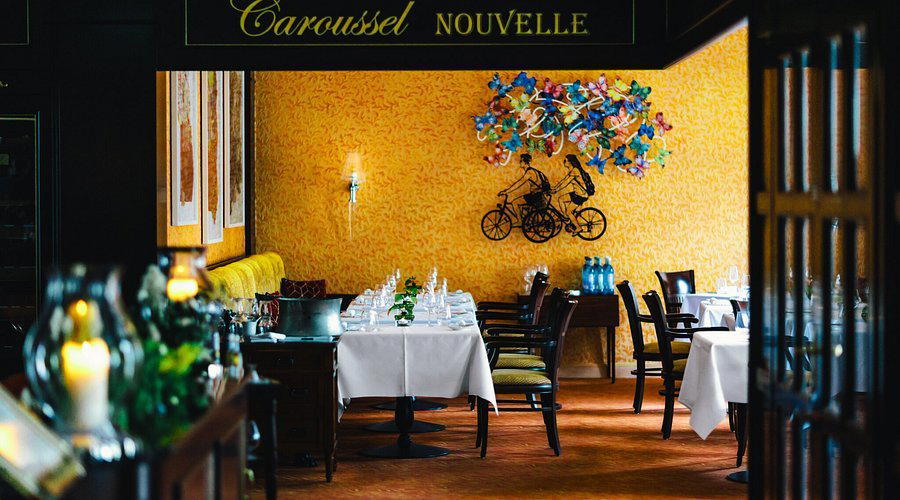
| Caroussel Nouvelle | €€€ | Contemporary, €€€ | |
| Schmidt's | €€ | Farm to table, €€ | |
| Bülow Palais | German Fine |
Continue exploring
More in Dresden
Restaurants in Dresden
Browse all →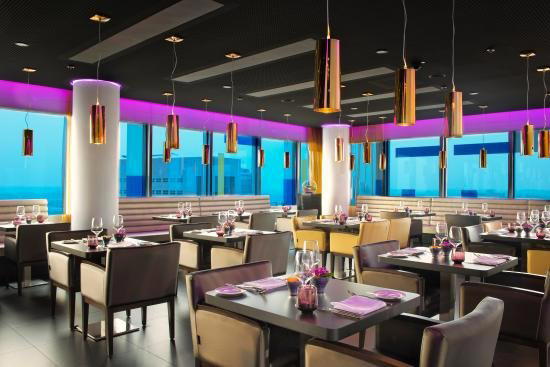
![[m]eatery restaurant in Dresden](https://cdn.enprimeurclub.com/storage/v1/object/public/images/restaurants/399cba83-7e5d-4a0c-9c34-707a5a37a8d2/hero1.jpg?width=3840&quality=75)
Bars in Dresden
Browse all →
Hotels in Dresden
Browse all →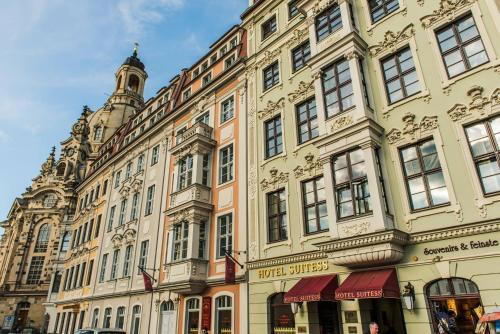
Wineries in Dresden
Browse all →
At a Glance
- Elegant
- Sophisticated
- Modern
- Date Night
- Special Occasion
- Business Dinner
- Rooftop
- Hotel Restaurant
- Open Kitchen
- Extensive Wine List
- Skyline
Sophisticated rooftop setting with spotlights and modern art, offering an intimate and welcoming atmosphere above Dresden's historic rooftops.