Dining at the Edge of the Exclusion Zone Chornobyl is not a city in any conventional sense anymore. The settlement that remains near the sealed reactor site functions primarily as a base for workers managing the decommissioned plant, scientists...
 Discover on Pearl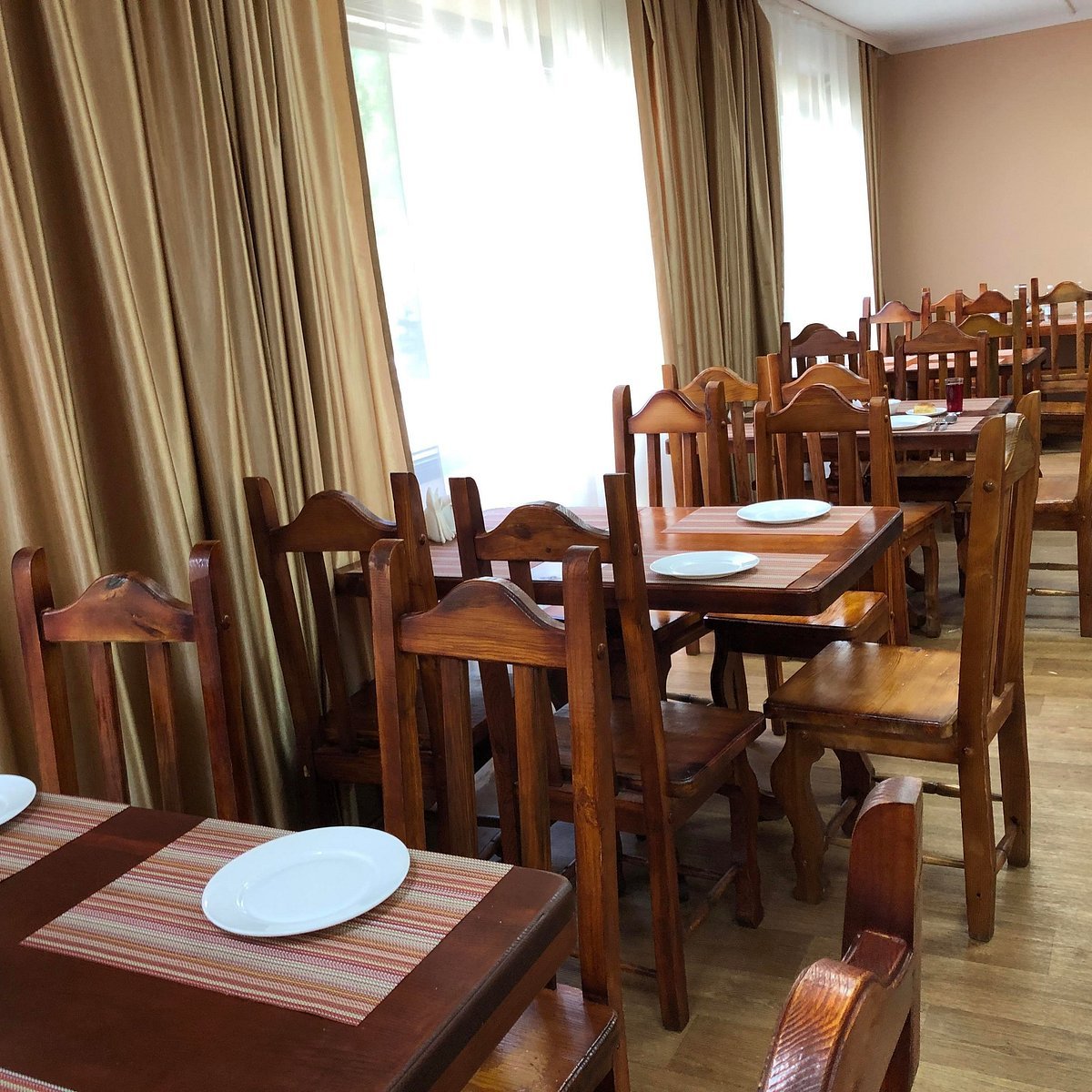
Dining at the Edge of the Exclusion Zone
Chornobyl is not a city in any conventional sense anymore. The settlement that remains near the sealed reactor site functions primarily as a base for workers managing the decommissioned plant, scientists conducting ongoing environmental research, and the organized tour groups that have made the Exclusion Zone one of Ukraine's most discussed travel destinations since the 2019 HBO dramatization renewed international attention. Against that backdrop, the question of where one eats in Chornobyl is less a matter of culinary aspiration than of logistical reality: options are constrained by the location itself, by the controlled access that governs who can be in the zone at any given time, and by the infrastructure that has been rebuilt or maintained to support the people who work there. Hotel Desyatka, on Bohdana Khmelnytskoho Street, sits squarely in that context.
Ukraine's broader restaurant culture has developed considerably over the past decade. In Kyiv, venues like Barbara Bar signal the capital's shift toward considered, ingredient-led cooking with genuine technical ambition. In Kharkiv, Don Omar represents a different urban energy. Further west, Valentino in Lviv and Cafe de Vino in Lutsk reflect the European-leaning culinary sensibility of the country's western regions. None of that context applies to Chornobyl. The settlement operates outside the normal commercial hospitality circuit, and any dining at Hotel Desyatka should be understood as serving a functionally specific audience in a functionally specific place.
The shortlist, unlocked.
Hard-to-book tables, cellar releases, and concierge-planned trips.
Get Exclusive Access →What Food Sourcing Means Here
The ingredient sourcing question that frames any serious discussion of a restaurant elsewhere in Ukraine takes on an entirely different character inside the Exclusion Zone. The 30-kilometer restricted area around Chornobyl Reactor No. 4 remains subject to ongoing radiological monitoring. Agricultural production within the zone is prohibited under Ukrainian law, which means that any food served in the area must be sourced entirely from outside and brought in through controlled checkpoints. This is not a farm-to-table context. It is, in a very particular sense, the opposite: a place where the severing of local food production from local consumption is not a matter of supply chain preference but of legal and environmental necessity.
That constraint defines the character of hospitality in the zone in ways that no amount of culinary investment could fully overcome. The supply logistics alone, involving the transportation of all foodstuffs through military-adjacent checkpoint infrastructure, set a practical ceiling on what is achievable. Hotels and canteens serving Chornobyl's working population have historically offered direct Ukrainian staples, borsch, varenyky, bread, preserved goods, protein dishes, all sourced from suppliers operating outside the restricted perimeter. The gap between that operational reality and the ingredient transparency movement visible at venues like Maiak in Odesa or Kovcheg in Ternopil is structural, not a matter of ambition.
The Zone as Context, Not Backdrop
Visitors arriving at Hotel Desyatka typically do so as part of officially sanctioned tours or on work-related permits. The experience of eating in Chornobyl is inseparable from that framework. Tour operators coordinating Exclusion Zone visits generally include meals as part of their organized packages, with food served at designated facilities that meet the zone's radiological and administrative protocols. The hotel's position on Bohdana Khmelnytskoho Street places it at the practical center of the settlement's limited infrastructure, which is where accommodation and dining for permitted visitors tend to converge.
The broader Ukrainian hospitality market has built a sophisticated tier of regional dining across cities from Ivano-Frankivsk, where Delikacia operates with evident craft, to Rivne, where Melange holds its own, to Prontoپiца in Chernivtsi. Hotel Desyatka operates in a category that none of those venues occupy: a hospitality facility in a restricted, post-disaster zone where the primary function is operational support rather than dining destination. That is not a criticism. It is an accurate description of what the place is and what it exists to do.
Planning a Visit to Chornobyl
Access to Chornobyl and the surrounding Exclusion Zone requires advance permit approval through Ukrainian authorities or through a licensed tour operator. Day trips from Kyiv, approximately two to three hours by road, are the most common format, and the majority of visitors never stay overnight. Those who do remain in the zone typically do so through organized group itineraries that include accommodation at facilities like Hotel Desyatka. Independent travelers without prior permit arrangements cannot simply arrive. Booking must happen through established channels, and meal provisions are generally included in the tour or work-stay package rather than selected a la carte. The logistical planning required to eat at Hotel Desyatka is, in that sense, substantially greater than what is required for a reservation at Le Bernardin in New York or Alinea in Chicago, even accounting for the difficulty of those bookings.
For travelers considering Ukraine's broader restaurant offerings, our full Chornobyl restaurants guide covers the operational realities of dining in the zone alongside the logistical considerations specific to the area. Internationally, the contrast with venues like Alain Ducasse at Louis XV in Monte Carlo, Alléno Paris au Pavillon Ledoyen, or 8½ Otto e Mezzo Bombana in Hong Kong could not be starker. Hotel Desyatka is not competing with those venues. It is serving a different purpose entirely, in a place where the act of eating is a practical necessity embedded within one of the most closely controlled environments on earth.
Travelers drawn to Lazy Bear in San Francisco, Atomix in New York, or Emeril's in New Orleans for their culinary programs will find none of that at Hotel Desyatka. What they will find, if they are among the small number of permitted visitors who stay overnight in Chornobyl, is a facility that serves the settlement's operational population and tour-sanctioned guests with the pragmatic hospitality appropriate to its location.
Frequently Asked Questions
- Would Hotel Desyatka be comfortable with kids?
- The Exclusion Zone around Chornobyl operates under strict Ukrainian government regulations, and children under 18 are generally prohibited from entering the restricted area regardless of their purpose of visit. This applies whether traveling for tourism or accommodation. The question of comfort at Hotel Desyatka is therefore largely moot for families with minors: access control at the zone perimeter would prevent their entry. Adults traveling as part of permitted tour groups or on work-related permits may use the hotel's facilities within that framework.
- What is the overall feel of Hotel Desyatka?
- Chornobyl's remaining settlement carries the specific atmosphere of a place rebuilt for function rather than habitation in the conventional sense. Facilities serving the zone's working population, researchers, and organized tour visitors reflect that utilitarian character. Hotel Desyatka, given its address at the center of the settlement, operates as a practical base rather than a hospitality destination. No awards or ratings are on record for the property, and the experience should be understood in that operational context rather than measured against Ukraine's wider hospitality standards.
- What do regulars order at Hotel Desyatka?
- No specific menu data is available on record for Hotel Desyatka. Historically, canteen-style facilities in Chornobyl's working zone have served standard Ukrainian staples brought in from outside the Exclusion Zone, given that local food production inside the restricted perimeter is prohibited. Regular occupants, primarily plant workers and researchers on rotation, would typically eat whatever the current supply allows rather than choosing from a restaurant-style selection. Tour visitors generally have meals pre-arranged through their operator packages.
- Is Hotel Desyatka the only place to stay overnight inside the Chornobyl Exclusion Zone?
- The number of authorized overnight accommodation options inside the 30-kilometer Exclusion Zone is extremely limited by design: Ukrainian authorities control access tightly, and the settlement's infrastructure supports a small, permit-holding population rather than general tourism. Hotel Desyatka on Bohdana Khmelnytskoho Street is one of the few documented accommodation addresses within Chornobyl proper. Visitors considering an overnight stay should confirm current permit requirements and availability through a licensed Exclusion Zone tour operator well in advance, as conditions and access policies are subject to change.
Comparison Snapshot
These are the closest comparables we have in our database for quick context.
| Venue | Cuisine | Price | Awards | Notes |
|---|---|---|---|---|
| Hotel Desyatka (Desyatka) | This venue | |||
| Kanapa | Modern European | Modern European | ||
| Beef | ||||
| Al Fresco | Tuscan Italian | Tuscan Italian | ||
| BEEF Meat&Wine | ||||
| La Luce |
Need a table?
Our members enjoy priority alerts and concierge-led booking support for the world's most difficult tables.
Get Exclusive AccessThe shortlist, unlocked.
Hard-to-book tables, cellar releases, and concierge-planned trips.
Get Exclusive Access →