The Physical Approach
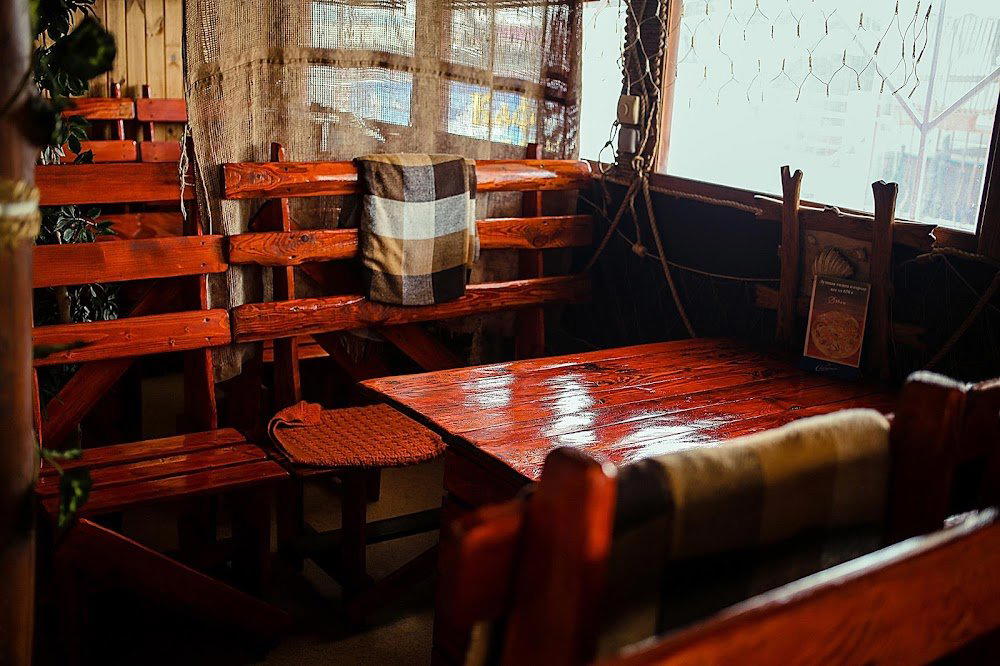
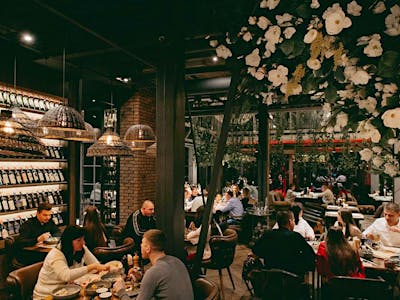
Entering Konnaya market and climbing to the second floor reframes the experience before any food arrives. The sightlines down to market stalls below, the ambient sounds of trade, the smell of produce in an active commercial space, these are not curated atmospheric effects but the actual conditions of a working market. Restaurants that occupy this kind of address are asking their guests to accept the market's own rhythm rather than the controlled tempo of a conventional dining room. That is a specific offer, and it suits a specific appetite: guests who prefer context over polish, and who find the evidence of supply chains more interesting than their concealment.
Odesa's market culture has deep roots. The city's position as a historic trading port meant that Privoz and the surrounding market infrastructure were always central to daily life rather than peripheral to it. Konnaya sits within that tradition. A restaurant on its second floor is, in this sense, building on ground with genuine historical weight rather than adopting market aesthetics as a design device.
Sourcing as Format, Not Decoration
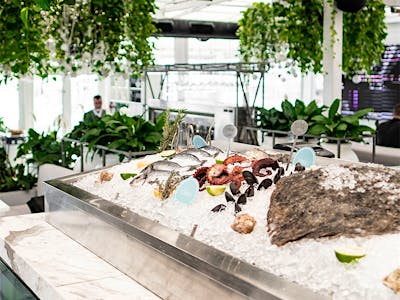
The argument for market-adjacent restaurants is not sentimental. It is logistical. When a kitchen operates within the same building as its primary suppliers, the practical constraints that force most restaurants toward pre-ordered, pre-committed menus relax. A chef on the second floor of Konnaya can respond to what is available at the stalls below that morning, shifting toward a different fish, a different vegetable, a different cut, without the planning horizon that delivery schedules impose on kitchens operating from fixed weekly orders. This is the operational advantage that market proximity provides, and it is more significant than most sourcing narratives acknowledge.
Ukraine's agricultural geography reinforces this. The country's black-soil belt produces wheat, sunflower, vegetables, and fruit of genuine quality. Odesa's coastal position adds Black Sea seafood, mullet, sprat, Black Sea turbot, to a sourcing picture that urban restaurants further inland cannot access with the same freshness. A market-embedded kitchen in Odesa has access to a supply profile that would be difficult to replicate in Kyiv or Kharkiv, however good the logistics. Compare this with what kitchens in Kyiv are working with at Barbara Bar, or the different regional sourcing logic at play at Don Omar in Kharkiv.
Western Ukrainian restaurants approach sourcing differently again, shaped by proximity to Carpathian produce and different trade routes. Valentino in Lviv and Delikacia in Ivano-Frankivsk operate in contexts where the available ingredients, and therefore the kitchens' identities, diverge significantly from what an Odesa market kitchen would prioritize. Sourcing geography shapes culinary identity in ways that transcend menu descriptions, and Maiak's address on Konnaya places it at a specific point on that map.
Where Maiak Sits in Odesa's Dining Picture
Odesa's restaurant sector has developed steadily over the past decade, with modern European formats, Kanapa being the most frequently cited reference, and Italian-inflected dining (Al Fresco holds the Tuscan Italian position in the city) establishing the upper-casual tier. Beef and BEEF Meat and Wine address the steakhouse segment that performs reliably in post-Soviet urban markets. La Luce occupies a further point in this competitive picture. Against this spread, a market-floor restaurant operating on daily sourcing logic represents a different proposition: less about format stability and more about ingredient-driven variability. The kitchen's offer on any given day depends on what Konnaya's stalls are carrying, which makes Maiak a different kind of commitment than a restaurant with a fixed, tested menu.
That variability is also what makes it interesting to the particular guest who reads a restaurant as an index of what a city's agricultural moment looks like right now. Globally, this model has proven durable at the level of serious restaurants: Lazy Bear in San Francisco built its reputation around a similar seasonal responsiveness, while institutions like Le Bernardin in New York demonstrate what sustained sourcing discipline looks like at the highest level over decades. Maiak operates at a different scale and price bracket, but the underlying logic, let the supply define the menu rather than the reverse, connects it to a global shift in how serious kitchens think about their relationship to ingredients.
Planning a Visit
Maiak is located on the second floor of Konnaya market, entered from 22 Konnaya Street in central Odesa. The market-floor setting means the experience is shaped by market hours and the rhythm of a working commercial space, so visiting earlier in the day, when the market below is most active, sharpens the connection between the setting and the food. Phone, booking platform, and hours data are not currently published, which suggests that walk-in visits or direct inquiry at the market are the most reliable approach. Guests travelling from elsewhere in Ukraine for a broader dining survey might pair this with Kovcheg in Ternopil, Melange in Rivne, or Cafe de Vino in Lutsk to build a picture of how regional Ukrainian dining differs across cities. For those covering a wider range, Pront Pitsa in Chernivtsi and Hotel Desyatka add further data points on the country's regional spread.