Hostellerie Saint-Louis
Our verdict
Set in the quiet Flemish village of Bollezeele in France's Nord department, Hostellerie Saint-Louis occupies a churchside address on Rue de l'Église that signals its roots in the regional hostellerie tradition. The kitchen draws on the agricultural depth of the Hauts-de-France, a territory whose endive fields, grey shrimp, and inland game have long sustained serious French cooking well outside the spotlight of the Paris circuit.

Pearl is the En Primeur Club membership app, where members save venues, book tables and use the concierge.
The menu
What to order
- Foie gras de canard
- Ris de veau à la crème
Where the Hauts-de-France Table Begins
The Nord department does not announce itself the way Provence or Burgundy does. There are no lavender fields visible from the motorway, no wine appellations on the road signs. What the region offers instead is a quieter kind of agricultural authority: cold-climate endives grown in darkened sheds, grey shrimp pulled from the sandbanks of the Channel coast, chickory-fed poultry, and game from the wetlands around the Aa river valley. This is the supply chain that has fed the Flemish border country for centuries, and it is the same larder that a churchside hostellerie in Bollezeele draws from when it places a plate in front of a guest.
Hostellerie Saint-Louis sits at 47 Rue de l'Église in Bollezeele, a commune of fewer than a thousand people in the Flandre Intérieure, roughly twenty kilometres south of Dunkirk and within reach of both Calais and the Belgian border. Its address on the village's main ecclesiastical axis places it squarely within a long French tradition: the hostellerie attached to or adjacent to a religious institution, serving travellers, pilgrims, and eventually locals across generations. That provenance matters because it shapes what these establishments have historically been expected to do, feed people seriously, with what the immediate land provides, without pretension toward metropolitan fashion.
The Regional Sourcing Logic of Northern French Cooking
French gastronomy's geography is often plotted by its star clusters: the Côte d'Azur with Mirazur in Menton, the Rhône corridor with Troisgros in Ouches and Paul Bocuse in Collonges-au-Mont-d'Or, Alsace with Auberge de l'Ill in Illhaeusern and Au Crocodile in Strasbourg. The Hauts-de-France does not sit comfortably on that map, which is part of what makes its dining culture worth examining. Without the ambient prestige of wine country or resort geography, kitchens here have historically justified themselves through ingredient fidelity rather than wine-pairing architecture or seasonal tasting theatre.
The waterzoï tradition, that Flemish broth of vegetables and protein, whether fish or poultry, is the clearest emblem of this ingredient-forward logic. It requires nothing to hide behind: the broth is the cooking medium and the sauce simultaneously, and the quality of what goes into it is immediately transparent on the palate. Carbonade flamande works on the same principle, where a slow-braised beef depends entirely on the cut and the local dark beer used to build the sauce. These are dishes that coastal and inland producers of the Nord have provisioned for a very long time, and they remain the structural anchors of serious Flemish-French tables.
For comparison, the sourcing discipline one finds at destination restaurants like Bras in Laguiole or Auberge du Vieux Puits in Fontjoncouse, both rooted in hyper-local terroir as the primary editorial point of their menus, has its quieter counterpart in the Hauts-de-France, where the sourcing is simply assumed rather than announced. A hostellerie like Saint-Louis inherits that same logic by geography and tradition.
The Atmosphere of a Flemish Village Hostellerie
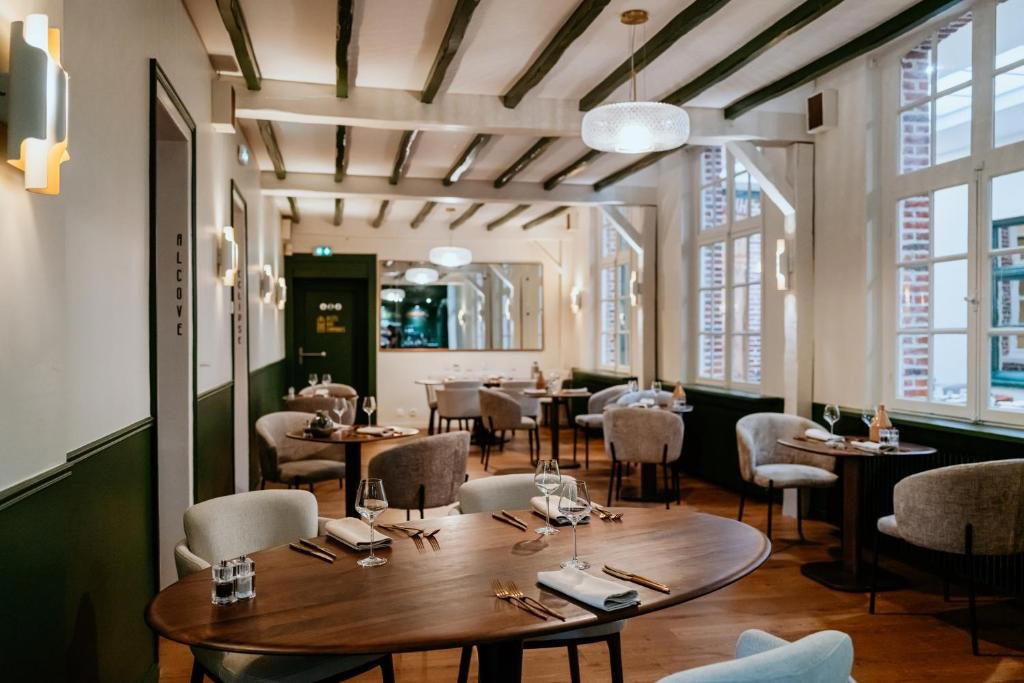
Approaching Bollezeele from the D226, the village resolves quickly around its church, the kind of Flemish brick architecture that reads as neither grand nor modest but simply functional over several centuries. The hostellerie's position on Rue de l'Église places it within this visual grammar: a building that belongs to its street and to its village in a way that self-consciously designed destination restaurants rarely achieve. The atmosphere of these establishments tends toward the unhurried. Service operates on the assumption that guests have driven some distance, that lunch will not be rushed, and that the meal is the event rather than a prelude to one.
This contrasts sharply with the theatrical density of a Paris grand address, an Alléno Paris au Pavillon Ledoyen in the eighth arrondissement, where the room itself is part of the argument the kitchen is making. In a village hostellerie, the room recedes and the plate advances. Tablecloths, local ceramics, a short wine list weighted toward regional and Belgian producers: these are the atmospheric coordinates, not chandeliers or sommelier theatrics.
For those travelling from the Channel ports, Calais is roughly forty minutes by car, Dunkirk closer to twenty-five, Bollezeele represents the kind of halfway stop that rewards planning. It sits off the main autoroutes, which means arriving here is a choice rather than a convenience. Guests who make that choice tend to be oriented toward the meal itself. See our full Bollezeele restaurants guide for context on what else the area offers.
Placing Saint-Louis in the Broader French Hostellerie Tradition
France's provincial hostellerie network is one of the least-discussed structures in its dining culture. Unlike the Relais and Châteaux circuit, which has absorbed many of the country's most celebrated addresses, from Georges Blanc in Vonnas to L'Oustau de Baumanière in Les Baux, a plain hostellerie in a small commune operates without the marketing infrastructure of a prestige network. It is sustained by local custom, regional reputation, and occasional visitors who have done enough research to find it.
This is the tier where French culinary continuity is actually maintained. The starred restaurants catalogued by Michelin, from Assiette Champenoise in Reims to Flocons de Sel in Megève, represent the apex of a triangle whose broad base is exactly this kind of establishment: serious kitchens in small towns, cooking regional produce with technical competence and without celebrity ambition. Internationally, the analogy holds: Le Bernardin in New York City and Atomix operate at the opposite end of the visibility spectrum from a Bollezeele hostellerie, but both depend on a wider culture of kitchen seriousness that provincial France has historically supplied.
Restaurants like Christopher Coutanceau in La Rochelle, AM par Alexandre Mazzia in Marseille, and La Marine in Noirmoutier-en-l'île illustrate how coastal sourcing has driven some of France's most ambitious cooking in recent years. The Nord coast's grey shrimp and Channel fish occupy a similar ingredient register, less celebrated, but no less precise in what they demand from a kitchen.
Planning a Visit
Hostellerie Saint-Louis is located at 47 Rue de l'Église in Bollezeele, in the Flandre Intérieure sub-prefecture of the Nord department. The village is accessible by car from Calais (approximately forty minutes), Dunkirk (twenty to twenty-five minutes), and Saint-Omer (fifteen minutes), making it a plausible lunch stop for travellers moving between the Channel ports and the Belgian border. Visitors are advised to confirm hours and reservation policy directly, as village hostelleries in this region often operate on reduced days mid-week and may close between lunch and dinner services. Dress codes at this tier of French provincial dining are generally relaxed, though a degree of table formality is assumed.
Frequently asked questions
Is Hostellerie Saint-Louis suitable for children?
A village hostellerie in a commune the size of Bollezeele operates at a different register than a destination tasting-menu restaurant. The churchside setting at 47 Rue de l'Église, the pace of a Flemish village address, and the format of a provincial French table all suggest an environment where families are accommodated without ceremony. That said, no specific children's menu or family policy is confirmed in the public record, so contacting the venue directly before visiting with young children is advisable.
What should I expect atmosphere-wise at Hostellerie Saint-Louis?
The address on a churchside street in Bollezeele sets the tone before you arrive: Flemish brick, a small commune in the Flandre Intérieure sub-prefecture, and the measured cadence of a working provincial hostellerie rather than a resort property. France's regional hostellerie network tends toward straightforward hospitality over theatrical service, and a village of Bollezeele's scale reinforces that register. Expect a room that feels embedded in its community rather than designed for visitors passing through.
Is Hostellerie Saint-Louis a practical overnight stop for travellers arriving via the Channel ports?
Geographically, Bollezeele sits roughly 25 minutes by car from Dunkirk and around 40 minutes from Calais, placing it in a corridor that sees significant cross-Channel traffic. A provincial hostellerie at 47 Rue de l'Église offers a more grounded alternative to the motorway hotel circuit along the A16. For travellers wanting their first night in France to read as France rather than a transit zone, the village address makes a reasonable case.
What dish is Hostellerie Saint-Louis famous for?
No signature dish is documented for Hostellerie Saint-Louis in the public record. What the Nord department does offer as culinary context is a distinct regional larder: endive, maroilles cheese, freshwater fish, and preparations rooted in Flemish-French crossover cooking. Whether Saint-Louis draws directly from that tradition is a question best answered at the table.
What's the address for Hostellerie Saint-Louis?
Hostellerie Saint-Louis is located at 47 Rue de l'Église, 59470 Bollezeele, France, Bollezeele.
Comparison Snapshot
Comparable venues nearby, for context on price, style, and recognition.
| Venue | Cuisine | Price | Awards | Notes |
|---|---|---|---|---|
| Hostellerie Saint-LouisThis venue (the venue you are viewing) | Traditional French Bistronomic | $30–50 | Not listed | Not listed |
| Pluriel' | Modern French Fine Dining | $30–50 | Michelin Plate | centre |
| Restaurant POTO | Creative French Bistro with Local Products | $30–50 | Not listed | Zudausques |
| Le Comptoir | French Bistronomique | $30–50 | Not listed | Labourse |
| Maison Blanche | Modern French Fine Dining | Not listed | Not listed | 8th arrondissement |
| Comptoir De Vie | Modern French Tasting Counter-Bar | $100–150 | Not listed | 2nd Arrondissement |
Continue exploring
More in Bollezeele
Restaurants in Bollezeele
All restaurants in Bollezeele →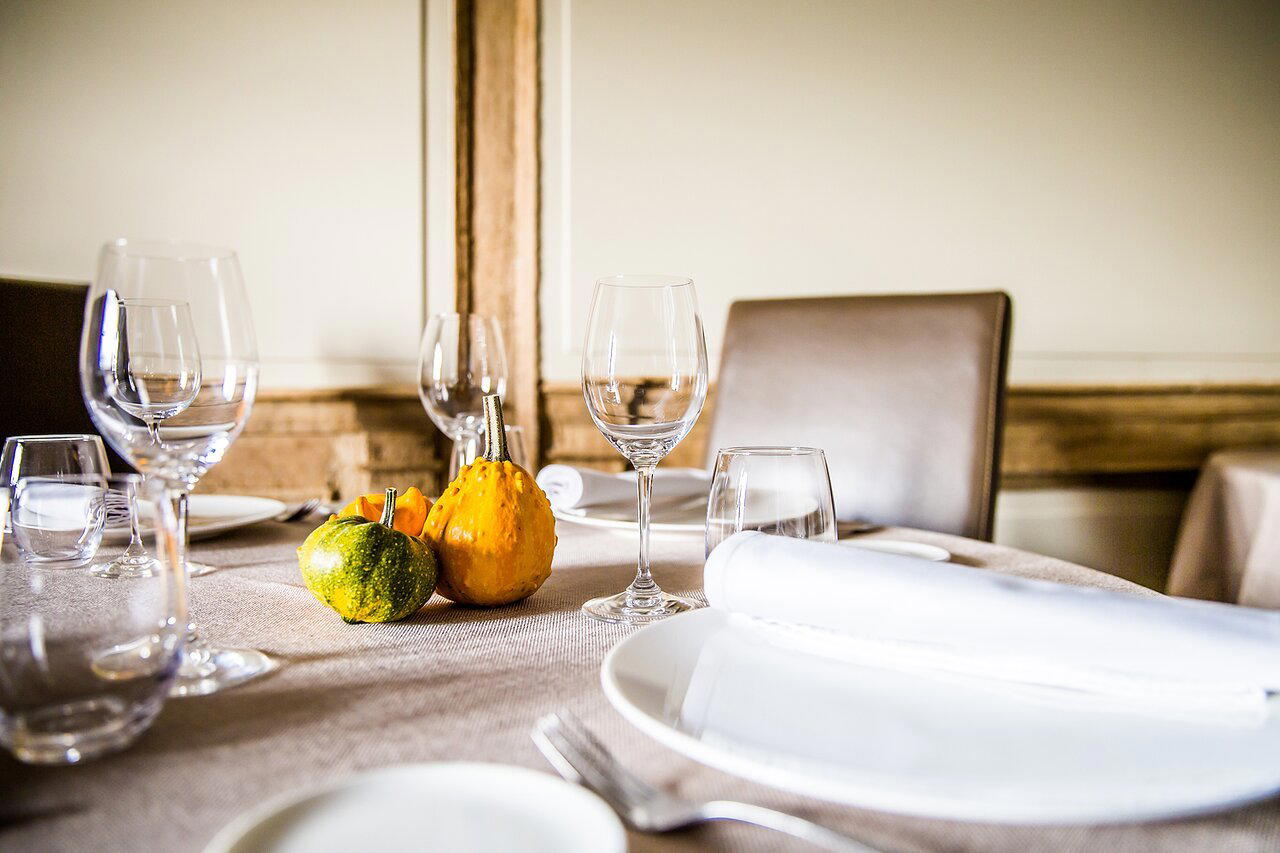
Hotels in Bollezeele
Browse all →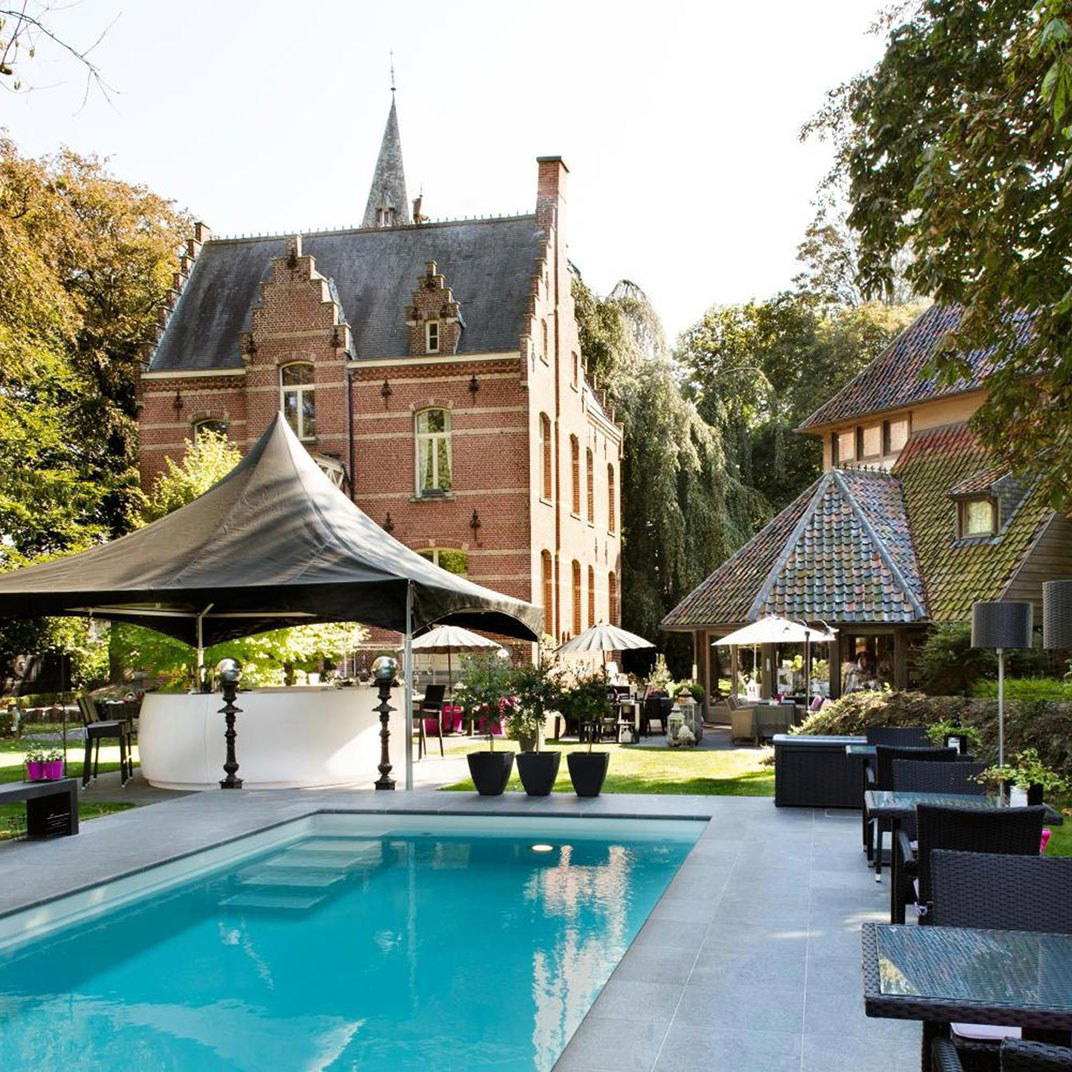
Wineries in Bollezeele
Browse all →
Details
- Classic
- Elegant
- Cozy
- Family
- Special Occasion
- Garden
- Historic Building
- Hotel Restaurant
- Local Sourcing
- Garden
- A La Carte
- Vegetarian Friendly
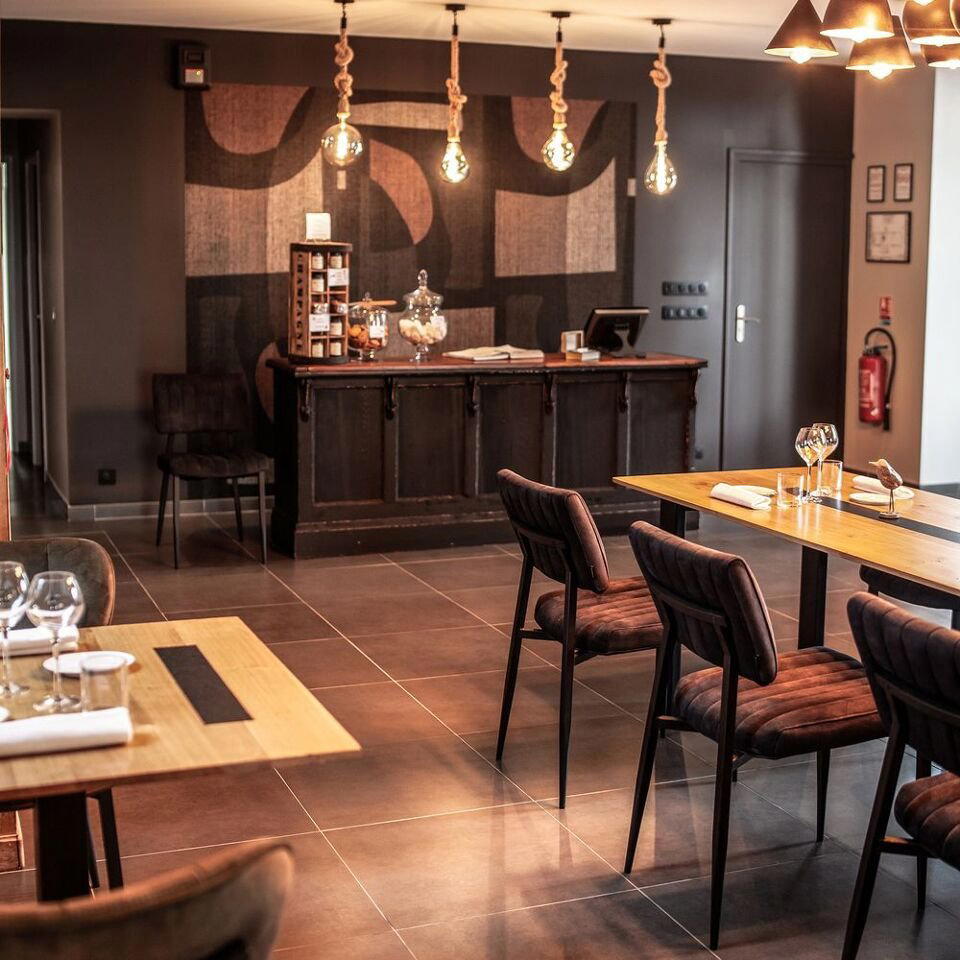
Refined bourgeois atmosphere with serious table settings, silverware, and cane chairs, surrounded by a wooded and flowered garden.