
Michelin Plate
Our verdict
Hop Yik Tai on Kweilin Street brings Michelin Plate recognition to Sham Shui Po's working-class street food corridor, where the dining room is as functional as the cooking is focused. Two consecutive Michelin Plates (2024 and 2025) confirm its standing in Hong Kong's recognised hawker tier, a city-wide category that punches well above its price point.

Pearl is the En Primeur Club membership app, where members save venues, book tables and use the concierge.
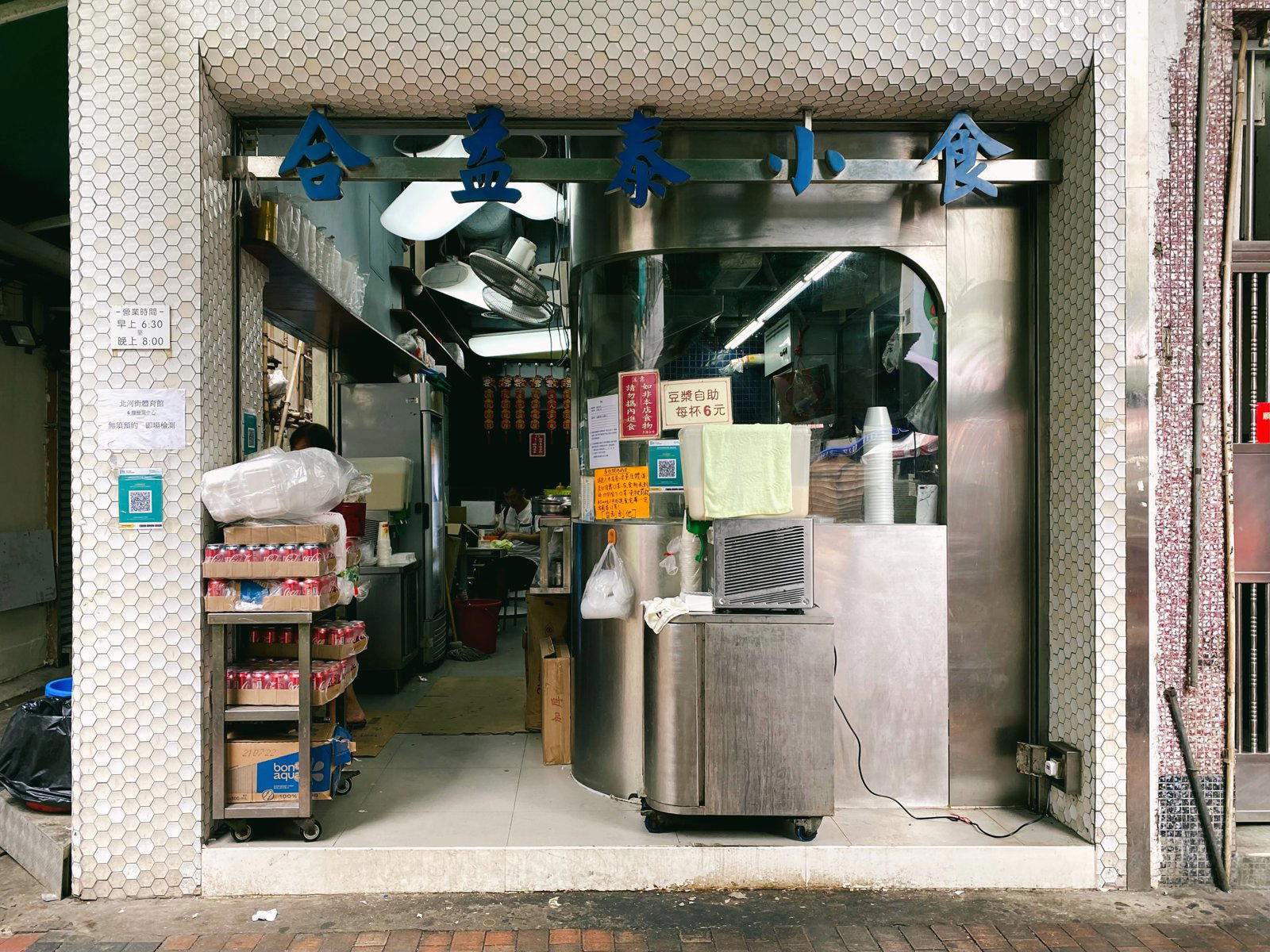
Kweilin Street and the Grammar of the Hong Kong Street Food Shop
Sham Shui Po runs on a different register from the polished restaurant floors of Central or Wan Chai. The neighbourhood's food culture is built around utility: counter stools, laminate tables, fluorescent light, and cooking that has been refined through repetition rather than reinvention. Kweilin Street sits in the heart of this district, a stretch where the physical container of a meal is almost aggressively simple and the food is expected to carry the entire weight of the experience. Hop Yik Tai occupies exactly that kind of space, a room whose design signals nothing except that the kitchen is the only thing that matters.
That approach is worth reading as a tradition rather than an absence. Hong Kong's cha chaan teng and street food shops evolved a visual language of deliberate spareness: walls that hold menus, tables positioned for turnover, no ambient design layer between the diner and the food. In the city's premium dining tier, where our full Hong Kong restaurants guide covers everything from three-Michelin-starred rooms like 8½ Otto e Mezzo Bombana to contemporary innovators like Andō, the physical environment is treated as a second menu. In Sham Shui Po, the environment is stripped back so the single menu does double duty.
What Two Michelin Plates Actually Signal
Hop Yik Tai holds a Michelin Plate for 2024 and 2025, a designation that sits below the star tiers but indicates food quality that the Guide's inspectors consider worth seeking out. In Hong Kong's street food context, the Plate has become a meaningful category marker: it distinguishes operations that meet a consistency threshold from the broader, unranked field of neighbourhood shops. The recognition places Hop Yik Tai in a tier occupied by a small number of street food addresses across the city, where the cuisine type is $-priced but the execution is scrutinised by the same body that awards stars to Caprice and Ta Vie.
That comparison matters because it illustrates how Michelin has treated Hong Kong differently from almost any other city in its coverage. The Guide here spans from haute French and Japanese-French innovation down to hawker stalls in working districts. Hop Yik Tai's consecutive Plates signal sustained consistency, not a one-year anomaly, a detail that carries weight when the kitchen is running a $-priced format where margins leave limited room for premium sourcing or elaborate prep.
For regional context, the same Michelin recognition model applies to street food addresses across Southeast Asian cities. Hill Street Tai Hwa Pork Noodle in Singapore and A Noodle Story represent the Singapore version of this tier: hawker-format cooking that earns Guide recognition without changing its price point or physical character. Hong Kong's recognised street food addresses, Hop Yik Tai among them, belong to that same regional conversation.
The Space as Functional Architecture
The editorial angle on Hop Yik Tai's physical environment is not aesthetics, it is function as design principle. The address on Kweilin Street follows a format that Sham Shui Po has sustained for decades: a shopfront that opens onto a narrow interior, seating arranged for density, surfaces chosen for ease of cleaning, and no decorative layer that would slow either service or turnover. This is an architecture of efficiency, and it produces a particular kind of dining experience that is essentially impossible to replicate in a purpose-designed restaurant room.
A volume that high, at a consistent 4.0 score, suggests a broadly reliable experience without significant polarisation, which is exactly what functional street food spaces need to maintain.
Other Sham Shui Po and Kowloon-side addresses worth cross-referencing for a similar functional aesthetic include Cheung Hing Kee in Tsim Sha Tsui and the broader neighbourhood roster covered in our Hong Kong guide. For a contrasting physical register in the same city, Bánh Mì Nếm in Wan Chai operates a counter-format that serves a different cuisine tradition but shares the no-frills physical approach.
Sham Shui Po as a Dining District
Sham Shui Po has a well-established dual identity: it is Hong Kong's electronics and fabric wholesale district by day and one of the city's most concentrated zones for affordable, long-running food shops at all hours. The neighbourhood attracts a local repeat customer base rather than a destination-dining crowd, which means the food economy here is disciplined by regular, knowledgeable eaters rather than occasional visitors. Shops that do not maintain quality lose their regulars quickly. That dynamic functions as a quality filter more demanding in some respects than award recognition alone.
The area's position on the Kowloon side, away from the central commercial drag, means it sits outside the tourist circuit that feeds restaurants in Tsim Sha Tsui or the finance-driven lunch trade of Central. For a diner arriving specifically for Hop Yik Tai, the surrounding street gives context: this is a working food neighbourhood, and the shop operates within that ecosystem rather than as an outlier from it. Nearby options like Fat Boy, Banana Boy, and Beanmountain illustrate the range of formats the district supports across different price points and cuisine styles.
For broader Hong Kong planning, our full Hong Kong hotels guide, bars guide, wineries guide, and experiences guide cover the full city picture. Street food research in the wider Asian region can extend to 545 Whampoa Prawn Noodles, 91 Fried Kway Teow Mee, 888 Hokkien Mee in George Town, Adam Rd Noo Cheng Big Prawn Noodle, Ah Boy Koay Teow Th'ng, and A Pong Mae Sunee in Phuket for comparable Michelin-recognised street food formats across the region.
Know Before You Go
- Address: 121 Kweilin Street, Sham Shui Po, Hong Kong
- Price range: $ (budget street food pricing)
- Awards: Michelin Plate 2024; Michelin Plate 2025
- Cuisine: Street Food
- Booking: No booking information available; walk-in format typical for this category
- Getting there: Sham Shui Po MTR station (Kwun Tong Line / Tung Chung Line) provides direct access to the neighbourhood; Kweilin Street is a short walk from the station exits
- Hours: Not confirmed; verify locally before visiting
- Phone / Website:
Would Hop Yik Tai be comfortable with kids?
At the $ price point in a casual street food setting, the format is generally low-friction for families. Sham Shui Po's food shops run on quick service and shared tables, which suits children better than formal tasting-menu rooms. That said, seating in high-turnover street food shops can be tight and tables shared, so the experience is practical rather than accommodating in a dedicated sense. The neighbourhood itself is a busy working district rather than a leisure precinct, so plan the visit as part of a broader Kowloon itinerary.
Reputation Context
| Venue | Cuisine | Price | Awards | Notes |
|---|---|---|---|---|
| Hop Yik TaiThis venue (the venue you are viewing) | Hong Kong Street Food - Cheong Fun | $1–10 | Michelin Plate | Not listed |
| 8 1/2 Otto e Mezzo Bombana (Hong Kong) | 3 Michelin-Star Italian Fine Dining | $200–300 | 3 Michelin Stars · World's 50 Best #94 | Italian |
| Ta Vie | Modern French-Japanese Fine Dining | $300–500 | 3 Michelin Stars · World's 50 Best #68 | Japanese - French, Innovative |
| Caprice | Contemporary French Fine Dining | $200–300 | 3 Michelin Stars · World's 50 Best #35 | French, French Contemporary |
| Feuille | Modern Vegetable-Forward French | $200–300 | 1 Michelin Star · World's 50 Best #93 | French Contemporary |
| Neighborhood | Modern French with Asian Influences | $50–100 | 1 Michelin Star · World's 50 Best #24 | International, European Contemporary |
Recognition history
Dated appearances from independent guides and award organizations, with the underlying list record or original source where available.
Michelin Plate
Michelin
Full recognition history (3 entries)
Michelin Plate
Michelin
Michelin Plate
Michelin
Continue exploring
More in Hong Kong
Restaurants in Hong Kong
All restaurants in Hong Kong →
Bars in Hong Kong
All bars in Hong Kong →
Hotels in Hong Kong
All hotels in Hong Kong →

Wineries in Hong Kong
All wineries in Hong Kong →
Details
- Lively
- Cozy
- Casual Hangout
- Standalone
- A La Carte
- Vegetarian Friendly
Current opening hours
- Monday
- 6:30 AM–8 PM
- Tuesday
- 6:30 AM–8 PM
- Wednesday
- 6:30 AM–8 PM
- Thursday
- 6:30 AM–8 PM
- Friday
- 6:30 AM–8 PM
- Saturday
- 6:30 AM–8 PM
- Sunday
- 6:30 AM–8 PM
Hours can change for holidays and private events. Hours as of .
Lively and crowded street food spot with cramped seating, simple decor, and the sounds of sizzling food and chatter.