Hop occupies a converted industrial space on Leuven's Vaartkom canal, positioning itself within the city's growing wave of ingredient-focused dining. The kitchen draws on Flemish agricultural networks to shape a menu that shifts with the season, placing it in a different register from the city's more format-heavy tasting counters. For a mid-sized Belgian university city, that level of sourcing discipline is notable.
Pearl is the En Primeur Club membership app — saves, bookings, and concierge access live there. Same editors, same standards.
- Address
- Vaartkom 1a, 3000 Leuven, Belgium
- Phone
- +3216356153
- Website
- hop-gastrobar.be
- Directions
- Get directions
 Saves & bookings on Pearl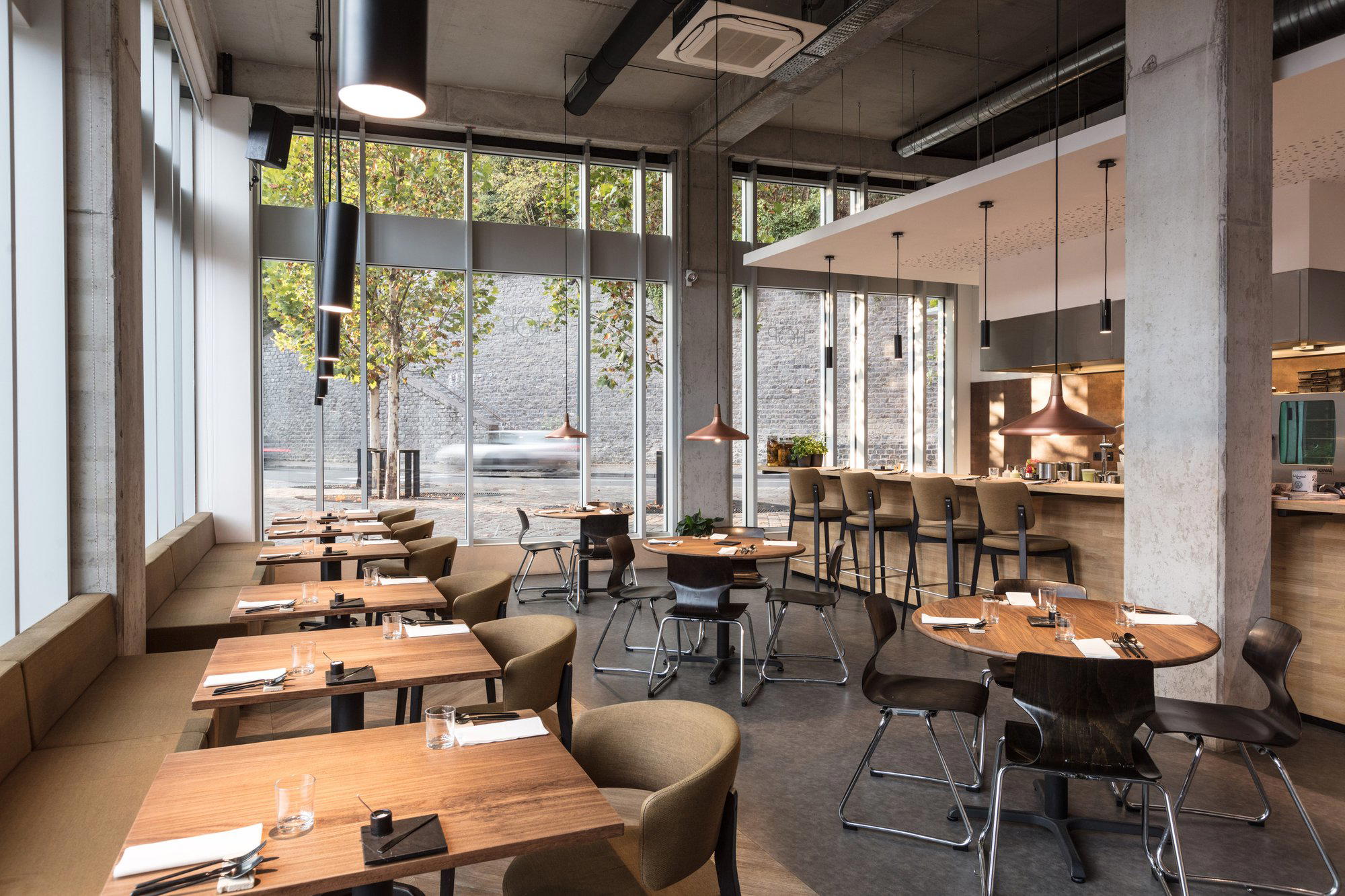
Vaartkom and the Restaurants That Followed the Water
Hop is a restaurant in Leuven, Belgium, serving modern Belgian bistronomic cooking at about €50 per person. The canal-side warehouses that once handled grain and industrial goods are now a more mixed proposition: bars still dominate stretches of it, but kitchens with genuine culinary ambition have been claiming the larger spaces for the better part of a decade. Hop, at Vaartkom 1a, sits at the entry point of that strip, in a building whose bones are still legibly industrial. Approaching from the town centre, the transition from compact medieval streetscape to open waterfront is abrupt, the canal opens the city out in a way that the interior quarters do not, and the restaurant sits in that release of space rather than fighting it.
Belgium has always maintained a high floor for casual-to-mid-register dining, the density of serious kitchens per capita in Flemish cities remains among the highest in Europe, but Leuven specifically has had to build its dining identity around the reality of its student population without surrendering to it. The restaurants that have lasted here are the ones that found a way to serve daily eating without flattening into the purely functional. Hop occupies that position on the Vaartkom side of the city's dining scene, a canal-side address that reads as relaxed but operates with more sourcing intention than the setting might initially suggest.
Ingredient Sourcing as the Kitchen's Organising Logic
Across Flanders, the conversation around ingredient provenance has moved from marketing language to operational fact at the tier of kitchen that takes it seriously. The Flemish agricultural belt, market gardens running from around Mechelen toward the Hageland, the hop fields of the Pajottenland, livestock operations in the Kempen, supplies a dense regional larder that serious kitchens now treat as the primary creative constraint rather than a secondary talking point. What this means in practice is that a kitchen genuinely working within those networks will run shorter menus, change them more frequently, and accept the occasional absence of a crowd-pleasing staple when the supply dictates it.
Hop's address in Leuven puts it within reach of the Hageland, a sub-region of Flemish Brabant where smaller-scale vegetable and fruit producers have operated for generations alongside the area's more widely discussed wine output. That proximity is not coincidental to the kitchen's logic. Restaurants at this price tier in Belgium that commit to sourcing from identifiable regional producers, rather than pulling from centralised wholesale networks, tend to shape menus around availability rather than consistency, which means the experience shifts across visits. It is a different model from the fixed tasting formats at the higher end of the Leuven market, represented by venues like EED (Flemish, Modern Cuisine, €€€€) or EssenCiel (French, Contemporary, €€€€), where the menu architecture is more controlled and less contingent.
Further out in Belgium's serious kitchen tier, the sourcing discipline that defines venues like Willem Hiele in Oudenburg or Bartholomeus in Heist, both of which have built identities around coastal and agricultural terroir, shows what that commitment produces at its most developed. At a city-dining scale, closer peer references include Alfalfa and Allison, two Leuven addresses working within a broadly similar everyday-eating register. Across Flanders, the farm-to-table framing now covers a wide range of actual practice, Castor in Beveren and De Jonkman in Sint-Kruis occupy different points on that spectrum, as does L'air du temps in Liernu, which operates a kitchen garden as part of its production model.
The Canal Setting and What It Shapes
Dining rooms in repurposed industrial buildings make a particular kind of promise, volume, light, and a certain studied informality. The Vaartkom address delivers all three. High ceilings and warehouse-scale proportions mean the room does not feel crowded even when occupied, and the canal proximity adds the specific quality of waterside light in the late afternoon, which falls differently than urban light bounced between close-set facades. The effect is that the room encourages longer meals without engineering them, which suits a kitchen whose output rewards attention rather than speed.
For comparison, Leuven's other mid-register options with genuine sourcing commitment tend to occupy smaller, denser spaces in the city's old quarter. Baracca operates in a different dining mode altogether. The Vaartkom position gives Hop a spatial signature that is less common in the city centre, and places it in better company with canal-district dining elsewhere in Belgium and the Netherlands, where industrial conversion has generated some of the more interesting mid-register kitchens of the last decade.
Leuven in Belgian Context
Belgium's serious dining is distributed across the country in ways that make city-by-city comparisons useful. Brussels carries the institutional weight, Bozar Restaurant in Brussels is one of several addresses operating at the intersection of cultural institution and serious kitchen. The West Flemish cluster around Roeselare and the coast has produced some of the country's most decorated kitchens, including Boury in Roeselare and the Michelin-recognised Hof van Cleve in Kruishoutem. Antwerp maintains its own dense tier, anchored by addresses like Zilte. Leuven sits outside most of those circuits but draws on the same agricultural hinterland as many Flemish Brabant kitchens, and a restaurant working seriously with that supply network is positioned to punch above its city-tier billing.
For international reference, the sourcing-led casual format that Hop approximates at canal-side scale has equivalents in more densely covered cities. The precision end of that register in New York, venues like Le Bernardin or Atomix, operates at a different price and formality tier, but the underlying argument about ingredient provenance as kitchen identity is the same conversation, scaled differently. And d'Eugénie à Emilie in Baudour shows how Wallonia engages with the same sourcing logic from a different regional supply base.
Planning a Visit
Hop sits at Vaartkom 1a, at the canal-facing edge of the district, reachable from Leuven's railway station on foot in around fifteen minutes or by the cycling infrastructure that runs along the canal bank.
How It Stacks Up
Comparable venues nearby, for context on price, style, and recognition.
| Venue | Cuisine | Price | Awards | Notes |
|---|---|---|---|---|
| HopThis venue — the venue you are viewing | Modern Belgian Bistronomic | $$ | Not listed | Not listed |
| Florida Foodbar | Mediterranean Street Food with Pitas | $$ | Not listed | Vaartkom |
| Sinatra | Cocktail Bar | $$ | Not listed | Vismarkt |
| Gastrobar Hop | Modern Belgian Gastrobar | $$$ | Michelin Plate | Vaartkom |
| Lukemieke | Seasonal Vegetarian | $$ | Not listed | near Leuven city park |
| La Filosofia | Authentic Italian Pizza & Pasta | $$$ | Not listed | City Center |
At a Glance
- Modern
- Intimate
- Casual
- Trendy
- Date Night
- Special Occasion
- Casual Hangout
- Open Kitchen
- Waterfront
- Beer Program
- Natural Wine
- Sommelier Led
- Local Sourcing
- Farm To Table
- Waterfront
Current opening hours
- Monday
- Closed
- Tuesday
- 7–11 PM
- Wednesday
- 7–11 PM
- Thursday
- 7–11 PM
- Friday
- 12–2 PM, 7–11 PM
- Saturday
- 7–11 PM
- Sunday
- Closed
Hours can change for holidays and private events. Last verified .
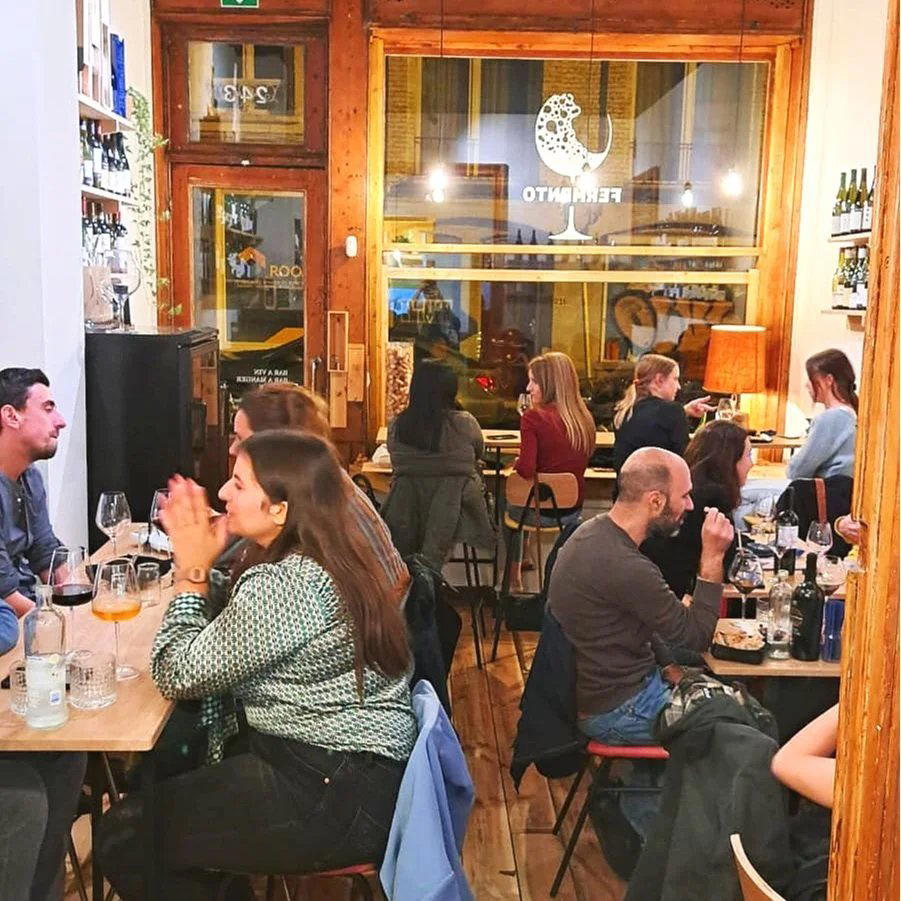
Light, brutalist decor with floor-to-ceiling windows, countertop seating overlooking the open kitchen where steam and clinking glass set the tempo; intimate 13-table space with casual yet refined atmosphere.