Hokkaido Ramen Santouka らーめん山頭火
Our verdict
Hokkaido Ramen Santouka operates from inside Mitsuwa Marketplace on Saratoga Avenue, placing one of Japan's most recognizable ramen chains inside a Japanese grocery complex rather than a standalone dining room. The format strips away dining-room ceremony in favor of direct, consistent bowl-focused eating. For the South Bay's Japanese community and ramen-oriented diners, the address functions as a known quantity rather than a discovery.

Pearl is the En Primeur Club membership app — saves, bookings, and concierge access live there. Same editors, same standards.
- Address
- Inside Mitsuwa Marketplace, 675 Saratoga Ave #103, San Jose, CA 95129
- Phone
- (408) 446-1101
- Hours
- Daily 11 AM–8:30 PM
- Website
- santouka.co.jp
- Directions
- Get directions
The menu
What to order
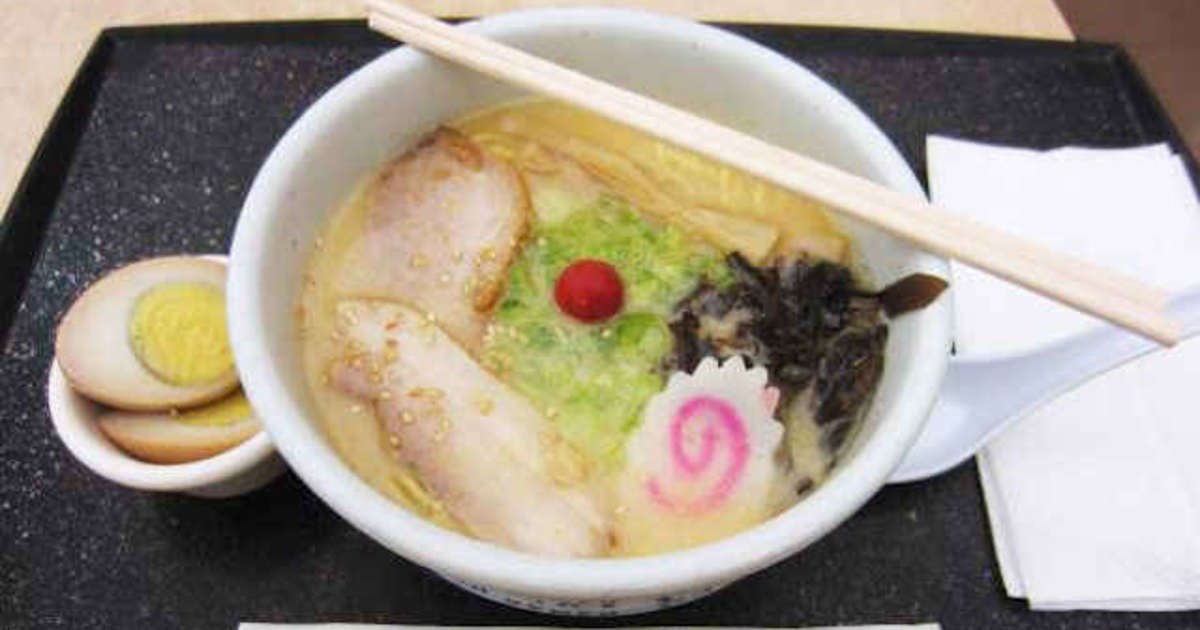
- Spicy Miso Ramen
- Shio Ramen
- Toroniku Shio Ramen
A Ramen Counter Inside a Japanese Grocery Complex
Walk into Mitsuwa Marketplace on Saratoga Avenue on a Saturday afternoon and the food court energy hits before anything else: the hum of a grocery complex doing serious volume, the smell of dashi and pork moving through a shared space, trays in motion. Hokkaido Ramen Santouka occupies a counter inside that food court, which immediately frames what kind of visit this is. There is no reservation, no dress consideration, no prix-fixe decision tree. You order at the counter, find a seat in the shared dining area, and the bowl arrives. That directness is the format, and it is the same format the chain operates in Japan and across its international locations.
Santouka originated in Asahikawa, Hokkaido, where it built its reputation on a tonkotsu-based broth that runs lighter and less aggressive than Fukuoka-style hakata tonkotsu. Asahikawa ramen has its own regional identity: it typically layers a lard-soy tare over pork-and-seafood combined stock, producing a richer, more complex base than single-stock preparations. Santouka's version of that tradition is what has traveled internationally, making it one of the more widely distributed formal ramen brands in North America. The San Jose location inside Mitsuwa sits within that larger network, not as an outlier but as a consistent node.
The Mitsuwa Setting and What It Means for Logistics
The editorial angle most relevant for planning purposes is the booking question, or rather the absence of one. Santouka inside Mitsuwa does not take reservations. Walk-in is the only format. That changes the calculus entirely compared to San Jose's reservation-required dining rooms, and it shifts the planning challenge from booking lead time to timing your arrival correctly.
Weekend lunch hours are the pressure point. The Mitsuwa food court draws a substantial Japanese-American community from across the South Bay, and the ramen counter sees its longest queues between roughly 11:30 a.m. and 1:30 p.m. on Saturdays and Sundays. Arriving at opening or after 2 p.m. on those days is the practical move. Weekday visits are considerably more relaxed. This is not a hidden constraint; it is a known operational pattern at high-volume food court ramen counters across the country, from the Mitsuwa locations in Torrance and Costa Mesa to comparable setups in Japanese grocery complexes in New York and Chicago.
The address, 675 Saratoga Ave Suite 103, places the venue in the western edge of San Jose's Saratoga Avenue corridor, inside the marketplace itself. Parking is available in the shared Mitsuwa lot. There is no street presence to look for; entry is through the grocery complex. For first-time visitors orienting to the area, this is meaningfully different from San Jose's downtown restaurant cluster or the Japantown blocks further east.
What the Bowl Format Delivers
Santouka's menu centers on its broths, with the toroniku (braised pork cheek) as the most discussed element across the chain's locations globally. The pork cheek preparation is slower and fattier than standard chashu, and it appears as a premium topping add-on across most Santouka menus. The base broth options follow Hokkaido tradition: shio (salt), shoyu (soy), and miso variations, each built on the same tonkotsu-adjacent stock. Shio is generally considered the reference preparation at Santouka, the version that shows the broth's clarity and depth without the miso or soy pulling it in a heavier direction.
This positions Santouka in a specific part of the ramen category: chain consistency, Japanese sourcing standards, and regional Hokkaido identity, rather than the artisan single-location model that dominates the current American ramen conversation. That distinction matters for what kind of dining experience you are calibrating toward. San Jose's broader dining options include considerably more formal propositions, from the Michelin-recognized Portuguese cooking at Adega (Portuguese) to more casual neighborhood anchors like Back A Yard Caribbean Grill. Santouka sits at a different register entirely, operating without the tasting menu architecture or the reservation pressure of San Jose's more formal dining tier.
Nationally, the venues that define formal Japanese dining for EP Club readers include operations like Atomix in New York City, which operates at the opposite end of the format spectrum from a food court ramen counter. That gap is worth naming plainly: Santouka is not a destination for progressive Japanese cuisine. It is a destination for a specific, well-executed regional ramen tradition, delivered at volume, with consistent standards across a large chain footprint.
Placing Santouka in the San Jose Dining Context
San Jose's restaurant scene spans formats that have little in common with each other beyond the city. The full San Jose restaurants guide covers that range: from the wine-forward seriousness of Adega and the Portuguese neighborhood character of Alma de Amón to counter-service and casual destinations scattered across the city's various ethnic enclaves. The Italian-American anchor Antipastos by DeRose and the contemporary American approach at Augustine fill other parts of the map.
Santouka's place in that picture is geographic and community-specific as much as culinary. The Mitsuwa Marketplace location serves as a Japanese community hub, and the ramen counter benefits from that foot traffic in ways that standalone restaurant operations do not. It is less about discovery and more about reliability for a community that knows the format well.
For comparison across Northern California's more formal dining tier, venues like Lazy Bear in San Francisco and Single Thread Farm in Healdsburg represent the reservation-intensive, multi-course end of the spectrum, while The French Laundry in Napa remains the region's most demanding booking exercise. Santouka requires none of that planning infrastructure, which is either a feature or irrelevant depending on what you are after.
Planning Your Visit
Access is entirely walk-in. Timing matters more than any other logistical variable. Weekday visits between 11 a.m. and 11:30 a.m. or after the primary lunch window, offer the least friction. Weekend visitors who arrive close to the Mitsuwa opening time will find shorter queues than those who arrive mid-afternoon. The food court is shared with other vendors, and seating is communal, so the experience assumes you are comfortable with that format.
Frequently asked questions
Where do I go for Hokkaido Ramen Santouka らーめん山頭火?
Hokkaido Ramen Santouka らーめん山頭火 is located at Inside Mitsuwa Marketplace, 675 Saratoga Ave #103, San Jose, CA 95129, San Jose.
Is Hokkaido Ramen Santouka inside Mitsuwa Marketplace worth visiting separately from the grocery store?
The San Jose Santouka counter draws dedicated ramen visits independent of any grocery shopping, which is notable given the food court context. The Mitsuwa location on Saratoga Avenue situates the counter inside a Japanese grocery complex, meaning a single trip can combine a bowl with access to Japanese pantry goods, prepared foods, and a bakery — a logistical argument for combining both rather than treating the ramen as incidental.
What's the signature dish at Hokkaido Ramen Santouka らーめん山頭火?
The toroniku, braised pork cheek, is the most discussed item across Santouka's global locations and the dish most regulars order by default. It appears across the broth formats the menu centers on, and its reputation carries consistently from the Japan-origin locations to the San Jose counter inside Mitsuwa Marketplace on Saratoga Avenue.
How hard is it to get a table at Hokkaido Ramen Santouka らーめん山頭火?
There are no reservations. The San Jose location inside Mitsuwa Marketplace operates entirely on a walk-in basis, which means timing determines your wait more than luck does. Weekday visits before 11:30 a.m. or after the primary lunch rush clear significantly faster than weekend afternoons, when the grocery complex draws its largest crowd.
What do critics highlight about Hokkaido Ramen Santouka らーめん山頭火?
The consistent point across editorial coverage is broth consistency: Santouka built its reputation in Asahikawa, Hokkaido on a specific style of tonkotsu that leans lighter and less fatty than Fukuoka-style versions, and that profile carries through to the San Jose counter. The food court setting inside Mitsuwa draws attention precisely because the bowl quality doesn't read as a concession to the format.
Can Hokkaido Ramen Santouka らーめん山頭火 handle vegetarian requests?
Santouka's identity is built on pork-based broths derived from the Hokkaido tonkotsu tradition, so the menu is not structured around vegetarian alternatives. Diners with strict dietary requirements should confirm current options directly at the counter inside Mitsuwa Marketplace, 675 Saratoga Ave, San Jose, as menu composition can vary by location.
Comparable Spots
Comparable venues nearby, for context on price, style, and recognition.
| Venue | Cuisine | Price | Notes |
|---|---|---|---|
| Hokkaido Ramen Santouka らーめん山頭火This venue — the venue you are viewing | Hokkaido-Style Tonkotsu Ramen | $10–20 | Not listed |
| Momosan Santana Row | Modern Japanese Izakaya and Ramen | $20–30 | Santana Row |
| Sushi Confidential Willow Glen | Modern Sushi | $30–50 | Willow Glen |
| Locanda Ischia | Southern Italian Trattoria | Not listed | Willow Glen |
| Castillo's Mexican Restaurant | Traditional Mexican | $20–30 | Village Oaks |
| Straits | Singaporean Asian Fusion | $30–50 | Santana Row |