Hog Island Oyster Co
Hog Island Oyster Co on Napa's First Street brings the raw bar tradition of its Tomales Bay farm operation inland, pairing freshly shucked oysters with local wines and craft beer. The format sits squarely between casual seafood counter and wine-country dining room, making it one of the more direct expressions of California coastal produce within walking distance of downtown Napa's hotel corridor.
 Discover on Pearl
Pearl is the En Primeur Club membership app — saves, bookings, and concierge access live there. Same editors, same standards.
- Address
- 610 1st St Suite 22, Napa, CA 94559
- Phone
- +1 707 251 8113
- Website
- hogislandoysters.com
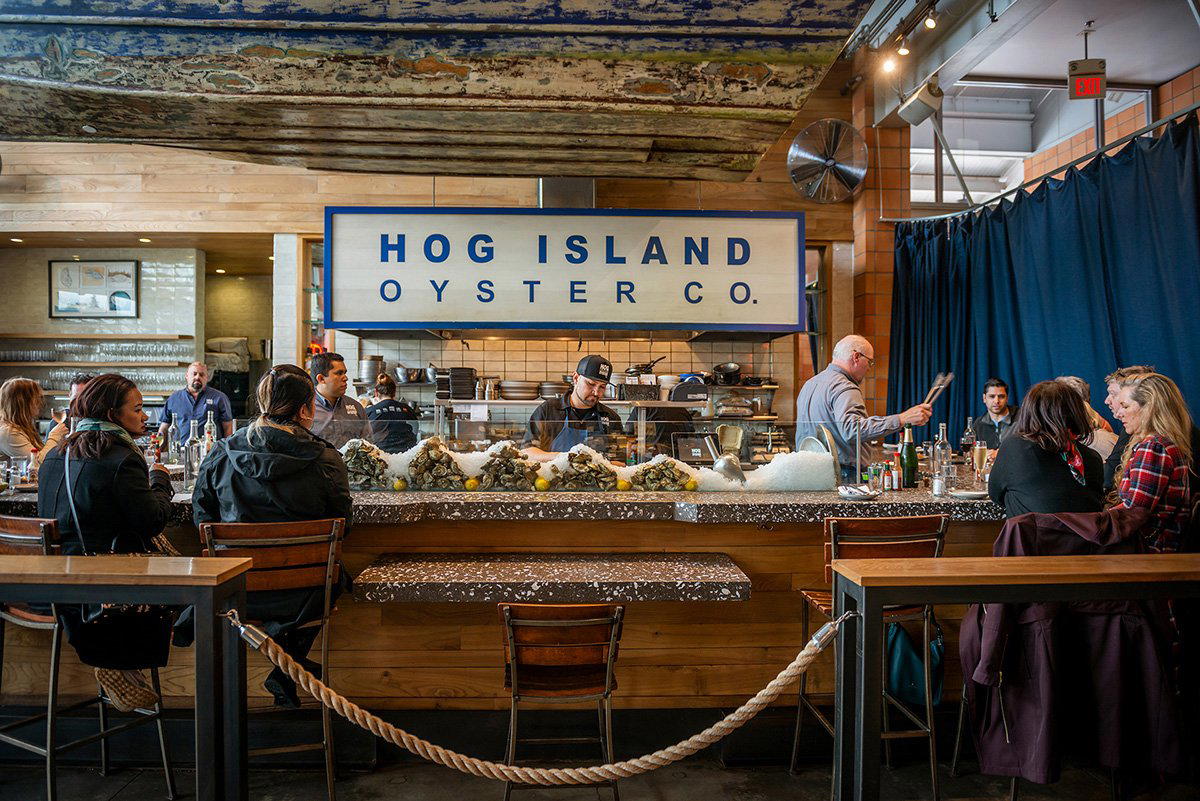
The Raw Bar in Wine Country: Where Oysters Meet the Valley's Pours
First Street in downtown Napa has developed into one of the more interesting dining corridors in the valley over the past decade, with a concentration of restaurants and bars that range from casual lunch stops to full-service dinner destinations. Into that mix, Hog Island Oyster Co is a casual oyster restaurant in Napa, California, at 610 1st St Suite 22, with a Google rating of 4.6 from 1,472 reviews and an estimated price of about $35 per person. The result is a raw bar in a wine region, which raises a direct question about pairing logic that most oyster houses never have to answer.
That question, how shellfish and California wine actually work together on a plate, is what makes this address worth thinking about rather than simply booking on instinct. The broader American oyster bar tradition was built around beer, mineral-driven muscadet, or a cold martini. Wine country forces a recalibration. The nearby producers working with high-acid varieties, whether Sauvignon Blanc from the cooler reaches of Napa or sparkling wine from across the bay, map more naturally onto the briny minerality of a well-shucked oyster than a barrel-aged Chardonnay ever could. The pairing logic, when it works, becomes an argument for why this particular outpost makes sense geographically even if it reads as counterintuitive at first glance.
The Food and Drink Logic at a Coastal Counter in an Inland City
American oyster bar culture broadly divides into two formats: the white-tablecloth seafood house where oysters are an opening act before a whole fish or lobster, and the counter operation where the shellfish is the main event and everything else on the menu is engineered to support it. Hog Island's downtown Napa location falls into the second category. The food programme at a well-run counter of this type typically anchors around the oyster itself, with a short list of accompaniments, mignonette, hot sauce, bread, perhaps a small selection of cooked shellfish or clam chowder, that are designed to frame the product rather than compete with it. The drinks list, in this context, is not a secondary consideration. It is part of the same editorial decision.
At addresses like this, the most considered pairing choices tend to cluster around two poles. On the wine side, high-acid whites with mineral character, think Chablis in France, Vinho Verde in Portugal, or the leaner Sauvignon Blancs produced in cooler California appellations, cut through the fat of a Kumamoto or Pacific oyster without overpowering it. On the beer side, a dry Irish stout remains one of the more technically defensible pairings for a briny East Coast oyster: the roasted bitterness acts as a counterweight to the salinity in the same way that lemon juice does. A counter that sits inside California wine country has access to both traditions, and the drinks list in this context functions as a curatorial argument about which pairings the house believes in.
For comparison within Napa's broader bar and restaurant scene, Cadet Wine & Beer Bar takes a similarly focused approach to its drinks programme, while Angele Restaurant & Bar represents the more traditional full-service French bistro format that dominated Napa dining before the current wave of counter and casual concepts. Celadon sits in a different register entirely, and Blue Note Napa adds a live music dimension that changes the social grammar of the evening. Each represents a distinct version of what an evening in downtown Napa looks like; the Hog Island format is the one where the food is the most deliberately oceanic.
Seasonal Timing and Why It Matters for Oysters
The old rule about eating oysters only in months containing the letter R has more practical grounding than most people realise. Warm summer months accelerate oyster spawning, which changes the texture of the meat and can compromise both flavour and food safety in wild harvest operations. Hog Island's farm operations in Tomales Bay use cultivated stock rather than wild harvest, which reduces but does not eliminate the seasonality question. The cooler months, roughly October through April, remain the period when Pacific oysters from Northern California waters are at their densest and most saline. For anyone planning a Napa visit with the specific intention of sitting at this counter, the autumn and winter months offer the most dependable product condition. The overlap with Napa's harvest season in September and October creates a narrow window where both the oysters and the new-vintage wines are simultaneously worth seeking out.
How It Compares Across the US Bar Food Spectrum
The bar food and raw bar combination that Hog Island represents has counterparts at well-regarded American addresses in other cities. Jewel of the South in New Orleans operates at the intersection of cocktail craft and Southern bar food in a way that draws a similar pairing logic. Kumiko in Chicago approaches the food-and-drink integration from a Japanese-inflected angle. ABV in San Francisco, the closest geographically, has built its reputation on a drinks-first programme that takes the food side seriously enough to be considered alongside the cocktail list rather than incidentally. Bar Leather Apron in Honolulu and Superbueno in New York City each represent regional variations on the same underlying idea: that what you eat and what you drink should be in deliberate conversation, not parallel tracks.
What the Napa location of Hog Island adds to that conversation is a specific geographic argument. The oysters come from forty miles away. The wines, in many cases, come from even closer. That proximity is not a marketing detail; it is the structural premise of the pairing programme and the reason the format makes more sense in this location than it might in a landlocked city without the same access to both components.
Planning Your Visit
The First Street address at 610 1st St, Suite 22, puts Hog Island within walking distance of the bulk of downtown Napa's hotel properties and a short drive from most of the valley's major wine-tasting destinations. The counter format at locations of this type tends to seat walk-ins more readily than a full-service restaurant, though demand on Friday and Saturday evenings in peak season, late spring through harvest, can stretch wait times at the door. Visiting mid-week or arriving at opening time gives the best chance of counter seating without a pre-arranged reservation. For a broader overview of where this address sits relative to the rest of Napa's dining options, the scene spans a range of price points and formats.
Comparable Options
Comparable venues nearby, for context on price, style, and recognition.
| Venue | Cuisine | Price | Notes |
|---|---|---|---|
| Hog Island Oyster CoThis venue — the venue you are viewing | Dining | $$ | |
| Heritage Eats | Global Fusion Fast-Casual | $$ | Bel Aire Plaza |
| La Calenda | Dining | , | Napa |
| Thai Kitchen Restaurant | Authentic Thai | $$ | Trancas |
| Fatted Calf | Charcuterie & Deli | $$ | Downtown Napa |
| Hilltop restaurant | California Farm-to-Table | $$$ | Carneros |
Continue exploring
More in Napa
Restaurants in Napa
Browse all →
Bars in Napa
Browse all →
Hotels in Napa
Browse all →





At a Glance
- Rustic
- Casual
- Casual Hangout
- After Work
- Standalone
Casual market atmosphere with focus on fresh seafood in a bustling public market setting.